SK Telecom Pioneers Autonomous Workforce Governance with AX Innovation 2.0 and AI Agent ID System

South Korean telecommunications giant SK Telecom has launched a pioneering workplace and operational framework called AX Innovation 2.0. Unveiled by CEO Jung Jae-hun at the 2026 New Icheon Forum, this initiative shifts the corporate utilization of artificial intelligence from traditional task-based automation tools to fully integrated, autonomous digital colleagues. In an unprecedented move for the telecom and enterprise tech sectors, the platform assigns unique employee identification numbers, specific organizational affiliations, and distinct job responsibilities to active AI agents, according to reports by Korea Bizwire.
This structural evolution builds upon the company's previous optimization strategies. While the earliest phases of its AI transformation (AX) focused primarily on field-level operational efficiency, the 2.0 framework aims to fundamentally redesign how workflows are structured. By defining AI agents as distinct working entities managed through a lifecyle mimicking human employees—spanning from onboard onboarding to offboarding—the system establishes clear lines of functional accountability and interoperability within corporate networks, as documented by The Asia Business Daily.
From an industry analysis perspective, SK Telecom’s strategy addresses a critical bottleneck in the scaling of enterprise AI: governance and security orchestration. By formally embedding these autonomous agents into the corporate directory, the firm is establishing strict protocols for data access and security permissions. This ensures that multi-agent systems can collaborate smoothly alongside human workers without risking data leakage or unchecked privilege escalation, a shift detailed by Digital Today.
Reshaping Corporate Architecture via the AX Sandbox
A key operational mechanism within this roll-out is the "AX Sandbox" program, an internal experimental environment that dismantles traditional hierarchical and departmental boundaries to redesign processes entirely from scratch. Following a successful three-month pilot run by teams within SK Telecom's AI In-house Independent Company (CIC), the system proved the viability of a multi-role workplace structure. Under this model, individual human employees leverage multiple assigned AI agents to simultaneously manage diverse responsibilities across planning, development, and system design. This horizontal operational strategy has successfully compressed project planning timelines and enhanced organizational decision-making speeds, according to Chosunbiz.
A Benchmark for Global AI Governance
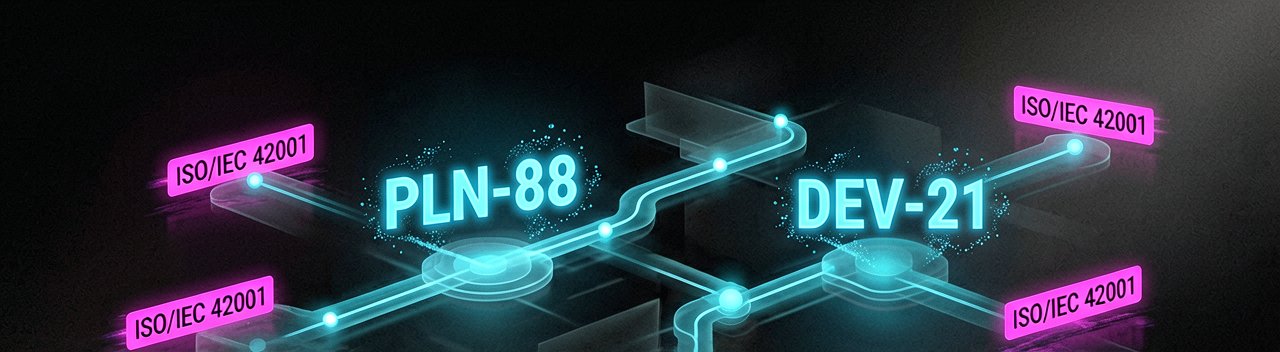
SK Telecom’s institutionalization of AI identity systems marks a significant milestone in global AI governance. By moving beyond abstract ethical principles and into hardcoded corporate frameworks—such as tying agent capabilities to their "T.H.E. AI" governance principles and ISO/IEC 42001 standards—the company provides a tangible blueprint for managing agentic risk, as outlined by Chosunbiz. As enterprises globally struggle with the compliance demands of autonomous software, assigning digital identities to tracking lifecycles establishes a clear standard for transparency, system tracking, and organizational compliance in the era of hyperscale enterprise AI.
Behind the Scenes of the Autonomous Corporate Directory
The implementation of SK Telecom’s AX Innovation 2.0 marks a shift away from the traditional view of enterprise software as passive utilities. By issuing formal corporate identities to artificial intelligence units, the telecommunications leader addresses a structural challenge that has troubled enterprise architects since the rise of large language models: the accountability gap in autonomous workflows. In typical corporate IT environments, software automation operates under shared service accounts or human user credentials, obscuring audit trails. The introduction of distinct agent identification numbers forces a reassessment of corporate access control, shifting the infrastructure from managing user permissions to managing a hybrid, multi-agent digital workforce.
This organizational change introduces new layers of complexity to human resource management and digital identity governance. Human professionals within the organization are transitioning from direct operators to systems orchestrators, overseeing networks of specialized AI agents that function across multiple departments. Industry analysts note that this model demands a complete restructuring of performance metrics and operational risk frameworks. When an autonomous agent completes an optimization task or executes a code deployment, the responsibility for that outcome is traced back through its assigned digital ID to its specific human supervisor and its internal training dataset, creating clear boundaries for operational liability.
The broader strategy behind this initiative reflects a response to the slowing growth in traditional telecommunications revenue, forcing South Korean operators to reposition themselves as core AI infrastructure providers. By transforming its internal workforce into an active testing ground via the AX Sandbox, SK Telecom is compiling a detailed data set on how multi-agent collaboration affects operational overhead, system latency, and network security. This internal experiment serves as a live proof-of-concept for enterprise clients, demonstrating that AI integration requires a systematic overhaul of corporate structure rather than simply deploying siloed software applications.
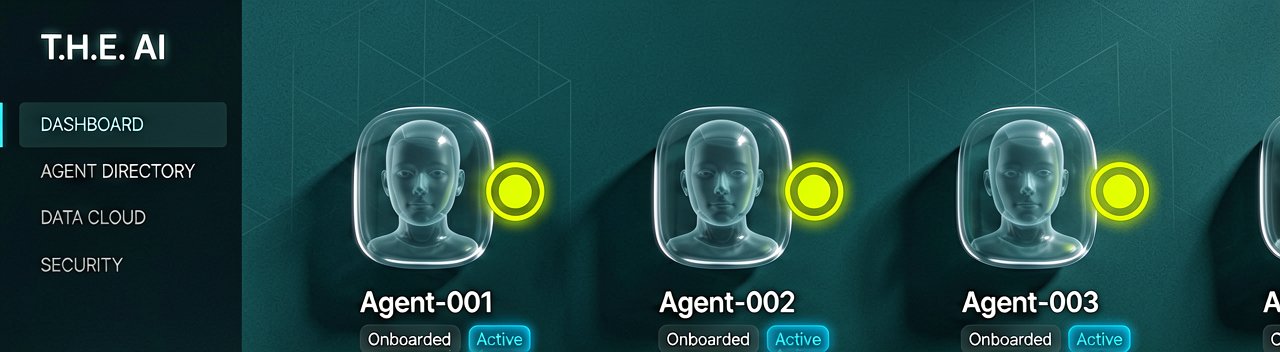
On a regulatory level, this deployment establishes an early framework for compliance in an environment where international AI legislation remains fragmented. By connecting individual agent profiles to the global ISO/IEC 42001 artificial intelligence management standards, the system creates automated compliance reporting directly within the workflow. If an autonomous agent attempts to access data outside its operational scope or shows signs of drift during a project execution, its digital identity can be immediately suspended or offboarded by system administrators. This capability provides a practical model for governance, demonstrating how enterprises can maintain strict control over autonomous software systems as they scale.
Reading Between the Lines of the Algorithmic Org Chart
While assigning employee IDs to AI agents makes for compelling tech journalism, it introduces significant operational contradictions that challenge standard corporate logic. Treating ephemeral software instances as permanent personnel creates a strange compliance paradox. If an AI agent faces "offboarding" due to poor performance or hallucinated data, the corporate structure is essentially rebranding a standard software patch or API termination as a human resources action. This linguistic shift risks obscuring the real technical liabilities of agentic systems behind a layer of corporate theater, potentially complicating real accountability while trying to enforce it.
Furthermore, the reliance on a multi-role workplace structure—where a single human employee manages multiple autonomous digital colleagues—creates intense psychological and logistical pressure on the remaining human workforce. Enterprise optimization frameworks often promise that automation will free workers from routine tasks, yet SK Telecom’s model effectively converts its engineers and planners into full-time, high-stakes system monitors. The human bottleneck does not disappear; it merely shifts from execution to continuous oversight. This framework demands that human supervisors possess the flawless technical expertise needed to instantly catch subtle, complex errors made by multiple autonomous agents operating simultaneously.
This aggressive internal push toward an AI-driven workforce also highlights an underlying friction between rapid corporate deployment and international safety benchmarks. Aligning these systems with ISO/IEC 42001 standards looks excellent on paper, but static compliance frameworks are poorly equipped to handle the unpredictable, emergent behaviors of interconnected, autonomous agent networks. As these digital workers begin to interact dynamically across different departments within the AX Sandbox, the potential for systemic glitches or unintended data exposure increases. This reality suggests that SK Telecom's pioneering experiment may serve less as a polished template for global AI governance, and more as a high-stakes cautionary tale regarding the limits of automated compliance.
"We have spent decades trying to eliminate corporate bureaucracy and clarify human org charts, only to invent a system where a human manager can now be formally gaslit by their own digital subordinates during a quarterly review."
Artūras Malašauskas is an AI Systems Integrator with 20+ years of production-grade web engineering experience. He has designed, shipped, and scaled enterprise Python/PHP systems for logistics, SaaS, and public-sector clients. For the past year, he has focused exclusively on AI integrations: deploying open-source LLMs, building generative media pipelines (image, audio, video), and engineering multi-agent workflows for real production environments. His standard: reproducibility, security, cost-efficient inference—no vaporware. He documents and evaluates emerging AI tooling, separating verified capabilities from marketing noise. Technical editor at: muza-ai.eu, ai-verslas.lt, ai-naujinos.lt Connect on LinkedIn
Comments