AI Trading Agents Face Transparency Test as Wallet V Unveils Public Benchmark Standards
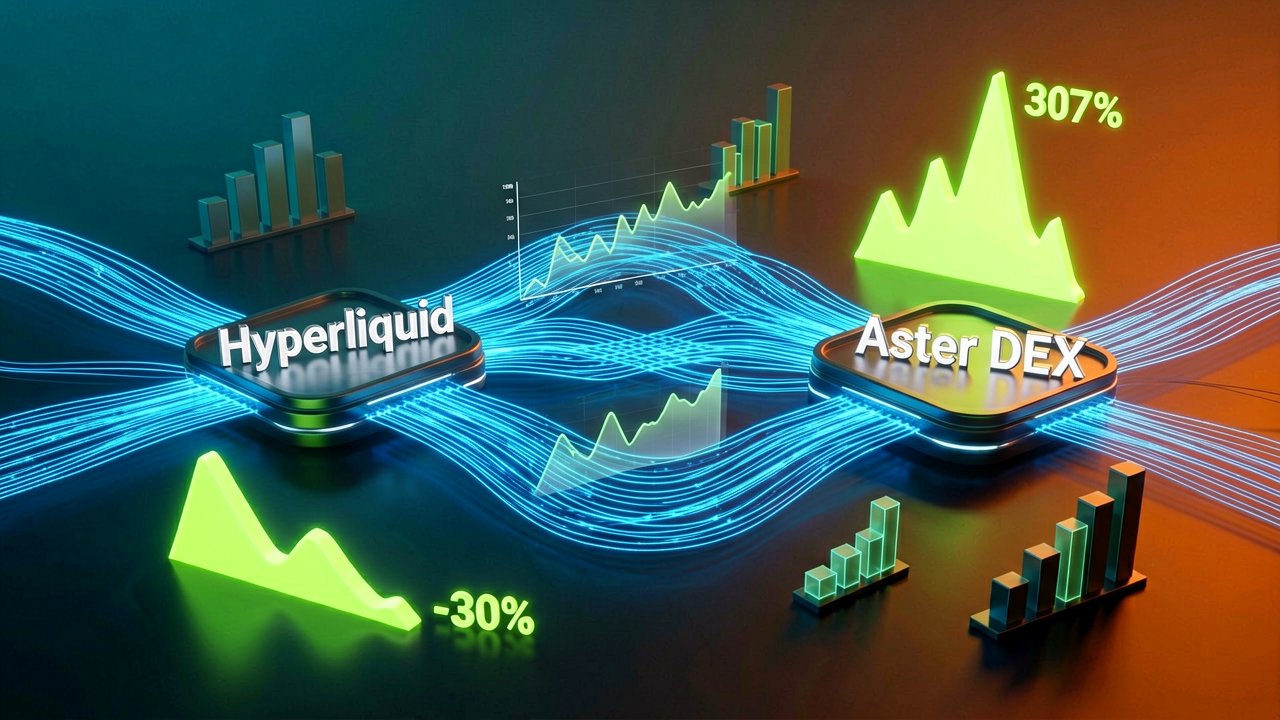
The decentralized finance ecosystem is undergoing a major shift toward automated transparency. Web3 self-custody platform Wallet V has introduced the industry's first public performance benchmark for user-configured AI trading agents. This open initiative tracks real-time data from 688 automated agents running across decentralized derivatives platforms including Hyperliquid and Aster DEX. By publishing verified data cohorts, the standard aims to solve the historic lack of transparent evaluation metrics for algorithmic systems in Web3 trading.
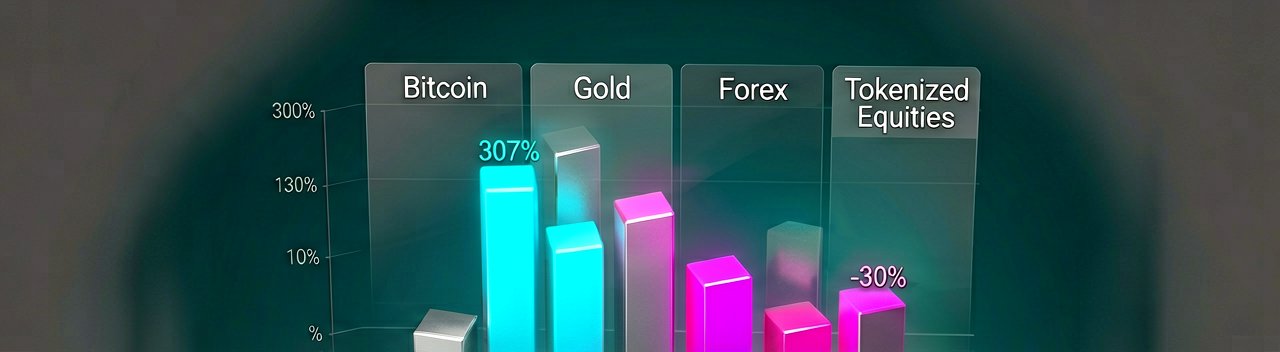
As detailed by Chainwire, this framework spans seven distinct large language model families. Initial performance figures expose the high-risk reality of autonomous retail trading, revealing that only 42 percent of deployed agents recorded a profit or broke even. Peak return on investment numbers displayed massive variation, fluctuating between negative 30 percent on the lowest-performing model configuration up to a positive 307 percent return on the most optimal setup.
The standardized testing dataset tracks complex perpetual futures trading across four fundamental asset classes. AI agents handle strategies involving major cryptocurrencies like Bitcoin and Solana, commodities like gold and crude oil, foreign exchange pairs, and pre-IPO tokenized equities. This wide market reach positions the open performance tracker as an essential foundation for institutional and retail trust in autonomous web3 software systems.
Driving Institutional Standards into Retail DeFi
Automated software tools have historically operated inside proprietary black boxes. This development brings verifiable, onchain accountability to user-driven prompts and large language models. By categorizing performance metrics by the underlying AI model family, the market gains clear data on which neural networks adapt best to sudden market liquidity changes. This step lowers structural entry barriers for traditional traders moving into decentralized instruments.
Strategic Shifts Toward Multi-Model Risk Management
The dataset confirms that no single AI model guarantees financial success in decentralized markets. Traders are shifting toward multi-model diversification strategies to protect capital against sudden drawdown. Wallet V, an incubator project under digital asset service provider Virgo Group, intends to expand these benchmarks to prediction markets and custom copilot generation tools. This expansion forces competitors to offer verified public data rather than unbacked marketing claims.
The Friction Between Autonomy and Accountability
Reading Between the Lines: The push for standardized AI trading metrics introduces a fundamental contradiction that the Web3 industry has yet to reconcile. Decentralized finance prides itself on absolute user autonomy, censorship resistance, and the elimination of gatekeepers. Yet, by superimposing institutional-grade performance benchmarks onto these systems, the market is effectively demanding a new layer of surveillance and curation. The fact that less than half of the tracked agents managed to stay in the green exposes the fragile illusion that large language models possess inherent financial market intelligence. It suggests that without strict centralized guardrails, fully autonomous retail capital remains largely a gamified lottery.
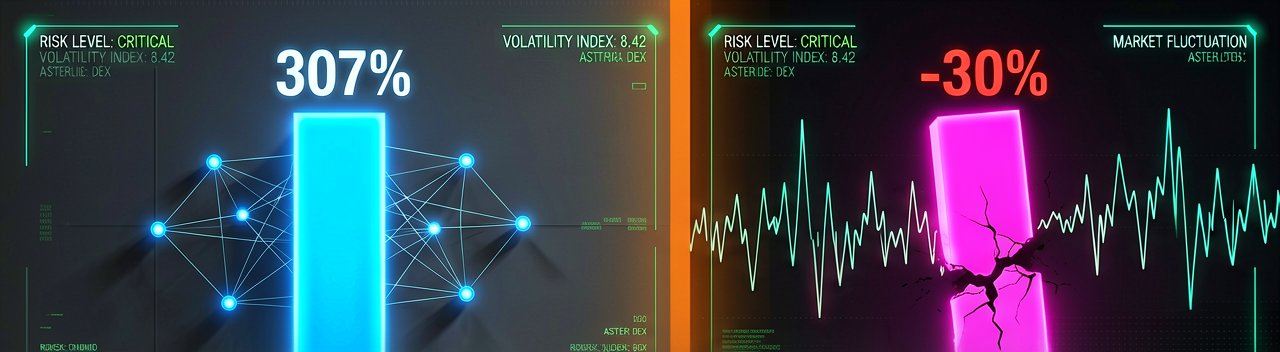
This initiative also highlights a critical vulnerability in the current wave of AI-driven trading narratives. While a 307 percent return sounds impressive on paper, pairing that figure with a 30 percent loss on the lower end reveals an asymmetric risk profile that would terrify any traditional fund manager. The underlying volatility suggests that these agents are not necessarily executing superior market logic, but are instead amplifications of the underlying leverage available on platforms like Hyperliquid. If an AI agent’s success relies entirely on catching a highly specific momentum wave, it functions less like a sophisticated quantitative analyst and more like an automated script riding blind luck.
Furthermore, evaluating AI models publicly creates a dangerous incentive structure for the developers building them. When performance data becomes a public marketing battleground, creators will inevitably optimize their agents for short-term yield to top the leaderboard rankings. This race to the top encourages aggressive risk-taking, tighter stop-losses that can easily be triggered by market noise, and over-fitting models to historical data. The long-term consequence of this transparency test could ironically be a less stable trading environment, as hundreds of public agents begin crowding into identical, hyper-optimized strategies that break down simultaneously during a systemic market crash.
Ultimately, the transition from opaque algorithms to public benchmarks forces a realization that code is only as smart as its execution layer. Even if a model flawlessly predicts a macroeconomic shift across foreign exchange and tokenized equities, it remains at the mercy of oracle latencies and gas fee spikes on decentralized networks. True transparency requires auditing not just the trading agent’s win rate, but the entire infrastructure stack that supports it. Until the underlying blockchain networks can guarantee predictable, institutional-speed execution under extreme stress, public benchmarks will simply measure which AI models are best at losing money in broad daylight.
"We have spent years trying to build an automated financial utopia where human error is entirely erased, only to discover that our brilliant AI trading agents are perfectly capable of reinventing the classic retail margin call all on their own—and now they can do it with standardized, high-resolution public charts."
Artūras Malašauskas is an AI Systems Integrator with 20+ years of production-grade web engineering experience. He has designed, shipped, and scaled enterprise Python/PHP systems for logistics, SaaS, and public-sector clients. For the past year, he has focused exclusively on AI integrations: deploying open-source LLMs, building generative media pipelines (image, audio, video), and engineering multi-agent workflows for real production environments. His standard: reproducibility, security, cost-efficient inference—no vaporware. He documents and evaluates emerging AI tooling, separating verified capabilities from marketing noise. Technical editor at: muza-ai.eu, ai-verslas.lt, ai-naujinos.lt Connect on LinkedIn
Comments