Midea’s Agentic Factory Solution Redefines Global Expansion for Chinese Enterprises
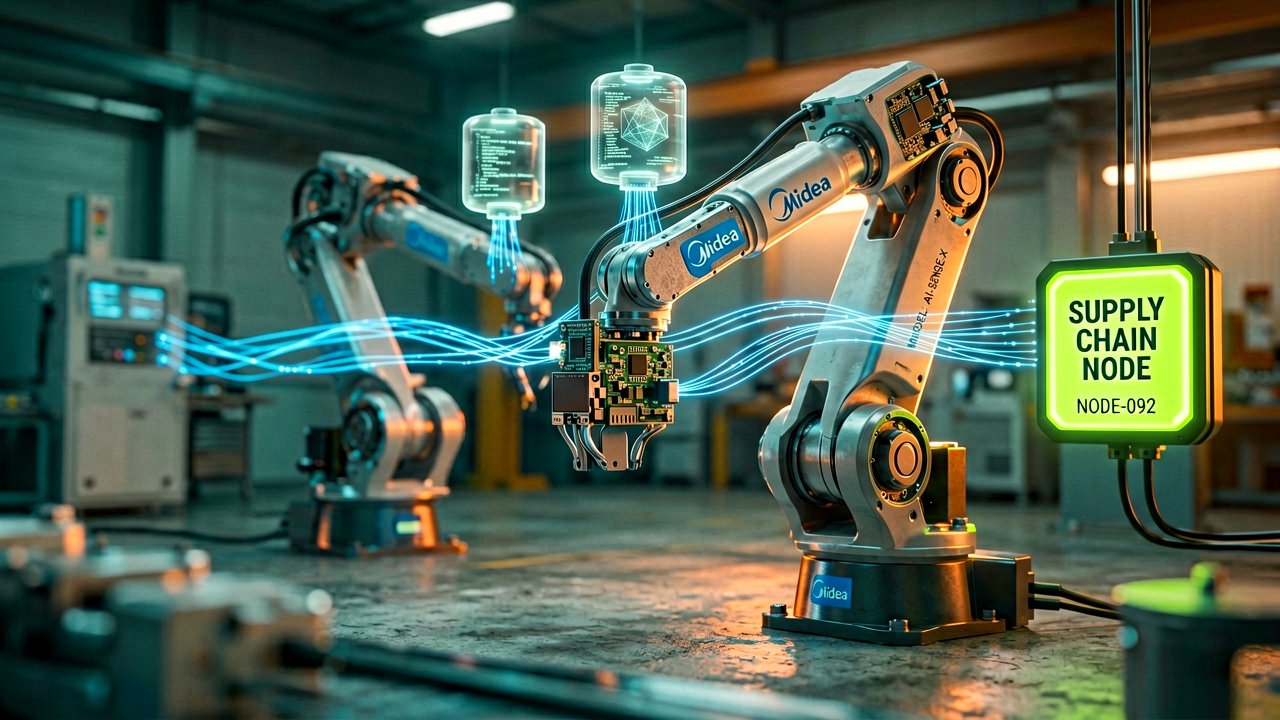
The globalization strategy for Chinese manufacturers has reached a crucial inflection point. Appliance titan Midea Group officially launched its "Agentic Factory Overseas Expansion Solution," an AI-driven blueprint designed to export autonomous manufacturing ecosystems globally, according to a press release on PR Newswire. This strategic pivot transitions Chinese outbound commerce from fragmented, localized capacity relocation to an era of systematic capability symbiosis. Capitalizing on the foundational technology of its Jingzhou facility—which secured the world's first multi-scenario Agentic Factory certification from the World Record Certification Agency—Midea has deconstructed complex automation architectures into 12 rapidly replicable global modules, as reported by Dealroom.
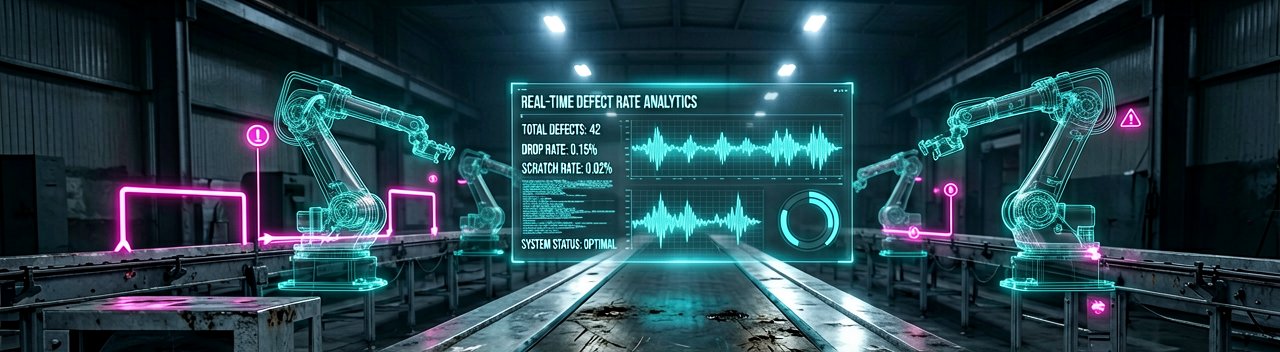
Field-validated data from Midea’s refrigeration and air conditioning base in Thailand underscores the immense operational gains of the platform. By orchestrating dozens of AI applications across localized factory scenarios, the automated architecture successfully sliced finished product defect rates by 50% and curtailed total order lead times by 43%, according to Manufacturing Digital. This deep integration of AI agents enables a centralized "Factory Brain" to dynamically perceive, execute, and self-correct on international factory floors. This mitigation drastically cushions the traditional execution risks that historically plagued cross-border corporate expansions.
Crucially, the solution tackles the complex logistics bottlenecks associated with international expansions. Midea’s newly deployed cross-border supply chain AI agent continuously interrogates 35 core nodes in real time, driving closed-loop exception handling times down from 48 hours to less than 12 hours, while maintaining a stable 96% raw material on-time delivery rate, according to market data from AASTOCKS. Coupled with an integrated logistics suite that ensures material kitting rates exceed 99%, the framework mitigates the severe supply chain disruptions that frequently lead to overseas facility shutdowns. To accelerate market penetration, the enterprise introduced its Go-Global Partner Program, establishing structured mentorship frameworks that have already assisted upstream suppliers in rapidly scaling automated operations across Southeast Asia and North America, as detailed by China Daily.
Mitigating Cross-Border Operational Friction
Venturing into foreign markets introduces severe operational friction stemming from language barriers, disparate regional regulations, and cultural differences in workforce management. Midea’s modular architecture mitigates these liabilities through localized multilingual AI training platforms, reducing localized workforce onboarding cycles by 62%. By automating cross-cultural employee upskilling and encoding 12 million historic manufacturing case files directly into its quality-control algorithms, the framework bypasses the costly trial-and-error periods typical of standard international factory deployments.
The Structural Shift to AI-Led Ecosystem Exports
From an industry analysis perspective, this rollout represents a monumental structural shift in industrial tech strategies. Historically, multinational corporations exported static physical hardware or simple operational workflows. Midea’s agentic paradigm transforms industrial knowledge into dynamic, cloud-tethered intelligence frameworks that continuously self-optimize. By licensing these algorithmic capabilities to expanding peer enterprises, Midea evolves from a traditional consumer electronics manufacturer into a dominant, platform-as-a-service architectural anchor for globalized smart manufacturing.
The Hidden Architecture of Decentralized Industrial Autonomy
Beyond the Factory Floor: The true disruptive power of Midea’s agentic framework lies not in the physical robots tracking across its assembly lines, but in its profound democratization of operational sovereignty. Historically, cross-border manufacturing relied on a fragile tethering mechanism where overseas satellite plants remained entirely dependent on centralized engineering teams at home for real-time troubleshooting. This legacy model inherently induced latency, as domestic technicians navigated timezone deltas, language barriers, and fragmented telemetry data to resolve operational anomalies. Midea has fundamentally inverted this paradigm by shifting the primary decision-making locus directly to the edge, embedding localized AI agents with the cognitive capacity to negotiate, diagnose, and recalibrate internal assets without human intervention.
This operational shift introduces an intricate dynamic between the domestic corporate nucleus and localized regional workforces. Industry insiders note that initial friction in overseas expansions often stems from local operational teams feeling alienated by rigid, top-down procedural software engineered solely for domestic workflows. By utilizing adaptive large language models tailored for industrial synthesis, the agentic framework essentially translates complex structural parameters into localized operational cultures, neutralizing the traditional friction point of technology transfer. Instead of forcing regional technicians to master opaque software frameworks, the factory brain adapts its interpretive interface to mirror the baseline competencies of the local labor pool, drastically accelerating institutional buy-in.
From a historical perspective, this evolution redefines the competitive playbook for industrial enterprises operating on the global stage. For decades, the dominant expansion thesis focused strictly on arbitrage—moving operations to regions characterized by low labor costs or favorable tariff structures. However, as global supply chains fragment under the weight of geopolitical realignments and rising regulatory scrutiny, cost arbitrage alone can no longer guarantee operational resilience. Midea’s blueprint shifts the metric of success from labor arbitrage to intelligence arbitrage, proving that the ultimate competitive advantage belongs to enterprises capable of rapidly embedding complex, self-healing technological ecosystems into highly volatile regulatory and geographic environments.
Furthermore, the long-term viability of this approach hinges on its ability to foster an open, interdependent supplier network rather than a closed proprietary loop. By deploying its Go-Global Partner Program alongside the underlying infrastructure, Midea is actively underwriting the technological transformation of its entire tier-one and tier-two supplier base. This cooperative integration ensures that when a primary manufacturing hub relocates or expands into a new continent, its critical component vendors are structurally equipped to migrate concurrently, arriving with pre-integrated, compatible digital twins that plug seamlessly into the broader regional matrix. Consequently, this creates a fortified, self-sustaining industrial enclave that shields the anchor enterprise from localized resource scarcity or sudden macro-environmental shifts.
The Fault Lines of Algorithmic Sovereign Production
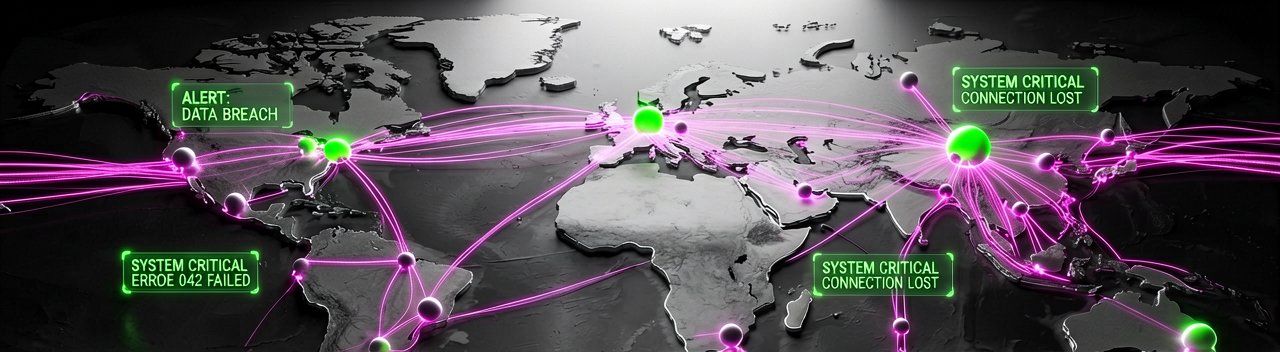
Reading Between the Lines: The triumphant narrative surrounding Midea’s self-contained agentic factories conveniently glosses over a glaring structural paradox inherent to autonomous globalized manufacturing. While exporting a standardized, AI-driven "Factory Brain" minimizes immediate operational dependencies on localized human skillsets, it simultaneously creates an unprecedented vulnerability to regional digital governance frameworks. Propagating highly complex neural networks across fractured geopolitical terrains forces these systems to operate within diametrically opposed data-privacy regimes, where cross-border telemetry transfers are increasingly treated as matters of national security. As a result, the ambition of achieving a seamlessly unified, globally synchronized automated footprint may inevitably fracture under the weight of regional data-localization mandates.
Furthermore, the corporate promise of minimizing operational risk through predictive supply chain agents assumes a level of global macroeconomic predictability that simply no longer exists. An AI agent, no matter how sophisticated its training dataset, remains fundamentally tethered to historical patterns and linear causal logic. When confronted with black-swan regulatory shifts, sudden maritime blockades, or localized trade weaponization, these automated platforms risk falling into catastrophic hallucination loops or triggering cascading, automated shutdowns across interconnected nodes. Relying entirely on algorithmic mitigation strategies risks replacing traditional human operational errors with systemic, hyper-accelerated systemic failures that unfold at a velocity far outstripping human intervention capabilities.
This aggressive automation push also introduces a sharp internal contradiction regarding local economic integration and host-country relations. Emerging economies invite foreign industrial giants under the explicit political promise of large-scale domestic job creation and structural skill elevation for the local workforce. By deploying an exportable ecosystem that systematically engineers human labor out of the productivity equation—reducing local onboarding times merely because the humans have fewer critical variables to control—multinational enterprises risk triggering protectionist backlash from local labor unions and regulatory bodies. The long-term geopolitical vulnerability for these hyper-automated hubs is that they may be perceived less as benevolent engines of local industrial development and more as autonomous corporate enclaves extracting regional resources while repatriating intelligence and profit back to the home country.
Ultimately, the transition toward platform-as-a-service smart manufacturing forces a critical re-evaluation of corporate IP boundaries. By onboarding upstream vendors and peripheral suppliers into a single unified agentic matrix via the Go-Global Partner Program, the orchestrating enterprise creates an intensely co-dependent ecosystem. This close proximity inevitably accelerates the commoditization of the underlying proprietary algorithms, as suppliers absorb the operational logic and inevitably port those efficiencies to competing industrial networks. The architectural anchor of today's smart manufacturing paradigm may find that in its rush to rapidly globalize its automated footprint, it has inadvertently subsidized the digital playbook for its next generation of cross-border competitors.
"The ultimate irony of the modern smart factory is that in our relentless, multibillion-dollar quest to eliminate the unpredictable human element from the assembly line, we have simply traded a temperamental forklift driver for an autonomous algorithm that might occasionally decide a minor supply chain hiccup justifies a total, self-healing existential crisis."
Artūras Malašauskas is an AI Systems Integrator with 20+ years of production-grade web engineering experience. He has designed, shipped, and scaled enterprise Python/PHP systems for logistics, SaaS, and public-sector clients. For the past year, he has focused exclusively on AI integrations: deploying open-source LLMs, building generative media pipelines (image, audio, video), and engineering multi-agent workflows for real production environments. His standard: reproducibility, security, cost-efficient inference—no vaporware. He documents and evaluates emerging AI tooling, separating verified capabilities from marketing noise. Technical editor at: muza-ai.eu, ai-verslas.lt, ai-naujinos.lt Connect on LinkedIn
Comments