Steam Next Fest Unleashes Thousands of Free Demos on PC Gamers Today
The highly anticipated June 2026 iteration of Valve's Steam Next Fest is officially live, serving as a massive digital playground for PC gamers globally. Running through June 22, the digital showcase presents players with a rare opportunity to test-drive thousands of upcoming video games completely free of charge. It’s an essential trial-before-you-buy window for gamers looking to construct their ideal summer wishlist before the upcoming seasonal discounts arrive.
For independent studios and AAA publishers alike, the seven-day digital festival acts as a vital Launchpad to garner invaluable early user feedback and generate organic community hype. Hundreds of creators are pairing their limited-time playable slices with live developer broadcasts and active chat rooms, hoping to catch the attention of a highly competitive market. According to tracking from Tech Times, nearly 5,000 active game demos have been uploaded for this specific event window, flooding the storefront with a massive wave of fresh digital content across every imaginable genre.
The Strategic Window for Wishlists
The true brilliance of Valve's timing lies in the upcoming calendar alignment. The event is intentionally positioned to conclude just three days before the major Steam Summer Sale kicks off on June 25. This brief gap allows players to aggressively curate their wishlists based on hands-on gameplay experiences, turning the festival into a practical shopping tool. Industry analysts highlight that it's the smartest way to separate genuinely impressive titles from clever promotional trailers before spending a single dollar.
While the volume of games can feel overwhelming, a few standout projects are already generating significant player chatter. High-profile entries like Innersloth’s narrative spin-off, Among Us Story: On Guard, and 1047 Games’ fast-paced movement shooter, EMPULSE, are currently dominating early download queues. Polygon's curation team has also drawn attention to quirky indie gems like Polygon's spotlighted Pigeon: A Love Story, proving that the festival remains a sanctuary for eccentric concepts alongside mainstream hits. Because the majority of these free builds will vanish from the storefront the moment the celebration concludes on June 22, players are encouraged to start downloading their top choices immediately.

The Hidden Engine of Indie Discovery
What Most Reports Miss: The modern Steam Next Fest is no longer just a friendly community celebration; it has evolved into a high-stakes, algorithmically driven survival gauntlet for independent developers. In an era where the Steam storefront sees dozens of new commercial games launched every single day, breaking through the digital noise without a massive marketing budget is nearly impossible. For a small studio, securing a coveted spot on the event's front-page recommendation queues can make or break a project's financial future before it even has an official release date.
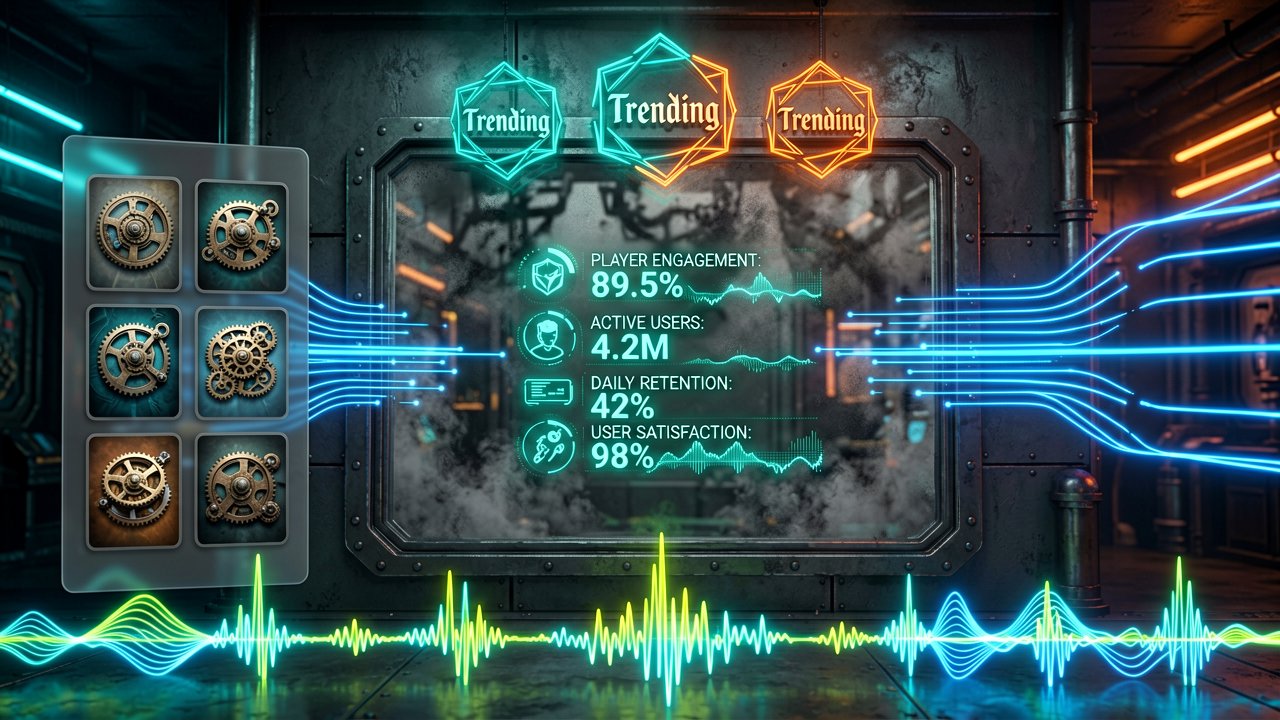
The festival's real power lies in Valve's underlying storefront algorithms, which heavily reward user engagement during this specific seven-day window. When thousands of players simultaneously download a demo, log playtime hours, and add the full game to their wishlists, the Steam algorithm flags that title as a trending product. This spike in automated visibility creates a snowball effect, pushing the game into prominent "Popular Upcoming" categories and ensuring it receives premier placement during future seasonal sales.
However, this frantic environment forces developers to adopt incredibly aggressive tactical strategies to capture short consumer attention spans. Many studios now construct their demos not as traditional vertical slices of a game's beginning, but as hyper-optimized, fast-paced fifteen-minute experiences designed to deliver immediate satisfaction. Developers frequently spend months fine-tuning these limited builds, sacrificing development time on the main game just to ensure their festival slice leaves a lasting impression on fickle players.
Historical data shows that this intense gamble frequently pays off for breakout hits. Industry success stories like Manor Lords and Dark and Darker initially generated their massive, unstoppable momentum during previous Next Fest iterations by captivating audiences with stellar demos. Conversely, studios that launch a buggy, unpolished demo run the risk of permanently poisoning their community reputation, proving that the event is a double-edged sword that demands absolute perfection from creators.
From a broader industry perspective, the sheer volume of content available this week highlights a growing tension between traditional games journalism and raw consumer behavior. With thousands of playable builds instantly accessible at a mouse click, players are increasingly bypassing professional reviews and gaming media entirely, preferring to act as their own critics. This fundamental shift has forced developers to focus their energy on cultivating direct relationships with internet influencers and community streamers, who can broadcast a demo to millions of viewers instantly.
The Hidden Cost of the Playable Preview
Reading Between the Lines: While the gaming community routinely celebrates this festival as a flawless win for consumer advocacy, the underlying reality presents a much darker economic paradox for creators. The conventional wisdom states that giving players a free, hands-on taste of a product inherently drives future sales by building trust. However, a growing faction of industry analysts suggests that this endless parade of free content might actually be contributing to a subtle devaluing of the medium, training an entire generation of consumers to treat games as disposable novelties rather than premium art forms.
The core contradiction lies in the psychological phenomenon of demo satiety, where a player's curiosity is fully satisfied by the free preview alone. For highly experimental indie titles or tightly focused narrative games, a twenty-minute demo can occasionally give away the entire mechanical hook, inadvertently convincing the player they have experienced everything the game has to offer. Instead of driving a purchase, a well-designed demo can unintentionally cannibalize potential sales, leaving developers with thousands of wishlist additions that never actually convert into paid transactions.
Furthermore, the structural framework of the festival heavily favors studios that already possess established marketing machinery, casting doubt on the event's egalitarian reputation. While Valve promotes the showcase as a level playing field where quality always triumphs, the reality is that teams backed by prominent indie publishers can afford specialized marketing agencies to drive early traffic to their store pages. This artificial inflation ensures they dominate the "Most Played" charts on day one, effectively burying the truly obscure, self-funded passion projects beneath a mountain of well-funded competition.
This dynamic threatens to turn the festival into a monoculture where only specific, stream-friendly genres can genuinely thrive. Games with immediate, visually chaotic loops—like roguelike deckbuilders, survival crafters, and chaotic physics simulators—possess an inherent advantage in a festival format over slow-burning, atmosphere-driven RPGs or intricate strategy titles. As a result, developers face a systemic pressure to alter their creative visions during the design phase, shaping their projects to fit the frantic, attention-grabbing requirements of a one-week digital convention.
"We have officially reached peak gaming convenience, a magical era where your Steam wishlist functions less like a shopping list and more like a digital graveyard of games you swear you will play eventually, right after you finish playing the free trial of the next shiny thing."
Artūras Malašauskas is an AI Systems Integrator with 20+ years of production-grade web engineering experience. He has designed, shipped, and scaled enterprise Python/PHP systems for logistics, SaaS, and public-sector clients. For the past year, he has focused exclusively on AI integrations: deploying open-source LLMs, building generative media pipelines (image, audio, video), and engineering multi-agent workflows for real production environments. His standard: reproducibility, security, cost-efficient inference—no vaporware. He documents and evaluates emerging AI tooling, separating verified capabilities from marketing noise. Technical editor at: muza-ai.eu, ai-verslas.lt, ai-naujinos.lt Connect on LinkedIn
Comments