The Code of Life Gets a Reboot: Radical Numerics Exits Stealth with $50M to Unify Biology
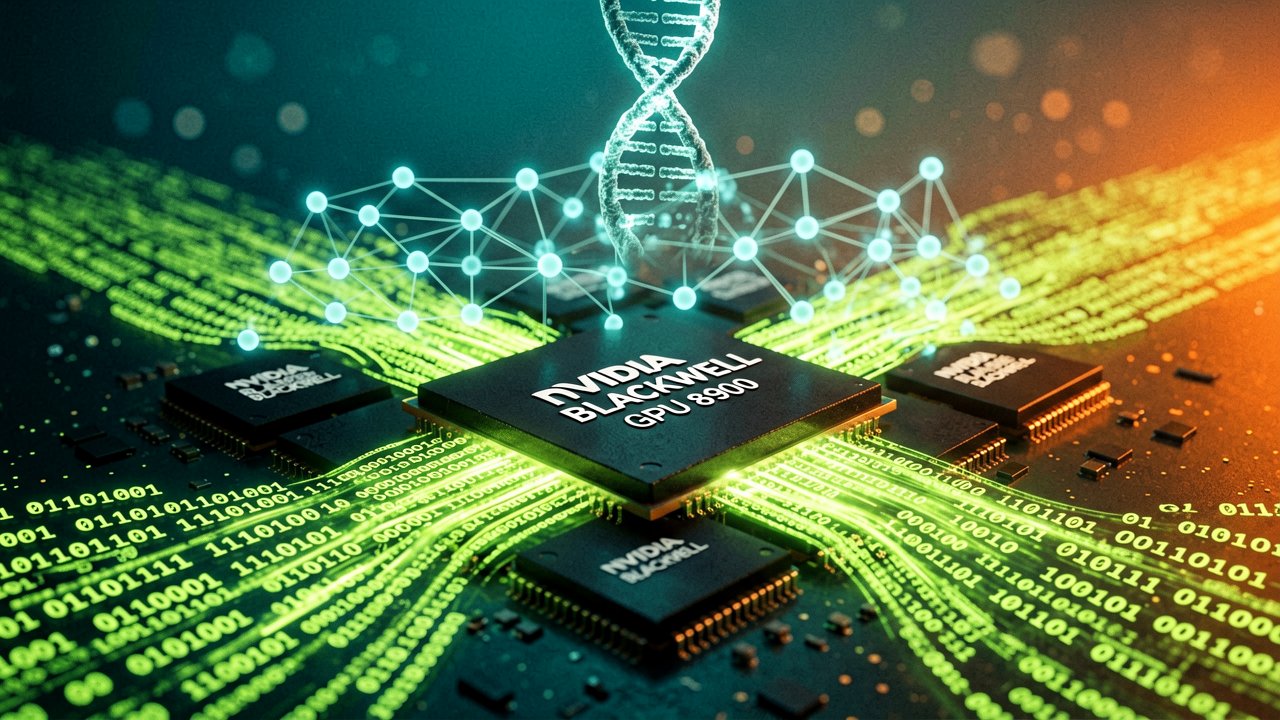
The boundary between silicon and biology just got a whole lot blurrier. On June 15, 2026, San Francisco-based AI research lab Radical Numerics officially broke its silence, announcing a massive $50 million seed funding round aimed at a staggering milestone: building what it calls "general biological intelligence." Instead of treating biology like a series of isolated riddles, the startup plans to forge multimodal AI models capable of reading, writing, and reasoning across the entire continuum of life—unifying DNA, RNA, proteins, and cellular systems into a cohesive computational map.
It is an eye-watering sum for a seed round, but the venture world is clearly betting on the pedigree of the founders. Led by CEO Eric Nguyen alongside Michael Poli, Stefano Massaroli, and Armin Thomas, this team is famous for pioneering generative genomics with Evo, the groundbreaking open-source biological AI project that proved large language models could write functional DNA. The capital infusion, led by tech investment heavyweight Radical Numerics and prominent backer Business Wire via Emergence Capital, will fund the construction of a custom data center packed with Nvidia Blackwell chips to handle the colossal compute required for their next-generation genome language model, Omnii.
Moving Beyond Single-Modality Medicine
For years, the biotech sector has celebrated point solutions. We have seen specialized systems designed exclusively to predict protein structures or design RNA strands. But Radical Numerics is explicitly steering away from this fragmented approach, arguing that the biggest bottleneck in drug discovery isn't synthesizing a compound, but understanding how that compound ripples through an entire, living system. By treating the four bases of DNA as an intricate vocabulary, their unified architecture aims to capture the holistic interplay of biological processes, fundamentally shifting how we approach cancer diagnostics and synthetic biology.
A Dual Mandate for the Age of Generative Bio
Of course, building an AI that can engineer biology from scratch triggers immediate safety alarms. If an algorithm can design life-saving therapies, it can just as easily be twisted to lower the barrier for engineering novel pathogens. The founders aren't sweeping this reality under the rug; they have established a strict dual mandate, balancing medical innovation with aggressive biodefense. Alongside health research, Radical Numerics is actively partnering with a national laboratory to use its models to detect and neutralize AI-generated biological threats, embedding safety directly into the foundation of the technology rather than treating it as a corporate afterthought.

The Architectural Pivot
Behind the Scenes: The technical architecture underpinning this initiative represents a fundamental departure from the transformer models that currently dominate consumer AI. While traditional large language models excel at processing sequence data like text, they routinely choke on the multi-scale, non-linear complexities inherent to cellular biology. Insiders close to the company indicate that Radical Numerics is moving away from purely attention-based systems toward state-space models and hybrid architectures capable of handling long-range genomic dependencies. This shift is crucial because mapping a disease isn't just about reading a static string of DNA; it requires modeling how that string folds in three-dimensional space and interacts with proteins over time.
This holistic approach addresses a long-standing frustration within the biotech investment community, where hundreds of millions of dollars have been funneled into hyper-specialized "point solutions." Previous platforms could predict a protein structure with astonishing accuracy but remained entirely blind to how that protein behaved inside a complex, dynamic immune system. By building a foundational model that treats DNA, RNA, and cellular metabolism as an interconnected network, the team aims to eliminate the trial-and-error bottlenecks that traditionally cause over ninety percent of experimental drugs to fail during clinical trials.
The Compute Bottleneck and Sovereign Data
Securing fifty million dollars at the seed stage is less an act of standard startup runway planning and more a desperate land grab for raw computational horsepower. The physics of training models on multi-gigabase genomes demand a scale of compute that few early-stage companies can access, particularly amid ongoing global shortages of advanced silicon. A significant portion of this capital injection is already earmarked for long-term cloud compute contracts and custom infrastructure, allowing the lab to train models with context windows large enough to ingest entire cellular pathways simultaneously rather than fragmented genetic snippets.
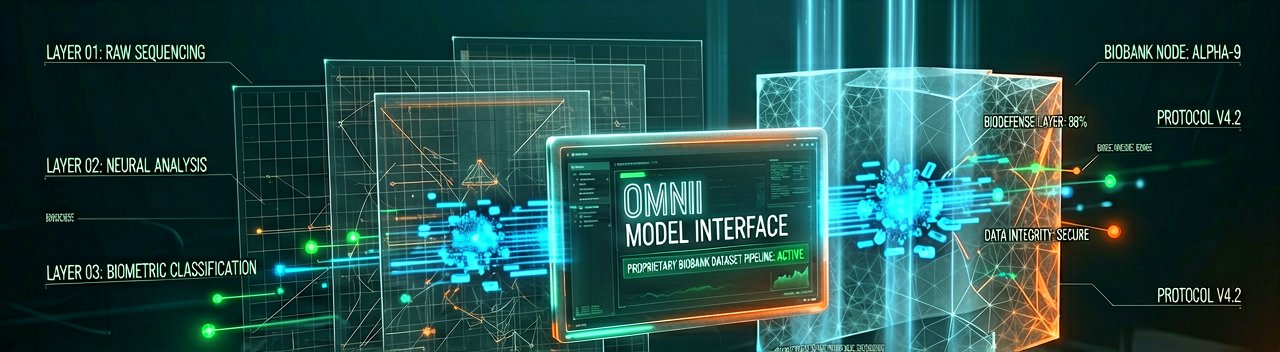
Beyond the hardware, the true battleground for general biological intelligence lies in data curation. Unlike internet text, high-quality biological data cannot simply be scraped from the web; it must be generated through meticulous, capital-intensive laboratory experimentation. Radical Numerics is quietly establishing partnerships with academic medical centers and private biobanks to feed their models diverse, deeply sequenced human datasets. This focus on proprietary data pipelines is designed to give the company a moat against larger tech conglomerates that possess infinite compute but lack the specialized biological data partnerships required to train truly predictive medical AI.
The Epistemic Chasm of Generative Biology
Reading Between the Lines: The tech sector’s intoxicating narrative of "programming biology like software" routinely glisses over a stubborn, inconvenient truth: software code is a human invention with explicit logic, while biological code is the messy byproduct of billions of years of chaotic evolution. Silicon Valley excels at pattern matching, but matching a pattern is not the same as understanding a mechanism. There is a profound risk that models like Omnii will become exceptionally skilled at generating plausible-looking biological sequences that ultimately fall apart under the brutal, unpredictable realities of wet-lab testing. Elevating biological prediction to a "general intelligence" assumes that life can be fully solved through brute-force computation, a hypothesis that many traditional molecular biologists view with deep skepticism.
Furthermore, the lab’s dual mandate of advancing innovation while simultaneously building biodefense tools presents a jarring operational contradiction. Radical Numerics is essentially positioning itself as both the architect of the digital wildfire and the chief of the fire department. While partnering with national laboratories to detect AI-generated pathogens makes for excellent public relations, the underlying reality is that the core capabilities required to neutralize a biological threat are identical to those needed to engineer one. By lowering the technical barrier to manipulating genetic code, the democratization of these foundational models inherently increases systemic risk, regardless of how many theoretical guardrails are bolted onto the final software release.
Even if the technology fulfills its loftiest technical promises, the commercial timeline is bound to collide with a regulatory infrastructure that moves at a glacial pace. The Food and Drug Administration and global regulatory bodies are built around slow, deterministic, and highly explainable clinical frameworks. They are fundamentally unequipped to evaluate probabilistic, multi-modal AI systems that cannot easily explain *why* a specific molecular design works. Until the startup can prove that its silicon-based insights reliably translate to predictable human outcomes without causing catastrophic off-target effects, this fifty-million-dollar milestone remains an expensive, albeit brilliant, opening gambit in a game that will take decades to play out.
"We are officially entering an era where AI can effortlessly draft the blueprint for a custom organism in thirty seconds flat, yet humanity still requires six months and a committee of twelve experts just to decide if a new spreadsheet format complies with corporate security policy."
Artūras Malašauskas is an AI Systems Integrator with 20+ years of production-grade web engineering experience. He has designed, shipped, and scaled enterprise Python/PHP systems for logistics, SaaS, and public-sector clients. For the past year, he has focused exclusively on AI integrations: deploying open-source LLMs, building generative media pipelines (image, audio, video), and engineering multi-agent workflows for real production environments. His standard: reproducibility, security, cost-efficient inference—no vaporware. He documents and evaluates emerging AI tooling, separating verified capabilities from marketing noise. Technical editor at: muza-ai.eu, ai-verslas.lt, ai-naujinos.lt Connect on LinkedIn
Comments