The Generative Lore Engine: How AI World-Building is Reshaping Franchise Entertainment

The traditional entertainment model of unilateral intellectual property exploitation is giving way to open-source algorithmic mythmaking. In an era where legacy content engines face fragmented audience attention, experimental AI world-building platforms are mutating into commercial sci-fi franchises that blur the lines between consumer, creator, and canon. This transition signifies a structural market shift from centralized narrative control to decentralized, endless co-creation, driven by advanced machine learning models that maintain mechanical and structural consistency across sprawling collaborative universes.
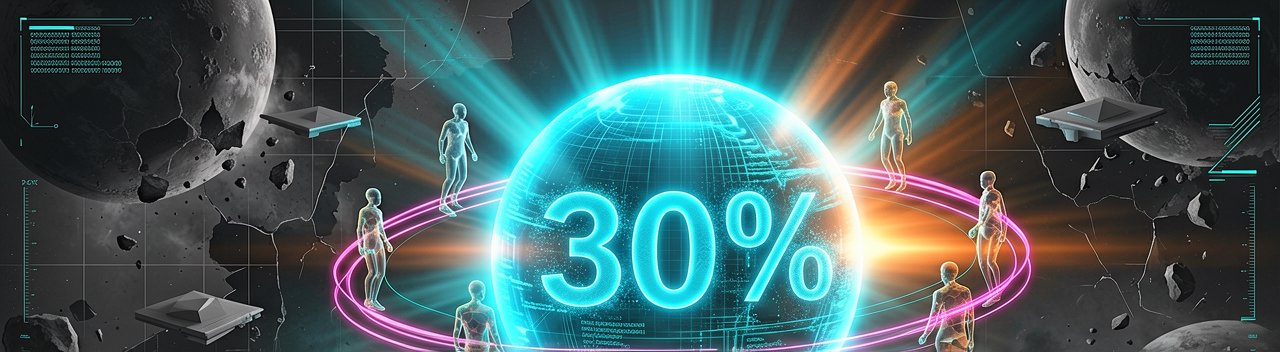
Market dynamics are shifting rapidly as tech platforms incentivize user-generated lore through native monetization models. For instance, as covered by The Verge , the AI storytelling platform Hidden Door launched its Atlas world-building tool, enabling users to architect fully interactive fictional universes while sharing 30 percent of platform subscription revenues directly with these creators. Simultaneously, capital injections from traditional tech giants are accelerating these interactive pipelines. Strategic moves like Amazon’s investment in Fable Studio's Showrunner platform, as reported by Variety, underscore an institutional betting cycle on prompt-driven streaming ecosystems where audiences instantly generate, remix, and expand animated serialized episodes within a persistent sandbox.
From Scripted Outlines to Algorithmic World Engines
The strategic shift underpins a new entertainment methodology where artificial intelligence does not act merely as an automated copywriter, but rather as an infrastructure engine for world rules, environmental logic, and character persistence. Traditional franchise development requires years of capital expenditure before an IP becomes tangible to stakeholders or audiences. Conversely, generative multimedia architectures allow textual lore bibles and visual assets to co-evolve simultaneously. Expert commentary featured on Forbes indicates that AI-native production pipelines allow creative teams to test tone, scale, and world-building variables during the earliest phases of ideation, fundamentally altering the gatekeeping mechanics of greenlighting projects.
The Economics of Collaborative Canon and IP Scalability
As these experimental sandboxes scale into cross-platform sci-fi franchises, they introduce complex operational questions regarding revenue splits and intellectual property boundaries. Platforms that successfully implement strict product user experience expectations and sustainable retention mechanics are emerging as the clear market leaders. The monetization of generative media relies heavily on lowering front-end production expenses while amplifying community-driven expansion. This dynamic allows a single core sci-fi narrative to branch into thousands of authorized, user-guided spin-offs without diluting the base brand equity. This symbiotic relationship between human intentionality and procedural scalability is establishing a new paradigm for twenty-first-century entertainment networks.
Anatomy of the Algorithmic Sandbox: Infrastructure, Intent, and the Creative Vanguard
What Most Reports Miss: The shift toward generative world-building is fundamentally an architectural challenge, not just a creative one. Historically, world-building required massive structural overhead—consider the meticulous timelines, maps, and genealogies maintained by legacy studio vaults to ensure continuity across multi-decade sci-fi universes. Today, early-stage startups and seasoned showrunners alike are replacing these static bibles with dynamic, semantic databases. These algorithmic world engines ingest textual lore, environmental rules, and character motivations, transforming them into a living framework capable of policing its own internal logic across thousands of decentralized branches simultaneously.
This technical evolution forces a complete reassessment of traditional screenwriting and creative direction. Showrunners are shifting from dictating specific dialogue or scene blocks to configuring the underlying behavioral models of an intellectual property. In this new ecosystem, a writer acts more like a systems architect, setting structural boundaries, emotional constraints, and narrative goals. When a user or co-creator interacts with the environment, the AI engine references this master framework to generate real-time narrative progressions that feel authentic to the core IP. This procedural guardrail prevents user-generated offshoots from breaking established franchise canon, solving a structural dilemma that has plagued collaborative fandoms for decades.
The operational implications are already reshaping Hollywood and the gaming sector, introducing unexpected friction between traditional labor models and emerging technology suites. Entertainment executives view these persistent engines as a mechanism to drastically reduce pre-production timelines and eliminate expensive creative bottlenecks. Meanwhile, veteran creators emphasize that without rigorous human curation and intentional design choices, procedurally generated lore quickly degrades into formulaic, repetitive narrative noise. The projects achieving early market traction are those positioning machine learning models as a conversational partner for human imagination rather than an automated replacement, keeping human intent firmly at the center of the world-building process.
Looking ahead, the long-term scalability of these sci-fi franchises depends on establishing clean, transparent data provenance. As community members inject their own narratives, characters, and subplots into a shared algorithmic universe, tracing the lineage of specific ideas becomes a vital legal necessity. Next-generation media networks are exploring automated attribution ledgers that log creative inputs at the prompt level, ensuring that if a user-generated faction or planetary system is elevated to official franchise canon, the originator is fairly credited and compensated. This systematic blending of human design, legal clarity, and algorithmic scale is laying the groundwork for a new era of decentralized entertainment ecosystems.

The Illusion of Infinite Content and the Paradox of Shared Canon
Reading Between the Lines: The entertainment industry’s current infatuation with endless, algorithmic co-creation overlooks a fundamental psychological reality of audience consumption: most people want to be told a compelling story, not assigned the collaborative homework of inventing one. While tech evangelists champion the democratization of lore, early market indicators suggest that infinite content often results in zero cultural resonance. When an algorithm can generate ten thousand valid variations of a planetary siege or a character’s backstory at the click of a button, it strips away the scarcity and deliberate intent that give cinematic milestones their gravity. A franchise that branches into a million personalized directions risks reducing immersive world-building to a solitary, echo-chamber experience that lacks shared cultural currency.
Furthermore, the structural contradiction embedded within the concept of "decentralized canon" threatens the long-term thematic stability of these franchises. Traditional narrative design relies on a singular artistic vision to engineer dramatic tension, subvert expectations, and deliver meaningful commentary. Algorithmic engines, by contrast, are mathematical models trained to optimize for historical patterns and immediate user satisfaction. This setup creates an existential feedback loop where user-guided sci-fi universes risk becoming hyper-derivative, churning out predictable tropes that please focus groups but lack the jarring, counter-intuitive creative leaps that define groundbreaking fiction. When the audience controls the boundaries of the sandbox, the narrative loses its ability to truly surprise them.
The financial math behind these procedural ecosystems also warrants intense skepticism. While minimizing front-end production costs is an attractive proposition for venture-backed entertainment startups, an infinite supply of personalized media inevitably drives individual asset value toward zero. Legacy media empires maintain multi-billion-dollar valuations because their intellectual property is scarce, universally recognized, and tightly gatekept. In a hyper-fragmented market where every consumer commands their own bespoke branch of a sci-fi universe, the communal watercooler moments that drive mainstream relevance, massive merchandise cycles, and global fandoms evaporate into personalized static.
"The ultimate irony of the generative entertainment boom is that in our rush to build the next multi-generational space opera, we may simply build a highly sophisticated software engine that allows fifty thousand people to simultaneously argue about the warp-drive physics of a starship that nobody else has ever heard of."
Artūras Malašauskas is an AI Systems Integrator with 20+ years of production-grade web engineering experience. He has designed, shipped, and scaled enterprise Python/PHP systems for logistics, SaaS, and public-sector clients. For the past year, he has focused exclusively on AI integrations: deploying open-source LLMs, building generative media pipelines (image, audio, video), and engineering multi-agent workflows for real production environments. His standard: reproducibility, security, cost-efficient inference—no vaporware. He documents and evaluates emerging AI tooling, separating verified capabilities from marketing noise. Technical editor at: muza-ai.eu, ai-verslas.lt, ai-naujinos.lt Connect on LinkedIn
Comments