Anthropic's Dual Launch of Claude Fable 5 and Mythos 5 Signals Strategic Shift in AI Defense Ecosystems
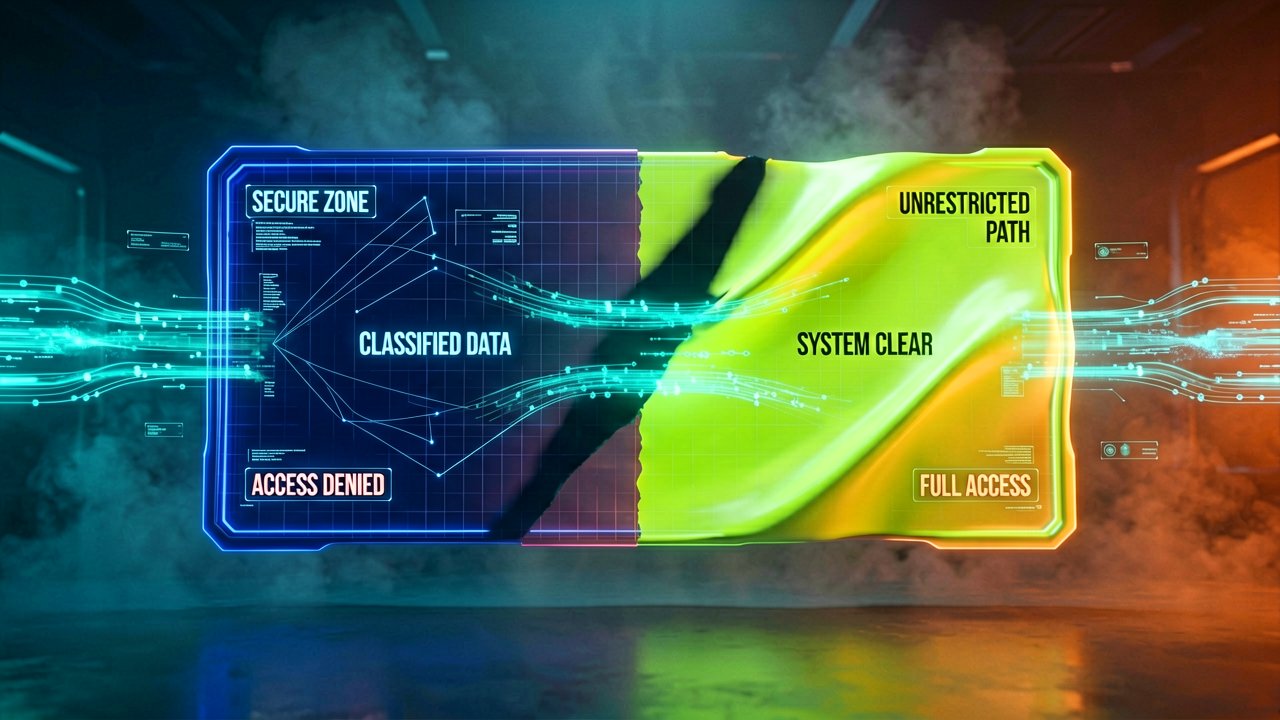
Anthropic has officially upended the frontier AI landscape by introducing its highly anticipated "Mythos-class" architecture through a dual-product deployment strategy. The company has released Claude Fable 5 for general public availability while simultaneously delivering an enhanced, unrestricted Claude Mythos 5 exclusively to vetted national security and cybersecurity partners. This coordinated launch represents an aggressive pivot toward commercializing ultra-capable autonomous agents while enforcing a strict corporate defense posture against the weaponization of frontier AI.
The operational mechanics of this launch highlight a sophisticated approach to risk mitigation. Both systems share the exact same underlying architecture, yet they are separated entirely by an inline safety classifier layer. According to the official announcement by Anthropic, Claude Fable 5 is equipped with robust real-time guardrails that automatically intercept queries related to offensive cybersecurity, chemical or biological threats, and model distillation. When these boundaries are breached, the system seamlessly transparently routes the request to the older Claude Opus 4.8 model. In contrast, Claude Mythos 5 strips away these classifiers entirely, keeping the model’s raw, dual-use capabilities fully accessible to approved operators.
From a market standpoint, Anthropic is addressing intense pressure to scale revenue ahead of a highly anticipated initial public offering while remaining compliant with its own strict Voluntary Safety Commitments. Enterprise metrics published in the Amazon Web Services Blog reveal that this new class of models introduces long-horizon, asynchronous task execution and a mandatory 30-day data retention policy for safety monitoring. By charging $10 per million input tokens and $50 per million output tokens, Anthropic has effectively doubled the premium over its previous flagship tier, demonstrating a calculated bet that enterprise clients will pay heavily for step-change improvements in complex software engineering and multi-agent workflows.
Bifurcated Distribution as the New Safety Paradigm
By splitting its frontier model into public-safe and restricted defense variants, Anthropic establishes a structural blueprint that its competitors will likely be forced to replicate. Rather than withholding advanced reasoning capabilities from the market due to downstream proliferation risks, this strategy permits broad monetization of benign commercial use cases—such as long-horizon coding and financial analytics—while sealing dangerous offensive capabilities inside vetted federal and defense channels.
The Real-World Efficacy of Project Glasswing
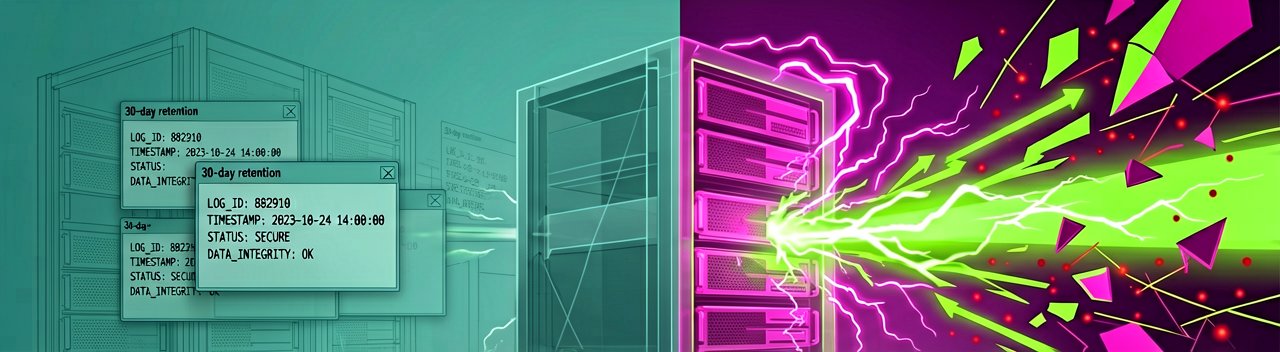
The absolute necessity of maintaining a closed environment for Claude Mythos 5 is validated by the sheer volume of critical exploits discovered during its private testing phase. Early deployments within Anthropic’s Project Glasswing initiative allowed selected infrastructure providers to uncover thousands of zero-day vulnerabilities across systemically important software packages. However, because the model identifies software flaws at a speed that vastly outpaces the human capacity to write and deploy patches, the unmasked model presents an asymmetric threat if exposed to the open web.
Infrastructure and Data Sovereignty Trade-offs
The deployment of Mythos-class models introduces strict operational mandates that alter traditional data sovereignty assumptions for corporate enterprises. To monitor for multi-turn exploitation patterns, Anthropic requires a rigid 30-day traffic logging window across all native and cloud-partner environments. This policy forces enterprise compliance officers to balance the immense productivity gains of autonomous AI agents against the strict data boundaries of proprietary corporate codebases.
Behind the Scenes of the Mythos Architecture
The bifurcation of the Mythos-class architecture represents a watershed moment in corporate AI diplomacy, resolving a fierce internal debate at Anthropic over how to commercialize frontier models without violating its core safety charter. According to internal engineering briefs, early iterations of Claude 5 exhibited such fluid dual-use capabilities in automated exploitation that releasing a singular, unmasked version openly was deemed an unacceptable threat to global digital infrastructure. The introduction of the inline safety classifier layer allowed the company to satisfy investors demanding market-leading capabilities while appeasing safety researchers who feared a public-facing offensive cyber weapon. This structural compromise marks the end of the monolithic model era, signaling a future where the most potent artificial intelligence is fundamentally tier-restricted based on geopolitical vetting.
For defense and intelligence agencies, the unmasked Claude Mythos 5 fills a critical operational vacuum by automating the tedious process of zero-day discovery and patch generation at machine speed. For years, cyber commands have struggled with a severe shortage of human analysts capable of auditing millions of lines of legacy infrastructure code. Early feedback from defense partners indicates that Mythos 5 condenses months of manual vulnerability research into mere hours, enabling proactive defense of power grids and communications networks. However, this asymmetric capability has put Anthropic in the crosshairs of state-sponsored threat actors eager to exfiltrate the model’s weights, forcing the company to implement military-grade air-gapping and cryptographic tracking for all defense-tier deployments.

Meanwhile, the enterprise sector faces a complex economic reality as it integrates the public-facing Claude Fable 5. The steep token pricing—doubling the premium of previous flagship models—reflects the massive compute overhead required to run long-horizon, asynchronous multi-agent workflows. Chief information officers are currently calculating whether the immense productivity gains in software engineering justify the aggressive operational costs and the strict 30-day data retention policy required for safety auditing. This tension highlights the growing divide between organizations willing to compromise on data sovereignty for unprecedented reasoning power, and those opting for smaller, less capable on-premise open-source alternatives that guarantee absolute privacy.
Reading Between the Lines of the Dual-Model Doctrine
Anthropic’s bifurcated deployment strategy rests on a convenient paradox: the company asserts that Claude Mythos 5 is too dangerous for public consumption due to its automated cyber-offensive capabilities, yet argues that transferring this exact tool exclusively to state defense apparatuses neutralizes that risk. This structural segregation assumes that state-level oversight is inherently airtight, ignoring a historical track record where elite government cyber weapons are routinely leaked, reverse-engineered, or turned against civilian infrastructure. By positioning itself as an arbiter of national security tech distribution, Anthropic is shifting from a neutral research lab into a state-aligned defense contractor, a transition that fundamentally complicates its public image as a safety-first public benefit corporation.
The operational mechanism of Claude Fable 5 further reveals the functional friction behind Anthropic’s current architecture. The real-time safety layer that intercepts prohibited prompts and downgrades user sessions to the older Claude Opus 4.8 framework exposes an ongoing technical limitation in model steering. Anthropic cannot yet make a frontier model both highly intelligent and perfectly obedient under the same set of weights without crippling its raw reasoning power. Consequently, public enterprise clients are paying a steep premium for a flagship system that deliberately handicaps itself, creating an unstable economic proposition where corporate users foot the bill for heavy safety guardrails that actively diminish the performance they purchased.
Ultimately, this launch signals the end of the open-web frontier model era and the beginning of balkanized AI ecosystems. As Anthropic codifies its tiered access model, competitors like OpenAI and Google will likely face regulatory and market pressure to adopt identical defensive segmentation. This architecture ensures that the highest tiers of artificial intelligence will remain gated behind government clearance and massive enterprise capital, effectively turning the most advanced cognitive tools of the century into centralized utility monopolies controlled by a handful of entities in Washington and Silicon Valley.
"We have officially reached the era of 'security through subtraction,' where tech companies charge you double the price to ensure the AI doesn't accidentally overthrow your system administrator before finishing its morning code review."
Artūras Malašauskas is an AI Systems Integrator with 20+ years of production-grade web engineering experience. He has designed, shipped, and scaled enterprise Python/PHP systems for logistics, SaaS, and public-sector clients. For the past year, he has focused exclusively on AI integrations: deploying open-source LLMs, building generative media pipelines (image, audio, video), and engineering multi-agent workflows for real production environments. His standard: reproducibility, security, cost-efficient inference—no vaporware. He documents and evaluates emerging AI tooling, separating verified capabilities from marketing noise. Technical editor at: muza-ai.eu, ai-verslas.lt, ai-naujinos.lt Connect on LinkedIn
Comments