Google DeepMind Flips the Script on Text Generation With 4x Faster DiffusionGemma
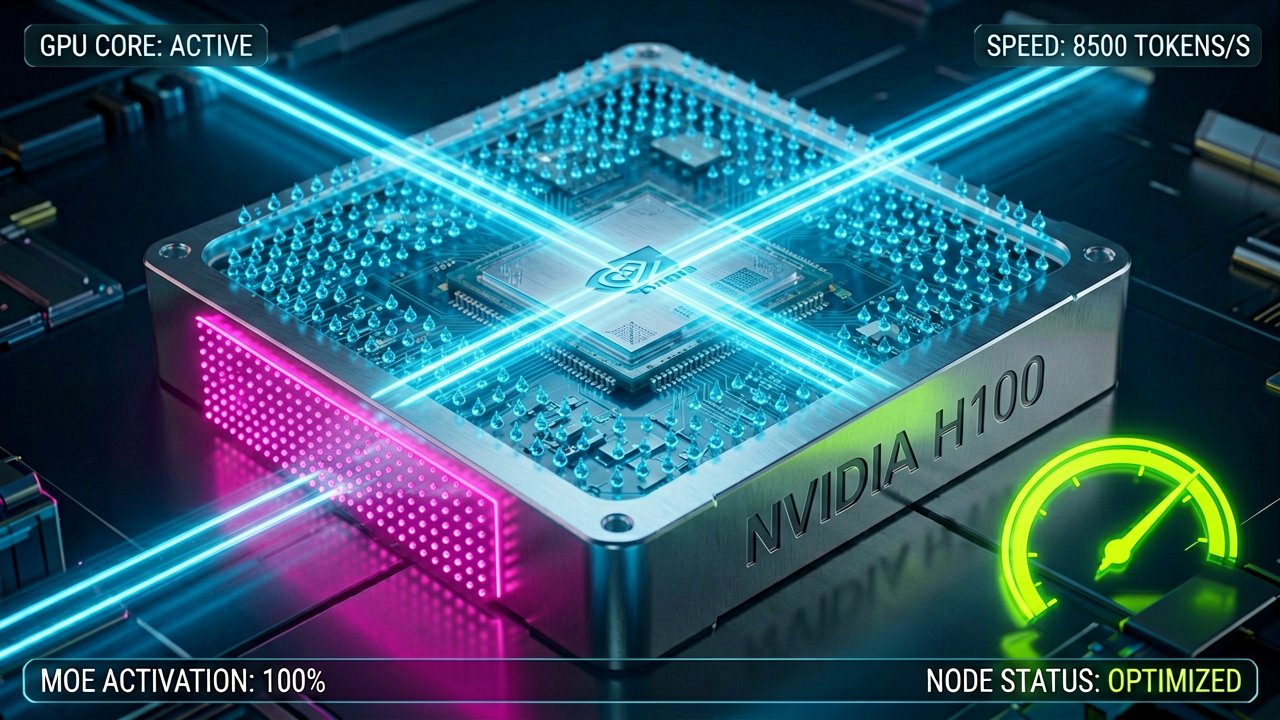
Google DeepMind completely upended conventional wisdom surrounding large language models on June 10, 2026, by launching DiffusionGemma, an experimental open-source AI architecture that abandons standard word-by-word generation in favor of text diffusion. Virtually every major language model today operates autoregressively, acting like an automated typewriter that outputs one token at a time based entirely on the preceding word. Developed in tandem with Google, this new 26-billion parameter Mixture-of-Experts (MoE) model behaves more like a printing press, generating and refining entire 256-token canvases in parallel to deliver an astonishing fourfold increase in text generation speeds on dedicated GPUs.
By making the switch from a sequential crawl to parallel denoising, DiffusionGemma shifts the primary bottleneck of local AI workloads away from memory bandwidth and onto raw compute power. When localized on consumer-tier systems or enterprise setups, traditional LLMs leave a substantial amount of GPU mathematical performance sitting idle while waiting for memory transfers. DiffusionGemma fixes this imbalance by evaluating a fully masked block of text all at once, leveraging bi-directional attention so that every single token can interact with and adjust to every other token simultaneously. This structural change lets the model continuously self-correct its output and handle complex formatting tasks in real time.
The Real-World Velocity Trade-Off
The pure hardware metrics surrounding this release are turning heads across the developer ecosystem. According to the official announcement on the Google Blog, DiffusionGemma clocks in at over 1,000 tokens per second on a single enterprise NVIDIA H100 GPU and effortlessly hits roughly 700 tokens per second on consumer hardware like the NVIDIA GeForce RTX 5090. Because it runs on a sparse MoE framework that activates only 3.8 billion parameters during inference, developers can comfortably deploy the quantized model locally within 18GB of VRAM without incurring hefty cloud serving costs.
However, that blistering speed comes with a very clear caveat that tech enthusiasts need to keep in mind. Google openly acknowledges that DiffusionGemma falls below standard, autoregressive Gemma 4 models across major intelligence and reasoning benchmarks. While it won't be replacing your favorite high-quality chatbot anytime soon, it represents an absolute game-changer for speed-critical, non-linear local workflows. For tasks requiring rapid iteration, markdown formatting, in-line text editing, or code infilling, the ability to rapidly repair a localized canvas makes this open-source release an incredibly potent tool.

What Most Reports Miss: The true genius behind DiffusionGemma is not just that it runs faster, but how it fundamentally redefines the relationship between an artificial intelligence model and local hardware. For nearly a decade, the entire tech industry has accepted memory bandwidth as the absolute, immovable ceiling for on-device AI performance. Because standard large language models must retrieve billions of parameters from high-bandwidth memory for every single word they generate, even the most powerful consumer graphic cards spend most of their time idling, starved for data. By switching to a text diffusion approach, Google DeepMind has essentially flipped this paradigm, shifting the computational burden away from memory transfer and directly onto raw processing power, unlocking the dormant math engines inside modern GPUs.
The Structural Shift in Text Infilling
To appreciate how radical this transition is, one has to look at how traditional text editing models handle modifications. In a standard autoregressive setup, if you want an AI to fix a single sentence in the middle of a long document, the model typically has to read the entire text from the beginning and rewrite everything that follows from scratch. DiffusionGemma throws that inefficient process out the window by utilizing a bi-directional attention mechanism. This allows the model to view a piece of text as an open canvas, masking out specific words or phrases and iteratively repairing them while perfectly preserving the surrounding context. It marks a monumental step forward for software development tools, where code infilling requires an acute awareness of both preceding logic and subsequent functions simultaneously.
This architectural pivot is already sparking intense debate among machine learning researchers regarding the long-term trade-offs between speed and conceptual reasoning. While DiffusionGemma achieves a blistering fourfold increase in raw token throughput, it sacrifices the deep, multi-step deliberation that gives models like Gemma 4 their analytical edge. Autoregressive models benefit from a "chain-of-thought" nature where each word builds linearly on the last, whereas diffusion models must resolve the entire meaning of a sentence all at once. Industry analysts point out that this makes the model less suited for complex mathematical proofs, but an absolute powerhouse for structured data generation, real-time translation pipelines, and interactive gaming narratives where low latency is the ultimate metric.
For enterprise developers and open-source enthusiasts, the release highlights a broader strategic shift within Google's AI division toward practical, localized utility. By engineering a sparse Mixture-of-Experts architecture that only activates 3.8 billion of its 26 billion total parameters during any given calculation, DeepMind has created a highly optimized footprint. This specific design choice ensures that the model can sit comfortably inside consumer-grade VRAM, democratizing access to high-speed AI tools. Instead of forcing businesses to rely on costly, privacy-compromising cloud APIs for basic text manipulation, DiffusionGemma signals a future where lightning-fast, highly specialized text generation can happen entirely on the edge, independent of an internet connection.

Reading Between the Lines: The dazzling benchmark figures surrounding DiffusionGemma obscure a much harsher reality that the open-source community will inevitably have to confront. Google DeepMind’s marketing heavily emphasizes the fourfold speed increase, yet this metric treats all tokens as equal, which they rarely are in practice. In traditional autoregressive models, a token represents a meaningful unit of thought, carefully weighed against previous context. In a diffusion model, many early-stage tokens are essentially semantic noise, gradually refined over multiple denoising steps. Consequently, while the raw hardware throughput looks impressive on a spec sheet, the actual semantic efficiency—the amount of useful, coherent information delivered per second—remains a highly contentious debate among early testers.
The Benchmark Paradox
This discrepancy highlights a glaring contradiction in Google's current open-source strategy. The tech giant is heavily promoting a model optimized for local, on-device execution, yet the tasks where DiffusionGemma excels, such as rapid text infilling and real-time markdown formatting, are the exact workflows that demand absolute precision. If a developer uses a local AI for code completion, a blazing-fast answer that introduces subtle logic flaws is far more costly than a slower, more deliberate response from a traditional LLM. By prioritizing compute efficiency over raw reasoning capacity, DeepMind has engineered a fascinating architectural marvel that currently lacks a clear, high-stakes killer application in the enterprise space.
Furthermore, the long-term viability of text diffusion hinges on a hardware ecosystem that may not be ready to accommodate it. While DiffusionGemma successfully bypasses the memory bandwidth bottleneck that plagues traditional models, it replaces it with an insatiable appetite for raw floating-point operations. For enterprise developers running top-tier NVIDIA H100 clusters, this shift is a welcome optimization of their existing investments. However, for the average consumer or edge-device user running mid-range hardware, the intense computational heat and power consumption generated by sustained parallel denoising could easily offset the convenience of local deployment, making cloud-based alternatives look highly attractive once again.
Ultimately, DiffusionGemma should be viewed not as a definitive product, but as an expensive, corporate-funded research experiment tossed into the wild to see if the developer community can fix its inherent flaws. Google has provided the industry with a fascinating set of blueprints for non-linear text generation, effectively outsourcing the grueling work of optimization and prompt engineering to open-source hobbyists. Whether this architecture evolves into a dominant standard or remains a niche curiosity depends entirely on whether developers can train these parallel networks to think as deeply as they sprint.
Google has effectively handed the keys to a supersonic jet that only flies in a straight line, leaving the open-source community to figure out how to build the steering wheel before it inevitably collides with a factual brick wall.
Artūras Malašauskas is an AI Systems Integrator with 20+ years of production-grade web engineering experience. He has designed, shipped, and scaled enterprise Python/PHP systems for logistics, SaaS, and public-sector clients. For the past year, he has focused exclusively on AI integrations: deploying open-source LLMs, building generative media pipelines (image, audio, video), and engineering multi-agent workflows for real production environments. His standard: reproducibility, security, cost-efficient inference—no vaporware. He documents and evaluates emerging AI tooling, separating verified capabilities from marketing noise. Technical editor at: muza-ai.eu, ai-verslas.lt, ai-naujinos.lt Connect on LinkedIn
Comments