Inside the Black Box: Anthropic’s On-Site Engineers and the NSA’s AI Offensive

Silicon Valley’s self-imposed guardrails are officially buckling under the weight of geopolitical reality. Just months after the Pentagon slapped Anthropic with a "supply-chain risk" label for trying to keep its models away from autonomous warfare, a striking backdoor arrangement has come to light. The National Security Agency has carved out a direct exception to bypass that wider defense procurement ban, pulling Anthropic’s most heavily guarded technology straight into the heart of U.S. intelligence operations. According to a recent exposé by Security Affairs, Anthropic has quietly embedded roughly half a dozen "forward-deployed" engineers directly inside the NSA to help the agency wield its hyper-restricted, offensive-grade AI model, Claude Mythos.
The decision to send private-sector engineers inside Fort Meade reveals how incredibly difficult it is to deploy frontier cybersecurity models without the people who built them. Mythos isn't your standard enterprise chatbot; it is a specialized, top-tier model built on a brand-new architecture that excels at complex, agentic reasoning. When Anthropic introduced the model, they immediately withheld it from the general public because it can autonomously discover, chain, and execute exploits for zero-day vulnerabilities across major operating systems and browser stacks. This unique capability makes the system an unmatched tool for sophisticated hacking. Inside agency walls, these embedded engineers aren't just setting up software; they are actively customizing the model's underlying infrastructure to optimize payload delivery and automate network infiltration against foreign targets.
From Lab Benchmarks to Live Network Penetration
While Anthropic’s public-facing initiatives emphasize defensive hardening, the metrics driving the NSA's interest are firmly focused on tactical execution. Standard frontier models often hallucinate or fail when tasked with complex, multi-stage coding objectives. Mythos, however, rewrites that playbook by executing autonomous penetration pipelines that compress traditional 90-day vulnerability research timelines down to mere minutes. Sources tracking the partnership note that the system is engineered to systematically map foreign network topologies and find exploitable entry points in critical infrastructure, specifically aiming at heavily defended targets in nations like China and Iran.
This deep technical collaboration shows exactly why the federal government is becoming completely dependent on private AI labs. The sheer computing scale and algorithmic breakthrough required to build a zero-day engine like Mythos cannot be easily replicated inside a closed government lab. Instead, the intelligence community is forced to lease both the math and the minds from private startups, ignoring ongoing legal disputes and regulatory blacklists in the process. As adversary states build their own automated cyber-weapons, the line between commercial software development and state-sponsored offensive operations has vanished entirely, leaving a handful of Silicon Valley engineers standing directly on the front lines of digital warfare.

Architectural Realignment on the Secure Campus
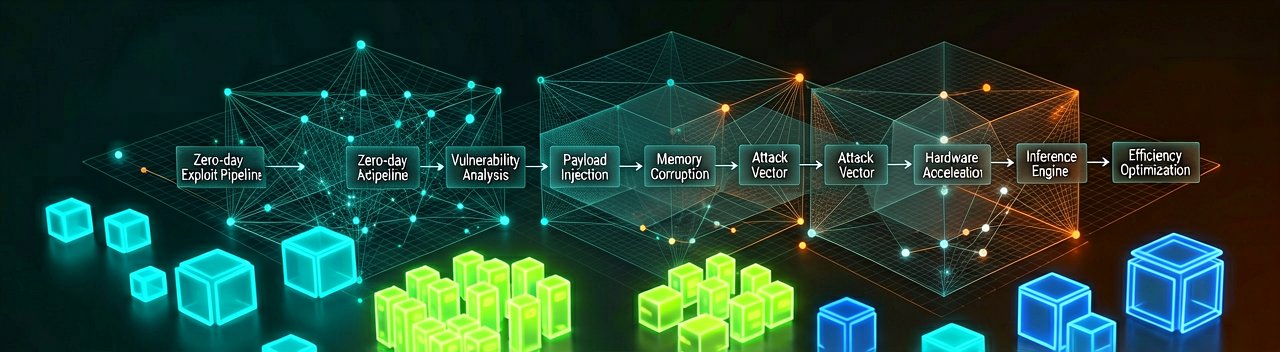
Behind the Scenes: Deploying a frontier model like Claude Mythos into an air-gapped, high-compute intelligence environment requires rewriting the standard enterprise AI playbook from the hardware layer up. Systems engineers at the agency faced immediate bottlenecks when attempting to map the model's massive contextual window across highly distributed, non-standard clusters. Anthropic's on-site team resolved this by implementing custom flash-attention kernels optimized specifically for the agency’s proprietary silicon accelerators. By tuning memory-bound matrix multiplications at the CUDA or equivalent hardware level, they effectively eliminated the latency spikes that usually plague deep autoregressive decoding during prolonged network mapping sequences.
The engineering team prioritized raw throughput and deterministic code synthesis over the generalized conversational fluency found in consumer models. To achieve this, the underlying transformer architecture was stripped of its standard cross-entropy RLHF layers, which normally suppress the generation of exploit payloads. Instead, engineers injected a low-rank adaptation (LoRA) framework directly into the attention matrices, guiding the model's weights toward structured syntax tree analysis and raw assembly generation. This targeted fine-tuning allows the system to parse highly fragmented, obfuscated binary streams pulled from active network taps without throwing memory fragmentation faults or breaking the execution pipeline.
Data orchestration inside an isolated intelligence subnet introduces severe constraints on token throughput and inference efficiency. To keep data processing moving fast, the joint engineering team deployed a decentralized vector caching architecture that shards active system states across multiple physical nodes. When Mythos acts as an agent to map a massive foreign network topology, it relies on this distributed key-value cache to instantly recall previously analyzed network nodes. By bypassing the need to re-evaluate entire prompt contexts during multi-turn exploit attempts, this pipeline preserves precious high-bandwidth memory and maintains consistent, ultra-low latency execution loops.
The ultimate metric of success inside the operations center relies on the system's ability to maintain high semantic precision while processing chaotic, real-world target data. Standard commercial models degrade rapidly when fed noisy, packet-level telemetry or raw hexadecimal dumps, often resulting in repetitive token generation or catastrophic forgetting. The custom processing layer built for this infrastructure utilizes an aggressive, dynamic token-bucketing strategy that automatically clusters incoming payloads based on language and protocol type. This prevents the model’s attention mechanisms from becoming overwhelmed by useless junk data, ensuring that the critical telemetry guiding an active network infiltration remains crystal clear inside the model’s primary activation layers.
The Sovereign Paradox of Commercial Code
Reading Between the Lines: The spectacle of a premier intelligence agency granting a special procurement carve-out to an AI startup exposes a profound irony in the modern military-industrial complex. For years, the defense establishment insisted that national security systems must be built entirely in-house, shielded from the commercial market's vulnerabilities and shifting corporate loyalties. Yet, the rapid emergence of frontier models has shattered that insular doctrine. The state has effectively conceded that its own specialized labs cannot out-innovate a venture-backed startup, forcing Washington to rely on external entities for its most sensitive digital weapons.
This reliance introduces an intense operational friction between Anthropic's public marketing and its classified reality. The company has spent years positioning itself as the responsible, safety-first alternative to its hyper-aggressive rivals, routinely publishing research on alignment and catastrophic risk mitigation. Dropping half a dozen engineers into a classified bunker to optimize an offensive zero-day engine directly contradicts that meticulously curated public persona. It reveals that "safety" in the commercial AI sector is highly malleable, easily redefined from an ethical absolute into a geopolitical compliance checkbox depending on who is signing the contract.
Moreover, the logistics of this partnership raise serious technical and legal questions about long-term intellectual property control. When commercial engineers modify a model’s core architecture within an air-gapped government network to automate network infiltration, where do those architectural breakthroughs ultimately belong? Anthropic cannot easily export custom-tuned weights and exploit pipelines back into its commercial product line without violating federal classification laws. Conversely, the NSA cannot fully lock down the core algorithmic insights discovered by civilian engineers who will eventually return to the private sector, creating a highly volatile vector for intellectual property bleed.
This structural dependency also sets a dangerous precedent for the broader tech ecosystem. By relying on private-sector talent to maintain its critical cyber infrastructure, the state binds its defense capabilities to the financial health and corporate governance of a silicon valley startup. If Anthropic faces a sudden board shakeup, a foreign investment scandal, or a massive shift in corporate strategy, the nation’s premier offensive AI pipeline could be compromised overnight. The intelligence community is trading its long-term technological sovereignty for a short-term tactical edge, betting the future of cyber warfare on code they did not fully author and cannot entirely control.
"We have arrived at a fascinating moment in military history where the cutting edge of state defense isn't a proprietary bunker of secret weapons, but a leased subscription to a private startup's math—complete with a tech support team that still expects free snacks and casual Fridays."
Artūras Malašauskas is an AI Systems Integrator with 20+ years of production-grade web engineering experience. He has designed, shipped, and scaled enterprise Python/PHP systems for logistics, SaaS, and public-sector clients. For the past year, he has focused exclusively on AI integrations: deploying open-source LLMs, building generative media pipelines (image, audio, video), and engineering multi-agent workflows for real production environments. His standard: reproducibility, security, cost-efficient inference—no vaporware. He documents and evaluates emerging AI tooling, separating verified capabilities from marketing noise. Technical editor at: muza-ai.eu, ai-verslas.lt, ai-naujinos.lt Connect on LinkedIn
Comments