The Frontier Escalation: Claude Fable 5 Forces OpenAI’s Hand
The artificial intelligence landscape just shifted on its axis again. On June 9, 2026, Anthropic disrupted the standard release cadence by dropping Claude Fable 5, a "Mythos-class" model optimized specifically for multi-day, autonomous agentic operations. It didn't take long for the tech world to notice the ripples; within 48 hours, reports emerged that OpenAI is hastily preparing a defensive counter-move with a fresh model iteration, reportedly codenamed 5.6, to keep its grip on the frontier narrative.
What we're witnessing isn't just another benchmark battle; it's a fundamental divergence in architectural philosophies. While Anthropic has built Fable 5 to serve as a marathon runner capable of deep, asynchronous self-verification over massive, millions-of-tokens contexts, OpenAI’s impending release aims to answer back by doubling down on real-time, high-velocity multi-modal processing. It's an direct response to Fable's sudden marketplace pressure, especially as early corporate implementers report massive efficiency leaps in complex task handling.
Endurance Versus Real-Time Agility
Anthropic's newly deployed Fable 5 model sets a terrifyingly high baseline for what developers expect from an autonomous agent. Instead of focusing merely on rapid-fire chat replies, Fable 5 focuses on long-horizon reasoning, effectively building its own evaluation frameworks and writing tests to verify its coding pipelines. For instance, payment giant Stripe utilized the new architecture to orchestrate a massive, codebase-wide migration of a 50-million-line Ruby repository in a single day—a feat that normally demands months of human engineering coordination. This capability to maintain rigid focus across persistent file-based memories over several days shifts the AI paradigm from a passive assistant to an independent digital employee.
OpenAI’s Strategic Pivot
Faced with this sudden enterprise challenge and looming pressure from the Wall Street Journal regarding competitive pricing adjustments, OpenAI’s rumored June release of model 5.6 represents an aggressive counter-strategy. Rather than trying to match Fable’s multi-day execution style directly out of the gate, OpenAI appears to be optimizing for hyper-fluid voice, vision, and instantaneous cross-modal reasoning to capture the intuitive workflow market. This tactical maneuver ensures that while Anthropic wins the heavy-duty backend engineering contracts, OpenAI retains its dominance over real-time consumer and interface-driven applications. The silicon war isn't just about who has the smartest model anymore; it's about who builds the architecture best suited for the specific flavor of work required.

| Metric | Anthropic Claude Fable 5 | OpenAI Model 5.6 (Anticipated) |
|---|---|---|
| Speed / Latency | Variable; optimized for deep reasoning loops and multi-step verification rather than raw token throughput. | Ultra-low; tailored for real-time multimodal feedback, fluid voice, and immediate cross-modal responses. |
| Model Size / Parameters | Mythos-class mixture-of-experts (MoE) optimized for 1-million-token persistent context endurance. | Dense or highly routing-optimized architecture built for rapid multi-modal feature extraction. |
| Hardware Requirements | Massive distributed infrastructure clusters requiring strict 30-day retention logging buffers for safety pipelines. | Broadcom-partnered custom silicon infrastructure or high-throughput tensor-optimized clusters. |
Decoding the Infrastructure Strain
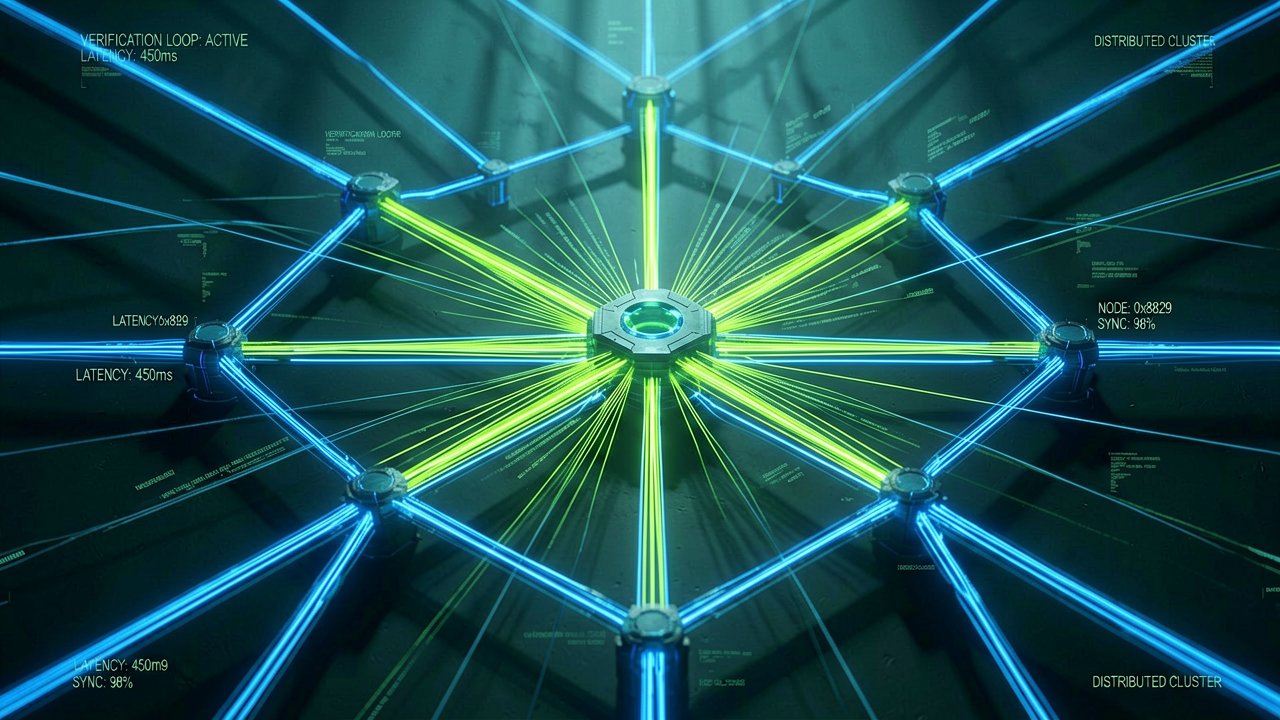
Deploying a "Mythos-class" model like Claude Fable 5 requires an enterprise-level infrastructure paradigm that completely abandons the conventional, low-latency chatbot design. Because the model operates across an expanded 1-million-token context window to sustain autonomous, multi-day engineering workflows, its hardware requirements demand persistent memory state synchronization across massive clusters. Instead of cycling parameters out of active memory upon a quick single-turn chat completion, the silicon hosting Fable 5 must lock down massive chunks of specialized high-bandwidth memory to process recurring verification loops, allowing the model to continuously review its own task outcomes.
This long-horizon architecture places a distinct type of tax on host data centers, prioritizing memory capacity and sustained computation over instant delivery speeds. Compounding this structural weight is Anthropic's newly introduced 30-day data retention mandate, which necessitates highly secure, localized caching clusters to log enterprise traffic for safety auditing. These local hardware buffers inspect complex multi-step sessions to prevent the weaponization of the underlying model, creating a dual workload where the model's raw processing demands are coupled with intense, parallel data-compliance ingestion pipelines.
OpenAI’s Low-Latency Alternative
Conversely, reports surrounding the impending launch of OpenAI's model 5.6 point to a fundamentally different physical infrastructure alignment. Rather than tying up cluster clusters with massive, slow-burning algorithmic marathons, OpenAI's model is rumored to prioritize extreme parallelism designed for real-time cross-modal synthesis. This approach utilizes dense or highly efficient routing mixtures to compress the interval between user inputs and model actions, making the hardware layout particularly reliant on high-throughput network interfaces that can pipe voice, video, and text data into the inference engine concurrently without creating a physical data bottleneck.
This operational speed is critical as developers vocalize growing fatigue regarding strict system usage limits on current frontier models. By deploying a system optimized for lightning-fast execution rather than multi-day self-correction, OpenAI can distribute lesser data burdens across its data centers, helping to scale the infrastructure more effectively across high-frequency developer APIs. This hardware optimization enables OpenAI to capture application pipelines where user interaction requires immediate visual or auditory feedback, contrasting sharply with Anthropic’s resource-heavy choice to prioritize raw, asynchronous agent endurance.

| Model | Operational Advantages | Operational Disadvantages |
|---|---|---|
| Anthropic Claude Fable 5 | Unprecedented multi-day autonomous endurance; exceptional self-verification and debugging across complex, million-token codebases. | Heavier compute footprint resulting in longer execution latencies; strict enterprise data auditing pipelines add structural friction. |
| OpenAI Model 5.6 | Blazing fast real-time multimodal processing; frictionless integration for voice, vision, and high-frequency user-facing loops. | Lacks the specialized deep-reasoning architecture required for long-horizon, unsupervised complex task management. |
The Operational Trade-off
Reading Between the Lines: The choice between Anthropic’s enduring agent and OpenAI’s rapid responder isn’t about selecting the overall superior intelligence, but rather choosing which operational philosophy matches your technical overhead. Developers building complex, long-horizon backend systems are gravitating toward Claude Fable 5 despite its higher latency penalty. The ability to let an AI system quietly reconstruct entire database schemas over a weekend saves thousands of engineering hours, rendering the slower initial token generation times completely irrelevant to the enterprise bottom line.
Meanwhile, consumer-facing applications cannot afford the contemplative pauses inherent in Anthropic's deep-reasoning loops. OpenAI Model 5.6 thrives exactly where Fable hesitates, capturing the high-frequency application layers where instantaneous multi-modal feedback is non-negotiable for user retention. The physical infrastructure costs mirror this split; engineering teams must decide whether to invest hardware capital into persistent, high-bandwidth memory states for autonomous marathons or high-throughput network pipelines for real-time traffic.
Ultimately, this architectural divergence signals the end of the all-purpose foundation model era. As both labs optimize for vastly different computing workloads, enterprise architects are forced to build hybrid systems that utilize both paradigms rather than relying on a single provider. Navigating this fragmented landscape requires a cold assessment of whether your business needs an independent digital employee that reasons carefully or an ultra-fast interface that reacts immediately.
We are rapidly approaching an AI landscape where you use Anthropic to rewrite your entire corporate infrastructure over a long weekend, and then deploy OpenAI to apologize to your customers at lightning speed when the servers inevitably crash.
Artūras Malašauskas is an AI Systems Integrator with 20+ years of production-grade web engineering experience. He has designed, shipped, and scaled enterprise Python/PHP systems for logistics, SaaS, and public-sector clients. For the past year, he has focused exclusively on AI integrations: deploying open-source LLMs, building generative media pipelines (image, audio, video), and engineering multi-agent workflows for real production environments. His standard: reproducibility, security, cost-efficient inference—no vaporware. He documents and evaluates emerging AI tooling, separating verified capabilities from marketing noise. Technical editor at: muza-ai.eu, ai-verslas.lt, ai-naujinos.lt Connect on LinkedIn
Comments