The Silicon Shift: How Micron and SanDisk Upstaged Nvidia in the 2026 AI Arms Race
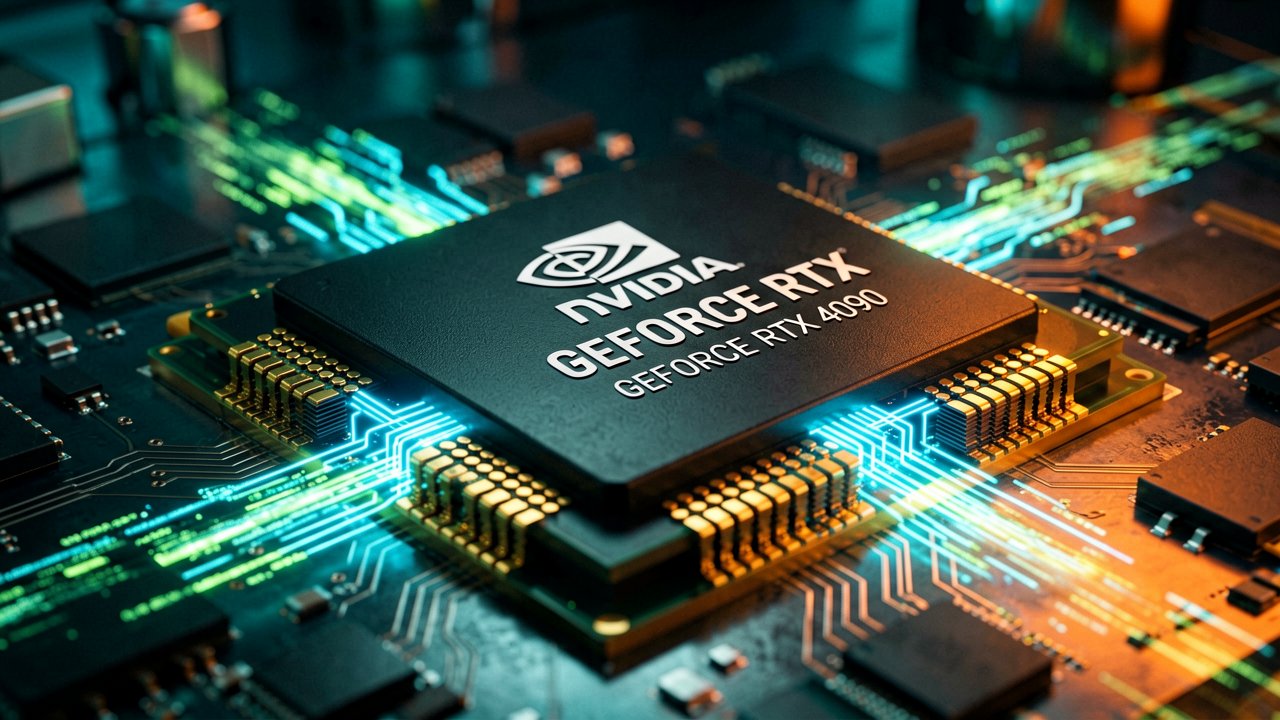
For the past few years, Wall Street treated Nvidia as the undisputed king of artificial intelligence, but the narrative has shifted dramatically in the first half of 2026. While Nvidia has logged a modest 12% gain this year, memory hardware titans Micron Technology and SanDisk have absolutely crushed the market benchmark. Propelled by a brutal, global memory chip shortage, Micron's stock has surged by 228%, while SanDisk has engineered a mind-boggling rally of nearly 600%, making them the hottest buys on the Nasdaq-100 according to financial tracking by The Motley Fool .
This explosive divergence highlights a fundamental transition in data center economics from raw processing velocity to data architecture throughput. Nvidia's graphic processors remain the golden standard for training massive generative models, but modern AI workloads are choking on data bottlenecks. Hyperscalers have realized that supercomputers cannot operate efficiently if processors sit idle waiting for data, a realization that has triggered an unprecedented capital rush toward high-performance storage and high-bandwidth memory architectures.
Divergent Architectures: High-Bandwidth Memory vs. Enterprise NAND
The core technological baseline separating these market contenders lies in how they handle data pipeline mechanics. Nvidia designs the logic processors that compute data, whereas Micron and SanDisk dominate the storage media where that data lives. Micron has established a commanding position by manufacturing both dynamic random-access memory (DRAM) and NAND flash storage. Its advanced High-Bandwidth Memory (HBM) chips are stacked vertically and integrated directly alongside AI accelerators, providing the blistering bandwidth necessary for real-time AI processing.
SanDisk, following its high-profile structural separation from its legacy parent corporation, operates as a pure-play NAND flash powerhouse. Unlike Micron, SanDisk focuses its engineering entirely on solid-state drive (SSD) innovations for long-term architecture, capitalizing heavily on the transition away from mechanical enterprise hard drives as reported by MarketMinute. Because AI inference workloads require rapid retrieval from monolithic datasets, enterprise-grade flash storage has shifted from a generic commodity into a mission-critical component of AI data center buildouts.
Technical Specifications Matrix
| Metric | Nvidia (Logic Accelerators) | Micron (High-Bandwidth Memory) | SanDisk (Enterprise Flash) |
|---|---|---|---|
| Speed / Latency | Sub-nanosecond compute cycles; high execution velocity bound by memory access time. | Ultra-low latency with terabytes-per-second bandwidth directly on the interposer. | Microsecond-level latency; built for sustained, high-throughput block storage reads. |
| Model Size / Parameters | Executes models from billions to trillions of parameters; requires distributed clusters for massive layers. | Caches active layers of trillion-parameter models locally to keep processing cores saturated. | Stores petabyte-scale training sets, foundational weights, and massive checkpoints cold or warm. |
| Hardware Requirements | Requires complex liquid cooling infrastructure, high-wattage power delivery, and PCIe/NVLink fabrics. | Demands advanced 2.5D/3D packaging technology and precise thermal management next to the logic die. | Utilizes standard U.3 or EDSFF form factors running on high-lane PCIe Gen5/Gen6 storage buses. |
Decoding the Silicon Pipeline
The operational divide highlighted by these specifications underpins why data center economics have shifted so radically. Nvidia’s graphics processing units are engineered for pure computational throughput, packing thousands of arithmetic logic units into a single piece of silicon. However, these processing cores are notoriously starved for data. If the memory bus cannot feed instructions to the processor fast enough, the hardware falls into an expensive idle state, wasting electricity and extending training timelines for large language models.
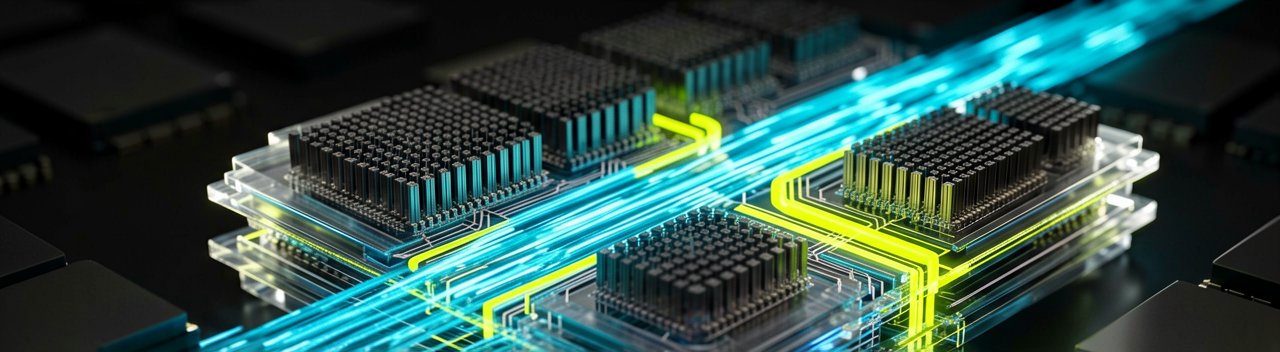
This is exactly where Micron’s technology steps in to bridge the performance chasm. High-Bandwidth Memory circumvents the traditional bottlenecks of standard system memory by stacking DRAM dies vertically and connecting them through microscopic wires known as through-silicon vias. By placing this stack on a shared substrate directly next to the Nvidia processor, the physical distance data must travel shrinks from inches to millimeters. This architectural proximity unlocks the terabytes-per-second bandwidth required to keep trillion-parameter models resident in active memory during complex inference cycles.
Further down the pipeline, SanDisk handles the massive capacity layers that neither logic chips nor volatile memory can accommodate. Before a model can be trained or cross-referenced, hundreds of petabytes of unstructured text, video, and corporate data must be stored reliably. Traditional spinning hard drives are simply too slow to feed modern AI pipelines, which has forced a massive data center migration toward enterprise-grade solid-state drives. SanDisk’s high-density 3D NAND technology packs multiple bits per cell across hundreds of vertical layers, offering the dense, non-volatile storage fabric needed to house raw datasets and model checkpoints.
Ultimately, these three technologies function as a tightly interdependent triad rather than isolated competitors. While Nvidia provides the cognitive muscle to process AI algorithms, the actual velocity of the system depends entirely on Micron's ability to cache the active workload and SanDisk’s capacity to stream the foundational data. The shifting financial valuations in the market reflect a broader industry realization that processing power is only as valuable as the storage and memory architectures supporting it.

Editorial Pros & Cons
| Provider | Operational Advantages | Operational Disadvantages |
|---|---|---|
| Nvidia | Unrivaled ecosystem dominance via CUDA; industry-standard software optimization; highest market mindshare. | Exorbitant acquisition costs; crushing power consumption; high vulnerability to architectural pivots. |
| Micron | Irreplaceable hardware layer for HBM architectures; pricing power during chip deficits; massive margin expansion. | Vulnerable to commodity memory cyclicality; immense capital expenditure required for fab scaling. |
| SanDisk | Pure-play focus on dense NAND scaling; cost-efficient storage per gigabyte; vital for petabyte-scale data ingestion. | Lower barrier to entry than logic chips; pricing remains highly sensitive to global flash oversupply. |
The Balance of Power in Silicon Valley
Reading Between the Lines: The dramatic shifts in the tech stock landscape prove that building the fastest brain in the world means absolutely nothing if the nervous system cannot deliver data to it fast enough. Nvidia’s multi-year monopoly on AI compute created a massive gold rush, but it also masked a structural imbalance in infrastructure spending. Hyperscalers spent billions buying up elite accelerators, only to find their ultra-expensive infrastructure choking on data bottlenecks, stalling operations while processors waited for storage subsystems to catch up.
This reality check is exactly what fueled the massive resurgence of Micron and SanDisk. Micron’s capacity to command astronomical premiums for its high-bandwidth memory modules shows that computing speed is now inextricably bound to memory limits. By embedding high-bandwidth memory directly alongside processors, they have turned hardware packaging into the ultimate choke point of AI scaling. The companies that control this integration wield immense leverage over the entire tech ecosystem, dictating deployment timelines for the next generation of artificial intelligence.
Meanwhile, SanDisk’s strategy highlights the unglamorous but utterly essential world of enterprise storage fabric. While high-level logic design captures the public imagination, AI data training models are fundamentally data-hungry monsters that require petabytes of persistent storage to live on. Moving away from legacy mechanical hard drives toward high-speed enterprise flash architecture is no longer an optional upgrade for modern server farms. It is a critical baseline requirement to prevent massive training operations from grinding to a halt during checkpoint intervals.
Looking ahead, the longevity of this hardware supercycle hinges on whether these storage providers can manage their historical vulnerability to market oversupply. The semiconductor industry has always been notoriously cyclical, characterized by periods of aggressive factory expansion followed by sudden, crushing price collapses. If Micron and SanDisk overplay their hand and build too much manufacturing capacity, they risk turning their current high-margin premium products back into cheap tech commodities, regardless of how much data the artificial intelligence boom demands.
Designing a trillion-parameter artificial intelligence model to run on yesterday's memory architectures is the tech equivalent of dropping a Ferrari engine inside a rusty riding lawnmower and wondering why you aren't winning the Grand Prix.
Artūras Malašauskas is an AI Systems Integrator with 20+ years of production-grade web engineering experience. He has designed, shipped, and scaled enterprise Python/PHP systems for logistics, SaaS, and public-sector clients. For the past year, he has focused exclusively on AI integrations: deploying open-source LLMs, building generative media pipelines (image, audio, video), and engineering multi-agent workflows for real production environments. His standard: reproducibility, security, cost-efficient inference—no vaporware. He documents and evaluates emerging AI tooling, separating verified capabilities from marketing noise. Technical editor at: muza-ai.eu, ai-verslas.lt, ai-naujinos.lt Connect on LinkedIn
Comments