Mastercard Opens the Transaction Loop to Machines with Agent Pay
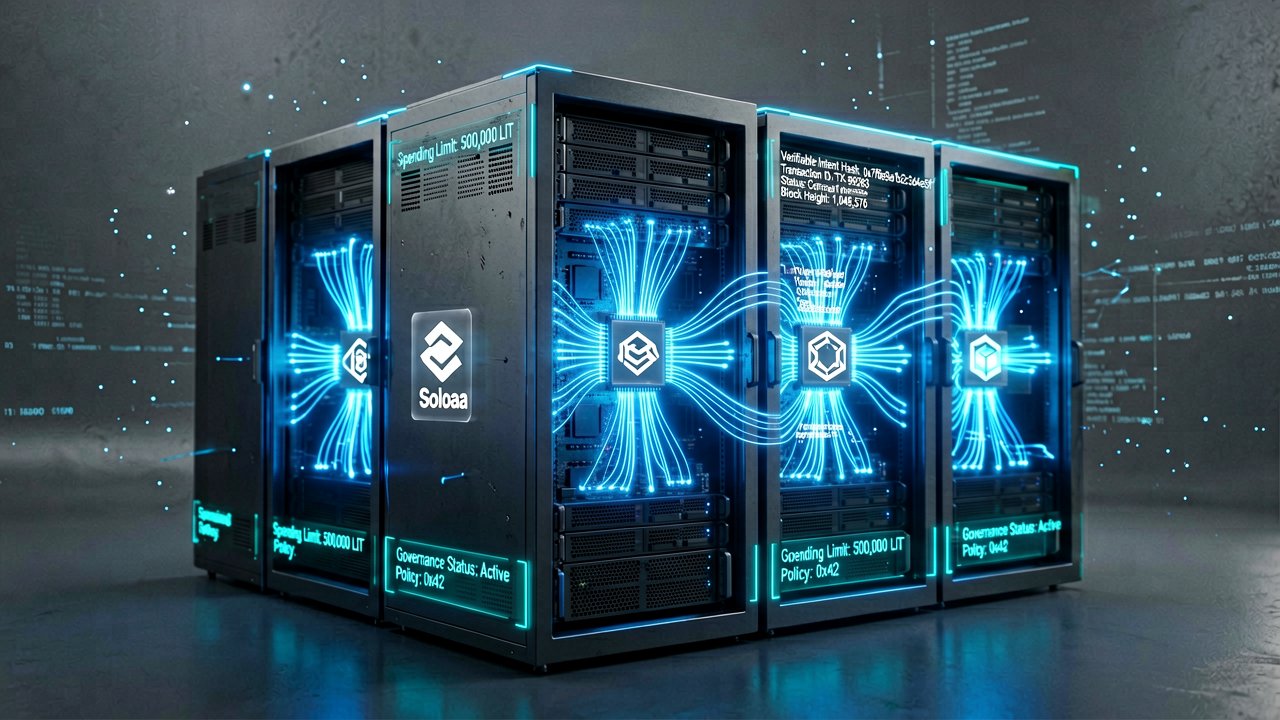
The payments landscape just crossed a quiet but monumental threshold into a world where humans are no longer required at checkout. On June 10, 2026, credit giant Mastercard officially launched Agent Pay for Machines (AP4M), an industry-first network protocol built explicitly to let autonomous artificial intelligence agents pay one another. This isn’t about a smarter chatbot helping you buy groceries; it’s a radical shift toward a background economy where software programs act as independent financial entities, handling micro-transactions at machine speed without human intervention.
Mastercard isn’t venturing into this machine-to-machine wild west alone. The card giant has assembled an aggressive coalition of more than 30 launch partners across the fintech, cloud, and Web3 sectors, recruiting heavyweights like Stripe, Adyen, Cloudflare, and Coinbase, alongside decentralized networks like the Solana Foundation and Polygon Labs. In practice, the system allows a corporate AI agent—say, a bot tasked with launching a new business website—to programmatically hire and pay separate, specialized AI agents for hosting, graphic design, and copywriting. It chunks a single human prompt into a continuous, background cascade of frictionless micropayments, some worth only fractions of a cent, that traditional credit card networks were simply never designed to handle.
Building the Security Guardrails for Automated Wallets
Letting autonomous code control corporate capital sounds like a security nightmare, which is why the underlying architecture relies heavily on strict, cryptographic governance. Instead of tracking permissions in a vulnerable, closed corporate database, Mastercard is leveraging public blockchains like Base, Solana, and Polygon to log the precise boundaries of what each bot is authorized to do. By anchoring these rules to an open ledger, external merchants and applications can instantly verify that a transacting bot isn't going rogue before they accept its payment.
The framework operates on four distinct operational pillars designed to mimic the trust of traditional cardholder verification. Every system is assigned a digital credential linked directly to its human or corporate owner via a feature called Verifiable Intent, allowing the network to distinguish verified agents from malicious scripts. Furthermore, businesses can enforce precise, programmatic spending limits and rules. This means a logistics bot routing cargo can seamlessly settle warehouse handling fees and purchase cold-chain data on the fly, but it won’t have the financial freedom to drain its parent company's broader bank accounts or stablecoin reserves.
The Long Game for Non-Human Commerce
This initiative represents a direct maturation of the basic consumer-facing Agent Pay program that Mastercard debuted back in 2025. While that initial effort focused on allowing AI tools to make purchases on behalf of individual shoppers, AP4M targets a far more lucrative and scalable B2B market where machines act as the primary economic actors. Because the transactions are programmatic, they bypass traditional web checkout pages entirely, paving the way for massive payment volumes operating at near-zero latency.
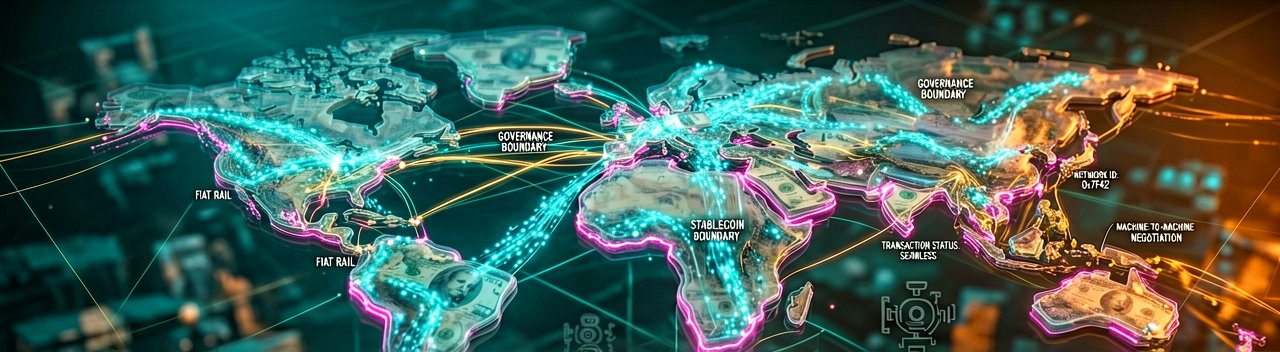
Though financial analysts don't expect machine-to-machine commerce to wildly alter Mastercard’s revenue sheets by next quarter, the strategic implications for the broader payments industry are massive. Competitors like Visa and tech giants like Google have been racing to claim territory in the automated economy, but Mastercard’s broad multi-rail settlement approach gives it an early edge. By supporting seamless, guaranteed settlement across traditional credit cards, standard bank accounts, and regulated stablecoins, the company is quietly repositioning its legacy network to serve as the default infrastructure for an economy increasingly managed by algorithms.
Beyond the PR Glitz: The true friction in automating commerce isn't the technological plumbing of sending pennies from Bot A to Bot B; it's the legal and systemic liability of who takes the fall when a machine hallucinates a bad deal. For decades, consumer credit has lived under the comforting umbrella of Regulation E and chargeback rights, where a human could call their bank, claim fraud, and get their money back. In an autonomous machine-to-machine loop running thousands of transactions per second, that safety net fundamentally breaks down. If a logistics agent mistakenly overpays a cloud service provider by ten grand because of a minor API misinterpretation, Mastercard's legacy dispute resolution framework is utterly useless, forcing the industry to invent a new breed of automated compliance on the fly.
The Real-Time Liquidity Trap
Traditional banking operations rely heavily on the luxury of time, using overnight batch processing and multi-day settlement windows to catch anomalies and manage liquidity. Machine commerce, by contrast, operates on the assumption of immediate finality, demanding that capital move at the exact speed of compute power. If an AI agent requires real-time data to optimize a trading algorithm, it cannot wait three business days for an ACH transfer to clear before accessing that data silo. Mastercard is attempting to solve this structural mismatch by leaning into multi-rail settlement, allowing the protocol to bypass the slow gears of legacy banking whenever a transaction demands immediate execution through stablecoins or instant-payment rails.

This rapid shift toward immediate settlement introduces an intense operational strain for corporate treasurers who are used to predicting cash flows weeks in advance. Under the Agent Pay model, corporate bank accounts become dynamic pools constantly drained and replenished by automated scripts optimizing logistics, supply chains, and cloud infrastructure. Financial officers are suddenly forced to treat cash liquidity less like a static monthly budget and more like server bandwidth, keeping a constant eye on machine consumption metrics to prevent automated payment failures from grinding critical business workflows to a sudden halt.
The Threat to the Open Web's Ad-Based Economy
Looking at the bigger picture, the rise of autonomous machine transactions threatens to quietly dismantle the fundamental business model of the consumer internet. For a quarter of a century, the web has functioned on an implicit barter system where users view advertisements in exchange for free content and services. But when AI agents become the primary entities browsing the web, scraping data, and aggregating services, the traditional ad-supported model collapses entirely because software bots don't buy shoes from sidebar banners. Mastercard’s machine payment protocol provides the alternative infrastructure, replacing the ad-click economy with a web of micro-subscriptions where bots seamlessly pay fractions of a cent for every piece of data they ingest.
This structural evolution effectively splits the digital landscape into two distinct tiers: an older, ad-cluttered web built for cash-strapped humans, and a premium, API-driven backend where machines trade pristine data with other machines for a fee. While tech evangelists celebrate this as a triumph of economic efficiency, it raises serious competitive hurdles for smaller developers and independent publishers. Without the massive capital reserves required to plug into these elite, automated payment networks, independent creators risk being entirely locked out of the machine economy, leaving the future of automated commerce firmly in the hands of dominant tech conglomerates and enterprise financial institutions.
Reading Between the Lines: The tech industry’s grand narrative for autonomous commerce paints a utopian picture of flawless algorithmic efficiency, but it conveniently ignores the messy reality of software engineering. Proponents claim that cutting humans out of the loop will eliminate transaction friction, yet they fail to account for the unpredictable friction generated by bad code. Software updates break APIs, cloud servers suffer outages, and AI models frequently misinterpret their operational boundaries. Depositing financial trust into a network of autonomous agents assumes a level of system reliability that simply does not exist in the real world, turning every minor software bug into a potential corporate treasury crisis.
The Paradox of Decentralized Trust on Legacy Rails
There is a glaring contradiction at the heart of Mastercard’s new machine-to-machine architecture. The protocol relies heavily on public, decentralized blockchains like Solana and Polygon to log governance rules and verify agent identities, yet the ultimate settlement of high-value transactions still depends on heavily centralized financial institutions. This hybrid approach attempts to marry the trustless, automated ethos of Web3 with the rigid, risk-averse compliance structures of Wall Street. In practice, this creates a volatile bottleneck where swift, blockchain-verified machine logic inevitably collides with slow-moving corporate compliance checks and anti-money laundering regulations.
This structural friction becomes highly problematic when trying to scale automated micro-transactions across international borders. While an AI agent can execute a smart contract in milliseconds, the underlying fiat currency movement must still navigate a complex web of central bank policies, capital controls, and fluctuating foreign exchange rates. By forcing decentralized machine identities to comply with legacy financial frameworks, the system introduces a layer of regulatory vulnerability that could easily trigger automated account freezes. Instead of a smooth, friction-free global marketplace, businesses may find themselves managing a chaotic web of halted transactions and algorithmic false positives.
An Inevitable Shift in Market Monopolies
Over the long term, the widespread adoption of machine-to-machine payments will likely consolidate market power rather than democratize it. While the protocol is marketed as an open toolkit for businesses of all sizes, the sheer capital required to train, deploy, and maintain autonomous financial agents naturally favors dominant tech giants. Small and mid-sized enterprises lack the engineering resources to build robust, self-governing AI systems that can safely navigate automated marketplaces. Consequently, the machine economy risks becoming an exclusive playground where a handful of tech conglomerates control both the autonomous software agents and the digital storefronts they frequent.
Furthermore, this shift fundamentally redefines the concept of consumer choice. When human shoppers delegate their purchasing decisions to algorithmic buyers, they surrender personal agency to the hidden optimization metrics of a software developer. AI agents will naturally prioritize vendors that offer the cleanest API documentation and the fastest machine checkout, completely locking out traditional merchants who rely on visual branding and human relationships. Mastercard’s new network doesn't just automate the existing economy; it actively reshapes the marketplace to reward cold, programmatic compatibility over human-centric value.
We have spent decades teaching humans how to avoid internet scams, only to build a brand-new financial system optimized for software bots to efficiently rob each other at the speed of light while corporate lawyers desperately look for the off switch.
Artūras Malašauskas is an AI Systems Integrator with 20+ years of production-grade web engineering experience. He has designed, shipped, and scaled enterprise Python/PHP systems for logistics, SaaS, and public-sector clients. For the past year, he has focused exclusively on AI integrations: deploying open-source LLMs, building generative media pipelines (image, audio, video), and engineering multi-agent workflows for real production environments. His standard: reproducibility, security, cost-efficient inference—no vaporware. He documents and evaluates emerging AI tooling, separating verified capabilities from marketing noise. Technical editor at: muza-ai.eu, ai-verslas.lt, ai-naujinos.lt Connect on LinkedIn
Comments