Nextcloud Hub Gets Massive Upgrade with Euro-Office Integration and Smarter AI Automation
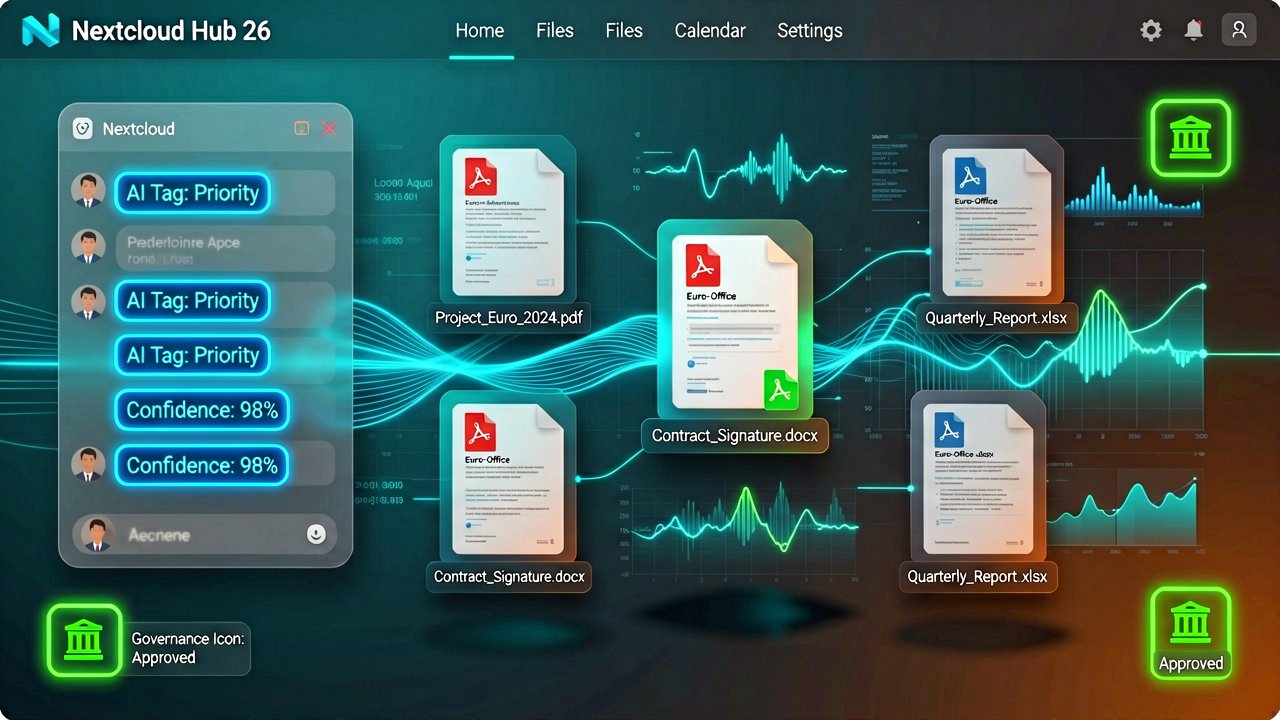
Europe’s push for digital sovereignty just took a massive leap forward. On June 9, 2026, open-source pioneer Nextcloud launched its Hub 26 Spring workplace suite, introducing a natively integrated alternative to dominant American office software. The star of the show is Euro-Office, a freshly minted, fully sovereign office suite born out of a continent-wide industry coalition that includes tech heavyweights like Nextcloud and IONOS. By weaving this web-based collaborative editor directly into its platform, Nextcloud is offering enterprises a genuine escape hatch from the data privacy anxieties of foreign-hosted cloud ecosystems.
But the update is far from just a localized document editor. Nextcloud is also aggressively doubling down on private artificial intelligence by supercharging its built-in AI Assistant. Recognizing the strict compliance boundaries forced by the EU AI Act, the updated assistant features transparent large language model tagging so organizations always know exactly where their data is being processed. It also debuts a slick sidebar chat interface inside the suite, allowing teams to troubleshoot complex spreadsheet math or draft clean copy without ever leaking internal company communications to external third-party servers.
Compliance Meets Seamless Automation
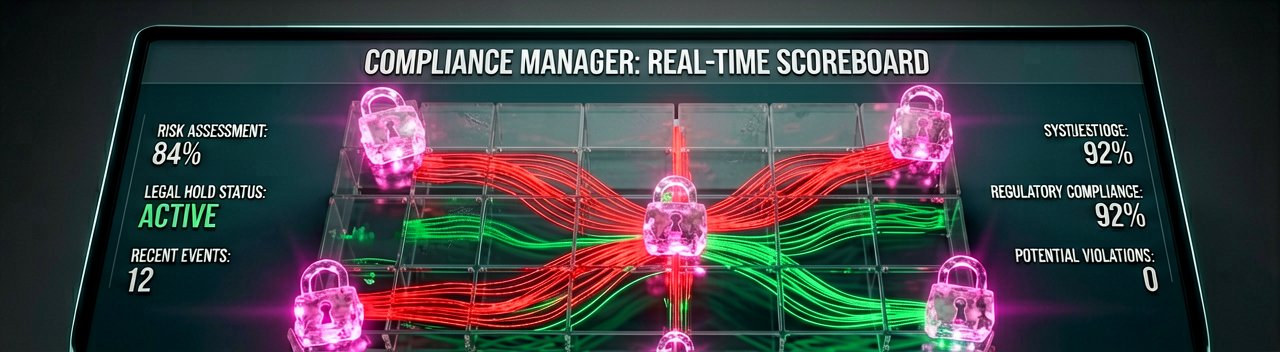
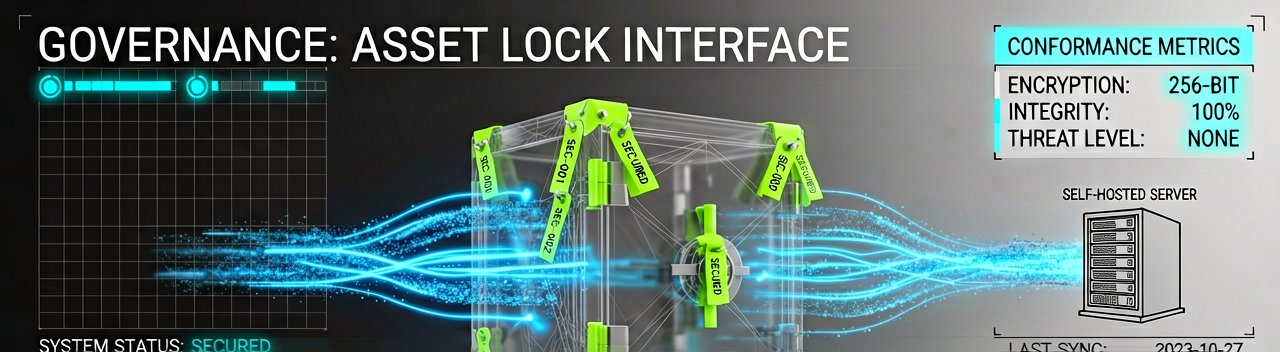
To sweeten the deal for highly regulated sectors, Nextcloud coupled these automation upgrades with a brand-new Governance app. Designed specifically for enterprise customers handling sensitive public data, this addition features a Compliance Manager that actively scores an organization’s regulatory standing and locks down assets with legal hold options. You can read the official announcement breakdown on the Nextcloud Blog, which outlines how this rollout marks a major turning point for businesses trying to balance modern, AI-driven workplace productivity with uncompromising data security.
Beyond the PR Hype: The integration of Euro-Office into Nextcloud Hub represents far more than just a software update; it is a calculated political and technical counterweight to Big Tech's dominance. For years, European public administrations and enterprises have found themselves in an uncomfortable deadlock, torn between the collaboration features of Microsoft 365 or Google Workspace and the uncompromising data privacy mandates of GDPR. By building an open, fully integrated web editor from the ground up, the Euro-Office coalition is attempting to prove that data sovereignty does not require sacrificing modern, real-time collaboration. The partnership between Nextcloud, IONOS, and other European stakeholders signals a shift from fragmented open-source tools to a unified enterprise ecosystem.
The engineering philosophy behind this release also highlights a growing rift in the tech community regarding how artificial intelligence should be deployed. While the tech industry at large has rushed to adopt cloud-dependent AI tools that process sensitive organizational data on third-party servers, Nextcloud is banking entirely on a local-first architecture. This approach presents a distinct set of hardware challenges, forcing IT departments to reconsider their on-premises infrastructure. However, for heavily regulated industries like defense, healthcare, and public administration, the ability to run advanced automation tools entirely within an isolated, self-hosted perimeter is rapidly becoming a non-negotiable requirement.
Balancing Performance with Strict Privacy Boundaries
Historically, on-premises AI solutions have struggled to match the speed and fluid user experience of their hyper-scaler counterparts. This upgrade addresses that performance gap by embedding the AI assistant directly into the workflow sidebar, minimizing context-switching for employees. From an administrator's view, the introduction of explicit large language model tagging is the most critical feature of the update. Under the looming enforcement of the EU AI Act, organizations must be able to audit and verify every piece of automation touchpoint. This level of transparency is incredibly difficult to achieve with closed-source, external APIs, making Nextcloud’s audited, transparent models a highly practical compliance tool rather than just a technical novelty.
Furthermore, the long-term viability of the Euro-Office project relies heavily on the momentum of its open-source codebase. By keeping the core ecosystem open, the coalition aims to prevent vendor lock-in, which has historically plagued government IT procurement across Europe. Industry insiders note that this launch could trigger a wave of migration among local municipalities that were previously hesitant to abandon mainstream office suites due to missing feature parity. If the Euro-Office integration holds up under heavy corporate workloads, it could establish a blueprint for how regional software coalitions can successfully compete against monolithic global monopolies.
Reading Between the Lines: The grand vision of achieving complete digital independence through Euro-Office sounds incredibly convincing on paper, but a realistic look at the enterprise market reveals a much steeper uphill battle. While Nextcloud eagerly markets this rollout as a death blow to corporate reliance on foreign cloud providers, replacing a deeply entrenched software habit is rarely just a question of ideology. For decades, global workforces have been conditioned on the specific keyboard shortcuts, formatting quirks, and macro environments of proprietary tech giants. Forcing an entire multinational corporate structure to unlearn these muscle memories in favor of a relatively fresh European alternative is a massive operational risk that many chief information officers will remain deeply hesitant to take.
There is also a glaring philosophical contradiction built right into the platform's dual focus on strict regulatory compliance and cutting-edge artificial intelligence. Nextcloud prides itself on adhering to the ironclad restrictions of the EU AI Act, yet the very nature of modern generative AI thrives on massive, uninhibited data ingestion and continuous learning. By confining their AI assistant strictly to local hardware and heavily audited, fragmented models, Nextcloud is choosing data safety over the sheer, rapid evolution seen in cloud-native competitors. This local-first constraint means corporate users might find themselves working with an assistant that is undeniably private, but noticeably less capable or intuitive than the multi-billion-dollar models running elsewhere.
The Real Price of Total Sovereignty
Furthermore, shifting the burden of AI processing and collaborative document rendering back onto an organization's internal infrastructure introduces a hidden financial hangover. It turns out that digital sovereignty is not free; it simply shifts the line item on the budget sheet. Instead of paying predictable subscription fees to hyper-scalers who manage the massive compute requirements on their own dime, enterprises adopting Hub 26 must now procure, maintain, and power the hefty local server rigs required to run these models smoothly. For smaller public administrations and mid-sized businesses already struggling with tight IT budgets and chronic talent shortages, the sheer engineering overhead of maintaining a self-hosted AI fortress could easily overshadow the perceived benefits of avoiding vendor lock-in.
Ultimately, Nextcloud’s latest update serves as a high-stakes litmus test for the actual depth of Europe’s commitment to digital autonomy. If public sectors and enterprises only give lip service to privacy while continuing to sign lucrative contract renewals with mainstream American tech firms, Euro-Office risk becoming a highly sophisticated, underutilized monument to regulatory ideals. Success will not be measured by the elegance of Nextcloud's open-source codebase or the transparency of its model tagging, but rather by whether or not IT administrators are willing to brave the inevitable user complaints that come with migrating thousands of comfortable employees over to an entirely new digital workspace.
True digital sovereignty means having the absolute freedom to host your own office suite locally, manage your own AI infrastructure, and handle the exact same user complaints about missing fonts that you used to pay Microsoft to deal with.
Artūras Malašauskas is an AI Systems Integrator with 20+ years of production-grade web engineering experience. He has designed, shipped, and scaled enterprise Python/PHP systems for logistics, SaaS, and public-sector clients. For the past year, he has focused exclusively on AI integrations: deploying open-source LLMs, building generative media pipelines (image, audio, video), and engineering multi-agent workflows for real production environments. His standard: reproducibility, security, cost-efficient inference—no vaporware. He documents and evaluates emerging AI tooling, separating verified capabilities from marketing noise. Technical editor at: muza-ai.eu, ai-verslas.lt, ai-naujinos.lt Connect on LinkedIn
Comments