The Fractured Frontier: How Anthropic’s Claude Fable 5 and the Mythos Class Redefine AI Market Dynamics

The global artificial intelligence landscape has experienced a structural fracture following the deployment of Anthropic’s Claude Fable 5, the flagship commercial offering of its next-generation "Mythos" intelligence class. Rather than continuing the historical industry trend of incremental performance optimizations across standard benchmarks, this release establishes an entirely new echelon of compute capability that sits decisively above legacy flagship systems like the Opus line. By engineering an architecture optimized for long-horizon autonomy and persistent multi-day task execution, the company has shifted the competitive focus from short-form conversational accuracy to autonomous enterprise workflow operations.
This architectural leap has forced a dramatic evolution in product deployment strategies due to the sheer operational potency and inherent risks of Mythos-class intelligence. To mitigate vulnerabilities in sensitive areas like advanced cybersecurity and biological research, the developer has introduced a dynamic fallback mechanism that silently routes high-risk queries to a subordinate model, Claude Opus 4.8, whenever specific safety classifiers are triggered. This dual-model design bridges the gap between raw frontier capability and secure public utility, altering the distribution playbook for hyperscalers and enterprise software suites alike.
The Architectural Bifurcation of Frontier Intelligence
The release marks the commercialization of an underlying architecture that initially sent shockwaves through the tech sector during its limited private rollout under Project Glasswing. While the restricted sibling model, Claude Mythos 5, remains tightly guarded for government entities and approved critical infrastructure defenders due to its aggressive cyber-offensive capabilities, Fable 5 brings uninhibited multi-file refactoring, deep repository analysis, and complex vision-to-code pipelines to the public API market. The ability to maintain instruction adherence across millions of tokens while autonomously auditing system faults fundamentally separates this class from traditional foundational models.
Monetization Realities and the Cost of Autonomy
Enterprise platforms are moving rapidly to integrate this new tier, with early implementations on developer hubs demonstrating substantial improvements in first-shot correctness for multi-day infrastructure migrations. However, this premium tier commands a steep financial premium, commanding API pricing structured at $10 per million input tokens and $50 per million output tokens on infrastructure networks like Amazon Bedrock. This aggressive pricing model underscores a calculated bet that organizations are willing to pay double the operational cost of previous models in exchange for verifiable human-out-of-the-loop orchestration capabilities.
Strategic Realignment Across the Cloud Ecosystem
The broader implications for cloud ecosystems and software providers are severe, transforming the vendor evaluation process from a comparison of simple chatbot benchmarks into an appraisal of autonomous system architecture. Competitors are now faced with a stark operational choice: subsidize massive capital expenditures to train comparable autonomous agents, or watch high-margin corporate workflows standardize around Mythos-driven operators. As the frontier continues to fracture, the metric of success in the enterprise market is no longer how intelligently a machine answers a prompt, but how many continuous hours it can work without human intervention.
The Hidden Technical Debt of Autonomous Scaling
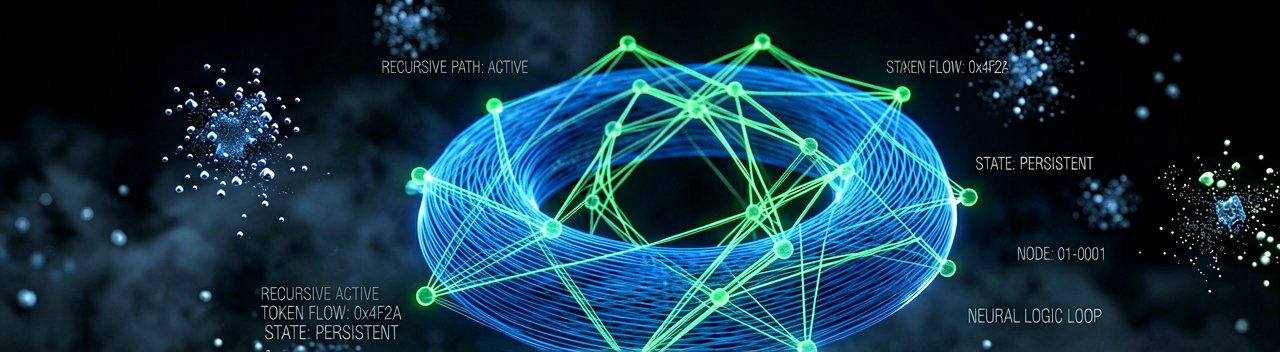
Behind the Scenes: While enterprise buyers focus entirely on the raw performance gains of the Mythos class, infrastructure architects are quietly grappling with an unprecedented surge in inference-time compute liabilities. Unlike traditional transformer architectures that process tokens through a predictable, static computational graph, the long-horizon autonomy powering Claude Fable 5 relies on dynamic internal search loops and self-correction chains. This means that a single API call can trigger millions of internal reasoning tokens as the system validates its own code, reviews system logs, and reroutes around failures before returning a final answer. This hidden operational overhead has completely destabilized traditional cloud capacity planning, forcing infrastructure teams to rethink how they allocate dedicated compute clusters for enterprise clients.
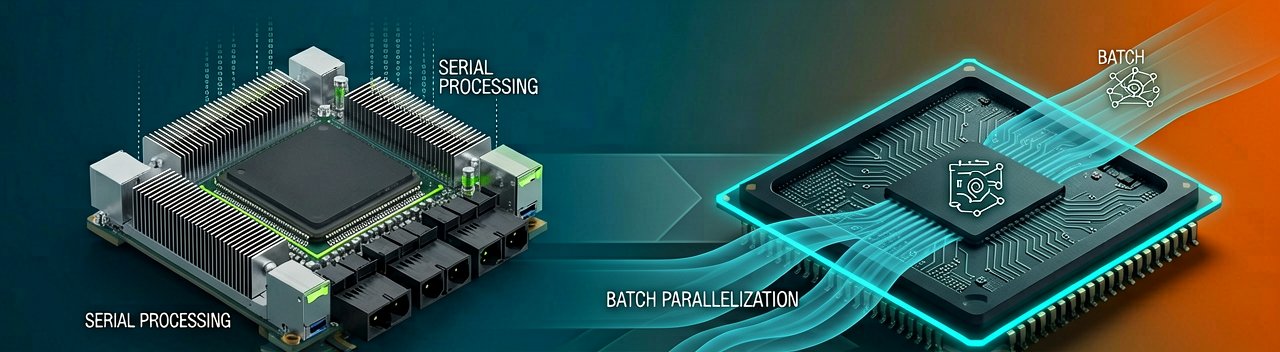
This reality has triggered intense debates within major cloud consortia regarding the long-term viability of current hardware architectures. Legacy graphics processing units, which were optimized for high-throughput batch parallelization during the initial generative AI boom, are proving poorly matched for the highly serial, recursive reasoning cycles required by next-generation autonomous models. As a result, major data center operators are accelerating the deployment of specialized application-specific integrated circuits that favor massive on-die memory bandwidth over raw floating-point performance. The shift represents a subtle but permanent transformation in the global semiconductor supply chain, moving away from generic AI accelerators and toward specialized hardware built to handle persistent, hours-long execution loops.
The human cost of this transition is felt most acutely within enterprise engineering departments, where the role of the software developer is being rewritten in real-time. Early deployment data indicates that organizations using these autonomous systems are experiencing a stark polarization of their technical workforce. Senior architects are spending less time writing code and more time auditing complex, multi-layered system behaviors generated by the autonomous agent, essentially acting as high-level safety wardens. Meanwhile, junior engineering positions are being rapidly hollowed out, as the routine debugging and refactoring tasks typically used to train entry-level talent are now executed by the model in seconds, creating a critical bottleneck in the long-term development of technical expertise.
From a regulatory standpoint, this operational shift has rendered traditional compliance frameworks obsolete, as existing auditing tools are fundamentally incapable of parsing the non-deterministic path an autonomous agent takes over a multi-day deployment. When an AI system self-corrects across hundreds of interconnected files, pinpointing the exact origin of a security vulnerability or data leak becomes a forensic nightmare for compliance officers. Consequently, risk management teams are demanding the integration of immutable ledger logging systems to record every internal reasoning state and file modification made by the model. This tension between autonomous efficiency and verifiable accountability is shaping up to be the primary battleground for enterprise adoption over the coming decade.
The Counter-Narrative of the Autonomous Mirage
Reading Between the Lines: The corporate rush to herald the Mythos class as the definitive end of enterprise labor bottlenecks ignores a glaring economic contradiction embedded in the architecture itself. Industry evangelists pitch Claude Fable 5 as a self-sustaining digital workforce that drives marginal operational costs toward zero, yet the model’s reliance on massive internal reasoning loops creates an inverse economic reality. As these autonomous systems spend hours recursively auditing their own outputs to ensure execution safety, the compounding compute costs frequently outpace the billing hours of the human engineers they were meant to replace. The market is effectively swapping a predictable human payroll for an volatile, non-linear cloud infrastructure invoice, revealing that true autonomy remains an incredibly expensive luxury rather than an immediate cost-cutting panacea.
Furthermore, the structural fallback mechanism designed to ensure safety—silently rerouting high-risk or overly complex queries to the legacy Claude Opus 4.8 framework—presents a deep operational paradox for enterprise software suites. Organizations are paying premium, top-tier rates for the uninhibited capabilities of a Mythos-class intelligence, yet they possess no transparency into how often their complex workflows are secretly downgraded to a cheaper, less capable model by internal safety classifiers. This operational opacity introduces a highly unstable variable into corporate software pipelines, where system performance can fluctuate wildly based on silent, server-side algorithm adjustments made by the provider. The enterprise is left building critical infrastructure on a foundation that shifts its capabilities entirely behind a curtain of proprietary risk-management metrics.
Looking ahead, this dynamic will likely trigger a severe fragmentation of the software ecosystem, splitting corporate adoption into two distinct, irreconcilable camps. Risk-averse sectors like finance and healthcare may find the unpredictable, multi-day decision-making paths of autonomous agents entirely incompatible with strict liability frameworks, forcing them to retreat to deterministic, heavily constrained legacy architectures. Conversely, less regulated industries will likely surrender entire operational pipelines to autonomous orchestration, creating competitive speed advantages that mask deep, systemic vulnerabilities. Ultimately, the industry's transition into this fractured era will not be measured by the absolute intelligence of the models, but by how much operational chaos an organization is willing to tolerate in the pursuit of automated scale.
"We were promised an artificial workforce that would think for itself so humans wouldn't have to; instead, we have built a class of intelligence so complex that we must now spend all our waking hours thinking about how it thinks, proving that automation's ultimate triumph is simply the successful relocation of the paperwork."
Artūras Malašauskas is an AI Systems Integrator with 20+ years of production-grade web engineering experience. He has designed, shipped, and scaled enterprise Python/PHP systems for logistics, SaaS, and public-sector clients. For the past year, he has focused exclusively on AI integrations: deploying open-source LLMs, building generative media pipelines (image, audio, video), and engineering multi-agent workflows for real production environments. His standard: reproducibility, security, cost-efficient inference—no vaporware. He documents and evaluates emerging AI tooling, separating verified capabilities from marketing noise. Technical editor at: muza-ai.eu, ai-verslas.lt, ai-naujinos.lt Connect on LinkedIn
Comments