WeChat’s AI Agent Launch: A Catalyst for Industry-Wide AI Adoption
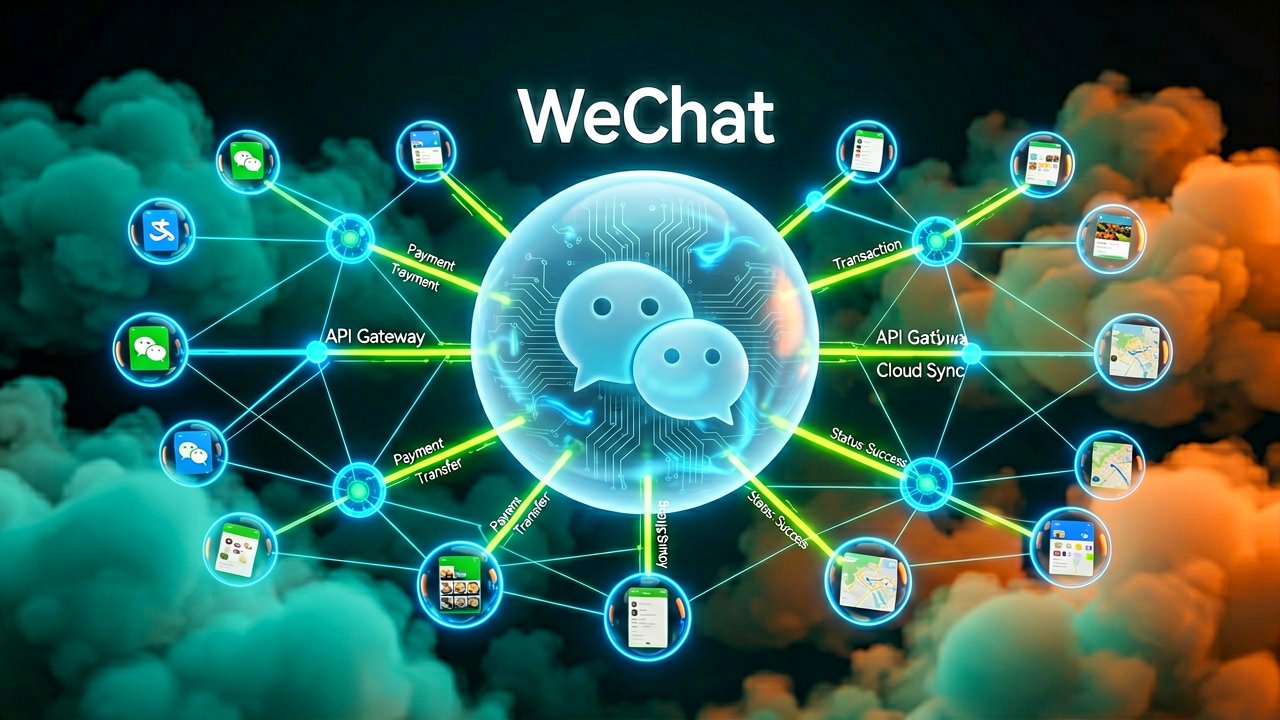
Tencent Holdings has fundamentally shifted the competitive landscape of the global artificial intelligence sector by advancing an embedded AI agent within its ubiquitous super-app, WeChat. According to reports documented by TechNode, Tencent has initiated internal prototype testing for a system capable of executing complex tasks via natural language commands by tapping into WeChat’s massive network of millions of mini-programs. This strategic deployment leverages WeChat's staggering infrastructure of 1.432 billion monthly active users, instantly establishing what market analysts view as a monumental hub for consumer-facing agentic AI workflow execution.
The market response to this secret project becoming public was immediate and highly pronounced. Upon initial disclosures regarding the impending regulatory compliance process for the embedded assistant, Tencent’s stock surged by 10.5% in a single day, adding over HK$300 billion to its market capitalization, as reported by South China Morning Post. This massive valuation re-rating underscores renewed investor confidence, effectively repositioning Tencent against domestic rivals like ByteDance and Alibaba, which had previously captured early momentum in the independent chatbot application race.
The Architecture of Ecosystem Domination
Unlike competing AI systems that often rely on heavy graphical user interface (GUI) screen-reading models to interact with third-party software, WeChat's agent operates through a highly efficient API-driven framework. The platform's millions of built-in mini-programs function as a standardized set of structured APIs. This enables the agent to instantly fulfill user requests—such as filtering specific cafe options, booking flights, or completing food deliveries—directly within a unified security and data boundary. According to details published by Caixin Global , the company has officially opened up access to this ecosystem, allowing developers to directly plug their services into the WeChat AI architecture.
Industry Alliances and the A2A Protocol Shift
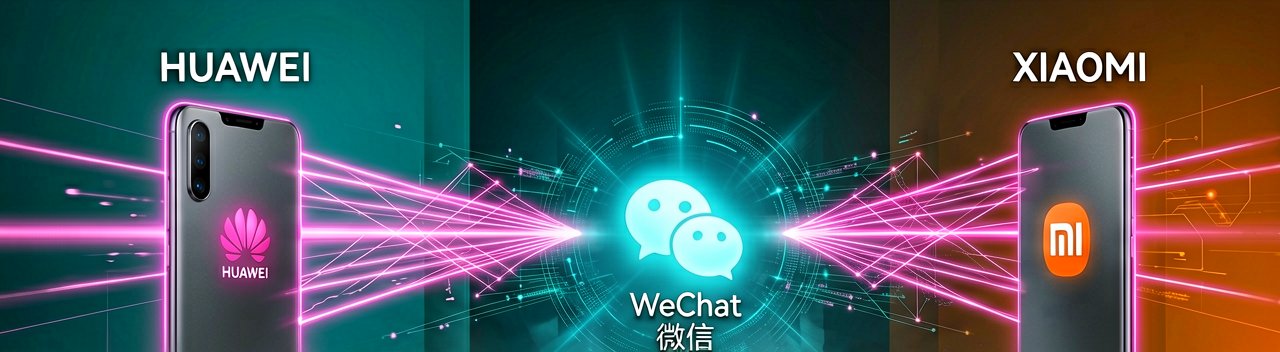
In tandem with opening developer access, Tencent has aggressively expanded its entry points by pioneering a proprietary "Agent-to-Agent" (A2A) protocol. Rather than treating hardware-level assistants as rival ecosystems, WeChat is actively partnering with top smartphone manufacturers including Huawei, Xiaomi, Honor, Oppo, and Vivo. Insights from KrASIA reveal that this protocol allows system-level phone assistants to securely pass user intents directly to WeChat’s internal agent for execution. This move positions Tencent as the ultimate gatekeeper of cross-app AI interactions, forcing external hardware systems to route actions through its controlled environment.
Monetization and Future Financial Horizons
The long-term implications of this roll-out span far beyond simple user convenience, signalling a massive monetization wave for the broader tech sector. Major internet services have rushed to sync with the framework, with platforms like Meituan announcing immediate plans to bridge their own AI tools with Tencent's core model. Financial institutions have noted that while the public launch will require a substantial spike in capital expenditure to sustain massive cloud computing and token costs, the financial returns are poised to be historic. Analysts estimate the commercialization of this ecosystem could expand WeChat’s annual revenue by billions of dollars over the coming three-year window, solidifying agentic AI as the definitive infrastructure of the next-generation digital economy.
The Hidden Dynamics of Agentic Distribution
What Most Reports Miss: The true disruption of the WeChat AI agent does not lie in its underlying large language model capabilities, but in how it completely bypasses the traditional app store bottleneck. For over a decade, Apple and Google have extracted a premium from developers through proprietary ecosystem controls and strict runtime guidelines. By embedding an agent directly on top of millions of cloud-hosted mini-programs, Tencent has effectively created an abstract operating system that functions entirely in runtime memory. Developers no longer need to optimize their services for varying mobile hardware configurations; instead, they simply expose structured JSON fields to WeChat’s orchestrator, rendering local native applications increasingly redundant for everyday consumer tasks.
This paradigm shift introduces profound competitive tension between Tencent and global smartphone manufacturers who are simultaneously developing system-level AI assistants. Silicon Valley’s approach has largely centered on on-device agents that utilize computer vision to read smartphone screens and click UI buttons. Tencent's API-first alternative is significantly faster, uses less battery power, and provides far more reliable data structures than fragile screen-parsing techniques. Consequently, hardware makers find themselves in a precarious strategic position: they must either integrate with WeChat via the newly introduced Agent-to-Agent protocol to keep their users engaged, or risk having their own native assistants locked out of China's most valuable transactional ecosystem.
From an enterprise perspective, this deployment addresses a massive integration bottleneck that has historically plagued corporate software development. Historically, linking disparate systems like corporate travel booking, expense management, and localized customer service required complex, bespoke middleware configurations that took months to deploy. The WeChat framework converts this fragmented landscape into an open marketplace of interoperable agents, where enterprise tools can communicate dynamically using standardized semantic protocols. Early adopters among multi-national retail chains note that deployment cycles for automated customer interactions have dropped from quarters to days, triggering a massive wave of localized backend restructuring across the broader software industry.

However, this consolidation of data flows raises intense regulatory scrutiny regarding anti-competitive behavior and algorithmic sovereignty. As an invisible layer governing consumer choice, WeChat's routing algorithm holds total authority over which third-party merchant receives a booking or delivery request. If the orchestrator exhibits even a slight bias toward Tencent-backed services, independent vendors could find their digital visibility reduced to zero overnight. Regulatory compliance officers are already monitoring how these intent-routing decisions are audited, signaling that the next major antitrust battleground will not be fought over application store fees, but over the neutrality of the semantic routing protocols that power autonomous agents.
The Friction of Frictionless Commerce
Reading Between the Lines: The tech industry’s collective infatuation with "frictionless" agentic commerce conveniently glossses over a fundamental economic contradiction: platforms thrive on friction. For years, the internet economy has been built on user attention, monetized through ad impressions, sponsored search results, and systemic browsing delays that encourage impulse buying. By allowing an AI agent to cut through the digital noise and instantly execute a single, optimized transaction, WeChat effectively cannibalizes its own ad-driven discovery model. This shift leaves industry analysts skeptical about how Tencent will replace the lucrative bidding wars for screen real estate when the screen itself is bypassed by an autonomous voice command.
Furthermore, the assumption that developers will universally benefit from this democratic API ecosystem ignores the historical reality of platform centralization. While an open Agent-to-Agent protocol sounds collaborative, it strips third-party brands of their unique user experiences, reducing a company's entire digital presence to raw, unbranded data streams. In this new paradigm, a luxury hotel brand and a budget motel are processed through the exact same text-based API output, completely eroding brand equity and customer loyalty. Merchants face a bleak ultimatum: surrender their customer relationships to Tencent’s orchestrator, or maintain absolute independence in a digital desert where consumers no longer search for apps manually.
The operational reality of managing this massive, real-time agent network also presents a looming infrastructure crisis that the current market hype ignores. Processing natural language, routing intents, and verifying the security of millions of connected mini-programs requires an unprecedented amount of compute power. Unlike traditional cloud hosting, where costs scale predictably with traffic, agentic loops can easily trigger infinite processing cascades if two third-party APIs fail to communicate properly. This technical liability means that either Tencent will have to introduce steep transactional toll fees that alienate small business developers, or the system will suffer from performance throttling, transforming the promised instant AI future into a digital bottleneck of lagging requests.
"We were promised a digital future where AI would liberate humanity from mundane administrative chores, but it appears we have instead built an incredibly sophisticated ecosystem where algorithms negotiate with other algorithms to buy us coffee—leaving humans with nothing left to do but figure out how to pay for the computing power."
Artūras Malašauskas is an AI Systems Integrator with 20+ years of production-grade web engineering experience. He has designed, shipped, and scaled enterprise Python/PHP systems for logistics, SaaS, and public-sector clients. For the past year, he has focused exclusively on AI integrations: deploying open-source LLMs, building generative media pipelines (image, audio, video), and engineering multi-agent workflows for real production environments. His standard: reproducibility, security, cost-efficient inference—no vaporware. He documents and evaluates emerging AI tooling, separating verified capabilities from marketing noise. Technical editor at: muza-ai.eu, ai-verslas.lt, ai-naujinos.lt Connect on LinkedIn
Comments