Slay the Spire 2 Shatters Records with 282K Players, Crowns New Deckbuilding Champion
The indie gaming landscape has a new king, and it wields a deck of cards. Mega Crit officially cemented its legacy when its highly anticipated sequel, Slay the Spire 2, absolutely obliterated expectations by drawing a mind-boggling 282,314 concurrent players on Steam within its first 24 hours of release. Launched into Early Access on March 5, 2026, the deckbuilding rogue-like didn't just step out of its predecessor's shadow—it completely redefined what independent strategic card games are capable of achieving in the modern market.
It's an astronomical leap forward for the studio. When the original game debuted back in 2017, it pulled in a modest peak of just 193 concurrent players. According to reporting by Rogueliker , the jaw-dropping launch day surge for the sequel represents a staggering 92,982% increase over the original’s debut. That early momentum was just the beginning, as the player base quickly ballooned even further over its opening weekend, eventually peaking at an eye-watering 574,638 concurrent users to claim a spot among Steam's top 20 most-played games of all time.
David Overthrows the AAA Goliaths
What makes this milestone so impressive is the sheer caliber of competition it left in the dust. Slay the Spire 2 quietly marched straight to the top of Steam’s global best-sellers chart, effortlessly outperforming heavy-hitting, multi-million-dollar AAA releases that launched during the exact same window. Industry coverage from GameSpot notes that the indie hit drew roughly four times as many launch-day players as Bungie’s high-profile extraction shooter, Marathon, while also outstripping Capcom’s Resident Evil Requiem in raw revenue.
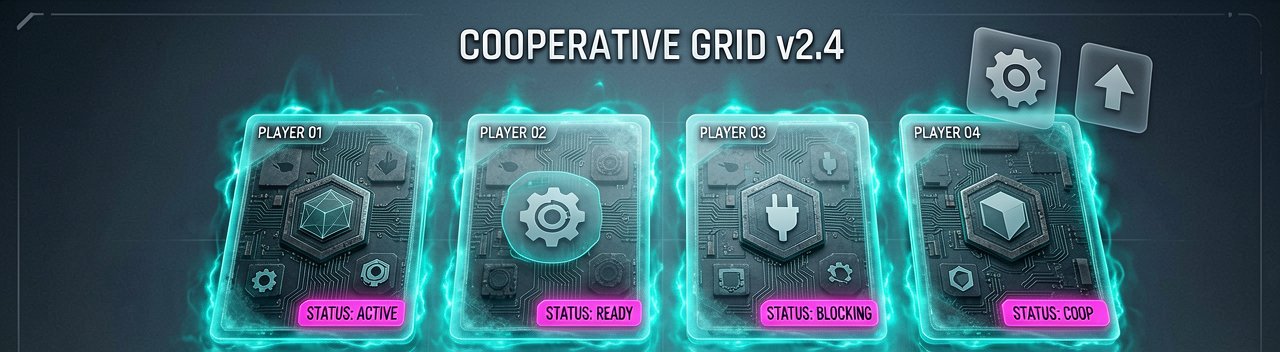
The record-breaking numbers prove that the appetite for strategic, mechanics-driven indie experiences has evolved from a niche corner of the industry into a dominant commercial force. By outclassing previous genre giants like Hades 2 and Mewgenics, Mega Crit has demonstrated that clever game design, refined card balance, and new community-requested additions—like the highly praised four-player cooperative mode—can reliably humble the massive budgets of traditional corporate publishers.
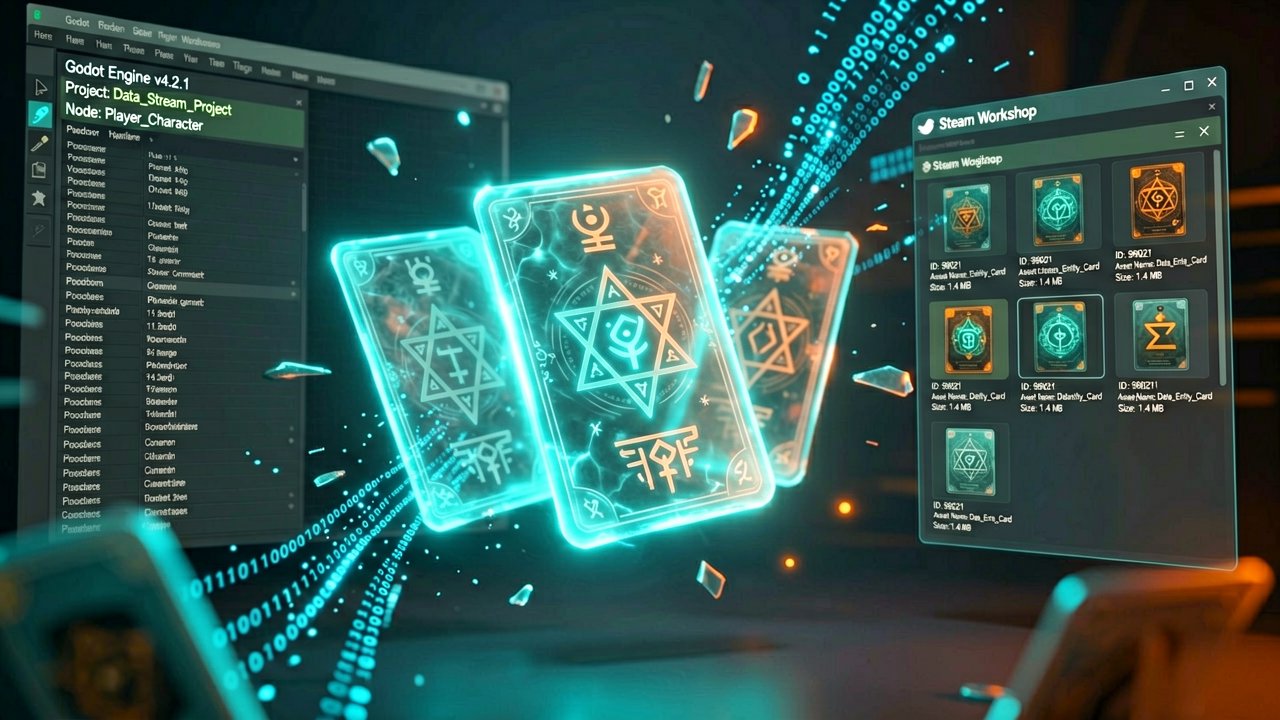
Behind the Stats: The massive initial player surge is more than just a flash in the pan; it represents the culmination of a high-stakes, multi-year gamble by the developers at Mega Crit. When the studio announced in late 2023 that they were abandoning Unity—the engine that powered the original game—in favor of the open-source Godot engine, the indie development community watched with bated breath. This fundamental shift required rewriting the core architecture from scratch, a grueling process that many industry analysts feared would delay the project indefinitely or compromise the razor-sharp mechanical balance that made the first title a masterpiece.
Instead, the engine migration proved to be a quiet masterstroke. Longtime players immediately noticed a significant reduction in loading times and a remarkably fluid user interface, which is crucial for a game where users execute hundreds of rapid-fire actions per hour. More importantly, the new framework allowed the development team to seamlessly implement highly requested, technically complex features that were notoriously difficult to patch into the original code. Chief among these is the native integration of modding support directly into the Steam Workshop on day one, ensuring that the community could begin expanding the game's lifespan immediately.
A Masterclass in Early Access Stewardship
The developer-player dynamic has also undergone a radical evolution since the 2017 launch. Rather than dropping a finished product into a crowded market, Mega Crit utilized the Early Access model as a transparent, collaborative laboratory. Veteran players and high-profile strategy streamers were brought into closed beta testing months prior to the March 2026 public launch, allowing the team to fine-tune the economic balance of the new Merchant mechanics and stress-test the servers for the chaotic four-player cooperative mode.
This radical transparency cultivated immense goodwill, transforming a standard product release into a shared cultural event for the roguelike community. By treating the player base as co-creators rather than mere consumers, the studio bypassed the traditional, expensive marketing cycles utilized by mainstream publishers. The strategy paid off handsomely, as word-of-mouth advocacy and organic streaming numbers on platforms like Twitch catapulted the title to the top of the charts within minutes of its digital storefront debut.

The Ripples Across the Indie Ecosystem
Beyond individual studio success, these historic player numbers are sending shockwaves through the wider video game publishing ecosystem. For years, conventional industry wisdom dictated that complex, turn-based card games possessed a strict commercial ceiling. The explosive reception of Slay the Spire 2 completely shatters that assumption, proving that mechanics-focused indie titles can command the same level of cultural real estate and financial viability as cinematic, graphics-heavy blockbusters.
As venture capital and major publishers look to de-risk their portfolios in an increasingly volatile market, this milestone will likely trigger a massive wave of investment into strategic, systemic indie games. Smaller development teams are already pointing to Mega Crit’s triumph as proof that deep, highly replayable gameplay loops can triumph over bloated production budgets. The deckbuilding revolution is no longer an experimental subgenre; it is officially a cornerstone of mainstream gaming culture.
Reading Between the Lines: While the gaming press eagerly crowns this milestone as an unmitigated victory for pure artistic merit, a colder analytical look reveals a far more complex reality. The meteoric rise of Slay the Spire 2 is not just a triumph of indie game design; it is a symptom of a deeply consolidated market where players are retreating to the safety of known brands. Labeling this a win for the broader indie sector ignores the harsh reality that Mega Crit is no longer a scrappy underdog, but an established juggernaut operating with a massive structural advantage that truly independent, unknown studios simply cannot replicate.
This reality exposes a glaring contradiction in the modern gaming landscape. We praise the sequel for disrupting the AAA hegemony, yet its success relied on the exact same risk-averse consumer behavior that fuels corporate sequels like Call of Duty or Resident Evil. The overwhelming player count suggests less of a sudden, widespread passion for strategic deckbuilding and more of a massive, pent-up demand for a highly specific, trusted intellectual property. For the hundreds of innovative, original card games launching into obscurity this year, the lesson is bittersweet: the market has plenty of room for Slay the Spire, but perhaps very little room for anything else.
The Early Access Double-Edged Sword
Furthermore, maintaining this dizzying momentum carries severe structural risks during an extended Early Access period. By launching with a massive player base on day one, Mega Crit has effectively traded the traditional slow-burn refinement period of an early-stage game for a high-intensity, live-service pressure cooker. Every minor balance tweak, card nerf, or bug introduction is now scrutinized by hundreds of thousands of vocal players in real-time, drastically reducing the developers' freedom to fail or experiment radically with new mechanics.
This hyper-visibility could inadvertently stifle the very creative spontaneity that made the first game a genre-defining masterpiece. When a studio is managing half a million active users, community management easily morphs into crisis management. If the development team spends the next year putting out fires and catering to the loudest factions of the competitive player base, the final, official 1.0 release might end up being a hyper-optimized, risk-averse product that pleases everyone but surprises no one.
The Copycat Conundrum
The long-term implications for the indie ecosystem may also trigger an unwelcome cycle of creative stagnation. History dictates that whenever an indie title achieves blockbuster financial success, venture capital and opportunistic developers rush in to flood the market with cheap imitations. We are likely on the precipice of a grueling multi-year wave of derivative, procedurally generated card games that mimic the aesthetic and mechanics of Slay the Spire 2 without understanding its underlying math or design philosophy.
This inevitable saturation risks burning out the audience entirely, turning a celebrated genre milestone into the catalyst for its own market fatigue. Mega Crit has proven that an indie game can capture lightning in a bottle twice, but in doing so, they may have guaranteed that the rest of the industry will spend the next five years trying to sell us the exact same bottle.
"Ultimately, Mega Crit has achieved the ultimate corporate dream through entirely indie means: they’ve built a machine so flawless that hundreds of thousands of people will happily pay for the privilege of doing math homework on their PCs, proving that the only thing gamers love more than escaping reality is calculating perfect mathematical synergy under immense virtual pressure."
Artūras Malašauskas is an AI Systems Integrator with 20+ years of production-grade web engineering experience. He has designed, shipped, and scaled enterprise Python/PHP systems for logistics, SaaS, and public-sector clients. For the past year, he has focused exclusively on AI integrations: deploying open-source LLMs, building generative media pipelines (image, audio, video), and engineering multi-agent workflows for real production environments. His standard: reproducibility, security, cost-efficient inference—no vaporware. He documents and evaluates emerging AI tooling, separating verified capabilities from marketing noise. Technical editor at: muza-ai.eu, ai-verslas.lt, ai-naujinos.lt Connect on LinkedIn
Comments