Cozy Strategy Meets Three-Way Rivalry: Veteran Devs Unveil 'Flame, Forest & Flood'
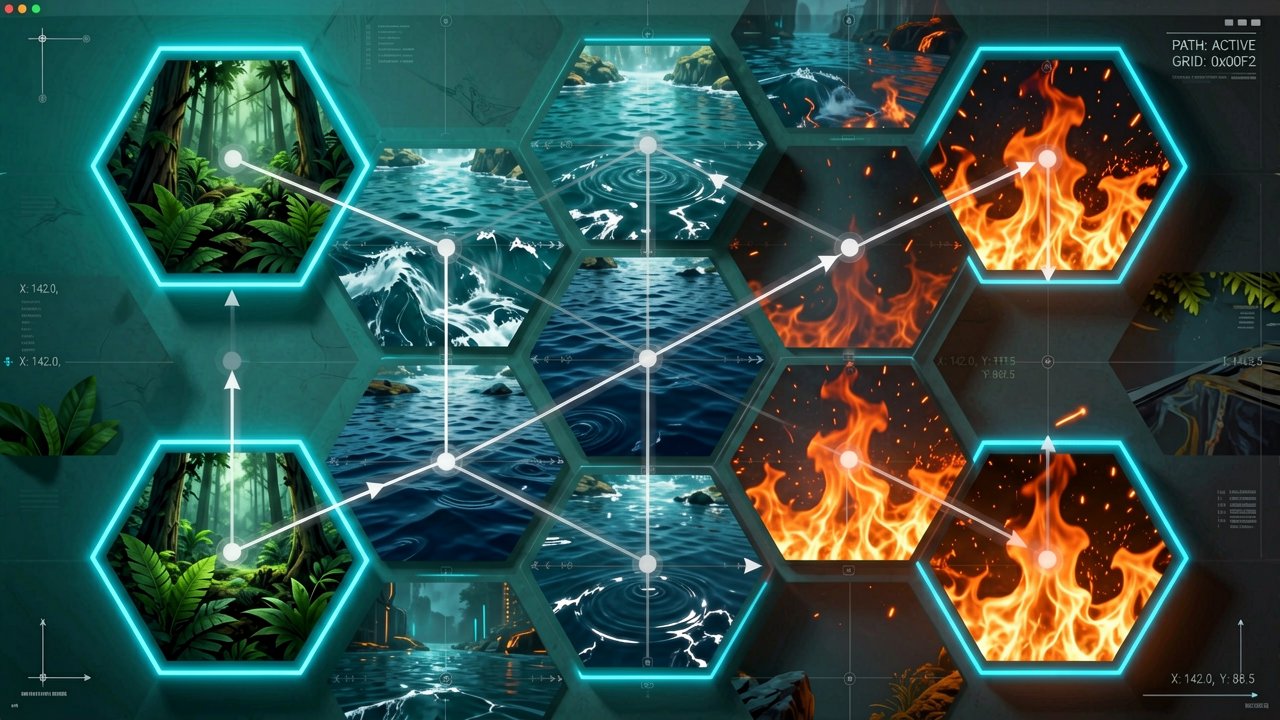
The indie development scene is getting a heavy dose of cozy competition. Industry veterans Denis Comtesse and Blaze Zywiczynski have officially broken their two-year silence to announce their studio's debut title, Flame, Forest & Flood, a clever three-player strategy showdown slated for a PC release in Fall 2026. Handcrafted by their new independent outfit, Fairy Mount Games, the upcoming title aims to subvert standard multiplayer tropes by replacing intense, stress-fueled combat with an accessible, board-game-inspired battle for territory.
The project represents a sharp pivot for its creators, who collectively hold development credits on complex and starkly atmospheric hits like Frostpunk, This War of Mine, and Rogue State Revolution. According to details shared via GamesPress, the team is deliberately stripping away the bloat of modern strategy design to focus entirely on player choice. By removing random number generators and hidden variables, the title ensures every victory or sudden comeback relies completely on positional tactics and elegant, deterministic moves.
Three Elements, Total Transparency
At the center of every match is a cyclic struggle between three distinct elemental spirits: Adeer, the spirit of Forest; Herr Mitt, the guardian of Flood; and Blaze, the keeper of Flame. Described as "eternal frenemies," these characters control distinct forces that interact on a shifting game board. The rules are designed to be simple enough to master within a few minutes, giving newcomers an honest shot at beating seasoned players right out of the gate, while hiding an intricate layer of tactical depth for those seeking a highly competitive edge.
Fairy Mount Games is building the experience entirely using open-source workflows, capitalizing on more than a decade of collective expertise with the Godot engine. In a notable stance against current industry pressures, the developers have explicitly committed to handcrafted asset creation, completely excluding generative AI from their pipeline. When players need a break from territory wars, the game provides a persistent, personalized "Garden" diorama that expands as they complete quests and earn growth points.

Though the full digital launch is locked in for later this year, eager tacticians do not have to wait until autumn to get a taste of the action. The game is already available to wishlist on its Official Steam Store Page, and the studio plans to deploy a playable public demo during an upcoming Steam Next Fest broadcast.
Behind the Scenes: The genesis of Flame, Forest & Flood marks a calculated rebellion against the psychological exhaustion baked into modern competitive gaming. For years, major studios have treated player engagement as a high-stress arms race, driving communities into toxic spirals with hyper-reactive combat loops and punishing leaderboard grinds. By stripping away these frantic twitch mechanics, the team at Fairy Mount Games is trying to prove that high-stakes strategy does not require a high heart rate, carving out a distinct sub-genre they like to call "cozy competitive." It is a delicate design tightrope to walk, aiming to satisfy the analytical mind of a chess enthusiast while enveloping them in the comforting audio-visual embrace of a slice-of-life simulator.
This tonal shift is especially fascinating given the design pedigree of the studio's founders. Denis Comtesse and Blaze Zywiczynski built their reputations delivering some of the most stressful, morally compromising survival dilemmas in interactive entertainment. Transitioning from the freezing, resource-depleted apocalypse of Frostpunk to an upbeat, colorful elemental playground requires a complete restructuring of how they manipulate player emotion. Instead of utilizing scarcity and bleakness to induce panic, the developers are leaning heavily on spatial puzzle design and explicit readability to foster an atmosphere of calm, deliberate calculation.
The Human Touch in an Automated Era
Beyond the gameplay mechanics, the studio's development philosophy serves as a localized case study for an industry undergoing a massive identity crisis. The decision to completely bar generative AI from their production pipeline is more than a marketing stunt; it is a direct response to the community-led backlash against algorithmic art in indie spaces. By prioritizing human-crafted assets, the team ensures that every texture in the elemental realms and every custom item placed within the auxiliary diorama gardens carries distinct intentionality. This stubborn adherence to traditional craftsmanship has resonated strongly with digital artists and purists who feel the soul of independent game design is being diluted by rapid automation.
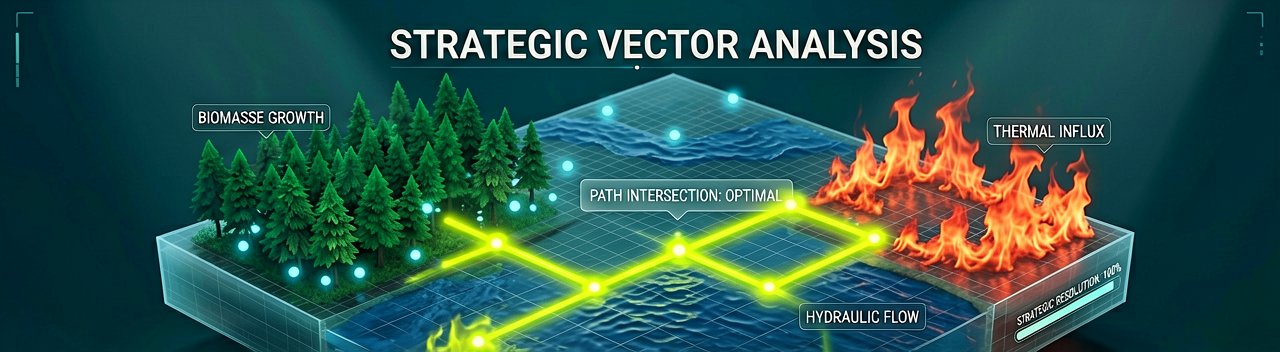
Financially, the project relies on the structural agility of the open-source Godot engine, a software choice that has seen a massive influx of veteran talent over the last few years. Escaping the restrictive licensing ecosystems of proprietary corporate engines allows the small team to allocate their limited budget directly into gameplay refinement and community engagement. By coupling this technical independence with their reliance on predictable, deterministic mechanics, the developers are actively building a transparent relationship with their growing audience. This grassroots approach ensures that when the public demo finally lands during the next Steam Next Fest, players will be evaluating a pure vision of human ingenuity, completely unburdened by corporate monetization mandates.
Reading Between the Lines: The primary paradox of Flame, Forest & Flood lies in its idealistic attempt to marry the cutthroat nature of three-player mechanics with a "cozy" aesthetic. Historically, three-player board games and strategy titles are notorious for creating unstable political dynamics, where two lagging players inevitably gang up on the leader, or a passive player wins simply by letting the other two destroy each other. Labeling a game as cozy does not magically erase the inherent frustration of being double-teamed by your friends on a Friday night. Whether the deterministic, chess-like rules can actually suppress the stress of asymmetrical territorial warfare remains a massive gamble, regardless of how soft the background music is.
Furthermore, relying on a completely deterministic design—where every move is entirely predictable and devoid of random variables—presents a double-edged sword for an indie title aiming for broad appeal. While hardcore strategy purists loathe random number generators, the reality is that a dash of randomness acts as a crucial equalizer in multiplayer games. Without hidden information or lucky dice rolls to level the playing field, a skill gap between players becomes instantly punishing. Newcomers might find themselves systematically dismantled by experienced players within minutes, completely undermining the studio’s promise of an accessible experience that anyone can pick up and enjoy.
The Realities of the Cozy Market
The decision to build an auxiliary "Garden" diorama as a psychological safety net also highlights a tactical contradiction in current market positioning. It suggests the developers are hyper-aware that the core strategy loop might be too intense for the traditional cozy audience, necessitating a separate, stress-free progression system to keep them engaged. However, splitting development focus between a competitive tactical board game and a passive digital garden risks alienating both demographics. Hardcore strategy fans may view the diorama mechanics as superfluous bloat, while casual players might find the mandatory territorial matches too hostile an entry barrier just to unlock a new digital flowerpot.
Ultimately, Fairy Mount Games is stepping into a saturated Steam marketplace where the "cozy" label is no longer a guaranteed ticket to viral success. While their open-source workflow and anti-AI stance earn them crucial goodwill among tech-savvy purists, the broader gaming public judges a title by its immediate engagement factor. Transitioning from the bleak, narrative-driven survival of Frostpunk to a colorful, mechanics-first elemental arena requires a total rewiring of how this veteran team hooks a player. If they succeed, they could pioneer a lucrative new hybrid genre; if they fail, they risk proving that some gaming philosophies are simply incompatible.
Designing a stress-free game about ruthless territorial domination is a bit like trying to host a relaxing family dinner where everyone is actively contesting the will; no matter how nice the tablecloth looks, someone is bound to leave the table crying.
Artūras Malašauskas is an AI Systems Integrator with 20+ years of production-grade web engineering experience. He has designed, shipped, and scaled enterprise Python/PHP systems for logistics, SaaS, and public-sector clients. For the past year, he has focused exclusively on AI integrations: deploying open-source LLMs, building generative media pipelines (image, audio, video), and engineering multi-agent workflows for real production environments. His standard: reproducibility, security, cost-efficient inference—no vaporware. He documents and evaluates emerging AI tooling, separating verified capabilities from marketing noise. Technical editor at: muza-ai.eu, ai-verslas.lt, ai-naujinos.lt Connect on LinkedIn
Comments