Joy-Con Stick Drift Fine Signals Growing Consumer Trust Issues in Gaming Hardware

Nintendo of Europe has agreed to pay a €35 million fine to settle regulatory claims regarding original Nintendo Switch Joy-Con drift defects, according to a market development published by GamesIndustry.biz . The penalty stems from an investigation by France’s consumer protection agency, the DGCCRF, which concluded that Nintendo engaged in deceptive commercial practices between 2018 and 2023. The regulator discovered that the platform holder knew about the potentiometer-based technical defects as early as 2018 but failed to transparently inform customers until 2020. This systemic delay led many consumers to purchase unnecessary replacement controllers rather than pursuing a free repair or replacement through customer service channels.
As part of the settlement reported by Game Developer, Nintendo denies intentionally misleading consumers, framing the resolution as an amicable settlement without admitting guilt. Nevertheless, the company must display a notice detailing these deceptive business practices directly on the homepage of its French website. This formal regulatory action highlights how hardware reliability is shifting from an engineering problem into a major compliance hazard. With European consumer watchdogs previously characterizing the recurring defect as a form of planned obsolescence, global regulatory scrutiny is aggressively intensifying across all major consumer electronics ecosystems.
Escalating Regulatory Scrutiny and Consumer Accountability
The penalty serves as a stark warning to the broader interactive entertainment industry, illustrating that self-regulation on component defects is no longer sufficient. Consumer advocacy groups, such as the French association UFC-Que Choisir, have spent years documenting how minor components can trigger widespread hardware failures. This regulatory enforcement proves that consumer protection agencies are willing to impose real financial consequences if manufacturing anomalies are hidden from the public. Because companies have historically hidden behind narrow statutory warranties, government watchdogs are rewriting the rules of hardware accountability.
Strategic Hardware Adaptations in the Next-Generation Market
This penalty directly coincides with a broader transitional phase for gaming hardware providers as they deploy newer engineering standards. The persistent vulnerability of analog potentiometers to friction and dust has forced the global peripheral market to pivot toward alternative technologies. Manufacturers are increasingly adopting magnetic Hall Effect sensors and TMR thumbsticks to completely eliminate mechanical wear. By forcing transparency and continuous support, regulators are successfully accelerating a market-wide strategic shift toward durable hardware configurations that protect consumer investment.
The Hidden Engineering Trap of Modern Controller Production
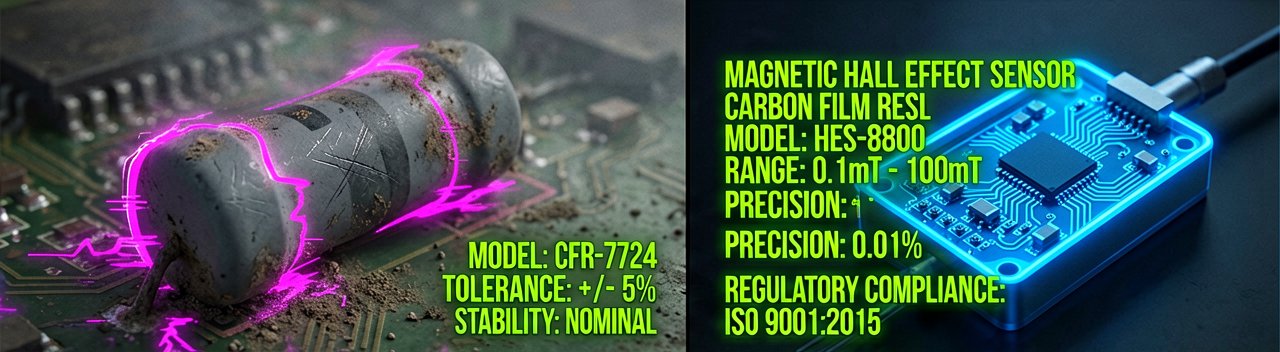
Behind the Scenes: The persistent failure of modern controller analog sticks represents a systemic compromise between industrial design choices, cost-cutting manufacturing, and physical limitations. For years, major hardware manufacturers have relied on mechanical analog stick components that utilize carbon film resistors. Over months of intensive gameplay, the friction from movement generates tiny plastic debris inside the housing. This debris corrupts the electrical signals, leading to the erratic phantom movements commonly known as stick drift. While engineers have known about this threshold for mechanical degradation, platforms have historically prioritized high-margin accessory sales over implementing more expensive, durable alternatives.
This engineering friction has forced third-party accessory makers to step into the gap and exploit the vulnerabilities of first-party hardware. High-end pro controllers and affordable secondary peripherals are now actively marketing Hall Effect sensors, which use magnets rather than physical contact to measure input. This shift exposes the strategic paralysis of primary platform holders. Redesigning standard controllers midway through a console life cycle involves shifting multi-million dollar supply chains and restructuring automated factory tooling. Consequently, companies like Nintendo chose to offer free post-purchase repair programs in specific territories rather than executing a total hardware overhaul, balancing ongoing logistical repair costs against the extreme price tag of a complete manufacturing redesign.
The regulatory intervention in Europe marks a critical shift from treating stick drift as an isolated technical glitch to addressing it as an institutional consumer rights issue. Historically, hardware developers could rely on standard one-year warranties to mitigate their financial liabilities regarding component degradation. However, the legal pushback from consumer protection agencies highlights a growing intolerance for components that fail well before the expected operational lifespan of the host console. As regulatory bodies enforce strict transparency rules and demand accessible repair pathways, the gaming industry is reaching a tipping point where building durable, easily repairable hardware is becoming cheaper than managing the legal and public relations fallout of premature component failure.
The Competing Priorities of Console Lifecycles and Engineering Reality
Reading Between the Lines: The assumption that a multi-million dollar fine will instantly force the gaming industry to adopt bulletproof hardware engineering ignores the brutal economics of consumer electronics. Platform holders operate on Razor-and-Blade business models, where hardware margins are Razor-thin and supplementary accessory sales drive significant corporate profit. While a thirty-five million euro penalty appears substantial on paper, it represents a fraction of a single quarter's revenue for a global entertainment titan. For many corporations, the math remains painfully simple: paying occasional legal settlements and funding localized mail-in repair centers can still prove more cost-effective than proactively re-engineering hundreds of millions of standard components already circulating in global supply chains.

This economic reality creates a sharp contradiction between corporate public relations and actual consumer experiences. Even as major platform holders issue statements championing sustainability and customer satisfaction, they continue to bundle premium-priced consoles with the exact same vulnerable potentiometer components. Moving to superior tech like Hall Effect or TMR sensors introduces specialized logistical challenges, including precise magnetic shielding requirements to prevent interference with internal console antennas. By treating stick drift as a PR issue to be managed through legal compromises rather than a fundamental flaw requiring immediate hardware recalls, the industry subtly shifts the burden of proof and effort onto the player, who must still navigate customer support portals to claim their mandated remedies.
The long-term implication of this regulatory friction is not necessarily a sudden wave of indestructible controllers, but rather a fragmenting market where consumer trust becomes a luxury tier. We are already seeing the emergence of a multi-tiered ecosystem where standard, failure-prone controllers are bundled with base consoles, while durable, drift-resistant features are locked behind expensive premium upgrades or outsourced to specialized third-party brands. If regulators do not tie financial penalties directly to mandatory, universal hardware design changes, gaming companies will likely continue to optimize for the shortest component lifespan that legal frameworks allow, treating consumer advocacy fines as just another predictable cost of doing business in a captive market.
It turns out that the most advanced piece of engineering in modern gaming isn't a custom graphics processor or an innovative haptic engine, but rather the precise financial matrix required to calculate exactly how long a plastic joystick can fail before it becomes cheaper to fix the component than to keep paying the lawyers.
Artūras Malašauskas is an AI Systems Integrator with 20+ years of production-grade web engineering experience. He has designed, shipped, and scaled enterprise Python/PHP systems for logistics, SaaS, and public-sector clients. For the past year, he has focused exclusively on AI integrations: deploying open-source LLMs, building generative media pipelines (image, audio, video), and engineering multi-agent workflows for real production environments. His standard: reproducibility, security, cost-efficient inference—no vaporware. He documents and evaluates emerging AI tooling, separating verified capabilities from marketing noise. Technical editor at: muza-ai.eu, ai-verslas.lt, ai-naujinos.lt Connect on LinkedIn
Comments