Fear the Horizon: Why Resident Evil’s Open-World Temptation Could Explode the Franchise
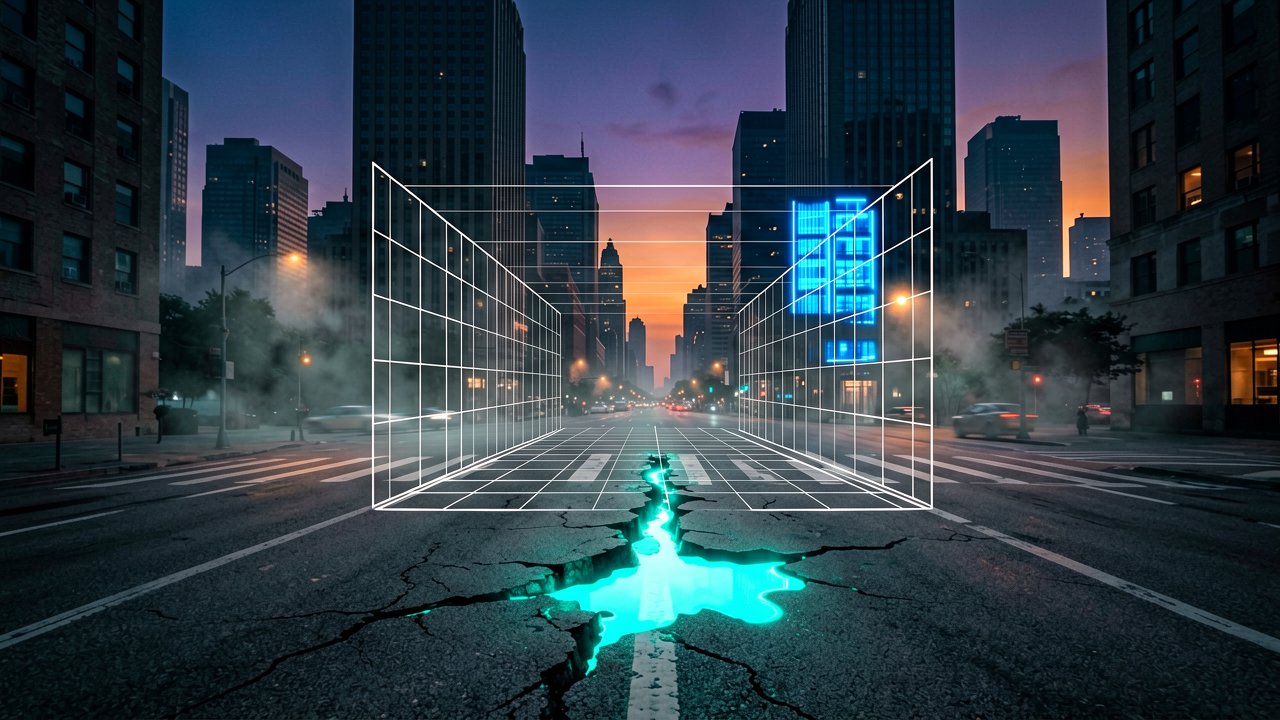
Survival horror is, by its very nature, an exercise in architectural claustrophobia. It thrives in the rotting corners of the Spencer Mansion, the narrow, rain-slicked corridors of the Raccoon City Police Department, and the suffocating, dilapidated shacks of Dulvey, Louisiana. So, when an early trailer for Capcom's ninth mainline entry, Resident Evil: Requiem, showcased a sprawling, bustling cityscape packed with pedestrian activity and unexpected verticality, the collective gaming community suffered a massive, synchronized panic attack. The immediate, feverish speculation that the series was abandoning its linear roots for a wide-open sandbox threatened to tear the fandom completely in two.
The terror didn't just come from the zombies; it came from the terrifying prospect of a map littered with glowing waypoint markers and repetitive radio towers. Longtime purists rightfully argued that true terror requires a tightly controlled environment where developers can curate every jump-scare, ration every single bullet, and turn the map itself into a puzzle box. If you give a player an open horizon, unlimited flanking routes, and the freedom to simply run away from the horror, you risk diluting the intense, concentrated dread that makes Resident Evil great. Yet, the sheer ambition of the footage sparked a counter-argument among modern action-horror enthusiasts: after three decades of exploring mansions and isolated villages, maybe an expansive urban nightmare is precisely the shot of adrenaline the franchise needs to stay relevant.
The Reality Behind the Rumors
As it turns out, the rumors of a total open-world overhaul were born from a chaotic, behind-the-scenes evolution. Director Koshi Nakanishi later clarified during a development update featured on the Capcom Resident Evil Portal that the team had spent significant time during the game's early six-year cycle experimenting with a massive, online open-world multiplayer format. Conceived initially as a drastic departure from its predecessors, the team eventually hit the brakes in 2021 after realizing that a bloated, endless sandbox simply wasn't what core survival horror fans actually wanted. Instead, they pivotally rebuilt the experience into a finely tuned, dual-protagonist narrative that chops the environment into intensely focused, digestible districts.
Instead of a seamless, Ubisoft-style map, the final release of Resident Evil: Requiem acts more like a beautifully disguised illusion. It smartly blends the claustrophobic dread of FBI analyst Grace Ashcroft’s first-person investigation with the explosive, high-stakes action of veteran agent Leon S. Kennedy's third-person segments. Reports from Insider Gaming confirm that despite the visual grandeur of the city streets, the core loop relies on classic Spencer Mansion-style hubs, puzzle solutions, and locked doors requiring specific keys. It isn't a sandbox; it is a meticulously constructed maze that uses next-generation hardware to give the terrifying impression of a living, breathing metropolis under siege.

A Dangerous Blueprint for the Future
Even though Capcom ultimately backed away from the edge of the open-world abyss this time around, the visual experiment has permanently changed the cultural conversation around the franchise. Gamers on forums like are already actively dreaming about what a fully unfettered, emergent urban horror game could look like under Capcom's direction. The technical triumph of the RE Engine proves the studio has the muscle to render massive, atmospheric spaces without losing their signature graphical fidelity. If future titles decide to fully bridge that gap, borrowing non-linear exploration elements from games like Dragon's Dogma 2, the franchise could redefine the genre all over again.
However, the line between an ambitious evolution and a total identity crisis remains incredibly thin. If Capcom ever decides to fully resurrect their abandoned open-world prototype for a future entry, they will have to work twice as hard to ensure the isolation and desperation of survival horror don't get swallowed up by the horizon. For now, Requiem proves that the series is at its absolute best when it balances modern scope with its classic, claustrophobic DNA, giving players just enough room to run—before trapping them in the dark once more.
The illusion of safety dissolves entirely when the streets themselves become the enemy. Wandering through the dimly lit thoroughfares of this new metropolis, the player quickly realizes that scope hasn't replaced tension; it has merely weaponized it. In classic Resident Evil games, a door was a hard boundary, a loading screen, or a temporary barrier that offered a fleeting moment to catch your breath and reload. By pulling back the camera and tearing down those comforting walls, Capcom forces players to confront a harrowing psychological truth: when horror can approach from any intersecting alleyway or shattered high-rise window, no corner of the map is ever truly safe.
This structural shift mirrors a broader, more creative risk regarding how survival horror handles resources and progression. In a tight corridor, tracking your inventory is a math problem with a finite set of variables. In a sprawling cityscape, that math becomes wildly unpredictable, forcing the player to constantly weigh the risk of exploring an abandoned storefront against the guaranteed depletion of their precious ammunition. The terrifying brilliance of this design relies entirely on the player's own curiosity, turning the traditional survival instinct into a dangerous gamble where greed frequently leads to a swift, brutal demise.
The Anatomy of Modern Panic
To pull off this structural tightrope act, the developers relied heavily on the adaptive capabilities of the RE Engine, pushing environmental storytelling into overdrive. According to technical deep-dives on Eurogamer, the engine's streaming architecture allowed the team to populate the environment with hundreds of dynamic, unpredictable physics objects and reactive enemy AI routines. A barricade that held during an early exploration phase might be completely obliterated by a roaming monstrosity upon your return, obliterating any sense of a memorized safe route and keeping players in a perpetual state of hyper-vigilance.
Furthermore, the narrative duality of the two protagonists prevents the expanded environment from ever feeling bloated or aimless. By constantly shifting perspectives between the meticulous, slow-burning investigation of Grace and the explosive, desperate survival tactics of Leon, the game effectively controls the pacing from behind the scenes. This narrative whiplash ensures that the open spaces never have time to become boring, using the vastness of the city as a canvas to paint two completely different sub-genres of horror right on top of each other.
Ultimately, this visual and mechanical gamble demonstrates that evolution does not have to mean abandonment. By taking the foundational DNA of the franchise—the item management, the mounting dread, the desperate search for safety—and stretching it across a grander, more terrifyingly realistic canvas, Capcom has managed to rejuvenate the series without losing its soul. It serves as a stark reminder to the rest of the gaming industry that the boundaries of horror are only as limited as the imagination of the architects holding the blueprint.
The ultimate success of this architectural gamble hinges not on the size of the map, but on the depth of its shadows. By refusing to succumb to the industry's obsession with endless, checklist-driven sandboxes, Capcom successfully weaponized scale to enhance, rather than dilute, the essence of survival horror. The grand illusion of a sprawling city ultimately serves a singular, brilliant purpose: it magnifies the player's isolation, making the rare pockets of safety feel like miraculous oases in a desert of absolute hostility.
This creative pivot sets a powerful new precedent for the entire gaming industry, proving that aging franchises do not need to choose between stagnant nostalgia and identity-erasing modernization. Instead of abandoning the classic locked-door puzzles and resource scarcity that defined the genre, the development team proved that these mechanics can thrive within a more complex, next-generation framework. It is a masterclass in compromise, demonstrating that a map can feel infinitely larger to the mind while remaining tightly controlled by the director's invisible hand.
A Blueprint for the Next Generation of Terror
As the dust settles on this latest infected metropolis, the broader implications for the future of interactive horror become clear. The technological achievements of the RE Engine have shattered the old limitations, showing that dynamic enemy AI and changing environments can replace scripted jump-scares to create a more organic, personalized form of panic. Future entries will undoubtedly build upon this foundation, pushing the boundaries of survival horror into even more unpredictable territories where the environment itself acts as a living, breathing antagonist.
Capcom's willingness to experiment, stumble behind the scenes, and ultimately course-correct highlights a rare editorial discipline in modern game development. They recognized that the true heart of Resident Evil lies in the desperate calculation of every bullet and the terrifying creak of an approaching threat. By keeping those core pillars intact while expanding the visual horizon, they successfully navigated the treacherous waters of fan expectation and delivered an experience that honors the past while boldly defining the future.
In the end, survival horror has never really been about the walls closing in; it has always been about the terrifying realization of just how far you still have to run to find the light.
Artūras Malašauskas is an AI Systems Integrator with 20+ years of production-grade web engineering experience. He has designed, shipped, and scaled enterprise Python/PHP systems for logistics, SaaS, and public-sector clients. For the past year, he has focused exclusively on AI integrations: deploying open-source LLMs, building generative media pipelines (image, audio, video), and engineering multi-agent workflows for real production environments. His standard: reproducibility, security, cost-efficient inference—no vaporware. He documents and evaluates emerging AI tooling, separating verified capabilities from marketing noise. Technical editor at: muza-ai.eu, ai-verslas.lt, ai-naujinos.lt Connect on LinkedIn
Comments