The Humanoid Mirage: Why China’s Robot Subsidies Are Chasing a Market That Doesn’t Exist Yet
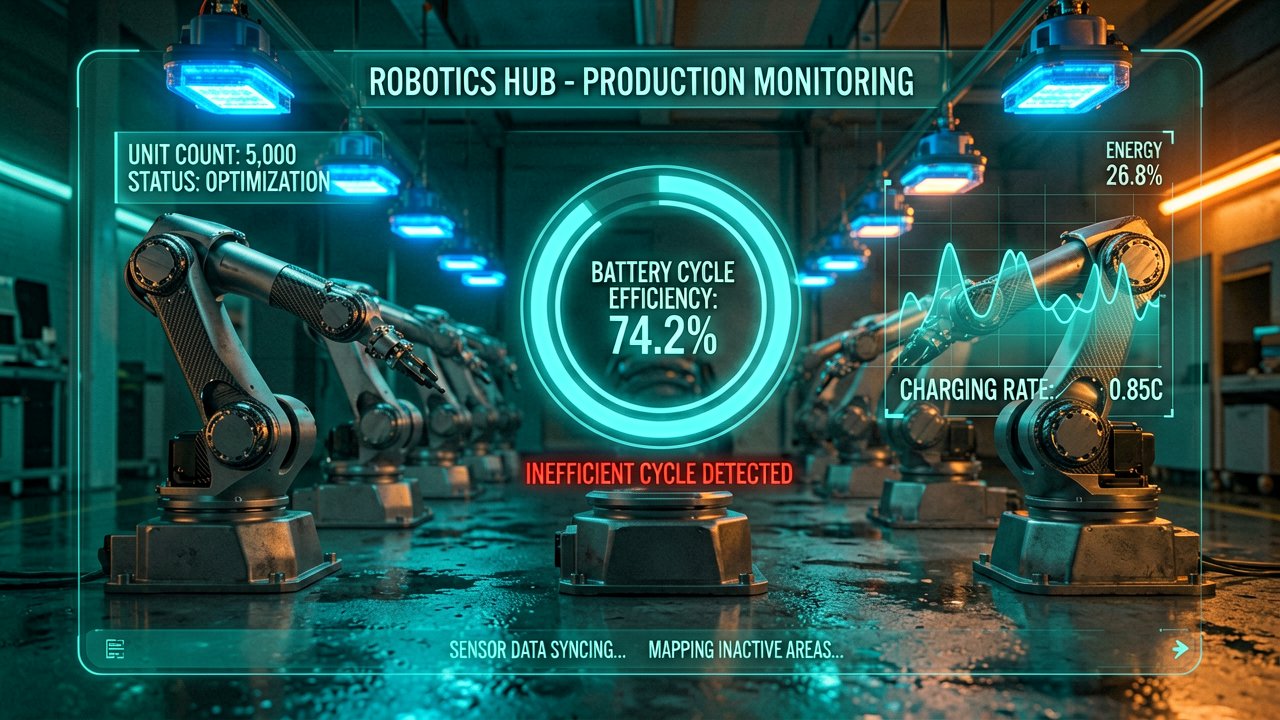
Walking through the modern tech expos of Shanghai or Shenzhen feels a bit like stepping onto a movie set where the props are entirely functional but the actors have nowhere to go. Metal limbs click, carbon-fiber digits flex with uncanny precision, and general-purpose artificial intelligence models whir under the hood. Chinese startups are churning out bipedal machines at a pace that makes the rest of the world look stationary, yet the real question isn't whether they can build them. It's who is actually going to sign the check.
The numbers coming out of the mainland look staggering on paper. According to data tracked by Omdia, local heavyweights like AgiBot and Unitree Robotics each shipped over 5,000 units last year, completely eclipsing the modest double- or triple-digit shipments of Western icons like Tesla's Optimus or Figure AI. China has effectively weaponized its existing electric vehicle supply chains, repurposing high-torque actuators, precision gears, and battery architectures to drive down manufacturing costs. But while the factories are ready for the grand opening, today’s commercial buyers are quietly slipping out the back door.
The Disconnection Between Supply and Satisfaction
The industry's most glaring open secret is that building a cheap chassis doesn't automatically mean you have built a useful employee. Market research from Morgan Stanley highlights a painful reality check: only 23 percent of surveyed enterprises expressed satisfaction with the humanoid models currently available on the market. The rest are staring down a frustrating list of operational hurdles. Battery life for these multi-million yuan investments frequently tops out at an impractical two to three hours per charge, transforming what should be a tireless 24-hour shift worker into a machine that needs constant babysitting at a charging dock.
Furthermore, hardware development has outpaced the software brain. While an articulated hand can technically grasp a bolt, navigating an unpredictable, messy factory floor requires a level of environmental adaptability that current embodied AI simply lacks. Unlike virtual large language models that scrape billions of text files from the open internet, physical robots require high-fidelity spatial data that can't just be pulled from a web page. Most companies are forced to train their machines in structured simulation loops, leaving the physical hardware clumsy and fragile when confronted with real-world chaos.

A Market Sustained by State Scaffolding
If private enterprise isn't buying, who is keeping the assembly lines running? The answer lies in massive local government intervention. Municipalities across the country are rolling out the red carpet with specialized funds, tax breaks, and state-backed testing centers designed to artificially jumpstart adoption. Provincial capitals are placing bulk orders for state-owned power plants, data centers, and public spectacles, using government procurement as a temporary financial floor. In cities like Shanghai, public facilities host dozens of humanoids simultaneously just to generate the operational data required to train future software generations.
This heavy-handed approach creates a classic chicken-and-egg dilemma. State funding allows manufacturers to scale up, reduce bills of materials, and hit production targets outlined in national development plans. However, this artificial demand distorts genuine market signals, leading regulators to openly warn about an impending investment bubble. With more than 140 domestic humanoid manufacturers chasing the same pool of state subsidies, the market is saturated with copycat designs that look spectacular in slick social media videos but fail to move the needle on real-world industrial productivity.
The Multi-Year Horizon
What we are witnessing isn't a failure of engineering, but a massive bet on a future timeline. China’s strategy mirrors its previous plays in consumer electronics and electric vehicles: flood the ecosystem with capital, build the deepest supply chain on earth, lower unit costs to unbeatable levels, and wait for the software capabilities to inevitably catch up. Analysts expect the real commercial pivot won't happen overnight, but rather during the early 2030s as component pricing compresses even further and machine autonomy matures.
For now, these bipedal creations remain ahead of their time, leaving manufacturers in possession of unparalleled factory capacity for a consumer base that remains largely unconvinced. The hardware is locked and loaded for a automated revolution, but the world is still waiting for the brains to arrive.
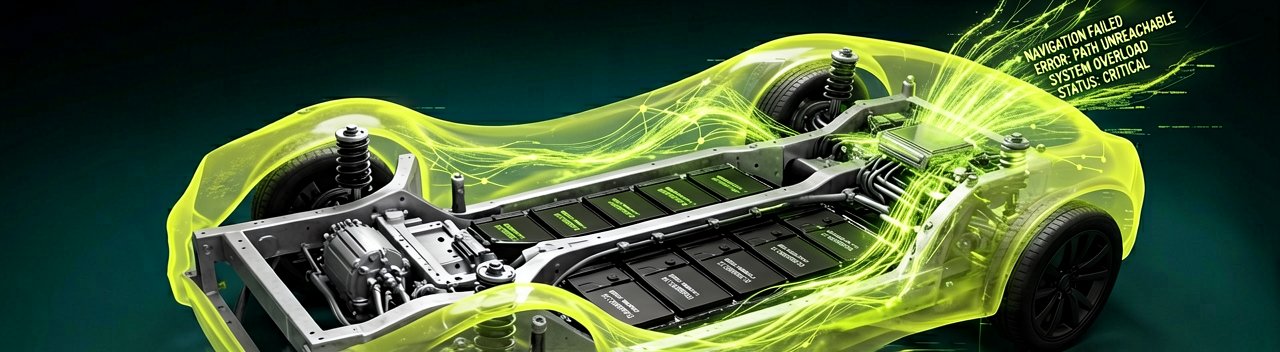
This is engineering by brute force, a relentless race to build the hardware container before the ghost can be coaxed into the machine. The great gamble of China's robotic theater is the firm belief that oversupply will eventually spark its own demand. By designating 2026 as the official "Year One" for widespread commercialization, Beijing has signaled that it is no longer content with keeping these machines confined to promotional tech expos or viral internet clips. Instead, pioneers like AgiBot and Unitree Robotics are pushing deep into unconventional distribution networks, introducing direct-to-consumer physical retail stores and flexible rental service programs to normalize the presence of bipedal helpers in regular environments.
The push to pull these mechanical marvels out of the lab has given rise to highly publicized spectacles designed to show off fluid, natural movements. Rather than the stiff, deliberate gaits of early industrial models, recent iterations have completed full outdoor marathons and executed intricate martial arts routines on major network broadcasts. This rapid evolution from rigid prototypes to agile bipedal athletes points to an unprecedented pace of mechanical optimization. However, the corporate world remains clear-eyed, recognizing that a robot capable of performing parkour is not inherently closer to solving complex, unmapped workplace logistics.
From Viral Stunts to the Bottom Line
As the initial media excitement settles, the focus is quickly pivoting from headline-grabbing athletic feats to measurable economic value. Private investors and venture firms, having poured massive capital into the space, are now loudly demanding clear paths to profitability and industrial scale. This shifting sentiment is triggering a rapid structural consolidation across the sector, separating well-funded firms with highly optimized supply chains from weaker startups reliant entirely on imitation. Observers anticipate that a major public listing from market leaders later this year could provide the benchmark needed to stabilize investor expectations and formalize the true financial worth of physical artificial intelligence.
The core struggle is no longer centered on basic physical capabilities, but on the profound software deficit holding back true multi-tasking operations. Chinese manufacturers are finding some success by optimizing systems around highly specific, predictable workflows rather than chasing the elusive dream of a fully generalized digital mind. By focusing on explicit industrial tasks like component sorting, warehouse tracking, and localized facility inspections, these hardware developers can iterate much faster. This pragmatic, task-specific strategy keeps the overall cost profile incredibly low, ensuring the machinery remains competitive even while its broader adaptability catches up.
Ultimately, the rapid expansion of this mechanical ecosystem is tied to a pressing demographic reality. Faced with a shrinking domestic labor pool and an aging workforce, state planners view humanoid machines not as luxury investments, but as the future backbone of industrial self-sufficiency. By leveraging existing, deeply integrated electric vehicle supply chains, these firms are driving component prices down to levels that Western competitors cannot easily replicate. While the global market waits for software models to mature, the physical infrastructure is being permanently cemented on the factory floors of the mainland.
The ultimate test of China’s robotic ambition will not be measured in factory capacity, but in the cold math of corporate utility. As the initial wave of state subsidies begins to level off, manufacturers are finding themselves at a critical crossroads where political mandates must finally align with commercial reality. The strategy of building a vast physical fleet before the software brains are fully mature has successfully granted the nation an unassailable head start in hardware logistics. Yet, maintaining this momentum requires transitioning from a heavily insulated, state-supported playground into the cutthroat arena of global industrial procurement.
This transition is already forcing a dramatic shift in how success is measured across the industry. Beautiful promotional videos showcasing humanoids making coffee or folding laundry are rapidly giving way to rigorous, multi-month pilot programs on real automotive assembly lines. Forward-thinking manufacturers are discovering that true integration requires rewriting the software stack from the ground up to prioritize predictable safety and spatial awareness over flashy, generalized intelligence. The companies that survive the upcoming market correction will be those that stop pitching their products as futuristic sci-fi companions and start selling them as reliable, high-uptime appliances.
The Geopolitical Ripple Effect
The global implications of this hardware saturation will likely mirror the disruptions seen in the solar panel and electric vehicle sectors over the previous decade. By driving the production cost of precision actuators and bipedal frames down to a fraction of Western estimates, China is effectively setting the global baseline price for physical labor containers. Even if international rivals develop superior foundational AI models, they may still find themselves forced to house those digital brains inside components manufactured in Shenzhen. This creates a complex, codependent ecosystem where Western software ingenuity remains tethered to Eastern industrial muscle.
As the decade progresses, the line between traditional industrial automation and humanoid robotics will continue to blur until the distinction disappears entirely. The massive data loops currently being gathered by thousands of state-deployed units are gradually feeding the next generation of multimodal models, closing the capability gap one shift at a time. The current market oversupply is not a systemic failure, but a deliberate, heavily subsidized down payment on a highly automated economic future that the rest of the world is still debating on paper.
"In the grand theater of automation, China has built an magnificent stage and crafted a flawless cast of mechanical actors; now, the entire world is simply waiting to see if they can finally remember their lines."
Artūras Malašauskas is an AI Systems Integrator with 20+ years of production-grade web engineering experience. He has designed, shipped, and scaled enterprise Python/PHP systems for logistics, SaaS, and public-sector clients. For the past year, he has focused exclusively on AI integrations: deploying open-source LLMs, building generative media pipelines (image, audio, video), and engineering multi-agent workflows for real production environments. His standard: reproducibility, security, cost-efficient inference—no vaporware. He documents and evaluates emerging AI tooling, separating verified capabilities from marketing noise. Technical editor at: muza-ai.eu, ai-verslas.lt, ai-naujinos.lt Connect on LinkedIn
Comments