MWC 2026 Sets New Benchmarks: How Xiaomi 17 Ultra and Honor Robot Phone Redefine Mobile Innovation
The Mobile World Congress (MWC) 2026 in Barcelona marks a definitive paradigm shift from conventional touch-and-swipe slabs toward autonomous, emotionally expressive, and hardware-integrated intelligent machinery. Rather than treating artificial intelligence purely as a localized cloud-based text assistant or a background photo editor, manufacturing pioneers are now using physical mechanics to manifest AI capabilities. This technological evolution signals a strategic pivot across the broader consumer electronics market, forcing legacy silicon and optics providers to re-engineer their fundamental hardware roadmaps.
Leading this strategic shift are two highly distinct hardware approaches that captured the industry’s attention. Xiaomi accelerated its deep optical integration by taking its partnership with Leica to an entirely new engineering level, merging monstrous multi-focal camera specs with a sleek flat-screen chassis. Conversely, Honor broke completely away from traditional static smartphone constraints by unveiling an interactive device housing an automated, motorized physical arm. Both devices illustrate that hardware is no longer just a passive container for software, but a core enabler of embodied machine intelligence.
Xiaomi 17 Ultra: Redefining Ultra-Premium Imaging and Optical Co-Creation
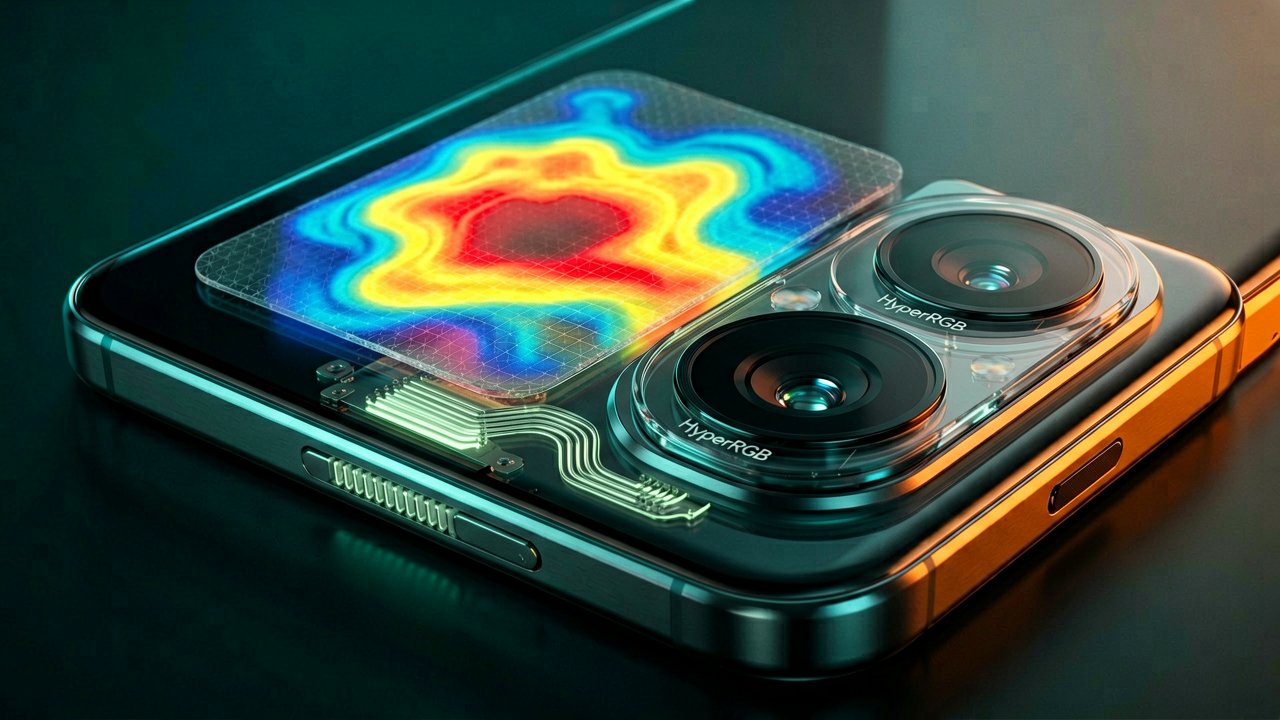
The global debut of the Xiaomi 17 Ultra represents a major structural change in mobile imaging strategy. As detailed by MobiGyaan, the device marks the transition from a standard "Joint R&D" framework to a deeply embedded Strategic Co-creation Model with Leica. This hardware-first approach shifts away from previous curved aesthetics to utilize a flat 6.9-inch M10 LTPO OLED display backed by HyperRGB clarity technology. Despite packing a comprehensive imaging array, it achieves an incredibly sleek profile measuring only 8.29mm in thickness.
The internal architecture is built entirely to sustain high-compute tasks without throttling. According to technical specifications compiled by Xiaomi Global , the flagship is driven by Qualcomm's Snapdragon 8 Elite Gen 5 platform alongside an upgraded bionic microstructure 3D Dual-Channel IceLoop cooling network. This high-efficiency silicon configuration is powered by a massive 6,000mAh Xiaomi Surge Battery that supports rapid 90W HyperCharge capabilities. To complement this raw power, the camera arrangement integrates a high-end 200MP periscope telephoto lens to dominate mobile zooming performance.
Honor Robot Phone: The Dawn of Embodied Intelligence and Kinetic Hardware
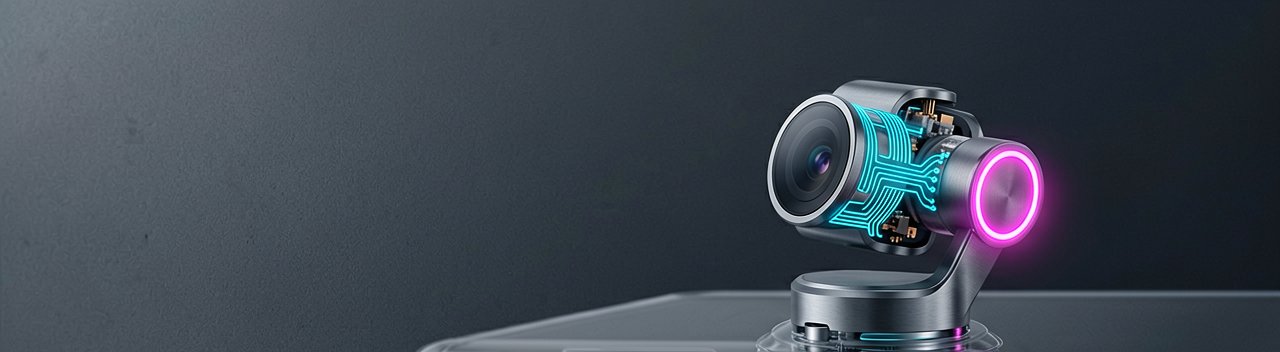
If Xiaomi represents the peak of traditional photography refinement, the Honor Robot Phone stands as a bold, disruptive exploration of kinetic device interaction. According to Honor Global, the phone embodies their Augmented Human Intelligence (AHI) vision under their long-term strategic Alpha Plan. It introduces a physical form factor built explicitly around spatial awareness and physical motion, successfully escaping the design constraints of a standard lifeless mobile slab.
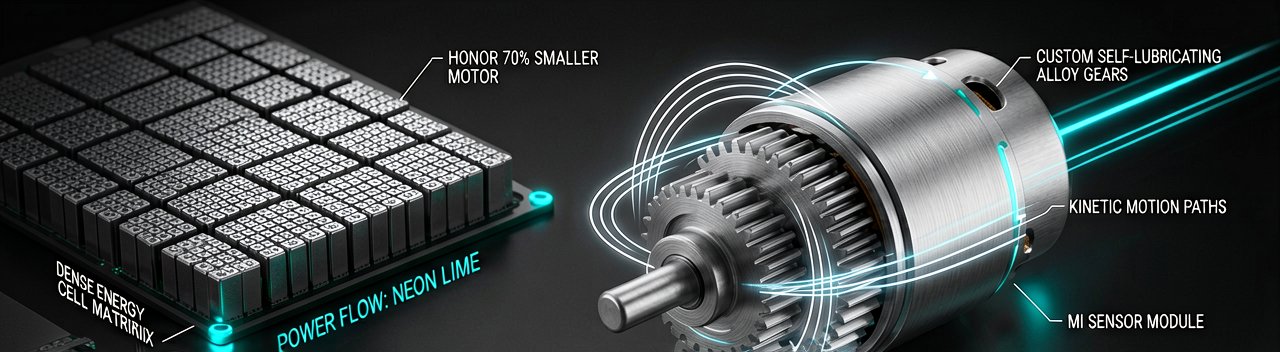
The mechanical engineering required to build this device relies on specialized microscopic components. Reporting from Huawei Central reveals that the device utilizes an incredibly light, proprietary micro-motor constructed out of 2800Mpa high-performance materials. The micro-motor is 70% smaller than standard industry options, allowing Honor to squeeze a highly sophisticated 4DoF mechanical gimbal inside a pocket-sized mobile body. This tiny architectural layout allows the integrated 200MP main camera to physical twist, turn, flip, and nod like a human neck to track environmental stimuli.
This kinetic flexibility opens up entirely new automated use cases for modern creators and casual consumers alike. As highlighted by Android Central, the device is officially slated for a global launch in Q3 2026 and features advanced cinema-focused video capabilities developed in partnership with ARRI. Armed with specialized multimodal perception, the phone autonomously pans and tilts via its 3-axis mechanical gimbal stabilization to track subjects during fast-moving vlogs or video calls. Additionally, the AI-driven companion engine communicates physically with users by nodding in agreement, shaking its head, or dancing synchronously to audio rhythms.
Strategic Imperatives for the Broader Mobile Market
The breakthroughs showcased by both companies outline a clear message for competitors: software refinement alone will no longer guarantee market leadership in the ultra-premium smartphone tier. Manufacturers must focus on deep engineering integration, whether that means creating bespoke physical cooling vapor chambers to support massive local AI processing or integrating miniature internal mechanical robotics. These engineering leaps redefine how global users view daily hardware interactions, setting an entirely new benchmark for premium industrial design moving forward.
The Architectural Strain on Legacy Supply Chains
Beyond the Showfloor Spectacle: The fundamental engineering shift witnessed at MWC 2026 is triggering an unheralded restructuring of global component supply chains. For nearly a decade, the smartphone industry relied on a predictable cadence of iterative sensor upgrades, display thinning, and software-side optimization. However, embedding multi-axis mechanical gimbals and heavy thermal dissipation loops directly into ultra-slim form factors forces component suppliers to operate under tolerances previously reserved for aerospace engineering or medical robotics. Standard automated assembly lines are poorly equipped to handle the delicate integration of micromotors alongside volatile, high-capacity silicon-carbon batteries, driving up initial manufacturing scrap rates and shifting production leverage toward highly specialized sub-assembly vendors.
This physical evolution is also forcing a critical re-evaluation of long-term component durability and consumer warranty frameworks. Kinetic hardware components, such as motorized joints that physically track users or articulate camera lenses, introduce a glaring point of mechanical failure that pure solid-state smartphones had largely eliminated. Industry analysts note that behind closed doors in Barcelona, insurance providers and corporate risk assessors expressed deep hesitation regarding legacy device protection plans. Manufacturers are consequently racing to certify new high-stress synthetic materials and custom self-lubricating alloys capable of enduring hundreds of thousands of physical cycles without catastrophic degradation, transforming the definition of premium build quality from simple drop resistance to long-term mechanical endurance.
Simultaneously, the race to power these resource-heavy, on-device AI models has sparked an invisible war over power management architecture. The introduction of high-density battery matrices, like Xiaomi’s dense energy cells, highlights a broader industry realization that traditional lithium-ion technology can no longer keep pace with continuous multimodal ambient processing. As software agents increasingly run background perception tasks, camera tracking, and localized LLM inference simultaneously, the power drain is non-linear. The strategic imperative has shifted away from chasing theoretical peak processing speeds toward developing hyper-efficient auxiliary co-processors that manage specific kinetic or sensory tasks without waking the power-hungry primary application processor.
Ultimately, this technological crossroads is fundamentally redrawing the competitive boundaries between hardware OEMs and silicon designers. Companies can no longer simply buy an off-the-shelf chipset, wrap it in a sleek glass chassis, and rely on algorithmic marketing to capture market share. The devices dominating the narrative at MWC 2026 demonstrate that true innovation now occurs at the exact intersection where customized code dictates physical, mechanical movement. Silicon vendors are being forced to co-design their future system-on-chip architectures alongside the specific mechanical aspirations of device makers, ensuring that the next generation of mobile computing is as structurally dynamic as it is computationally intelligent.
The Friction Between Innovation and Consumer Reality
Reading Between the Lines: The breathless enthusiasm surrounding the kinetic and optical marvels of MWC 2026 conveniently glints over an underlying commercial contradiction. For years, the mobile industry has aggressively conditioned consumers to expect entirely solid-state, seamlessly sealed devices capable of surviving accidental submersions and rugged daily drops. Introducing motorized articulation and external physical movement directly reverses this hardware evolution, trading hard-won physical resilience for novelty features that may offer diminishing practical utility. While a phone that physically nods or autonomously tracks a creator makes for an undeniable showfloor spectacle, it introduces an array of moving parts that are inherently vulnerable to the chaotic environments of pocket lint, beach sand, and accidental table spills.
Furthermore, the economic justification for these hyper-engineered devices remains deeply fragile within a highly saturated global smartphone market. Tech conglomerates are heavily subsidizing the immense research and development costs of specialized micromotors and custom co-creation optical assemblies under the assumption that consumers will willingly tolerate escalating premium price tiers. Yet, consumer data continuously shows extended device replacement cycles, as the average smartphone user finds their current hardware more than adequate for daily communication, browsing, and casual photography. Hardware manufacturers run a genuine risk of engineering over-sophisticated solutions for niche problems, alienating mainstream buyers who prioritize straightforward battery longevity and long-term device durability over a phone that mimics a robotic pet.
This aggressive push toward autonomous, physical hardware also creates an operational mismatch with existing mobile operating systems and app ecosystems. App developers are already struggling to optimize their software across standard varying screen sizes and chip architectures; they are unlikely to rush to build specialized features for a highly proprietary, motorized 4DoF mechanical gimbal. Without widespread developer adoption, these kinetic features risk becoming isolated hardware gimmicks confined entirely to native first-party apps. Until the broader industry establishes unified open standards for embodied mobile intelligence, these groundbreaking devices will likely remain expensive engineering proofs-of-concept rather than the universal foundations of the next computing era.
"We have spent over a decade perfecting the art of building unbreakable, waterproof glass bricks, only to decide that the future of mobile technology relies on giving those bricks a delicate mechanical neck that can break when dropped on a kitchen counter."
Artūras Malašauskas is an AI Systems Integrator with 20+ years of production-grade web engineering experience. He has designed, shipped, and scaled enterprise Python/PHP systems for logistics, SaaS, and public-sector clients. For the past year, he has focused exclusively on AI integrations: deploying open-source LLMs, building generative media pipelines (image, audio, video), and engineering multi-agent workflows for real production environments. His standard: reproducibility, security, cost-efficient inference—no vaporware. He documents and evaluates emerging AI tooling, separating verified capabilities from marketing noise. Technical editor at: muza-ai.eu, ai-verslas.lt, ai-naujinos.lt Connect on LinkedIn
Comments