Apple's WWDC 2026: Silicon Supremacy and AI Integration Redefine the Ecosystem
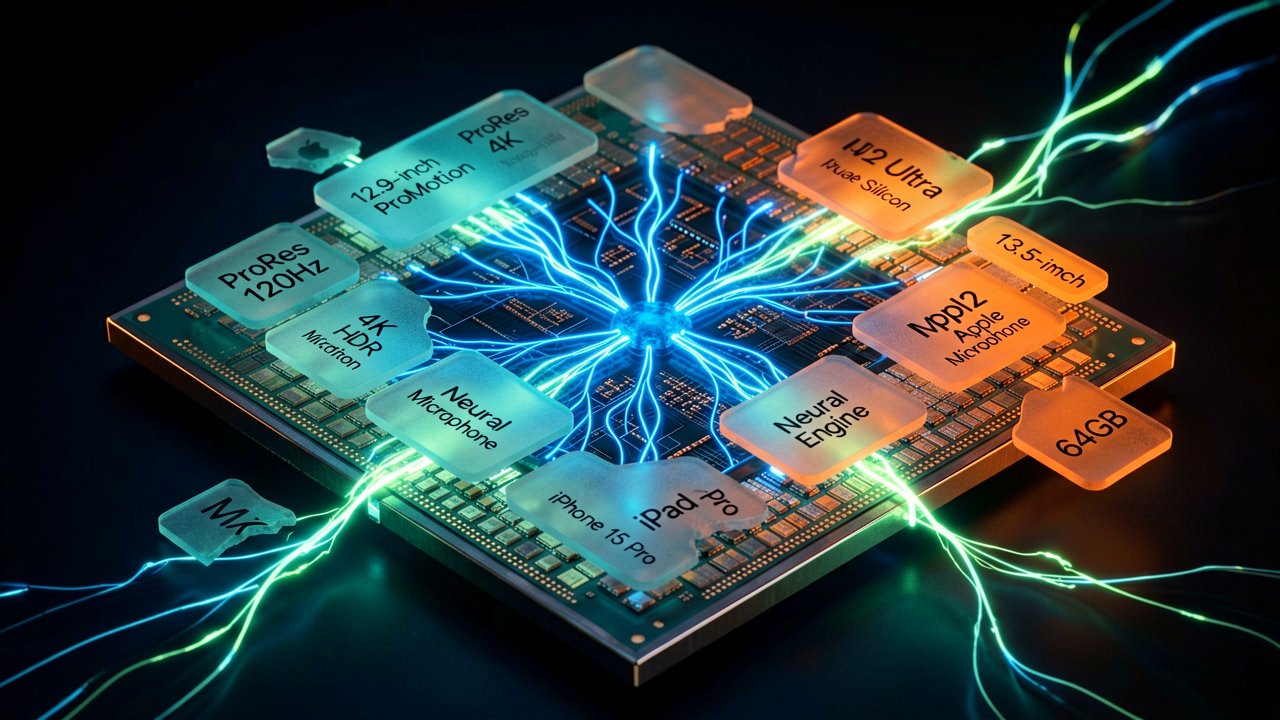
The annual Worldwide Developers Conference (Apple Developer) underscored a monumental shift in the tech giant's overarching product strategy. Faced with intensifying competition in generative artificial intelligence and high-performance computing, Apple utilized its keynote address to transition from standalone software updates to an interconnected, intelligence-first ecosystem. This strategic pivot heavily unifies next-generation software architecture with specialized silicon to secure its competitive moat and lock in consumer retention.
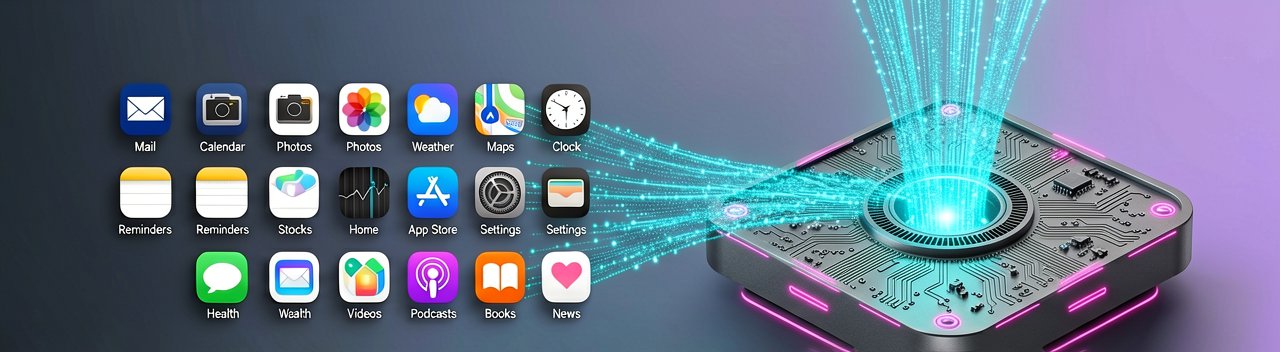
Central to this evolution is the deep integration of machine learning directly into the core fabric of the operating systems. Rather than treating artificial intelligence as a superficial layer or a separate application, the brand has structurally modified how hardware processes computational models. This structural alignment allows local workloads to communicate seamlessly across consumer hardware, offering a glimpse into a unified software landscape that prioritizes context-aware workflows, advanced agentic automation, and an uncompromised commitment to user privacy.
The Architecture of Synergy: iOS 20 and macOS Sonoma 2.0
The rollouts of iOS 20 and macOS Sonoma 2.0 represent a fundamental redesign of cross-platform experiences. Apple has deployed unified foundational models that allow software systems to share operational context dynamically. Developers can now utilize deep machine learning APIs via an updated MacRumors report outlining Xcode enhancements. These frameworks let apps anticipate intent, automate complex cross-application scripts, and execute predictive text and design tasks locally. By lowering the friction of complex cross-device computing, these operating systems transform the Apple ecosystem from a collection of synergetic gadgets into a singular, highly responsive cognitive network.
M4 Ultra: The Silicon Powering On-Device Intelligence
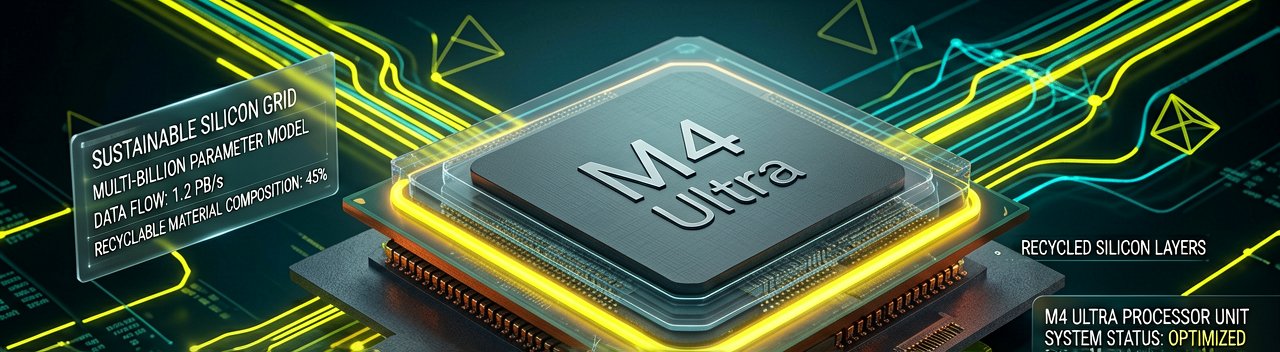
On-device intelligence requires immense computational capacity, a demand directly met by the introduction of the M4 Ultra system-on-a-chip. Built on an advanced architecture, this processor features a massively expanded Neural Engine designed to manage multi-billion parameter machine learning models locally. According to technical documentation reviewed by PCMag, certain high-tier AI operations will strictly require this level of high-performance silicon and minimum memory layouts. By executing complex generative tasks on local hardware, Apple effectively bypasses the latent delays and bandwidth costs associated with cloud computing, thereby establishing a major benchmark for consumer privacy and processing speed.
Eco-Conscious Infrastructure and the Green Computing Mandate
As computational demands rise, Apple has explicitly tied its hardware scaling to strict sustainability targets. Every facet of the M4 Ultra platform and matching consumer hardware conforms to a low-carbon design philosophy. This methodology integrates entirely recycled materials into internal circuit boards and enclosure chassis while maximizing performance-per-watt efficiency. This hardware optimization minimizes the energy footprints of on-device model training and execution, proving that the aggressive scaling of consumer electronics can align with rigorous, verified environmental goals.
Developer Empowerment and Market Implications
By placing sophisticated machine learning tools directly into the hands of global developers, Apple is deliberately accelerating the creation of a brand-new marketplace category. The ability to run local models without paying high cloud server fees gives indie developers and enterprise creators an immediate incentive to build exclusively for Apple operating systems. This move intensifies the competitive pressure on rival operating systems, forcing them to match this degree of deep vertical integration or risk losing software innovation leadership to Apple's highly fortified ecosystem.
An Ecosystem Untangled: The Reality of Vertical Consolidation
Behind the Curtain of Innovation: Apple’s structural shift at WWDC 2026 highlights a deliberate transition from product-focused engineering to absolute platform synthesis. Historically, the hardware, software, and silicon divisions operated with clear functional boundaries, coordinating at milestones but maintaining distinct architectures. The design philosophy underpinning iOS 20 and the M4 Ultra proves that these silos have effectively dissolved. Engineers are no longer optimizing software to fit existing hardware constraints; instead, the underlying silicon instruction sets and operating system kernels are being co-authored to serve the specific computational appetites of on-device neural networks. This tight alignment alters the development lifecycle, moving Apple away from incremental spec bumps toward a highly unified computational grid.
Industry analysts view this consolidation as a direct defensive maneuver against the commoditization of consumer electronics. As global smartphone and PC replacement cycles lengthen, the financial incentive relies heavily on creating a software experience that becomes impossible to abandon. By tying cross-device contextual awareness directly to the proprietary Neural Engine of the M4 family, Apple is actively changing the consumer calculus. A user can no longer swap an iPhone for a competing device without experiencing a severe drop in the intelligence, automation, and operational continuity of their connected Mac and iPad systems. This strategy deliberately shifts the competitive battleground away from individual hardware features toward the invisible intelligence web connecting the hardware.
From the perspective of third-party developers, this shift introduces both unprecedented capabilities and significant platform pressure. In previous eras, developers relied on cloud infrastructure to parse complex data, bearing the continuous financial burden of server maintenance and data transit fees. The exposed APIs in macOS Sonoma 2.0 shift that financial and computational weight directly to the end-user's local silicon. While this democratization of machine learning allows small software studios to deploy incredibly complex tools without capital-intensive infrastructure, it simultaneously ties their operational success to Apple's premium tier hardware. Apps built to leverage the local multi-billion parameter models will inevitably underperform on legacy platforms, indirectly forcing consumers into a faster upgrade cycle to maintain software compatibility.
The environmental mandates highlighted during the keynote also reveal a deeper geopolitical and operational reality. High-performance artificial intelligence is fundamentally resource-intensive, drawing intense scrutiny from global regulatory bodies over energy consumption and carbon footprints. By aggressively publicizing a closed-loop supply chain and maximizing performance-per-watt efficiency in the M4 Ultra, Apple is proactively neutralizing potential regulatory hurdles in markets like the European Union. This sustainable approach serves a dual purpose: it appeals directly to eco-conscious consumers while fortifying the supply chain against volatile rare-earth mineral markets, ensuring that future hardware production remains insulated from global trade disputes.
Ultimately, WWDC 2026 marks the end of the modular device era for the premium tech sector. The long-term strategy focuses heavily on ambient computing, where individual screens matter less than the continuous, context-aware operational layer that floats between them. By controlling the raw silicon design, the operating system kernel, the development frameworks, and the retail marketplace, Apple has constructed an ironclad vertical monopoly over consumer AI. As these new operating systems roll out to the public, the broader tech landscape faces a stark ultimatum: invest heavily in deep hardware-software integration or risk becoming a modular utility operating in the shadow of a fully consolidated ecosystem.
Reading Between the Lines: The Costs of the Closed Ecosystem
Reading Between the Lines: The grand narrative of a seamless, AI-driven ecosystem masking-over a far more transactional reality regarding device longevity and consumer choice. Apple’s emphasis on local processing via the M4 Ultra chip is framed as a triumph for user privacy, yet it simultaneously establishes an aggressive paradigm of hardware-enforced obsolescence. By anchoring the most sophisticated capabilities of iOS 20 and macOS Sonoma 2.0 to specialized, cutting-edge Neural Engines, Cupertino is quietly drawing a line in the sand. Consumers holding perfectly functional premium devices from just a few years prior will find themselves locked out of the core intelligence features, transforming what was once a software update into a subtle but persistent pressure to upgrade expensive hardware.
This strategy also exposes a glaring contradiction in Apple’s highly publicized environmental mandate. The corporate goal of achieving carbon neutrality across its product life cycle sits in direct tension with an engineering philosophy that accelerates functional hardware redundancy. While a chassis made from recycled aluminum reduces the initial manufacturing footprint, that ecological gain is quickly neutralized if the consumer is incentivized to replace the entire device years ahead of its physical expiration date just to access basic software automation. True sustainability relies on extending the operational lifespan of existing electronics, an objective that runs fundamentally counter to a business model dependent on predictable, high-margin hardware refresh cycles.
Furthermore, the democratization of machine learning for developers carries hidden caveats that threaten the open web. By encouraging the developer community to build applications tailored exclusively to Apple's local silicon and proprietary APIs, the tech giant is deepening its competitive moat at the expense of cross-platform interoperability. Developers face an optimization dilemma, finding it increasingly inefficient to maintain feature parity on web applications or competing operating systems that lack identical hardware accelerators. This calculated fragmentation risks creating a two-tiered software ecosystem where the most intuitive, context-aware digital experiences are gatekept behind a premium hardware paywall, ultimately limiting consumer choice to the confines of a single corporate garden.
Monetizing this intelligence layer also introduces long-term economic uncertainties for the enterprise. While shifting the computational burden of AI models from corporate cloud servers to local consumer silicon alleviates infrastructure costs for software studios, it shifts the financial risk entirely onto the consumer's wallet. Consumers are effectively being asked to subsidize the industry's massive AI research and development budgets through higher upfront device costs. Whether the broader public will continuously pay a premium for ambient context awareness remains an open question, especially as open-source web models continue to narrow the capability gap without requiring specialized desktop silicon.
"In the grand theater of modern personal computing, we are told that our devices must now anticipate our every thought and desire. Yet, as the hardware requirements climb alongside the corporate stock price, one cannot help but notice that the most predictable, automated feature of the entire ecosystem remains the annual migration of cash from the consumer’s bank account directly into Cupertino's vault."
Artūras Malašauskas is an AI Systems Integrator with 20+ years of production-grade web engineering experience. He has designed, shipped, and scaled enterprise Python/PHP systems for logistics, SaaS, and public-sector clients. For the past year, he has focused exclusively on AI integrations: deploying open-source LLMs, building generative media pipelines (image, audio, video), and engineering multi-agent workflows for real production environments. His standard: reproducibility, security, cost-efficient inference—no vaporware. He documents and evaluates emerging AI tooling, separating verified capabilities from marketing noise. Technical editor at: muza-ai.eu, ai-verslas.lt, ai-naujinos.lt Connect on LinkedIn
Comments