Accurate Background Signals Major Tech Push with Appointment of New AI Chief

Global background screening giant Accurate Background LLC has officially stepped up its enterprise automation game. In an announcement made on June 9, 2026, the Irvine, California-based company named veteran technology leader Todd Stuck as its new Senior Director of Artificial Intelligence. Reporting directly to Chief Information Officer David Szweda, Stuck will take the reins of the firm's overarching machine learning roadmap during a time when HR tech is aggressively transitioning from simple algorithmic processing to deep generative frameworks. The detailed strategy behind this executive hire was first highlighted in an official industry briefing on Accesswire.
Stuck isn't a stranger to steering massive ship-turns in highly regulated spaces. Over a 15-year career, he has managed high-stakes digital transformation, data analytics, and automation programs for corporate heavyweights like McKesson, CVS Health, USAA, and Cerner. It's exactly that intersection of heavy compliance background and corporate scale that Accurate needs as it processes complex background checks and continuous monitoring services across more than 240 countries and territories. Enterprise screening is inherently data-heavy and legally sensitive, meaning any internal AI adoption requires a careful tightrope walk between processing speed and absolute data integrity.
Pragmatism Over Hype in the HR Lifecycle
What makes Stuck’s appointment notable is his explicit focus on practical utility rather than chasing tech-industry buzzwords. He steps into the role with an mandate to scale intelligent workflows that reduce friction for both employers and job candidates, prioritizing actionable business outcomes over experimental AI deployments. Under his leadership, the compliance provider plans to heavily bake governance, privacy, and security frameworks directly into its underlying platform models. This strategy aims to ensure that quicker turnaround times on global talent acquisition don't inadvertently introduce regulatory or bias liabilities into the vetting process.
Beyond the Executive Suite: The real story behind Todd Stuck’s appointment is the quiet arms race transforming the background screening industry from a reactive administrative hurdle into a proactive, data-driven security discipline. Historically, consumer reporting agencies relied heavily on manual data entry, physical courthouse runners, and slow, fragmented public databases. Over the last decade, the explosion of remote work and global hiring forced an industry-wide pivot toward instant, digital verification. For a company like Accurate Background, which services everything from small startups to Fortune 500 enterprises, the sheer volume of unstructured data requires automated systems capable of reading, categorizing, and validating complex legal records without human intervention.

This transition is not without significant technical friction. AI models in the human resources sector are notorious for inheriting structural biases, particularly when scanning criminal records or verifying employment history across disparate global jurisdictions. Industry insiders note that tech leaders in this space face a dual challenge: they must train algorithms to be sharp enough to match names accurately despite typos, aliases, and incomplete records, while simultaneously ensuring the software does not flag false positives that could ruin a job candidate's career. Stuck’s deep background in healthcare technology at firms like CVS and Cerner gives him a distinct advantage here, as both health tech and background screening operate under zero-mistake compliance mandates where data accuracy is literally a matter of legal and financial survival.
Balancing Speed with Compliance Standards
The timing of this hire also aligns with a shifting legislative landscape. Regulatory bodies globally are cracking down on automated decision-making systems, demanding high levels of transparency and auditability from enterprise software platforms. By anchoring its AI roadmap under a seasoned director, Accurate is signaling to its corporate clients that its machine learning tools will be built with automated safeguards designed to pass strict compliance audits. The goal is to move beyond the industry standard of simple keyword matching and transition into deep contextual analysis, allowing the platform to intelligently interpret international screening laws that vary wildly by state, country, and municipality.
Ultimately, the successful integration of advanced AI into background checks could significantly shorten the corporate hiring lifecycle, which currently stretches over several days or weeks for complex international roles. Stakeholders are watching closely to see how Stuck balances the pursuit of near-instant turnaround times with the absolute precision required by risk management professionals. In an era where top talent is lost to competitors over a matter of hours, optimizing this final bottleneck in the onboarding process will likely determine which screening platforms dominate the enterprise market in the coming years.
Reading Between the Lines: The corporate enthusiasm surrounding AI appointments frequently masks a fundamental tension in automated vetting: the paradox of efficiency versus accuracy. While a tech provider's marketing team might pitch automated machine learning as a silver bullet for instant global background screening, the ground reality is that public record infrastructure remains stubbornly archaic. Huge swathes of the municipal court systems, county records, and international registries that screening firms must query are not digitized, standardized, or optimized for modern APIs. Consequently, no matter how sophisticated an internal AI framework is, it remains bottlenecked by the analog speed of local government archives, creating a stark contrast between corporate tech aspirations and systemic infrastructure realities.
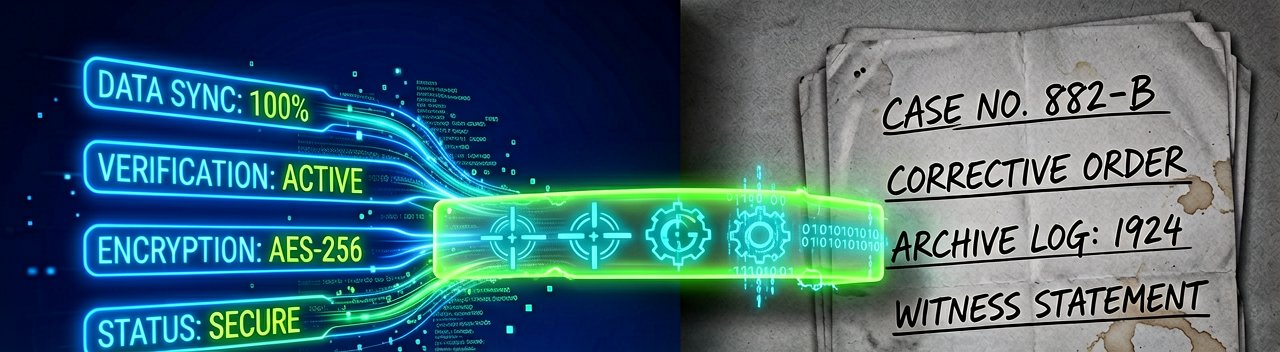
Furthermore, deploying generative models or deep learning in a highly litigious environment like applicant screening carries immense legal liability. Under the Fair Credit Reporting Act (FCRA) and evolving global data regulations, companies are strictly accountable for the accuracy of their reports. If an algorithm erroneously conflates identity records due to an overly aggressive machine learning inference, the consequences for the applicant are devastating, and the legal repercussions for the enterprise are severe. This introduces a structural contradiction in the role of an AI Director in this sector: their mandate is to innovate and accelerate automation, yet their primary operational boundary is to enforce rigid, ultra-conservative compliance thresholds that naturally resist automation.
The Realities of Algorithmic Objectivity
There is also an underlying skepticism within the broader tech industry regarding how "intelligent" these platforms can truly become without introducing bias. Training AI on historical data inevitably forces the model to digest decades of systemic discrepancies embedded within legal and employment tracking systems. A machine learning model designed to flag employment gaps or analyze criminal history contextualized across multiple global regions might inadvertently codify historical inequalities under the guise of objective data processing. Striking the balance between maximizing processing throughput and maintaining an objective, fair evaluation framework is a delicate engineering challenge that requires constant oversight and manual calibration.
As enterprise HR tech moves forward, the success of this AI push will not be measured by the novelty of the models deployed, but by the platform's ability to seamlessly handle edge cases where human lives and careers hang in the balance. True optimization in this space will likely look less like completely autonomous decision-making and more like highly sophisticated triage systems that filter out the noise, allowing human investigators to focus their expertise where it matters most. Until global regulatory bodies and municipal databases uniformly enter the digital age, advanced AI in vetting will remain a powerful engine trapped on a largely unpaved highway.
"In the high-stakes world of enterprise HR, artificial intelligence promises to eliminate the friction of human bias and delay, right up until a rogue algorithm accidentally rejects a qualified CFO candidate because they shared a zip code and a common surname with an international jewel thief."
Artūras Malašauskas is an AI Systems Integrator with 20+ years of production-grade web engineering experience. He has designed, shipped, and scaled enterprise Python/PHP systems for logistics, SaaS, and public-sector clients. For the past year, he has focused exclusively on AI integrations: deploying open-source LLMs, building generative media pipelines (image, audio, video), and engineering multi-agent workflows for real production environments. His standard: reproducibility, security, cost-efficient inference—no vaporware. He documents and evaluates emerging AI tooling, separating verified capabilities from marketing noise. Technical editor at: muza-ai.eu, ai-verslas.lt, ai-naujinos.lt Connect on LinkedIn
Comments