Ecoflow X Pioneers Sustainable Streaming Practices, Redefining Industry Standards

The global entertainment sector is facing unprecedented operational pressure to reduce the environmental footprint of digital distribution pipelines. Addressing this challenge, the independent launch of Ecoflow X marks a major pivot from theoretical corporate social responsibility targets toward unified ecosystem experimentation. The coalition aims to bridge the long-standing divide between traditional engineering performance and environmental transparency across the digital video supply chain.
The venture builds directly upon structured collaborative foundations to shift industry momentum. Initially formed as a cross-sector project under the 2024 IBC Accelerator program, the entity has officially transitioned into an independent, neutral organization, according to reporting by Broadband TV News. The transition enables a dedicated, long-term testing laboratory framework designed to serve broadcasters, content providers, and tech vendors collectively.
By establishing concrete sandboxes for real-world empirical validation, the initiative establishes a framework to modernize digital distribution protocols. This approach bypasses isolated corporate silos to drive measurable efficiency gains across high-density networks. The resulting architecture establishes a standardized path forward for an industry navigating strict global emissions compliance.
Collaborative Architecture and Core Stakeholders
The initiative is anchored by a joint consortium of video technology specialists, media engineering networks, and public broadcasters. Industry pioneers Accedo, Humans Not Robots, ITV, and the Institution of Engineering and Technology (IET) established the independent entity. Foundational support also includes prominent broadcast institutions and digital optimization platforms, such as Channel 4, the European Broadcasting Union (EBU), the Digital TV Group (DTG), Quortex, and Fairmile West.
Standardized Metrics and Operational Optimization
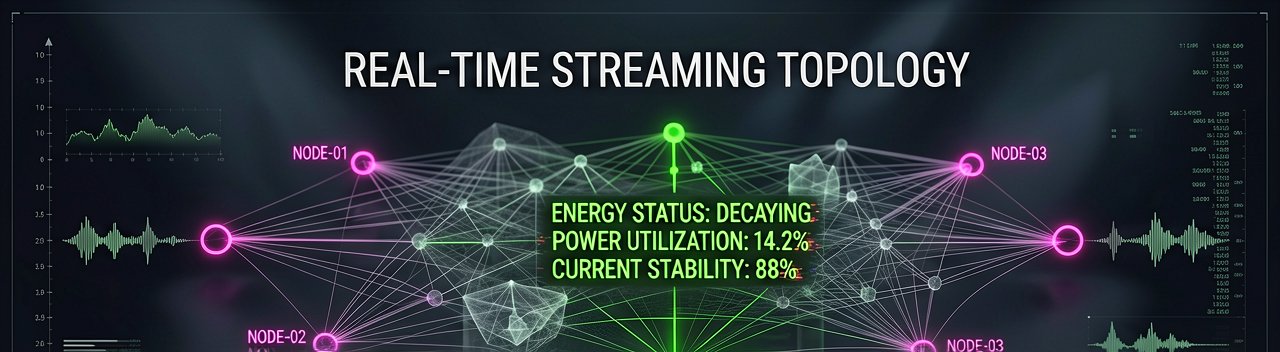
The primary strategic goal of the initiative centers on resolving fragmentation within environmental data reporting frameworks. Technical teams focus heavily on mapping the end-to-end streaming path, tracking power utilization from cloud processing facilities and content delivery networks down to individual household hardware. This empirical data collection establishes unified metrics that allow operators to balance high-definition content delivery with optimized data transit requirements.
Agentic AI Integration and Consumer Hardware Insights
The testing framework integrates agentic AI systems to provide operational recommendations and real-time efficiency adjustments for live streaming networks. Initial investigative findings published on the official Ecoflow platform highlight that optimizing infrastructure requires addressing consumer hardware constraints. Because standard device policies like Auto-HDR drive high power draw without clear consumer benefits, the group leverages algorithmic modeling to target display management, hardware decoding optimization, and context-aware application behaviors to lower cumulative energy demand.
Deep-Dive: Inside the Structural Overhaul of Media Distribution
Behind the Scenes: The technical evolution of the streaming sector has long prioritized minimizing video latency and maximizing visual fidelity, routinely treating the underlying power consumption as a secondary operational concern. The creation of Ecoflow X represents a fundamental restructuring of this design philosophy. By shifting sustainability from an isolated corporate compliance checkbox into an active media engineering discipline, the consortium forces a technical reconciliation between high-density bitrates and grid dependencies.
Historically, the digital video supply chain has operated within highly fragmented silos, where content delivery networks, cloud compute providers, and consumer electronics manufacturers rarely shared telemetry data. This lack of transparency made comprehensive carbon accounting nearly impossible, forcing platforms to rely on speculative industry averages. The testing laboratories established by this initiative are designed to replace these approximations with real-time empirical measurements captured across actual production workflows.

Operational data reveals that a significant portion of streaming energy waste occurs not during cloud encoding, but at the edge of the network and within consumer playback hardware. Automated workflows and unoptimized application architectures frequently force client devices to run at maximum thermal capacity regardless of content demands. Addressing these localized inefficiencies requires platforms to adopt dynamic, context-aware streaming profiles that adjust processing intensity based on active device states.
The strategic deployment of algorithmic modeling within these sandboxes allows engineers to simulate complex multi-vendor delivery pipelines before deploying code updates to live audiences. This structural validation ensures that energy-saving protocols do not trigger buffering or compromise service quality, which has historically been the primary point of resistance for commercial broadcasters. By proving that carbon reduction can coexist with strict service level agreements, the initiative establishes a pragmatic blueprint for a sector facing tightening global regulatory scrutiny.
Reading Between the Lines: The Friction of Practical Implementation
The Operational Paradox: The establishment of a unified testing framework exposes a critical tension between corporate environmental commitments and the commercial realities of data-driven entertainment. For years, major media organizations have relied on carbon offsets and green energy certificates to claim progress toward sustainability targets. By transitioning the focus to active engineering metrics, the new initiative forces platforms to confront the physical power draw of their digital infrastructure, a shift that may reveal that past efficiency gains were largely administrative rather than operational.
This technical transparency introduces an inherent conflict with existing business models centered on maximizing user engagement and retention. Streaming platforms traditionally deploy resource-heavy features like autoplay, high-frame-rate previews, and algorithmic pre-loading to capture consumer attention, all of which drive up processing demand at the edge of the network. Convincing commercial operators to throttle these high-energy engagement tactics in favor of carbon optimization remains a significant hurdle, as marketing departments are rarely aligned with engineering-led sustainability goals.
Furthermore, standardizing metrics across a highly distributed, multi-vendor supply chain presents major governance challenges. Public broadcasters and independent technology vendors may embrace open-source telemetry standards, but proprietary cloud providers and global content delivery networks often treat their infrastructure efficiency data as highly guarded trade secrets. Without mandatory regulatory pressure or absolute compliance from the largest infrastructure providers, localized sandboxes risk becoming isolated ecosystems that fail to influence the broader global traffic footprint.
The reliance on algorithmic modeling to optimize client-side hardware also faces the reality of device fragmentation. While modern smart TVs and flagship smartphones can adjust decoding protocols dynamically, millions of legacy streaming devices and budget set-top boxes lack the processing architecture required to execute context-aware power management. Consequently, the burden of implementation may fall disproportionately on content delivery networks, forcing complex server-side optimizations that could inadvertently increase operational costs for smaller streaming services.
"Ultimately, the industry faces a choice between optimizing its code or waiting for the climate to optimize its operating environment, proving that while data may live in the cloud, the servers still run on a very terrestrial power grid."
Artūras Malašauskas is an AI Systems Integrator with 20+ years of production-grade web engineering experience. He has designed, shipped, and scaled enterprise Python/PHP systems for logistics, SaaS, and public-sector clients. For the past year, he has focused exclusively on AI integrations: deploying open-source LLMs, building generative media pipelines (image, audio, video), and engineering multi-agent workflows for real production environments. His standard: reproducibility, security, cost-efficient inference—no vaporware. He documents and evaluates emerging AI tooling, separating verified capabilities from marketing noise. Technical editor at: muza-ai.eu, ai-verslas.lt, ai-naujinos.lt Connect on LinkedIn
Comments