Datadog Drops 100 New AI Capabilities to Tame Enterprise Complexity

In a massive bid to shift from passive monitoring to autonomous IT operations, cloud observability giant Datadog unleashed more than 100 new AI-driven capabilities and security tools on June 9, 2026. The sweeping rollout focuses heavily on injecting agentic AI and advanced behavioral protection across the entire enterprise tech stack, signaling a definitive move toward self-healing software systems. According to an official press release hosted on GlobeNewswire, the company's new features are explicitly engineered to combat the dizzying operational strain that scaling large language models places on engineering teams.
The timing of this release isn't accidental. It lands just as modern tech stacks are hitting a breaking point under the sheer weight of multi-model pipelines and fragmented cloud systems. By deploying these automated toolkits, the monitoring powerhouse intends to stop alert fatigue right in its tracks, helping engineers manage both runaway infrastructure costs and escalating security vulnerabilities without constantly manually intervening.
Autonomy Meets Security on the Factory Floor
Among the headline additions is a security framework dubbed AI Guard, which leans on deep agent telemetry tracing and stateful behavioral anomaly analysis. This tool is built specifically to detect and block malicious prompt injections, preventing sensitive company secrets from leaking out through rogue AI workflows. Rather than treating security as a separate afterthought, the framework integrates protective logic directly into the software deployment pipeline.
Simultaneously, the software suite introduces the Bits Agent Builder, allowing enterprise teams to orchestrate customized AI agents capable of diagnosing and repairing system anomalies on the fly. According to technical documentation found on Datadog, these specialized agents can plug directly into more than 2,000 prebuilt cloud and CI/CD actions. By executing automated, context-rich remediation strategies, they give corporate response units a massive head start on neutralizing outages long before an engineer has to wake up and open a laptop.
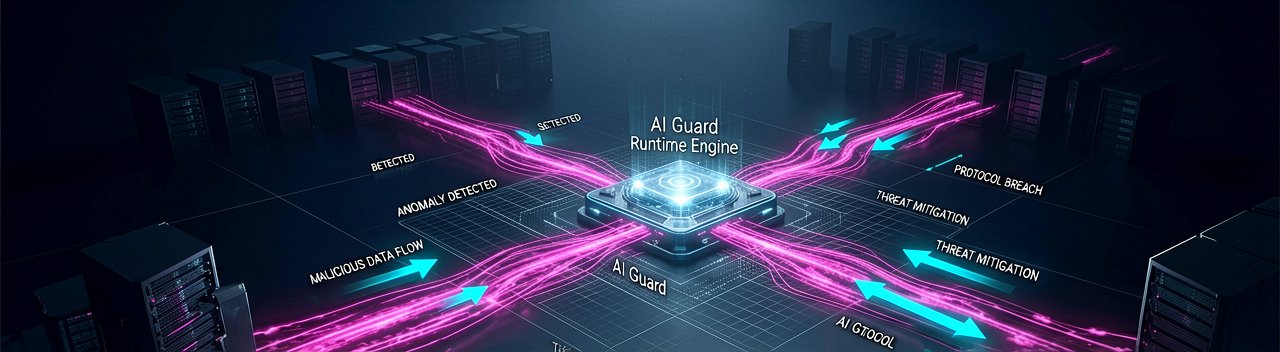
Behind the Data Storm: Datadog’s sweeping rollout marks a pivotal shift in the long-running war against enterprise complexity. For years, monitoring software acted purely as a smoke detector, screaming at engineers when systems began to melt down but leaving human teams to actually locate and extinguish the fire. This new evolution represents a structural leap toward an era where the platform itself actively orchestrates the repairs, fundamentally altering the traditional day-to-day realities of site reliability engineering.
Industry insiders note that the introduction of automated debugging agents answers a desperate industry need rather than just chasing a marketing buzzword. As enterprises rushed to deploy generative artificial intelligence over the past few years, they inadvertently created a monitoring nightmare. Large language models introduce a highly unpredictable layer of non-deterministic behavior into otherwise predictable software pipelines, making traditional, rule-based threshold alerts practically useless for capturing subtle logic failures or drift.
The Real-World Cost of Modern Alert Fatigue
Veteran system administrators are quick to point out that the human cost of managing modern IT infrastructure has reached an unsustainable boiling point. When a single microservice failure triggers a cascade of thousands of downstream warnings, engineering teams find themselves buried under an avalanche of digital noise. By deploying customized operational agents that understand the contextual relationships between infrastructure layers, organizations can shift their engineering focus away from tedious log analysis and toward long-term architecture improvements.
This paradigm shift also breaks down the historic walls that have long separated IT operations from core security teams. Traditionally, developers focused exclusively on keeping services running at peak performance, while security analysts operated within a completely isolated silo to hunting down malicious threats. The integration of continuous behavioral scanning directly into the observability pipeline acknowledges that in a cloud-native ecosystem, an operational anomaly and a security breach are frequently two sides of the very same coin.
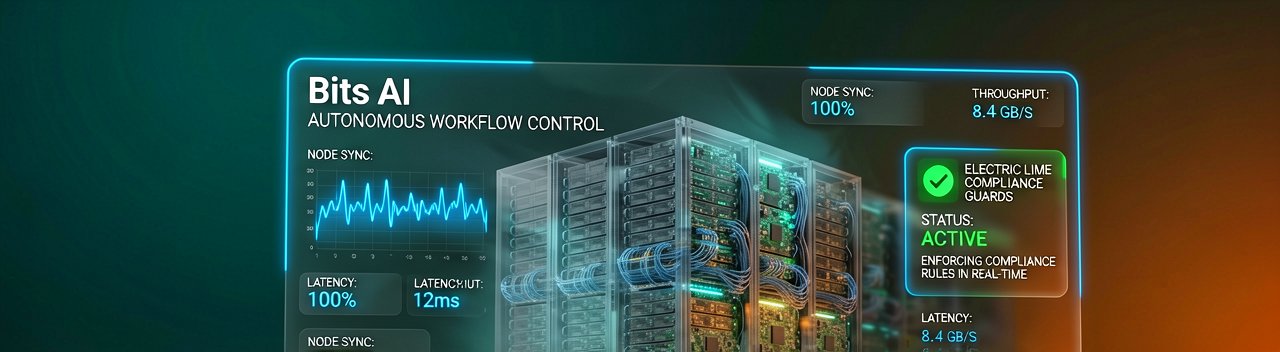
Ultimately, the success of this automated infrastructure model hinges entirely on the fragile element of corporate trust. Handing over the keys to autonomous agents capable of altering live production code requires a massive leap of faith for conservative enterprise leadership teams. While the immediate promise of reduced downtime and optimized cloud spend is incredibly alluring, engineering organizations will likely phase these tools in gradually, starting with passive diagnostic recommendations before letting AI autonomously patch their primary digital pipelines.
Reading Between the Lines: The glossy promise of an entirely self-healing enterprise tech stack sounds revolutionary on paper, but a sharp reality check reveals a deeply ironic paradox. In the rush to dismantle operational complexity by deploying one hundred new AI tools, organizations are fundamentally introducing an entirely new, highly unpredictable layer of complexity into their systems. Software engineers who previously spent their days debugging human-written code must now learn to debug the complex, opaque reasoning paths of autonomous monitoring agents.
There is a glaring contradiction in relying on generative AI to monitor the very same generative AI pipelines that are breaking modern infrastructure. Datadog’s newly minted AI Guard and Bits Agent Builder are essentially fighting fire with fire, operating under the assumption that algorithmic oversight can reliably police algorithmic chaos. If an autonomous agent misinterprets a spike in traffic as a malicious prompt injection and erroneously shuts down a critical database pipeline, the resulting outage could easily rival the very system failures the tools were built to prevent.
The Real Price of Vendor Lock-In
From a purely financial perspective, this massive operational consolidation raises serious questions about enterprise dependence on a single monitoring provider. By tying infrastructure health, cost optimization, and core security protocols directly into one platform, enterprises are effectively entering into a deep vendor lock-in that will be incredibly difficult to untangle. This consolidation shifts massive leverage toward the software provider, leaving corporate IT departments highly vulnerable to future subscription price hikes or platform-wide outages.
Furthermore, the long-term impact on the engineering workforce remains highly volatile. While eliminating repetitive alert fatigue is an undeniable win for team morale, over-reliance on autonomous remediation risks creating a severe skills gap over time. If junior engineers spend their formative career years simply approving changes suggested by automated agents rather than tracing systemic bugs manually, the industry may eventually face a critical shortage of senior architects who actually understand how these complex underlying systems work from the ground up.
It turns out that the ultimate dream of autonomous computing looks a lot like hiring a tireless, hyperactive robotic intern who can read a million logs per second, but might still occasionally delete the entire company database because it misunderstood a piece of natural language feedback.
Artūras Malašauskas is an AI Systems Integrator with 20+ years of production-grade web engineering experience. He has designed, shipped, and scaled enterprise Python/PHP systems for logistics, SaaS, and public-sector clients. For the past year, he has focused exclusively on AI integrations: deploying open-source LLMs, building generative media pipelines (image, audio, video), and engineering multi-agent workflows for real production environments. His standard: reproducibility, security, cost-efficient inference—no vaporware. He documents and evaluates emerging AI tooling, separating verified capabilities from marketing noise. Technical editor at: muza-ai.eu, ai-verslas.lt, ai-naujinos.lt Connect on LinkedIn
Comments