The Arms Race Inside Your Inbox: Haven Drops Free AI Bodyguard to Fight Hyper-Realistic Phishing
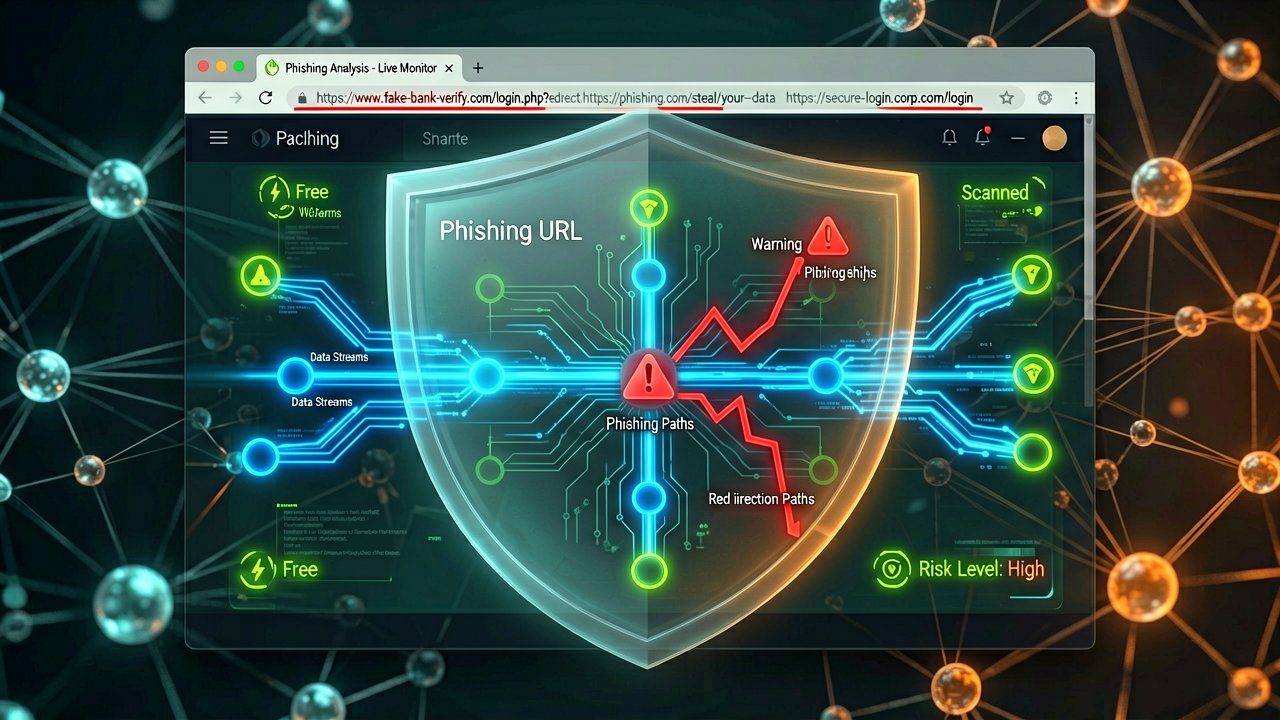
The rules of digital deception have permanently changed. On June 10, 2026, browser security platform Haven announced the launch of its free AI Security Companion, a tool built entirely around the harsh reality that traditional email filters are failing us. Developed by MirrorTab, Inc., this browser extension shifts the battleground from outdated blocklists to real-time behavioral analysis, hoping to protect everyday users from a staggering wave of highly personalized, machine-generated scams.
For years, staying safe online meant looking for clumsy red flags like broken English, mismatched domains, or bizarre urgent demands. But today's cybercriminals are weaponizing generative artificial intelligence to craft flawlessly written messages that convincingly spoof internal corporate memos or trusted financial systems. Because these attacks often run on hijacked, legitimate infrastructure—meaning they can easily slip past authentication checks—they fool traditional antivirus software and human eyes alike.
Context Over Checklists
Instead of merely cross-referencing sender names against a static list of known bad actors, Haven's new tool attempts to think contextually. It interrogates the broader anatomy of an interaction, analyzing hidden factors like embedded link redirections and structural manipulation techniques. By identifying the invisible social engineering patterns inherent to modern phishing kits, the extension aims to stop the exploit before a user can make a costly mistake.
A Free Shield in an Expensive War
While enterprise-level protection usually commands a steep premium, Haven is keeping the baseline extension completely free for individual use. It is a necessary intervention at a time when the economic math favors attackers; automated phishing setups have driven down the cost of launching hyper-targeted social engineering campaigns by up to 99%. By distributing this protective layer on the Chrome Web Store, Haven is effectively trying to democratize defense mechanisms before the human layer of cybersecurity completely collapses under the pressure of AI-driven fraud.

What Most Reports Miss: The launch of Haven’s free extension is not just a philanthropic gesture; it is a tactical acknowledgment that defensive cybersecurity has hit a breaking point. For decades, the industry relied on a reactive posture, where a threat had to be caught in the wild, analyzed, and added to a central database before anyone else could be protected. This worked fine when phishing campaigns were distributed via mass mailings that took weeks to deploy. Today, a threat actor can spin up a localized, generative phishing kit, target a specific group of executives, and tear down the infrastructure within hours—long before traditional security vendors can flag the domain.
Industry insiders have grown increasingly vocal about how quickly generative tools have eroded the baseline human intuition that used to keep users safe. In the past, security awareness training focused heavily on visual anomalies—spotting an odd character in a URL or catching an uncharacteristic greeting from a manager. By automating the customization process, attackers can now generate distinct, context-aware emails for thousands of different targets simultaneously. Because these messages mimic the exact stylistic tone of legitimate internal communications, relying on user vigilance has become a losing strategy.
The Economics of Modern Intrusion
This structural shift has completely inverted the economic calculus of digital defense. Historically, highly sophisticated social engineering was reserved for state-sponsored actors or elite ransomware syndicates due to the sheer human labor required to research targets. Now, commodity AI tools allow low-tier criminals to scale personalized operations at practically zero marginal cost. Security professionals point out that when defense remains expensive and offense becomes dirt cheap, the entire security model collapses unless automated, real-time protection can be deployed at scale without financial barriers.
By pushing this technology directly into the browser, Haven is bypassing the bottleneck of traditional enterprise IT deployments. Security architectures often require complex network configurations or heavy corporate software packages that everyday consumers and small businesses cannot afford or manage. Integrating defense mechanism directly into the browser environment allows the security companion to evaluate data at the exact point of interaction—analyzing the rendering behavior of a malicious page the moment a user clicks a link, rather than waiting for an external firewall to block it.

Ultimately, the success of this rollout will depend on how effectively Haven balances aggressive threat detection with user friction. Security tools that trigger too many false positives quickly suffer from alert fatigue, leading users to disable them entirely out of sheer frustration. As the boundaries between authentic digital interactions and automated deception continue to blur, tools that utilize behavioral analysis over rigid signature matching represent the front line of consumer defense in an era where seeing is no longer believing.
Reading Between the Lines: While the democratization of AI-driven security tools sounds like a definitive victory for the average internet user, it exposes a deeper, more uncomfortable contradiction within the tech ecosystem. We are currently witnessing an architectural absurdity where the very tech giants providing the infrastructure for generative AI models are also racing to sell us the cures to the problems those models create. By offering a free tier, Haven is making a savvy play for market share and user data telemetry, knowing that a massive, active install base is the only way to train its defensive models fast enough to keep pace with the rapidly evolving adversarial landscape.
This reliance on real-time behavioral monitoring also introduces a delicate paradox regarding privacy. To effectively judge whether an inbound link or an unusual script is a sophisticated trap, an AI companion must deeply observe how a user interacts with their browser. This creates an unsettling reality where, in order to protect ourselves from malicious corporate impersonation, we must willingly invite a continuous, highly analytical surveillance layer into our daily workflows. The line between a protective digital bodyguard and an invasive data-harvesting tool is razor-thin, and users are forced to trust that defensive algorithms will treat their browsing habits with more respect than the attackers do.
The Cat-and-Mouse Trap
Furthermore, tech journalists and security engineers alike must acknowledge that any defensive tool made freely and publicly available is immediately downloaded, dissected, and reverse-engineered by the very hackers it is meant to stop. Threat actors do not operate in a vacuum; they will use Haven’s own security companion as a testing sandbox, adjusting the parameters of their phishing code until they find the exact threshold that allows a malicious payload to slip past undetected. A free security extension is not a permanent solution, but rather a temporary patch that shifts the battlefield, forcing the adversary to innovate just a little bit harder.
This relentless escalation suggests that the ultimate vulnerability is not a flaw in our software, but a flaw in our biology. No matter how sophisticated an AI companion becomes, it can only flag, warn, and recommend. It cannot completely override the human tendency to ignore warnings when we are tired, rushed, or desperate. As long as security systems rely on a final "allow" click from an unpredictable human operator, the tech industry is simply building increasingly expensive fences around a lawn that anyone can still walk across if they are sufficiently distracted.
"We have officially reached the point in human history where we must rely on a friendly robot to double-check our inbox because we can no longer tell if a corporate email was written by our actual manager or an offshore algorithm having a particularly creative afternoon."
Artūras Malašauskas is an AI Systems Integrator with 20+ years of production-grade web engineering experience. He has designed, shipped, and scaled enterprise Python/PHP systems for logistics, SaaS, and public-sector clients. For the past year, he has focused exclusively on AI integrations: deploying open-source LLMs, building generative media pipelines (image, audio, video), and engineering multi-agent workflows for real production environments. His standard: reproducibility, security, cost-efficient inference—no vaporware. He documents and evaluates emerging AI tooling, separating verified capabilities from marketing noise. Technical editor at: muza-ai.eu, ai-verslas.lt, ai-naujinos.lt Connect on LinkedIn
Comments