Zscaler's Zero Trust AI Security: A Paradigm Shift for Autonomous Systems
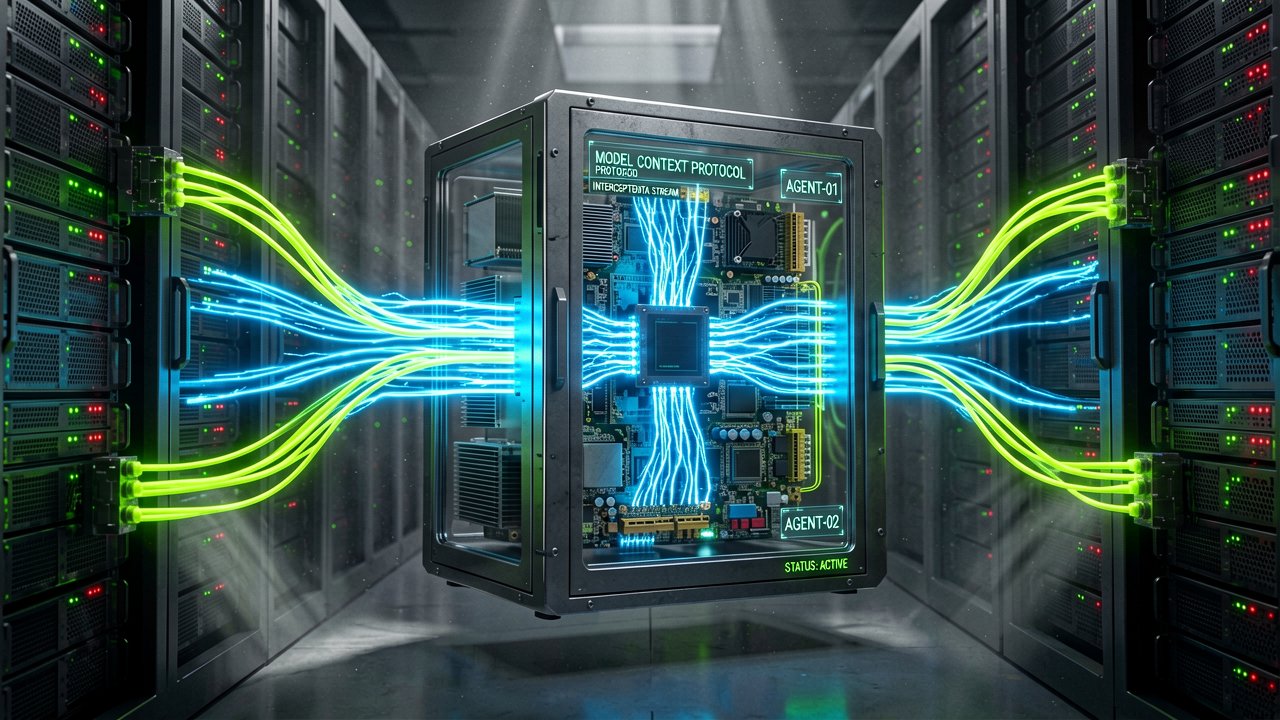
The rapid integration of autonomous artificial intelligence within the enterprise has initiated a profound shift in the cybersecurity landscape. Traditional perimeter defenses and identity frameworks, which were originally engineered around predictable human behaviors and static access controls, are fundamentally ill-equipped to govern independent digital entities. To address these emerging structural vulnerabilities, Zscaler extended its Zero Trust Exchange platform to deliver the industry's first complete security architecture tailored specifically for agentic AI. This evolution repositions cybersecurity from an edge-focused barrier into an active orchestration layer designed to intercept machine-speed operations.
This market shift comes at a critical juncture, as autonomous agents are increasingly deployed to execute multi-turn tasks, spin up sub-agents, and modify systems without direct human intervention. As highlighted by Network World, the market for AI systems security is projected to surge from practically zero to an $8 billion industry by 2030, intensifying competition among dozens of active vendors. The architectural dilemma facing organizations stems from the fact that modern agents require unprecedented data access to remain effective, yet their capacity to dynamically generate temporary machine identities creates vast visibility gaps that legacy security configurations cannot bridge.
By enforcing continuous, intent-aware monitoring rather than static, upfront permission catalogs, this platform establishes a "principle of least agency" to isolate autonomous behavior safely. According to Security Boulevard, the framework relies on centralized control elements that systematically regulate agent-to-agent and Model Context Protocol communications. This granular governance model allows security teams to map data lineage in real-time, effectively reducing the risk of prompt injections, lateral threat movements, and automated data exfiltration within distributed cloud and endpoint environments.
Securing the Machine-to-Machine Exchange
At the center of this architectural pivot is the Zscaler AI Broker, a dedicated control system designed to arbitrate communication happening via Model Context Protocols (MCP) and Agent-to-Agent (A2A) pathways. This mechanism relies on an integrated Agent Registry, allowing enterprises to establish rigorous validation protocols before any autonomous agent interacts with transactional systems. Rather than letting agents operate with inherited, broad human permissions, the broker forces continuous re-authentication, treating each sequential decision or sub-agent generation as an unverified, independent action request.
Mapping the Lineage of Non-Human Identities
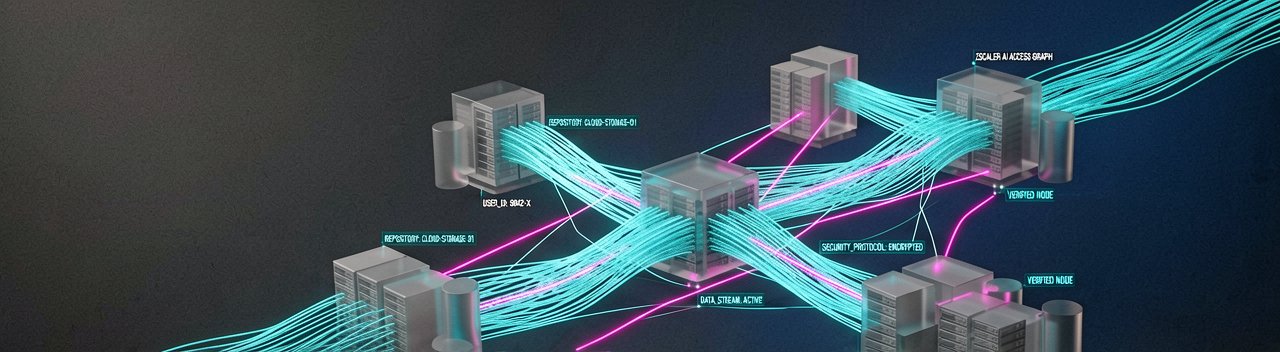
To deliver the visibility necessary for strict governance, the platform introduces the Zscaler AI Access Graph, which maps the complex web of connections between human identities, AI agents, and enterprise data repositories. Built upon automated data-mapping capabilities, this technology tracks what information an agent accesses and records the specific rationale behind its actions. This level of auditability provides security administrators with a clear view of data lineage, ensuring that multi-turn agent behaviors can be traced and analyzed for compliance even when a transaction is delegated through an interconnected chain of autonomous tools.
Hardening the Endpoint Against Autonomous Vulnerabilities
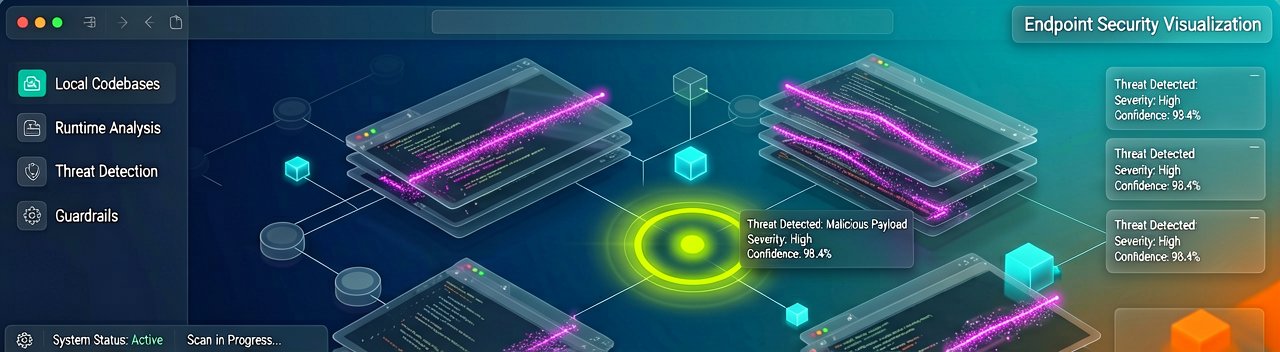
The decentralization of corporate workflows means local developer tools, browser plugins, and third-party extensions frequently harbor unmanaged AI capabilities. Zscaler Endpoint AI Security tackles this vulnerability directly by scanning the local application and browser layers where traditional endpoint protection software typically lacks visibility. By continuously checking agentic codebases and enforcing runtime guardrails directly on employee devices, this layer prevents malicious plugins or compromised local models from serving as undetected beachheads for enterprise data theft.
Reading Between the Lines: The Structural Paradox of Autonomous Trust
Reading Between the Lines: The collective enterprise rush to secure agentic AI exposes a fundamental architectural contradiction in modern enterprise strategy. For years, organizations have championed automation as the ultimate mechanism to eliminate human friction and accelerate business velocity. Yet, the introduction of specialized orchestration brokers and persistent runtime monitoring frameworks effectively reintroduces that exact friction, albeit at the programmatic layer. This creates a perpetual design paradox where the more guardrails security teams impose to limit an autonomous agent's behavioral blast radius, the less useful and autonomous that agent becomes. By forcing digital agents to continuously re-authenticate every multi-turn sub-task, organizations risk turning their highly agile AI investments into heavily bureaucratic, computationally expensive state machines.
Furthermore, the cybersecurity industry's newfound obsession with the "principle of least agency" assumes that an enterprise can clearly define the boundaries of intent for a system designed to be inherently generative and adaptive. Traditional zero-trust frameworks operate on binary certainties, such as verifying specific IP addresses, cryptographic tokens, or known human identities. Agentic workflows, by contrast, operate in a gray zone of probabilistic reasoning where an agent might dynamically choose an untested path or call an external API to fulfill a broadly stated corporate objective. Attempting to police these probabilistic behaviors with deterministic, rule-based security software creates a massive mismatch, likely resulting in a torrent of false positives that will overwhelm security operations centers and cause developers to bypass the guardrails altogether.
The long-term economic implications of this architectural race also warrant measured skepticism. As the market for AI security platforms scales toward multi-billion-dollar projections, enterprise buyers face an ironical reality where they must spend nearly as much money securing and auditing autonomous agents as they do on the underlying LLMs and infrastructure compute. This overhead is compounded by the fact that the primary vectors of attack—such as sophisticated prompt injections and data poisoning—often bypass network-level brokers completely by hiding within legitimate corporate payloads. Until the underlying foundational models possess native, structurally unbreakable internal reasoning boundaries, overlaying an external zero-trust network fabric will remain an expensive game of architectural whack-a-mole, treating the symptoms of autonomous unpredictability rather than curing its inherent volatility.
"We are spending millions to replace human employees with autonomous digital agents that can work at machine speed, only to spend millions more building digital bureaucracies to prevent those same agents from accidentally bankrupting the company before lunch."
Artūras Malašauskas is an AI Systems Integrator with 20+ years of production-grade web engineering experience. He has designed, shipped, and scaled enterprise Python/PHP systems for logistics, SaaS, and public-sector clients. For the past year, he has focused exclusively on AI integrations: deploying open-source LLMs, building generative media pipelines (image, audio, video), and engineering multi-agent workflows for real production environments. His standard: reproducibility, security, cost-efficient inference—no vaporware. He documents and evaluates emerging AI tooling, separating verified capabilities from marketing noise. Technical editor at: muza-ai.eu, ai-verslas.lt, ai-naujinos.lt Connect on LinkedIn
Comments