The Human Edge: Capcom's Strategic Compromise on Generative AI
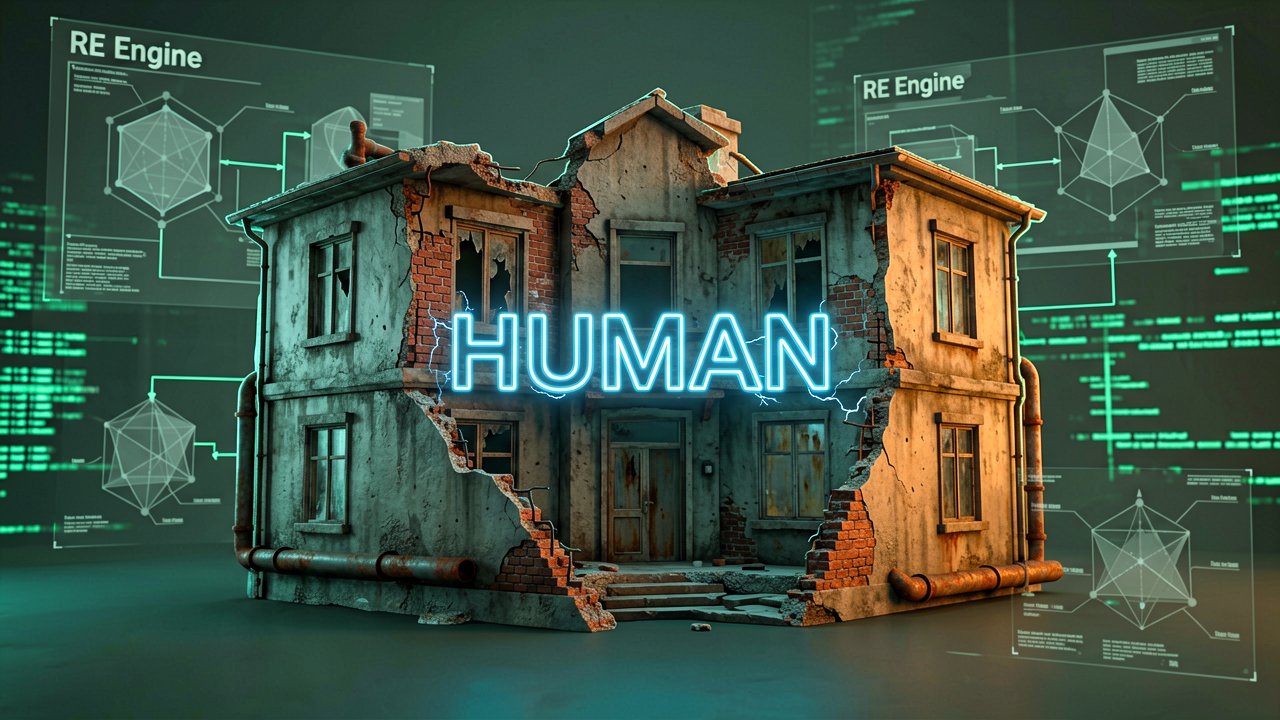
In a landscape where video game budgets are continuously spiraling upward, IGN reported that Capcom has drawn a definitive line in the sand regarding the future of game asset creation. The publisher behind blockbuster franchises like *Resident Evil* and *Monster Hunter* publicly declared that it will not implement materials generated by artificial intelligence into its shipped game content Video Games Chronicle. This landmark policy shift reassures players that the final visual assets, audio, and narratives they experience will remain fundamentally human-crafted Game Developer.
However, this refusal to ship machine-made content does not mean the company is rejecting technological innovation entirely. Capcom has openly admitted that it will "actively utilize" generative AI tools behind the scenes to enhance efficiency and accelerate productivity within its internal development pipelines GosuGamers. By integrating these systems for routine technical tasks and early-stage brainstorming, the studio is actively managing the rising complexities of AAA game development while actively shielding its artistic integrity from reputational risks IGN.
Market Context and Strategic Shifts
The gaming industry is currently grappling with a severe divide between the demands of investors seeking faster production times and players demanding authentic human creativity. Capcom's recent shareholder mandate is a direct response to this tension. By publicly avoiding player-facing generative AI, the publisher navigates clear of the severe community backlash that has recently plagued other major studios Game Developer. Historically, studios that have unintentionally or deliberately slipped AI assets into final releases have faced intense consumer scrutiny Game Developer.
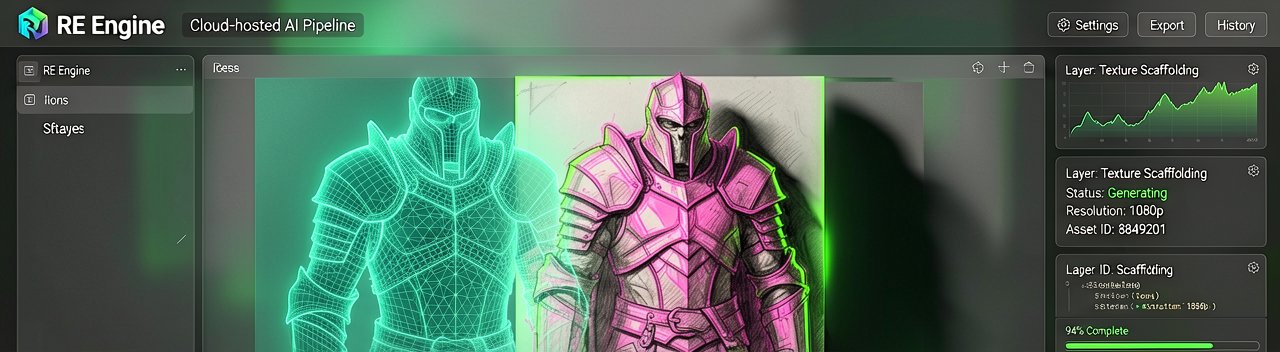
Capcom's solution is a strategic compromise: the storefront stays polished, while the internal warehouse gets automated BigGo Finance. Internal teams are testing AI across disciplines like graphics, programming, and sound generation IGN. For instance, developers have leveraged proprietary, cloud-based systems during the idea-creation process to brainstorm the hundreds of thousands of unique items needed to flesh out complex game worlds IGN. Instead of replacing the artist, the AI acts as a rapid springboard, providing reference drafts that are subsequently evaluated, refined, and perfected by human hands Video Games Chronicle.
The Delicate Balance of Artistic Integrity
Capcom's firm stance against utilizing final AI-generated assets sets a precedent in a market fraught with questions regarding authorship and copyright GosuGamers. As the demand for stunning visual fidelity increases, companies are forced to find ways to scale production without diluting the core emotional resonance that keeps consumers loyal to established IP Video Games Chronicle.
Capcom's approach is firmly rooted in the philosophy that technology should exist merely to augment human creativity, not to substitute it. By offloading tedious, intermediate brainstorming and routine tasks to machine learning models, human developers are theoretically freed to focus entirely on the high-level creative direction and mechanical nuance that defines modern hits Video Games Chronicle. This duality represents a mature, pragmatic methodology for handling AI in the industry: leveraging the machine to save time on the backend, while championing human craftsmanship as the ultimate selling point on the frontend.
Behind the Scenes: The Invisible Mechanics of Capcom's Workflow Automation
While mainstream headlines focus entirely on Capcom's refusal to ship machine-made artwork, the true operational transformation is happening within the studio’s proprietary RE Engine development pipeline. Behind closed doors, video game production has become a grueling race against escalating fidelity, where creating a single photorealistic environment can consume months of human labor. Capcom’s corporate strategy treats generative tools not as a creative replacement, but as an advanced mechanical lever designed to eliminate the highly repetitive, non-creative tasks that historically bog down production schedules.
Veteran developers understand that the initial phases of AAA pre-production are notoriously inefficient, often requiring thousands of concept iterations before a game's visual direction is locked. By deploying internal, cloud-hosted machine learning models, Capcom's development teams are now able to generate rapid technical scaffolding and asset baselines in a fraction of the traditional time. These systems analyze vast pools of existing, legally cleared internal data to output rapid prototypes of level layouts, texture variations, and environmental wireframes, giving human artists an immediate foundation to heavily modify, paint over, and reshape.
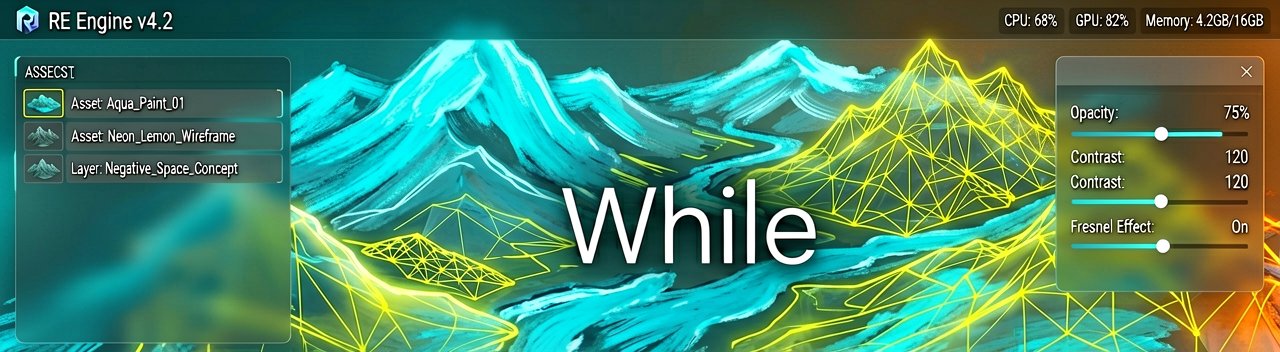
This hybrid methodology addresses a critical friction point between corporate stakeholders and the creative workforce. While investors demand shorter development cycles to maximize fiscal returns, historical attempts by competitors to cut corners with player-facing AI have triggered fierce union resistance, voice actor strikes, and consumer boycotts. Capcom's explicit guarantee that every shipped asset will retain human authorship serves as a crucial olive branch to its internal talent, ensuring the preservation of developer morale and protecting the studio from costly intellectual property litigation.
Furthermore, this operational shift highlights a distinct philosophical divide within the global gaming market, particularly between Western publishers and major Japanese studios. While some Western entities have experimented with automated narrative generation and procedural dialogue systems, Capcom's cultural legacy relies heavily on tightly controlled, auteur-driven experiences. The intricate combat mechanics of *Monster Hunter* or the precisely timed tension of *Resident Evil* require meticulous, deliberate human balancing that statistical probability models simply cannot replicate with emotional resonance.
Ultimately, Capcom is setting a highly practical blueprint for how legacy publishers can navigate the economic realities of the modern industry without sacrificing their brand identity. By establishing a rigid, transparent boundary between back-end workflow optimization and front-end artistic execution, the company insulates itself from reputational damage while simultaneously reaping the efficiency gains of the algorithmic era. This delicate equilibrium positions human craftsmanship as the ultimate premium selling point in a future market that will inevitably be flooded with hyper-templated, machine-generated media.
Reading Between the Lines: The Friction of Corporate Realism and Creative Purity
While Capcom’s public anti-AI posture has earned widespread praise from the gaming community, an expert analysis reveals a highly calculated paradox at the heart of their strategy. The corporate declaration that no AI-generated content will ever make it into a shipped game hinges entirely on how a studio defines an "asset." In modern AAA development pipelines, the boundary between a tool-assisted human creation and a heavily modified machine output is becoming incredibly thin, making absolute claims of creative purity difficult to sustain over a multi-year production cycle.
The core contradiction lies in Capcom's simultaneous vow to aggressively integrate generative AI to accelerate back-end productivity. If internal machine learning models are tasked with generating thousands of early-stage asset baselines, code snippets, or texture variations, the final human-polished product inevitably carries an algorithmic DNA. This creates a convenient loophole where corporate leadership can satisfy a passionate, tech-skeptical fanbase while quietly enjoying the cost-saving, rapid-prototyping benefits of automation behind closed doors.
Furthermore, maintaining this strict dichotomy poses severe long-term operational challenges as generative tools become deeply embedded into standard industry software suites. When commercial engines, audio editing programs, and digital painting applications natively integrate generative layers into their core brushstrokes and rendering algorithms, isolating human labor from machine assistance becomes virtually impossible. Capcom risks trapping itself in a regulatory and auditing nightmare, forced to police its own developers to ensure that a routine background process does not technically violate their public pledge.
This policy also introduces a high-stakes competitive gamble against rivals who choose to embrace automated production completely. If competing studios successfully leverage customer-facing generative AI to build massive, dynamically changing worlds at a fraction of the cost, Capcom will be forced to compete using a heavily manual, more expensive workforce. The company is betting its financial future on the assumption that players will continue to pay a premium price specifically for human authorship, a consumer sentiment that may shift as younger generations grow accustomed to algorithmically driven entertainment.
Ultimately, Capcom’s bold stance serves less as an immutable technological barrier and more as a brilliant public relations shield designed to weather the current wave of cultural anxiety. By drawing a hard line in the sand today, they buy themselves critical time to study the legal, ethical, and artistic fallout of the AI boom without alienation. However, as the economic pressures of bloated development budgets continue to mount, the corporate definition of what constitutes a "human-crafted asset" will almost certainly undergo a subtle, pragmatic evolution.
"In the modern gaming industry, promising to keep your final code entirely free of machine-generated elements is a bit like a bakery promising to sell artisanal bread without ever letting an automated mixer touch the dough—it sounds beautiful on the label, but eventually, someone in the kitchen is going to get tired of kneading by hand."
Artūras Malašauskas is an AI Systems Integrator with 20+ years of production-grade web engineering experience. He has designed, shipped, and scaled enterprise Python/PHP systems for logistics, SaaS, and public-sector clients. For the past year, he has focused exclusively on AI integrations: deploying open-source LLMs, building generative media pipelines (image, audio, video), and engineering multi-agent workflows for real production environments. His standard: reproducibility, security, cost-efficient inference—no vaporware. He documents and evaluates emerging AI tooling, separating verified capabilities from marketing noise. Technical editor at: muza-ai.eu, ai-verslas.lt, ai-naujinos.lt Connect on LinkedIn
Comments