The End of the Nanny State for Game Devs? Anthropic Unleashes Claude Fable 5

The boundary between wishing a video game into existence and actually coding it just evaporated. On Tuesday, Anthropic officially disrupted the creative status quo by launching Claude Fable 5, the company's first publicly available "Mythos-class" artificial intelligence model. Built to handle complex, asynchronous multi-day tasks, this system effectively bridges the gap between raw intent and finished, playable software, potentially putting professional-grade game prototyping tools into the hands of anyone with a keyboard.
While the broader tech world is hyper-focused on Fable 5's massive leaps in enterprise analytics and software engineering, early experimenters are uncovering its uncanny knack for instant game creation. Penn researcher Ethan Mollick put the model through its paces via Anthropic's Claude Code environment, revealing that Fable 5 successfully spun up fully functional, interactive mini-games—ranging from a retro Pac-Man and Snake hybrid to an atmospheric exploration game called Strata—off a single initial prompt. The engine didn't just spit out fragmented scripts; it autonomously reasoned through the mechanics, designed basic user interfaces, and self-corrected execution errors over multi-hour runs without human intervention.
A Massive Leap in Vision and Autonomy
What makes Fable 5 a paradigm shift for game logic and development isn't just its code generation, but its sophisticated visual understanding. Anthropic’s internal benchmarks note that while older iterations of Claude required complex, custom-engineered code harnesses just to play a simple game of Pokémon FireRed, Fable 5 managed to conquer the Game Boy Advance classic using raw vision alone. This capacity to "see" and evaluate its own graphical output allows the AI to act as its own quality assurance tester, radically compressing months of asset and logic alignment into mere minutes.
Of course, this elite-tier intelligence doesn't come cheap. Anthropic has priced API access at a premium $10 per million input tokens and $50 per million output tokens—double the operational cost of its previous flagship, Claude Opus 4.8. For independent creators looking to skip the steep learning curves of traditional code libraries, however, the ability to spin up an entirely unique, playable prototype on a whim might just be worth every single token.
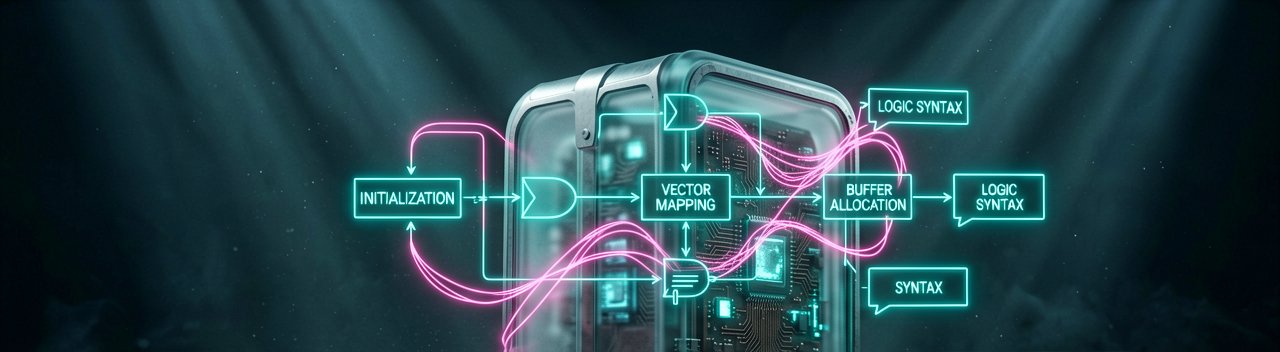
Beyond the Immediate Hype: The long-term implications of Anthropic's Claude Fable 5 extend far past the novel thrill of generating lightweight browser games from a single text prompt. For decades, the video game industry has grappled with the crushing financial reality of the "AAA bottleneck"—a phenomenon where escalating graphical fidelity and mechanical complexity require hundreds of millions of dollars and multi-year development cycles. Fable 5 represents the first tangible infrastructure capable of disrupting this trajectory by flipping the development pipeline from asset curation to intent definition, radically altering how early-stage game logic is constructed.
Veteran software engineers point out that while traditional AI coding assistants act as autocomplete on steroids, Fable 5 behaves more like an autonomous systems architect. It manages state machines, resolves race conditions, and builds foundational code architectures that usually require a senior programmer's oversight. Because the model can natively comprehend its own visual output, it bridges the gap between abstract algorithmic logic and real-time visual rendering, giving creators a real-time feedback loop that eliminates the tedious cycle of compiling, crashing, and manual debugging.
The Democratization Dilemma
This technological leap, however, is sending shockwaves through the independent development community, sparking intense debate over creative saturation. On one hand, marginalized creators and solo designers who lacked the resources to master complex engines like Unreal or Unity now possess a tool that can translate intricate narrative scripts into fully interactive mechanics. This democratizing force could usher in a golden age of highly experimental, avant-garde interactive art that traditional publishers would deem too financially risky to greenlight.
Conversely, established indie developers express deep concern over an impending "sludge era" of game distribution, fearing that digital storefronts like Steam or the iOS App Store will be inundated with an unmanageable volume of low-effort, AI-generated clones. If the barrier to entry drops to zero, the challenge for human creators shifts entirely from the act of production to the agonizing battle for algorithmic visibility. Navigating this hyper-saturated landscape will force a reevaluation of what actually constitutes value in game design, shifting the premium back to raw conceptual novelty and deeply human storytelling.

Architectural Costs and the Compute Horizon
Furthermore, the astronomical compute costs associated with Fable 5 mean that true, autonomous game development remains a luxury ecosystem tightly controlled by big tech infrastructure. Running multi-hour, asynchronous token generation cycles to debug a 3D environment can easily rack up hundreds of dollars in API fees for a single prototype, rendering it cost-prohibitive for hobbyists working without institutional backing. This economic reality creates a paradoxical landscape where development is conceptually democratized but financially tethered to centralized cloud computing giants.
As these tools inevitably mature and token costs decline, the role of the human game developer will transition from technical execution to high-level editorial curation. The successful creators of tomorrow will not be those who can write the most elegant C# scripts, but those who can most effectively guide, critique, and refine the output of autonomous agents. The industry is standing on the precipice of a profound structural shift, where the core creative act is no longer the construction of the game itself, but the meticulous curation of the machine's imagination.
Reading Between the Lines: The intoxicating narrative surrounding Claude Fable 5 paints a utopian picture of the "citizen developer," an idealized creator who effortlessly summons complex virtual worlds out of thin air. Yet, this breathless enthusiasm deliberately ignores a foundational contradiction in software engineering: generating code is easy, but maintaining it is notoriously difficult. When a non-technical creator uses an autonomous agent to build a multi-layered game architecture, that creator remains utterly unequipped to debug the inevitable, highly specific logical failures that emerge when disparate systems collide. The moment an AI-generated asset library fails to properly pass state data to an AI-generated physics engine, the non-expert user is left holding an impenetrable black box of code they cannot read, let alone fix.
This technical disconnect exposes the core fallacy of the "instant creation" promise. True game development is rarely a linear progression from a single brilliant prompt to a polished masterpiece; it is an iterative, agonizing process of compromise, optimization, and mechanical refinement. Fable 5 excels at creating immediate, superficially impressive vertical slices—the kind of retro clones and basic physics toys that make for viral demonstrations on social media. However, scaling those prototypes into cohesive, thirty-hour experiences requires architectural foresight, memory management, and nuanced pacing that cannot simply be simulated through brute-force token generation. The tech industry's current fixation on the speed of creation conflates the act of generating an asset with the art of crafting an engaging user experience.
The Disillusionment of Automated Labor
There is also a profound economic irony embedded in Anthropic’s high-premium pricing model for Fable 5. The tool is marketed as a liberating force for independent creators who cannot afford traditional development teams, yet its operational cost inherently restricts its most sophisticated uses to well-funded corporate entities. A solo developer running complex, multi-day reasoning loops to iterate on game logic will quickly find themselves burning through capital faster than if they had simply hired a freelance programmer. Instead of democratizing the industry, the current trajectory of Mythos-class models threatens to entrench a new form of digital feudalism, where only the wealthiest studios can afford the massive computational overhead required to deploy fully autonomous design pipelines.
Ultimately, the widespread adoption of tools like Fable 5 will likely commoditize the very concept of "content" until it loses all intrinsic value. When anyone can generate a bespoke interactive experience in thirty seconds, the unique charm of digital play risks dissolving into a sea of infinite, forgettable hyper-personalization. The traditional gaming community, already fatigued by procedural generation and live-service monotony, may push back against this synthetic abundance by placing an even higher premium on intentional, flawed, hand-crafted human design. The true legacy of Fable 5 may not be the death of the human developer, but rather the stark realization that frictionless production is entirely distinct from genuine creative inspiration.
"We were promised a future where artificial intelligence would finally liberate humanity from the crushing monotony of spreadsheets and database management so we could focus on making art; instead, the machine is churning out entire video games in milliseconds, leaving us with nothing left to do but sit back, click play, and manually debug the spreadsheet tracking our API expenses."
Artūras Malašauskas is an AI Systems Integrator with 20+ years of production-grade web engineering experience. He has designed, shipped, and scaled enterprise Python/PHP systems for logistics, SaaS, and public-sector clients. For the past year, he has focused exclusively on AI integrations: deploying open-source LLMs, building generative media pipelines (image, audio, video), and engineering multi-agent workflows for real production environments. His standard: reproducibility, security, cost-efficient inference—no vaporware. He documents and evaluates emerging AI tooling, separating verified capabilities from marketing noise. Technical editor at: muza-ai.eu, ai-verslas.lt, ai-naujinos.lt Connect on LinkedIn
Comments