AI Democratizes Game Development: A Beginner’s 24-Hour 'League of Legends' Clone
The gaming industry is witnessing a structural shift as generative artificial intelligence dismantles traditional barriers to software creation. In a striking demonstration of this technical evolution, a solo developer leveraged Anthropic's advanced Claude Opus 4.8 model to construct a fully playable, browser-based multiplayer online battle arena (MOBA) game named LMAO: League of Mediocre Arena Outcasts over a single weekend. This feat compresses what historically required millions of dollars, extensive engineering teams, and months of production pipelines into a rapid, iterative process controlled by a single individual.
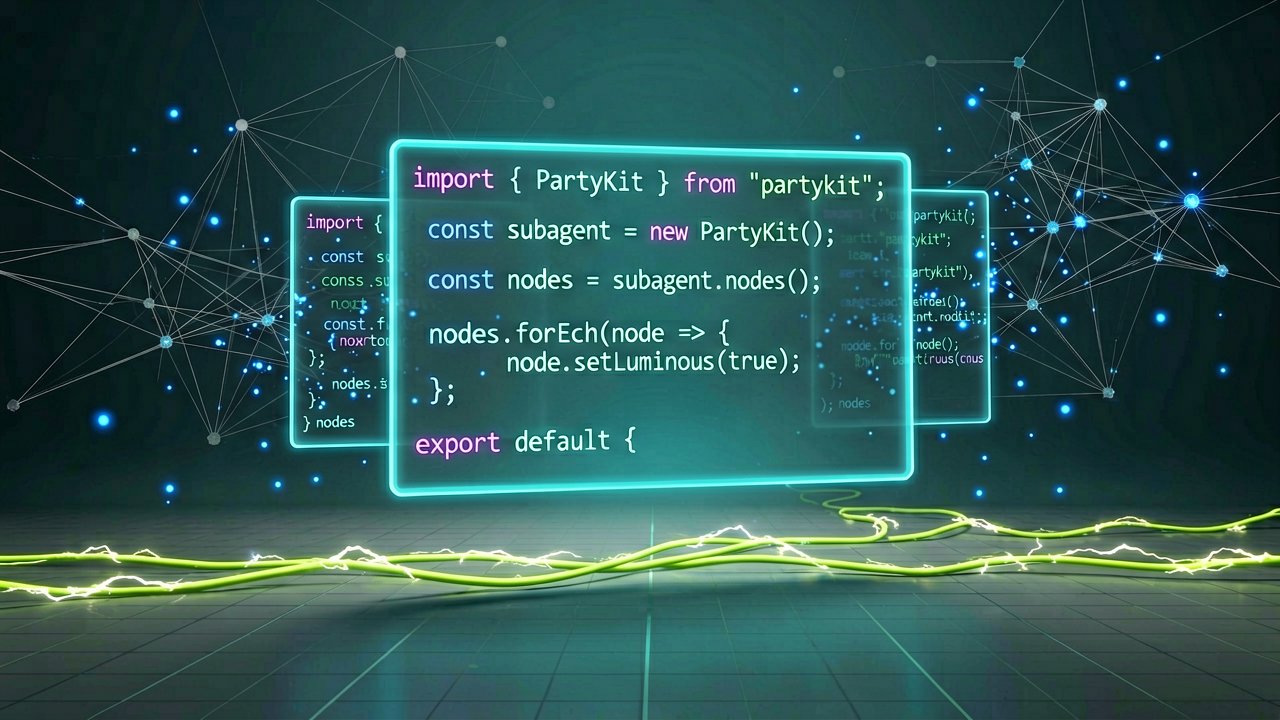
The technical architecture of the League of Legends clone highlights the sophisticated orchestration capabilities of modern AI frameworks. Built utilizing TypeScript, React, Canvas, and PartyKit for networking, the developer generated the core game mechanics via an initial prompt before deploying specialized AI subagents to handle distinct vertical tasks. These autonomous subagents systematically engineered 18 unique champions, procedural canvas graphics, fog of war, and a fully functional item shop with integrated item build paths, while automated workflows managed continuous multiplayer combat balance and bot behavior. According to the creator's data shared via AI Emerges, the project processed roughly 2.7 billion tokens, capitalizing heavily on prompt caching to optimize operational throughput.
The Disruption of Traditional Studio Economics
This rapid prototyping capability signals an impending restructuring of game studio economics and resource allocation. Traditionally, establishing synchronized multiplayer infrastructure, pathfinding, and real-time asset rendering demanded deep specialization across isolated engineering and art departments. By automating boilerplate code execution and procedural art assets, AI tools allow micro-studios and independent creators to shift their capital toward high-level design, narrative depth, and community engagement. The ability to deploy a networked multiplayer environment entirely through a web browser—complete with dynamic matchmaking room codes and scale-adjusting AI bots—fundamentally rewrites the competitive landscape for indie publishers.
Scalability, Polish, and the Future Landscape
While the initial assembly speed of LMAO underscores the democratization of development, industry experts note that enterprise-grade scaling still presents distinct hurdles. Generating a functional prototype in under 48 hours proves the viability of automated code generation, but long-term player retention requires deep anti-cheat integration, network optimization, and meticulous balance adjustments. Moving forward, the strategic advantage in game development will likely pivot away from raw programming capacity and toward the mastery of multi-agent AI workflows, enabling creators to rapidly iterate, debug, and ship complex software architectures at nominal costs.

Unpacking the Technical Pipeline Behind the Autonomous Studio
Beyond the Immediate Headlines: The rapid realization of LMAO relies heavily on the interplay between deep technical orchestration and recent breakthroughs in long-context window architectures. Standard large language models often degrade during prolonged software engineering tasks due to context drift, where initial codebase constraints are overwritten by later generations. The developer mitigated this historical roadblock by implementing a highly structured multi-agent loop, isolating individual feature requests—such as specialized champion abilities or networked state synchronization—into compartmentalized prompt contexts before committing the verified code to a unified TypeScript repository. This methodology prevented the logic collisions that typically derail large-scale AI generation.
Furthermore, the strategic utilization of modern multiplayer frameworks like PartyKit represents a major shift away from legacy network engineering requirements. Historically, establishing low-latency, real-time synchronization across multiple clients meant manually configuring WebSockets, handling packet drop compensation, and managing authoritative server states—a specialized engineering bottleneck that routinely delayed indie titles by several months. In this project, the AI accurately interpreted high-level multiplayer parameters and instantly produced the necessary edge-computing event handlers, proving that cloud networking logic can now be abstracted away as easily as local game loops.
From an industry-wide stakeholder perspective, this democratization forces a complete re-evaluation of developer seniority and specialized team dynamics. Veteran technical directors emphasize that while the platform flawlessly generated basic item shops and functional pathfinding algorithms, the current iteration of these tools still functions primarily as an accelerator rather than a replacement for architectural design. Experienced developers are shifting their focus from writing boilerplate syntax to mastering the role of an AI orchestrator, defining systemic rules and evaluating code output to prevent hidden technical debt from compounding inside rapidly expanding, machine-generated codebases.
Ultimately, this technological milestone mirrors historical shifts in consumer software accessibility, similar to how digital audio workstations disrupted the traditional music recording industry or how non-linear editors democratized independent filmmaking. The true disruptive power of this 48-hour development cycle does not lie in the potential to flood digital storefronts with derivative clones, but in the radical minimization of financial risk for avant-garde creators. By shrinking the cost of testing complex, multiplayer concepts to near zero, the industry is entering an era where experimental gameplay mechanics can be validated and deployed directly to global audiences without the need for traditional venture capital or publisher approval.
The Mirage of the Zero-Dollar Masterpiece
Reading Between the Lines: The intoxicating narrative of a novice building a competitive multiplayer game over a weekend obscures a fundamental tension in automated software engineering. While the generation of 2.7 billion tokens demonstrates that AI can rapidly output syntax, it simultaneously highlights a massive inefficiency in machine-driven design. The model essentially brute-forces its way through software architecture, relying on prompt caching to keep costs manageable while generating thousands of lines of redundant web canvas code. This structural bloat works fine for a browser-based prototype hosted on lightweight edge networks, but it falls apart under the strict performance demands, memory optimization requirements, and anti-cheat constraints of real-time competitive gaming.
This dynamic exposes a clear contradiction in the current wave of "democratized" game development. The technology lowers the barrier to entry for writing code, yet it drastically raises the bar for debugging and maintaining that code. When an AI agent generates hundreds of interconnected functions across multiple subagents, the human operator acts less like a creative director and more like a forensic accountant. Finding a subtle race condition or a memory leak in a massive codebase you did not write requires a deep, institutional level of software engineering expertise, which directly contradicts the idea that these tools enable true beginners to ship production-grade products solo.
Furthermore, the long-term market implications point toward a paradox of choice and an oversaturated ecosystem. If the cost of producing a functional multiplayer prototype drops to zero, the market will likely be flooded with a massive wave of synthetic, asset-flipped clones that look and play remarkably similar. In this hyper-saturated landscape, discovery becomes the ultimate bottleneck, shifting power away from independent creators and right back to the platform gatekeepers and massive marketing machines capable of buying user attention. The democratizing power of AI may level the playing field for writing code, but it hyper-accelerates the competitive war for distribution.
Ultimately, this technological leap changes the nature of developer skill sets rather than eliminating them entirely. The core battleground in game design is shifting away from the mechanics of programming syntax and toward the creative discipline of systems balancing and systemic novelty. Studios that rely entirely on LLM logic loops will find themselves trapped in an averaging machine, producing games that are structurally functional but culturally hollow. The future belongs to developers who treat AI as a high-speed calculator, using it to rapidly clear out technical overhead while dedicating their human capital to the elusive, non-algorithmic art of making a game actually fun to play.
The future of game development promises an era where anyone can pitch, code, and launch a massive multiplayer universe before Monday morning—leaving players with the unique privilege of sorting through ten thousand identical MOBA clones just to find one where the shopkeeper doesn't accidentally hallucinate the currency system.
Artūras Malašauskas is an AI Systems Integrator with 20+ years of production-grade web engineering experience. He has designed, shipped, and scaled enterprise Python/PHP systems for logistics, SaaS, and public-sector clients. For the past year, he has focused exclusively on AI integrations: deploying open-source LLMs, building generative media pipelines (image, audio, video), and engineering multi-agent workflows for real production environments. His standard: reproducibility, security, cost-efficient inference—no vaporware. He documents and evaluates emerging AI tooling, separating verified capabilities from marketing noise. Technical editor at: muza-ai.eu, ai-verslas.lt, ai-naujinos.lt Connect on LinkedIn
Comments