Human Agency in the First AI War: A Strategic Imperative for Global Security
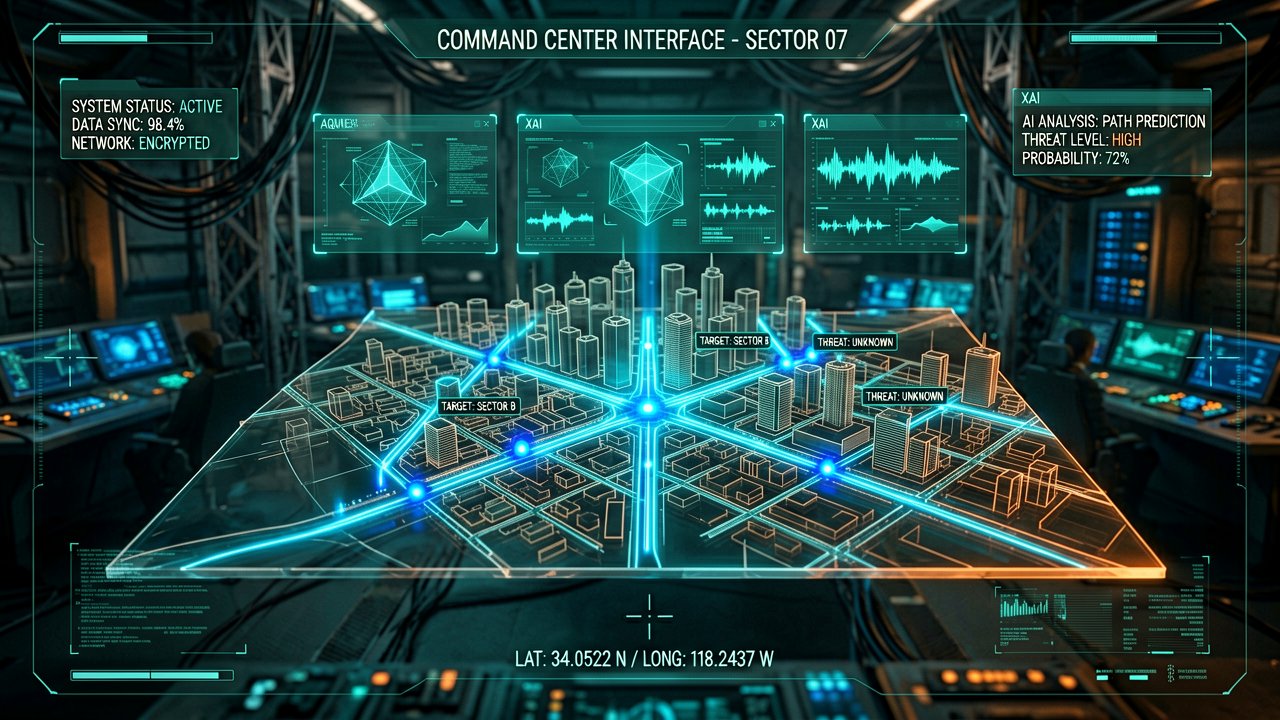
The dawn of the "First AI War" marks a profound shift in modern conflict, proving that while autonomous systems drastically accelerate the pace of operations, human oversight remains the true linchpin of strategic success. Global military doctrines are rapidly evolving to avoid full machine autonomy, prioritizing hybrid human-machine teaming instead. This tactical equilibrium is driving massive industrial expansion, with the global autonomous defense platforms market projected to surge from $69.77 billion in 2026 to $198.87 billion by 2034, according to Fortune Business Insights . Rather than replacing commanders, these multi-billion-dollar investments are intended to ingest battlefield data at scale, preserving and amplifying human decision-making under intense pressure.
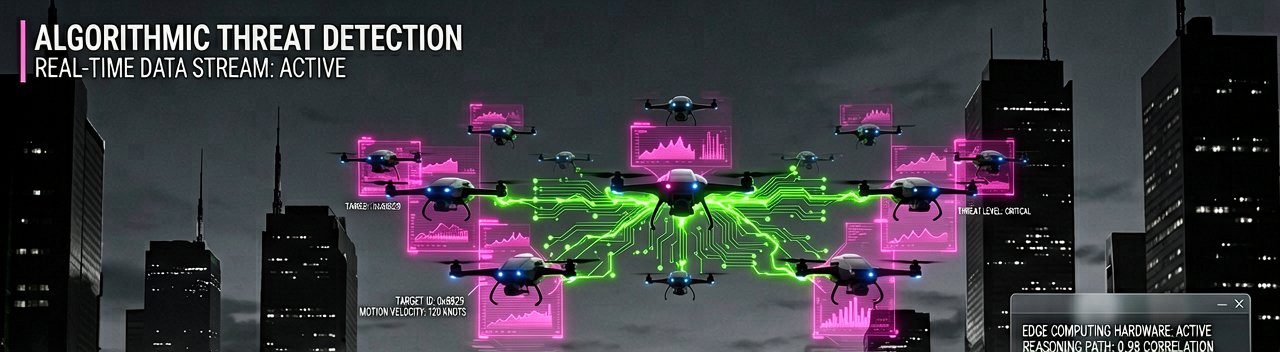
Geopolitical tensions are fueling a fierce defense procurement race, transforming artificial intelligence from an experimental luxury into a baseline survival mechanism. Advanced sensor fusion, real-time autonomous threat detection, and algorithmic target tracking are rewriting operational playbooks. The Pentagon alone requested $13.4 billion for small drone warfare and related autonomous architectures for 2026, as detailed by the . This immense deployment of capital underscores how global powers view automated platforms: not as independent decision-makers, but as cognitive enablers meant to optimize the speed and precision of human commands.
The Industrialization of Algorithmic Warfare
The global defense sector is scaling up production of semi-autonomous hardware, creating a highly lucrative market segment for specialized software providers and defense contractors. The broader artificial intelligence in military market is expected to expand rapidly, with projections from Grand View Research indicating it will reach $19.29 billion by 2030. This growth is heavily concentrated in machine learning infrastructure, edge computing on hardware platforms, and decentralized swarm intelligence. These systems absorb the cognitive burden of sorting through thousands of data streams, but the ultimate authority to execute lethal actions is intentionally restricted to human operators to maintain legal and operational control.
Ethical Dilemmas and the Limits of Autonomy
Deploying AI in active combat zones introduces severe ethical risks and technical liabilities that threaten global security architectures. Automated targeting systems rely on training data that can fail in unpredictable, chaotic environments, raising the risk of catastrophic algorithmic errors and unintended civilian harm. International bodies are raising alarms over these systemic vulnerabilities, noting that a lack of meaningful human intervention could burden armed forces with dangerous, unaccountable systems. According to an extensive policy analysis by the , the rush to integrate military AI without robust, independent oversight safeguards creates profound legal loopholes. Consequently, maintaining a strict human-in-the-loop framework is no longer just an ethical preference; it is a strategic requirement to prevent accidental escalation and ensure compliance with international humanitarian law.
Geopolitical Realignments and Command Integrity
The rapid proliferation of battlefield AI is rewriting global defense alliances and changing how nation-states project power. Major powers like the United States, China, and Russia dominate aggregate defense AI spending, compelling smaller nations to upgrade their legacy systems through emergency acquisition programs. For instance, the broader autonomous weapons market is forecasted to hit $38.23 billion by 2034, according to data from The Insight Partners. As these automated systems spread across international borders, the risk of miscalculation escalates. The states that succeed in this new era will not be those that completely automate their command structures, but those that seamlessly combine artificial intelligence with the irreplaceable nuance of human strategic judgment.
Deep-Dive: The Reality of the Algorithmic Frontline
What Most Reports Miss: The actual bottleneck in algorithmic warfare is not the speed of machine learning models, but the fragile relationship between software recommendations and human trust under fire. In modern combat command centers, operators are constantly bombarded by target recommendations generated by decentralized swarm networks. The true operational hazard is "automation bias," a psychological phenomenon where military personnel naturally defer to an AI's calculated target list without verifying the underlying sensor data. Defense analysts emphasize that when algorithmic recommendation loops operate faster than human cognitive processing, meaningful human agency quickly degrades into a rubber-stamping exercise, introducing profound operational and ethical vulnerabilities.
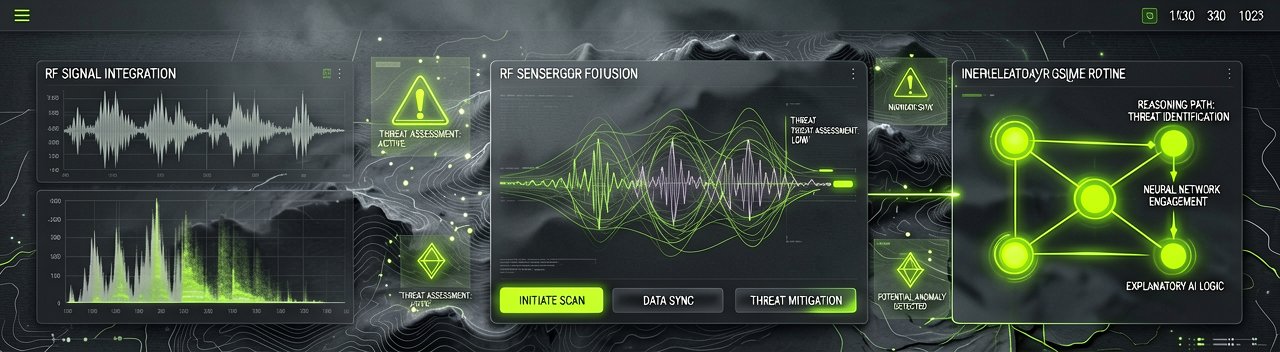
To counteract this loss of control, the defense sector is shifting engineering priorities toward "explainable AI" (XAI) frameworks tailored specifically for localized edge computing. According to documentation on military product ecosystems tracked by PR Newswire, companies are actively integrating multi-domain intelligence platforms that combine radio frequency (RF) sensing with explicit real-time explanation layers. These systems are explicitly designed not just to point out an object on a display, but to show exactly why a certain object has been categorized as a threat. Providing this immediate reasoning helps combat units avoid catastrophic target misidentifications and retain actual tactical veto power on the battlefield.
This rapid shift toward human-machine collaborative interfaces is reshaping procurement cycles across international defense consortia. Frontline feedback proves that isolated, fully autonomous platforms fail to adapt when electronic warfare units intentionally jam communication links or manipulate environmental data. By focusing on hybrid systems where algorithmic processing remains paired with human intuition, modern militaries ensure that strategic adjustments can be executed instantly when automated systems face unexpected conditions. Ultimately, human oversight is proving to be the ultimate fail-safe against the inherent brittleness of autonomous battlefield networks.
Reading Between the Lines: The Friction of the Electronic Battlefield
Reading Between the Lines: The prevailing defense industry narrative suggests that the deployment of battlefield artificial intelligence will seamlessly eliminate the historical "fog of war." This assumption relies on the idealized premise that pouring billions of dollars into algorithmic sensor fusion will consistently yield pristine, actionable insights for human commanders. However, this techno-optimistic view largely ignores the harsh realities of active combat zones, where deliberate adversarial deception can completely upend automated processing. When algorithmic models encounter unexpected, synthetic data or sophisticated physical decoys, their internal reasoning systems break down, frequently introducing a deeper, more unpredictable layer of confusion than the traditional combat friction they were built to solve.
This technical limitation exposes a glaring contradiction within modern defense procurement strategies, which simultaneously demand lightning-fast algorithmic response speeds and strict human oversight. Defense planners frequently boast about "human-in-the-loop" architectures as an airtight guarantee of ethical and operational accountability. Yet, the real-world operational tempo of autonomous drone swarms and automated air-defense batteries operates on a millisecond timescale that completely outpaces human neurological processing. Forcing an operator to oversee systems that execute actions in fractions of a second creates an illusion of control, turning the human element into a bureaucratic liability rather than a meaningful tactical safety valve.
Projecting these trends forward reveals that the true risk of the first AI war is not the arrival of rogue, hyper-intelligent machines, but the systemic proliferation of brittle, over-engineered software across volatile global flashpoints. As military forces increasingly rely on automated threat assessment pipelines to keep up with regional adversaries, the margin for human diplomatic intervention shrinks rapidly. The international security landscape is left highly vulnerable to accidental escalation loops, where a minor algorithmic misinterpretation by an autonomous sensor can trigger an automated retaliatory sequence before human decision-makers even realize a glitch has occurred.
"The supreme irony of the algorithmic revolution is that after spending untold billions to remove unpredictable human emotion from the theater of war, global stability now rests entirely on an exhausted, underpaid operator possessing the sheer defiance to tell a multi-billion-dollar computer that its math is completely wrong."
Artūras Malašauskas is an AI Systems Integrator with 20+ years of production-grade web engineering experience. He has designed, shipped, and scaled enterprise Python/PHP systems for logistics, SaaS, and public-sector clients. For the past year, he has focused exclusively on AI integrations: deploying open-source LLMs, building generative media pipelines (image, audio, video), and engineering multi-agent workflows for real production environments. His standard: reproducibility, security, cost-efficient inference—no vaporware. He documents and evaluates emerging AI tooling, separating verified capabilities from marketing noise. Technical editor at: muza-ai.eu, ai-verslas.lt, ai-naujinos.lt Connect on LinkedIn
Comments