MetaMask Hands the Keys to AI: Why the New Agent Wallet Changes Everything
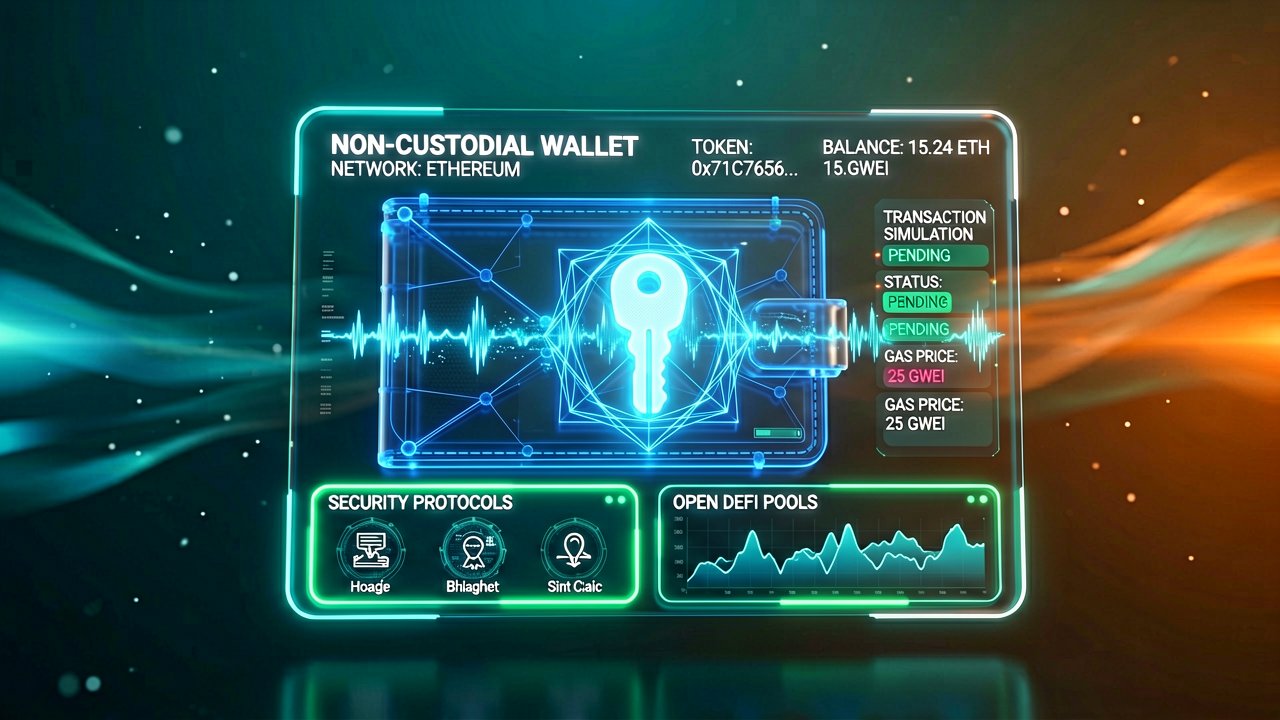
The intersection of artificial intelligence and Web3 just crossed a major milestone. On June 8, 2026, crypto heavyweight MetaMask officially unveiled its highly anticipated Agent Wallet, a non-custodial solution specifically engineered to let autonomous AI agents hold capital and execute complex decentralized finance (DeFi) trades. Developed by parent company Consensys, this new architecture flips the script on automated trading. Instead of forcing humans to repeatedly babysit transactions or hand over private keys to unsecure bots, it creates a sandbox where software can safely interact with the on-chain economy.
Let’s be honest: giving an autonomous algorithm access to your digital assets feels inherently terrifying. Smart contracts are notoriously unforgiving, and the thought of an AI miscalculating a trade or falling victim to a malicious protocol keeps plenty of investors up at night. MetaMask is tackling this anxiety head-on by leaning heavily into a robust security framework. The new tool natively integrates forced transaction simulation, address whitelisting, and real-time risk scanning powered by Blockaid. If an agent tries to jump into an unverified pool or triggers a security flag, the platform immediately pauses execution and forces a two-factor authentication (2FA) prompt to the user’s phone or email. According to reporting by CoinDesk, the wallet even includes up to $10,000 in transaction protection coverage for trades deemed safe by its system, offering a literal financial safety net for automated operations.
Balancing Autonomy with Absolute Control
The beauty of this framework lies in its flexible user-defined constraints. Investors can choose between two distinct operation profiles depending on their risk appetite. The default "Guard Mode" acts like a strict compliance officer, restricting the AI agent to rigid spending limits and pre-approved protocols. For the power users who want their models to move at the speed of light, an opt-in "Beast Mode" removes repetitive prompts but keeps the mandatory background threat detection and 2FA triggers fully active. This ensures the agent can aggressively pursue yields without the core user losing structural custody of the underlying private keys.
In a statement tracking the launch, Consensys CEO and Ethereum co-founder Joe Lubin noted that the next expansion of the blockchain economy will not be driven by humans alone. He pointed out that agents will soon manage real capital and make independent financial decisions, meaning the underlying infrastructure must be inherently resilient. Right now, the capability is available through a limited early-access command-line program for developers testing the waters across Ethereum-compatible blockchains, EVM chains, and the Hyperliquid network. A broader public rollout is slated for later this summer, marking a definitive shift toward a world where your most profitable financial manager might just be an algorithm you configured over breakfast.

What Most Reports Miss: The Hidden Architectural Battle for Machine Money
The rush to build wallets for artificial intelligence isn't just about making automated trades faster; it is a fundamental shift in how software interacts with property. Historically, internet bots operated on a strict credit card or API key model, which meant they were always tethered to centralized legacy banking rails. By giving an AI agent its own non-custodial crypto wallet, developers are effectively cutting that umbilical cord. For the first time, an algorithm can earn its own revenue, pay for its own API consumption, and reallocate its capital across decentralized protocols without needing a human corporate entity to sign off on every micropayment.
However, this transition introduces a massive cryptographic headache that tech industry veterans are only beginning to openly debate. Traditional crypto wallets rely on a single private key, a mechanism inherently designed for a human who can safely guard a seed phrase. When you hand that key over to an autonomous AI agent running on cloud servers, the attack surface expands exponentially. Hackers no longer need to phish the human owner; they just need to exploit a vulnerability in the AI's underlying code or breach the server hosting the model to drain the entire wallet. This specific vulnerability explains why MetaMask spent months engineering real-time simulation guards before pushing this update to the public dev tools.
Industry insiders suggest this launch is an aggressive defensive play against emerging rivals who are building machine-to-machine payment infrastructure from scratch. Startups in the Web3 space have been gaining traction by experimenting with programmable "smart accounts" using ERC-4337 account abstraction, which inherently allows for complex permission rules. By embedding these exact security and simulation layers directly into the dominant wallet ecosystem, MetaMask is trying to ensure that when the developers of tomorrow build autonomous trading systems, they don't migrate to entirely new platforms.
The legal implications of this rollout are also bound to keep compliance teams awake at night. If an autonomous agent accidentally interacts with a sanctioned smart contract or participates in a dynamic arbitrage loop that violates market manipulation rules, determining liability becomes a murky legal quagmire. Regulatory frameworks globally are entirely built around the concept of human actors or registered corporate entities. Because MetaMask's solution remains strictly non-custodial, the legal burden ultimately bounces back to the human who deployed the agent, making those granular "Guard Mode" spending limits a crucial shield against unintended regulatory violations.

Looking ahead, the success of machine-driven finance will depend heavily on the maturity of the AI models themselves. Right now, LLMs are still prone to hallucinations and logic flaws that could lead to catastrophic financial decisions if left entirely unchecked. The integration of real-time transaction simulation acts as an essential circuit breaker, ensuring that even if an AI completely misinterprets a market trend, the underlying smart contract environment will refuse to execute a self-destructive trade. It is a fragile but necessary compromise between absolute machine autonomy and the protective guardrails required to keep human capital safe.
Reading Between the Lines: The Mirage of Autonomous Capital
The tech industry's celebration of "autonomous machine economies" ignores a glaring paradox embedded in the very architecture of these systems. We are told that AI agents will operate independently, yet the entire security apparatus of the MetaMask Agent Wallet relies on freezing operations and forcing a human to respond to a two-factor authentication prompt. This creates a psychological safety net, but it fundamentally breaks the promise of autonomy. If an algorithmic trader must halt its lightning-fast execution to wait for a human to wake up, look at their phone, and approve a transaction, it loses the exact speed advantage that justified automating the process in the first place.
This dynamic reveals a deeper contradiction in the current Web3 ethos. For years, the rallying cry of the crypto movement has been absolute decentralization and the elimination of intermediaries. Yet, to make artificial intelligence safe enough to handle digital assets, MetaMask has had to introduce centralized threat intelligence feeds and real-time risk scanning systems. The reality is that true machine autonomy is too volatile for the current blockchain landscape. By implementing strict whitelist parameters and automated circuit breakers, developers are not actually liberating AI; they are building a highly restrictive electronic cage and calling it financial freedom.
Furthermore, the financial protection incentives look far more like a traditional marketing gimmick than a sustainable safety architecture. A ten-thousand-dollar transaction coverage limit is a drop in the bucket for serious DeFi liquidity providers, serving mostly to reassure retail users experimenting with minor capital. In high-velocity trading environments where slippage and exploit vectors can drain millions in seconds, a minor insurance policy does nothing to mitigate systemic risk. It highlights an uncomfortable truth: neither the wallet providers nor the security firms are actually willing to underwrite the massive financial liability of a rogue algorithm.
The long-term projection for this technology points toward a highly stratified ecosystem rather than a democratized financial frontier. While retail developers play with command-line tools and restricted spending limits in Guard Mode, institutional trading desks will inevitably deploy proprietary, unhindered models capable of swallowing market liquidity before smaller agents can even process the data. Instead of leveling the playing field, the automation of capital allocation threatens to widen the gap between standard users and institutional titans, transforming the decentralized web into an elite playground optimized exclusively for high-frequency machine warfare.
Giving an artificial intelligence full control over a crypto wallet is the ultimate test of faith for the modern tech optimist, proving that we are fully prepared to trust a complex mathematical model to manage our money, right up until the exact moment it actually tries to spend it.
Artūras Malašauskas is an AI Systems Integrator with 20+ years of production-grade web engineering experience. He has designed, shipped, and scaled enterprise Python/PHP systems for logistics, SaaS, and public-sector clients. For the past year, he has focused exclusively on AI integrations: deploying open-source LLMs, building generative media pipelines (image, audio, video), and engineering multi-agent workflows for real production environments. His standard: reproducibility, security, cost-efficient inference—no vaporware. He documents and evaluates emerging AI tooling, separating verified capabilities from marketing noise. Technical editor at: muza-ai.eu, ai-verslas.lt, ai-naujinos.lt Connect on LinkedIn
Comments