Cybersecurity’s New Frontier: How AI Battles AI in the Digital Arms Race

The digital defense paradigm has reached a critical inflection point where human intervention alone is no longer sufficient to counter machine-driven threats. Autonomous offensive security startup A (frequently referred to as A Security) recently emerged from stealth after securing $37 million in funding from high-profile backers including Lightspeed Venture Partners, Cyberstarts, Wiz CEO Assaf Rapaport, and Cyera CEO Yotam Segev, as reported by Fortune. This substantial venture injection reflects an escalating panic across enterprise sectors over automated exploitation frameworks that manipulate machine intelligence to identify and weaponize zero-day vulnerabilities at speeds human analysts cannot match.
The core philosophy driving this capital allocation is a structural pivot from traditional, static defenses toward proactive, autonomous mitigation. Founded by elite intelligence and security veterans, A Security deploys sophisticated agentic systems designed to continuously breach customer infrastructure to expose and remediate actual attack pathways before malicious threat actors can exploit them. The urgency of this methodology is punctuated by the recent, restricted rollout of advanced foundation software like Anthropic’s Mythos model, which demonstrated an unprecedented capability to autonomously surface undiscovered critical flaws across major operating systems and browsers, effectively rendering conventional diagnostic timelines obsolete.
The Industrial Shift to Autonomous Red Teaming
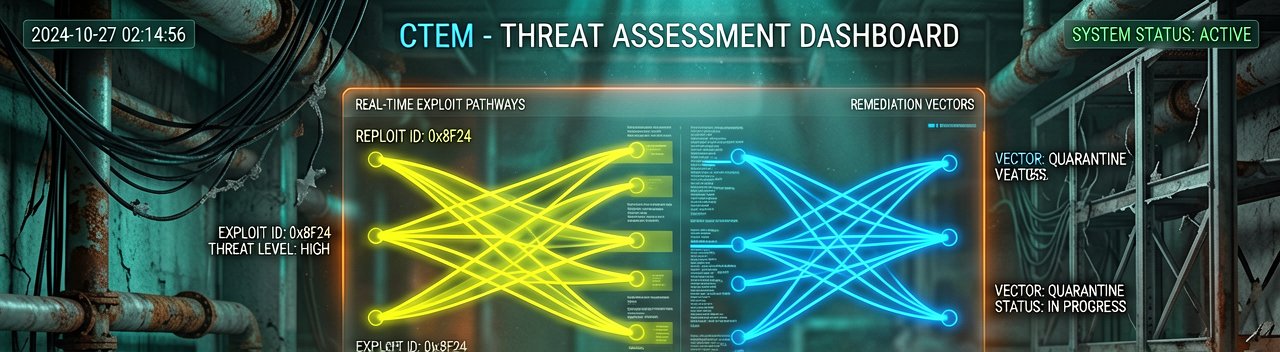
Historically, corporate penetration testing was an episodic, labor-intensive engagement that could cost tens of thousands of dollars and yield telemetry that was months out of date by the time reports were compiled. By integrating deep reinforcement learning and tailored large language models (LLMs), new-age security platforms automate continuous threat exposure management (CTEM). This paradigm shift transforms vulnerability hunting from a series of manual check-box assessments into a persistent, real-time adversarial simulation capable of adjusting to evolving enterprise networks.
Defending the Attack Surface Against Zero-Day Exploits
The monetization of advanced AI tools has drastically lowered the entry barrier for cybercriminals, enabling automated phishing, hyper-personalized social engineering, and algorithmic binary analysis at scale. Concurrently, broader infrastructure challenges exacerbate these risks; research highlighted by SDxCentral reveals that legitimate AI companies consuming massive bandwidth for data scraping have unintentionally stimulated the residential proxy market, indirectly subsidizing extensive compromised device networks. To combat this vast, automated footprint, modern defense tools must actively deploy agent-against-agent architectures that can intercept and neutralize machine-speed compromises the moment a digital perimeter is tested.

Regulatory Frameworks and Market Tailwinds
The private market’s aggressive capitalization of defensive AI coincides with escalating national security focus on algorithmic warfare. Regulatory mandates, such as the latest federal executive order covered by W.Media, establish frameworks to evaluate advanced frontier models used specifically in cyber operations. As public policy shifts toward prosecuting AI-assisted system breaches while encouraging localized corporate defenses, enterprise demand for autonomous security platforms will remain a dominant force in venture capital distribution, ensuring that the battle for network integrity continues to be fought machine against machine.
Inside the Algorithmic Trench Warfare
What Most Reports Miss: The true battlefield of this digital arms race is not found in marketing brochures, but within the rapidly shrinking time window between vulnerability discovery and weaponization. In traditional cybersecurity, defenders operated under the assumption of a multi-day "dwell time," giving human operators an opportunity to isolate compromised systems and patch software. The introduction of autonomous offensive tools completely shatters this timeline, condensing the exploitation cycle from days to mere milliseconds. When an artificial intelligence model scans an enterprise network, it does not just look for open ports; it analyzes millions of lines of proprietary code simultaneously, constructing bespoke exploits on the fly that have never been seen before by signature-based antivirus solutions.
This reality has triggered a fierce philosophical debate among Chief Information Security Officers (CISOs) regarding the deployment of autonomous defensive agents. For years, enterprise IT departments fiercely resisted automated remediation out of a logical fear: an overzealous security bot could mistakenly shut down a multi-million-dollar production database, causing self-inflicted downtime. However, the sheer velocity of modern AI attacks is forcing a reluctant surrender of human control. Security leaders are realizing that maintaining a "human-in-the-loop" approval process for every security alert is equivalent to bringing a knife to a laser fight, forcing organizations to grant autonomous software the unprecedented authority to rewrite network protocols and isolate infrastructure without human oversight.
Historically, this conflict echoes the early days of automated high-frequency trading on Wall Street, where algorithms triggered massive, systemic flash crashes before stabilizers could be implemented. In the cybersecurity domain, a similar risk looms large as defensive bots and offensive agents engage in continuous, unmonitored cycles of adaptation and counter-adaptation. Veteran threat researchers warn that this could lead to algorithmic feedback loops, where defensive adjustments inadvertently trigger unpredictable behaviors in the attacking AI, potentially destabilizing interconnected cloud ecosystems and supply chains that thousands of businesses rely upon daily.
The geopolitical dimension further complicates this venture-backed corporate defensive shield. While startups focus on protecting commercial assets, nation-state actors are heavily investing in specialized foundation models trained on classified vulnerability intelligence rather than public datasets. This creates a deeply fractured environment where commercial defenses are perpetually playing catch-up against subsidized, state-level offensive AI platforms. Consequently, investments like the capital infusion into A Security are no longer viewed by institutional investors as speculative bets on tech infrastructure, but rather as foundational investments in corporate survival and national macroeconomic stability.
The Paradox of Automated Deterrence
Reading Between the Lines: The prevailing industry consensus treats autonomous defense as a definitive cure-all, yet this narrative fundamentally ignores the dual-use dilemma inherent to machine learning. Venture capital is flowing into platforms like A Security under the assumption that defensive AI will outpace its offensive counterparts. However, the software architectures powering autonomous red teaming are nearly identical to those utilized by malicious actors. By funded engineering teams building increasingly sophisticated, automated exploitation engines to test corporate perimeters, the cybersecurity sector is inadvertently accelerating the evolution of the very offensive capabilities it seeks to destroy.
This dynamic creates a profound contradiction in the economics of digital defense. Corporate enterprises are paying hefty subscription premiums for autonomous platforms to continuously probe their own networks for vulnerabilities. Meanwhile, open-source AI models and leaked defensive frameworks are routinely intercepted, reverse-engineered, and repurposed by criminal syndicates. The market is effectively subsidizing the development of highly optimized, automated target-selection software, lowering the research and development costs for adversaries who merely need to download public security research to upgrade their own attack infrastructure.
Furthermore, the reliance on autonomous systems introduces a dangerous single point of failure: algorithmic bias and model poisoning. If an offensive entity successfully maps the training data or uncovers the decision-making heuristics of a dominant defensive AI provider, it can craft exploits specifically designed to fall within the machine's blind spots. A human analyst might investigate an anomalous, seemingly irrational network pattern out of sheer intuition. An AI, bound strictly to its mathematical optimization functions, will happily ignore a catastrophic breach if the attacker has mathematically disguised the intrusion to look like routine background telemetry.
Ultimately, the industry is rushing toward a state of mutually assured algorithmic destruction, where human security teams are relegated to mere spectators monitoring dashboards they no longer fully comprehend. The hyper-inflation of cybersecurity valuations suggests an ecosystem confident it can build an unbreachable digital fortress. Yet history dictates that in any technological arms race, the offense retains the structural advantage of choosing the time, place, and method of engagement, leaving autonomous defenders perpetually reactive, no matter how fast their processing cycles become.
"We are spending billions of dollars to replace human error with machine-speed catastrophe, all in the hope that our corporate firewall’s artificial intelligence is slightly more intelligent than the artificial intelligence currently trying to bankrupt us."
Artūras Malašauskas is an AI Systems Integrator with 20+ years of production-grade web engineering experience. He has designed, shipped, and scaled enterprise Python/PHP systems for logistics, SaaS, and public-sector clients. For the past year, he has focused exclusively on AI integrations: deploying open-source LLMs, building generative media pipelines (image, audio, video), and engineering multi-agent workflows for real production environments. His standard: reproducibility, security, cost-efficient inference—no vaporware. He documents and evaluates emerging AI tooling, separating verified capabilities from marketing noise. Technical editor at: muza-ai.eu, ai-verslas.lt, ai-naujinos.lt Connect on LinkedIn
Comments