Pharos Network Attempts to Bridge Narrative and Utility with 150,000 $PROS AI Agent Carnival
The conversation surrounding decentralized artificial intelligence has spent the last two years stuck in a frustrating loop of big promises and flimsy proofs-of-concept. Most onchain AI agents operate as isolated, one-off demonstrations rather than persistent economic actors capable of executing complex financial tasks. On June 8, 2026, Pharos Network launched its six-week global initiative, the "Create Like a PRO · Agent Carnival," to stress-test its institutional-grade Layer 1 blockchain and push autonomous agents into production-grade applications. Backed by a hefty incentive pool of 150,000 $PROS, the campaign marks the one-year anniversary of the network's public testnet and serves as its first massive operational trial to align utility with financial incentives.
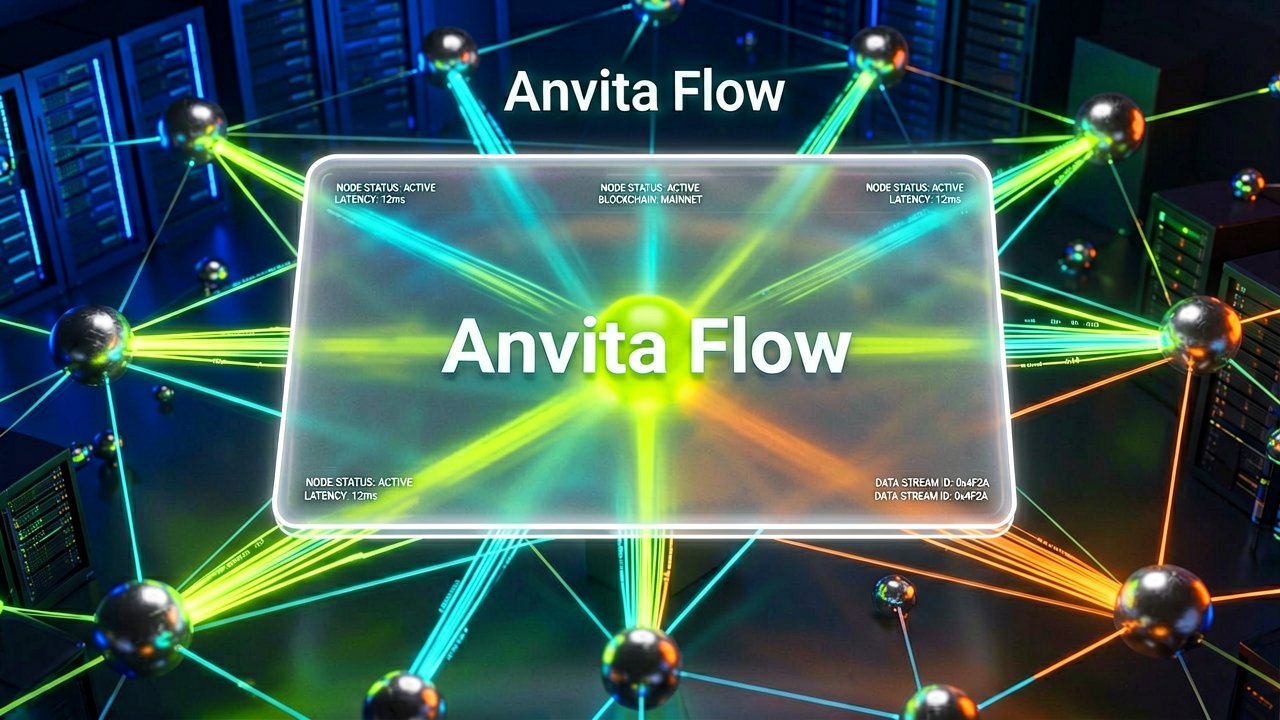
Pharos isn't just handing out rewards for basic developer deployment; it is trying to close the ecosystem loop between skill creators, autonomous builders, and everyday users. The infrastructure is engineered specifically for high-frequency, low-cost interactions, moving past the limitations of traditional chains that make autonomous, agent-mediated financial habits too expensive to maintain. By utilizing a unified portal called Anvita Flow, the network plans to orchestrate fragmented agent behaviors into traceable, value-generating activities that actually stick around after the marketing hype dies down.
Dividing the Spoils: Infrastructure Meets Social Graphs
To incentivize both the underlying plumbing and user adoption, the 150,000 $PROS prize pool is split into two specialized segments designed to reward long-term asset retention. According to an ecosystem announcement published by TechFlow, the bulk of the rewards—100,000 PROS—is explicitly locked down for the technical side. This allocation funds the Skill Hackathon, developer-side agent invocation competitions, and the initial deployment incentives for Steward Agents. The remaining 50,000 PROS target user engagement across social and transfer leaderboards, aiming to incentivize organic user transaction habits rather than artificial volume.
The structured timeline divides the carnival into two distinct phases to keep the momentum going through July 21, 2026. The opening "Developer Season" kicks off as a dual-track hackathon focusing heavily on building modular toolsets, backed by major industry heavyweights including Alibaba Cloud, GoPlus, and CertiK. Following the dev-centric sprint, the network will shift its focus toward consumer interactions on June 23, launching the "AI Carnival" phase which uses multi-dimensional leaderboards to push users into adopting agent-mediated payment protocols.
Building for Production Over Hype
For a project that raised a substantial $44 million Series A round earlier in the year, the carnival serves as a crucial milestone to translate venture capital backing into active onchain metrics. The network's core thesis rests on the idea that an AI agent's true worth lies in its capability to autonomously manage assets, call smart tools, and interact with web3 protocols without human intervention. Outstanding developers navigating the six-week gauntlet won't just walk away with native tokens; they will earn entry into Pharos’ selective incubator pool, opening the door for direct protocol support and core mentorship.
Behind the Scenes: The Financial Infrastructure Underpinning the Autonomous Economy
The real story beneath the marketing glitter isn't the incentive pool itself, but how Pharos Network is attempting to solve the existential crisis facing web3 AI. For years, autonomous agents on blockchain networks have been little more than glorified chatbots hooked up to digital wallets. Every time an agent wants to make a decision, pull data from an API, or execute a trade, it encounters the friction of high gas fees and latency. By organizing this six-week sprint, Pharos is forcing developers to confront the harsh reality of building agents that can operate continuously without burning through their operating capital in a matter of hours.
Industry insiders have long pointed out that the current crop of decentralized AI projects suffers from a severe lack of composability. A trading agent cannot easily talk to a data-verification agent, and neither can seamlessly verify the security of a smart contract on the fly. By bringing strategic heavyweights like GoPlus Security and CertiK into the ecosystem infrastructure, Pharos is attempting to build an environment where security checking is an automated, native skill rather than an afterthought. If an agent can automatically vet a token's security before interacting with it, the entire decentralized finance landscape shifts from a playground for speculators into a viable arena for automated asset management.
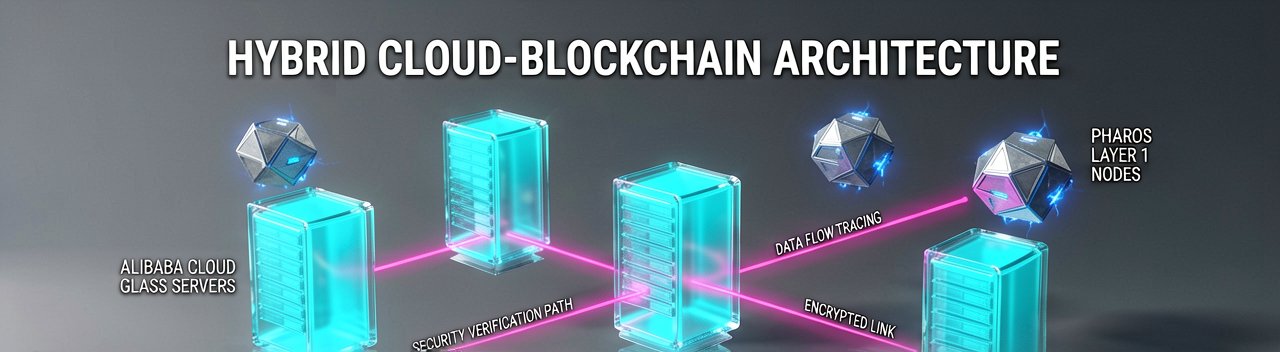
From the developer's perspective, the inclusion of Alibaba Cloud as a core partner highlights a major shift toward hybrid architecture. Purely onchain computation is too expensive for complex large language models, while entirely centralized AI defeats the purpose of blockchain censorship resistance. The "Create Like a PRO" initiative relies heavily on Anvita Flow to act as the traffic controller, determining which parts of an agent's logic run in high-performance cloud environments and which state changes must be permanently settled on the Pharos Layer 1 ledger. This pragmatic approach addresses the scalability bottleneck that has historically plagued decentralized AI projects trying to run everything onchain.

This event also serves as a crucial defensive maneuver in an increasingly crowded venture landscape. Having secured $44 million in Series A funding earlier in 2026, Pharos is under immense pressure to show that its high-throughput blockchain can generate organic transaction volume. The decision to split the prize pool between technical deployment and consumer-facing leaderboards suggests that leadership understands that developer tooling is worthless without an active, transacting user base. The multi-dimensional leaderboards are designed to gamify user habits, slowly transitioning retail users from manual wallet interactions to relying on autonomous "Steward Agents" for daily onchain tasks.
Looking ahead, the success of this carnival will likely be measured by how many of these agents survive past the July 21 deadline. The crypto graveyard is filled with protocols that successfully bought temporary developer engagement with lucrative hackathons, only to see volume crater the moment the subsidy pool dried up. By dangling the carrot of a formal incubator program for the top-performing teams, Pharos is betting that financial incentives, combined with institutional-grade developer tooling, will yield a handful of breakout applications capable of anchoring the network's ecosystem for the long haul.
Reading Between the Lines: The Fragile Economics of Bought Activity
The underlying irony of the decentralized AI narrative is that it relies on heavily centralized capital to stimulate artificial growth. Pharos Network’s deployment of 150,000 $PROS to subsidize developer engagement highlights a persistent vulnerability in the web3 ecosystem: the inability to generate organic developer loyalty without financial bribes. While the network frames this carnival as an acceleration pool for autonomous agents, history suggests that hackathon rewards often attract mercenary developers who build compliance-focused prototypes to capture the prize money, only to abandon the project once the funding dries up. The real test is not whether Pharos can buy activity over a six-week period, but whether the infrastructure possesses enough intrinsic utility to retain these builders when they have to pay their own gas fees.
Furthermore, the split in the incentive pool reveals an institutional anxiety about user adoption. Allocating 50,000 $PROS to consumer-facing leaderboards is a tacit admission that autonomous agents currently lack a compelling, intrinsic product-market fit for the average user. If a Steward Agent were truly revolutionary at managing assets or cutting transaction costs, users would adopt it out of pure self-interest, rather than chasing a spot on a gamified leaderboard. By forcing engagement through transactional rewards, Pharos risks creating a feedback loop of artificial volume where agents trade back and forth with other agents simply to farm tokens, masking a lack of genuine consumer utility under the guise of high onchain metrics.
There is also a fundamental tension between the project's institutional backing and its decentralized ethos. Partnering with a corporate behemoth like Alibaba Cloud provides the necessary compute muscle to handle large language models, but it exposes the structural compromises web3 AI must make to function in the real world. If the brains of these autonomous agents reside on centralized cloud servers while only their financial receipts are settled on the Pharos Layer 1, the narrative of a truly censorship-resistant, unstoppable AI starts to look more like a traditional web2 application wearing a cryptographic cloak. This hybrid architecture may be practical for performance, but it dilutes the core philosophical thesis that supposedly differentiates decentralized AI from its Silicon Valley counterparts.
Ultimately, Pharos is running a high-stakes experiment to see if venture capital can successfully brute-force an ecosystem into existence. With $44 million in Series A funding backing the play, the financial runway is there, but the window to prove that autonomous agents can function as self-sustaining economic actors is closing. If the carnival yields nothing more than automated Twitter bots and repetitive yield-farming scripts, it will solidify suspicions that onchain AI remains a narrative in search of a use case, rather than a paradigm shift in digital commerce.
"We are rapidly approaching an era where autonomous blockchain agents will spend millions of dollars in venture capital to trade synthetic tokens with other autonomous agents, completely unburdened by the inconvenience of human users or actual utility."
Artūras Malašauskas is an AI Systems Integrator with 20+ years of production-grade web engineering experience. He has designed, shipped, and scaled enterprise Python/PHP systems for logistics, SaaS, and public-sector clients. For the past year, he has focused exclusively on AI integrations: deploying open-source LLMs, building generative media pipelines (image, audio, video), and engineering multi-agent workflows for real production environments. His standard: reproducibility, security, cost-efficient inference—no vaporware. He documents and evaluates emerging AI tooling, separating verified capabilities from marketing noise. Technical editor at: muza-ai.eu, ai-verslas.lt, ai-naujinos.lt Connect on LinkedIn
Comments