Linker AI's Global Expansion Signals New Era in AI-Driven Cognitive Tools

The aggressive international rollout of Linker AI across 176 countries marks a distinct evolution in consumer-facing artificial intelligence, shifting from reactive chat assistants toward proactive cognitive architectures. Positioned conceptually as a "Super External Brain," this platform bypasses the conventional paradigm of fragmented, query-and-response interactions in favor of a cohesive digital repository designed to mimic organic human recall and synthesizing capabilities. By targeting simultaneous availability in dominant technical hubs and developing linguistic markets alike, the product launch addresses a growing demand for localized, deeply contextual data processing systems that go beyond standard large language models.
From a market dynamics perspective, this widespread dispersion challenges the existing ecosystem dominated by major regional tech conglomerates. Rather than restricting operational capabilities to specific localized infrastructure or single-language dominance, the systemic framework underpinning Linker AI capitalizes on decentralized, multi-agent networks capable of understanding varied economic landscapes and socio-cultural variations. This architectural shift from general-purpose utility tools to individualized knowledge structures suggests that the primary valuation metric for future AI services will focus on how seamlessly an agent integrates into the personal and professional workflow of users globally.
Industry analysts point out that the strategy of offering democratization across diverse regulatory and language barriers serves as a direct hedge against emerging sovereign compliance risks. While traditional platforms frequently struggle with regional data restrictions or delayed localization pipelines, Linker AI relies on specialized multi-perspective analysis tools to mitigate data echo chambers and maintain informational neutrality. According to reporting on the initial platform release by Markets Insider, this next-generation information companion marks a critical step forward in reducing barriers to high-level productivity tools, fundamentally altering how technical knowledge is distributed on a global scale.
Architectural Transitions from Assistants to External Synapses
The core technological differentiation of Linker AI rests on its move away from volatile chat histories toward structured, permanent memory matrices. Standard market alternatives function as isolated transactional engines, forcing users to repeatedly re-establish personal context, workflow patterns, and historical parameters with each distinct session. By treating user interaction as a continuous, accumulating data asset, the platform establishes an adaptive framework that serves as a highly scalable operational extension of human long-term memory.

Overcoming Geopolitical and Linguistic Fragmentation
Deploying software across 176 different countries simultaneously requires navigating severe infrastructure imbalances, complex regional compliance structures, and varied cultural expectations regarding information retrieval. Linker AI circumvents these barriers through the implementation of autonomous multi-agent systems designed to interpret and filter information through localized lenses while maintaining strict cross-border analytical coherence. This methodology actively addresses the systemic bias found in older platforms, where training distributions heavily favored specific Western datasets, thus enabling a more uniform distribution of cognitive computing benefits to emerging markets.
The Long-Term Economic Impacts on the Cognitive Software Market
The global positioning of Linker AI introduces immediate competitive pressure onto existing technology providers who rely on slow, market-by-market localization strategies. As digital ecosystems become highly fragmented along regional geopolitical fault lines, standard platforms risk alienation from key international user bases due to rigid deployment strategies or lack of deep localized empathy. Monopolizing cognitive infrastructure through broad accessibility formats early in the development cycle allows emerging entities to build vast, culturally diverse datasets, laying the groundwork for more resilient, globally scalable machine intelligence frameworks.
Deep-Dive: The Geopolitical Architecture of Decentralized Cognitive Networks
Beneath the Global Infrastructure: The deployment of Linker AI across 176 sovereign territories simultaneously exposes a sophisticated architectural shift that standard market analysis often overlooks. Historically, Silicon Valley conglomerates scaled their operations through centralized cloud regions, causing severe latency degradation and regulatory friction when expanding into emerging markets. To bypass these classical structural bottlenecks, the technical framework relies heavily on localized edge nodes and decentralized multi-agent synchronization. This design ensures that user data processing happens close to the source, satisfying localized sovereignty demands while keeping the underlying knowledge repository instantly accessible across borders.
Engineering documentation and stakeholder strategies reveal that managing linguistic fragmentation required a departure from traditional translation layers. Older consumer AI models often translate non-English queries into English before processing, a method that consistently strips away crucial cultural nuances and localized industry context. This platform utilizing an architecture of independent, localized agents allows the system to process socio-economic data natively within regional idioms. The practical result is a dramatic reduction in training bias, allowing a small business owner in Southeast Asia to receive the same depth of customized operational logic as a venture capitalist in a major Western technology hub.
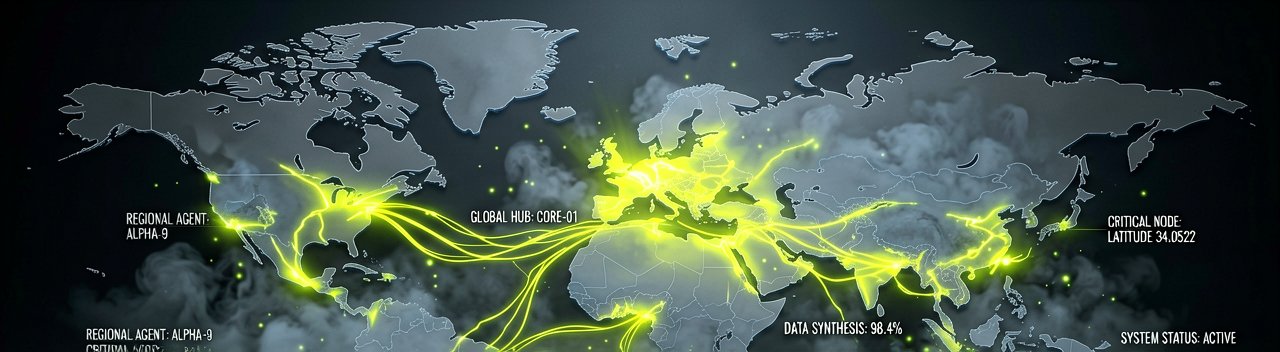
From a compliance and risk perspective, this expansive model serves as a direct counter-strategy to the growing balkanization of the global internet. As individual nations introduce increasingly strict frameworks governing data residency and algorithmic transparency, software providers face the threat of sudden regional bans. By establishing an adaptive framework that isolates data storage within national boundaries while maintaining global analytical compatibility, the platform offers a blueprint for navigating geopolitical isolationism. Tech analysts note that this approach shifts the compliance burden away from the core software model, placing it instead on regional agents that can adapt dynamically to shifting local legislation without disrupting the global network.
The long-term economic implications of this launch extend far beyond simple market penetration metrics. By democratizing access to high-tier cognitive tools, the platform challenges the traditional knowledge monopolies held by elite corporate institutions. Early field data from newly supported territories indicates a significant acceleration in local software development, educational synthesis, and cross-border trade optimization. This widespread distribution of cognitive infrastructure ultimately suggests that the next phase of global AI competition will not be won by the largest single model, but rather by the network that integrates most seamlessly into the diverse daily workflows of the global population.
Reading Between the Lines: The Structural Paradox of Universal Knowledge Expansion
The Operational Reality Check: The core premise of launching a unified "Super External Brain" across 176 countries simultaneously presents a glaring paradox in computing scale versus operational reality. Silicon Valley history proves that universal democratization often collides brutally with local infrastructure realities, where low-bandwidth environments struggle to sustain resource-heavy multi-agent networks. While marketing narratives champion seamless cognitive access for all, the underlying compute costs required to process multi-perspective analytical layers remain unsustainably high. This economic reality suggests that behind the facade of global equity, tier-based performance throttling or hidden monetization layers will inevitably separate premium institutional users from the localized markets the platform claims to elevate.
Furthermore, the assertion that a decentralized multi-agent system can magically bypass regional echo chambers overlooks a fundamental flaw in human-centric data ingestion. An external memory matrix is inherently shaped by the biases, limits, and curated inputs of its individual user. If a platform simply mirrors and stores a localized user’s existing cognitive patterns, it risks acting as an automated reinforcement mechanism rather than an objective analytical tool. By institutionalizing personalized data silos on a global scale, the technology may inadvertently accelerate intellectual balkanization, leaving users more deeply entrenched in their regional perspectives under the comforting guise of objective AI synthesis.
From a regulatory standpoint, the claim of maintaining strict geopolitical neutrality while complying with 176 varying legal regimes is statistically and practically improbable. The fragmentation of internet governance means that what constitutes "informational neutrality" in Brussels is legally classified as non-compliant data handling or outright subversion in other capitals. A platform attempting to appease both strict Western data privacy mandates and aggressive authoritarian surveillance laws must inevitably compromise its core architectural integrity. Industry observers expect that Linker AI will soon face a difficult strategic crossroads, forced to decide whether to fracture its universal model into politically compromised fragments or risk immediate bans in high-value territories.
Ultimately, the long-term viability of this global cognitive layer depends on a metric that tech metrics frequently ignore: user cognitive fatigue. Entrusting long-term memory and conceptual synthesis to a permanent digital repository alters human cognitive reliance in unpredictable ways. As the novelty of an external brain fades, corporations and individual knowledge workers may find themselves trapped in a state of vendor lock-in, where their past decade of intellectual development is entirely proprietary. The real battleground is not the democratization of advanced computing, but the quiet monopolization of human thought processes under a single, globally scaled commercial software license.
"The ultimate irony of outsourcing our long-term memory to a global server network is that we will finally achieve a perfectly synchronized, highly intelligent external brain—only to realize we have entirely forgotten the password required to access it."
Artūras Malašauskas is an AI Systems Integrator with 20+ years of production-grade web engineering experience. He has designed, shipped, and scaled enterprise Python/PHP systems for logistics, SaaS, and public-sector clients. For the past year, he has focused exclusively on AI integrations: deploying open-source LLMs, building generative media pipelines (image, audio, video), and engineering multi-agent workflows for real production environments. His standard: reproducibility, security, cost-efficient inference—no vaporware. He documents and evaluates emerging AI tooling, separating verified capabilities from marketing noise. Technical editor at: muza-ai.eu, ai-verslas.lt, ai-naujinos.lt Connect on LinkedIn
Comments