iOS 27's AI Integration Signals Shift in Smartphone Ecosystems
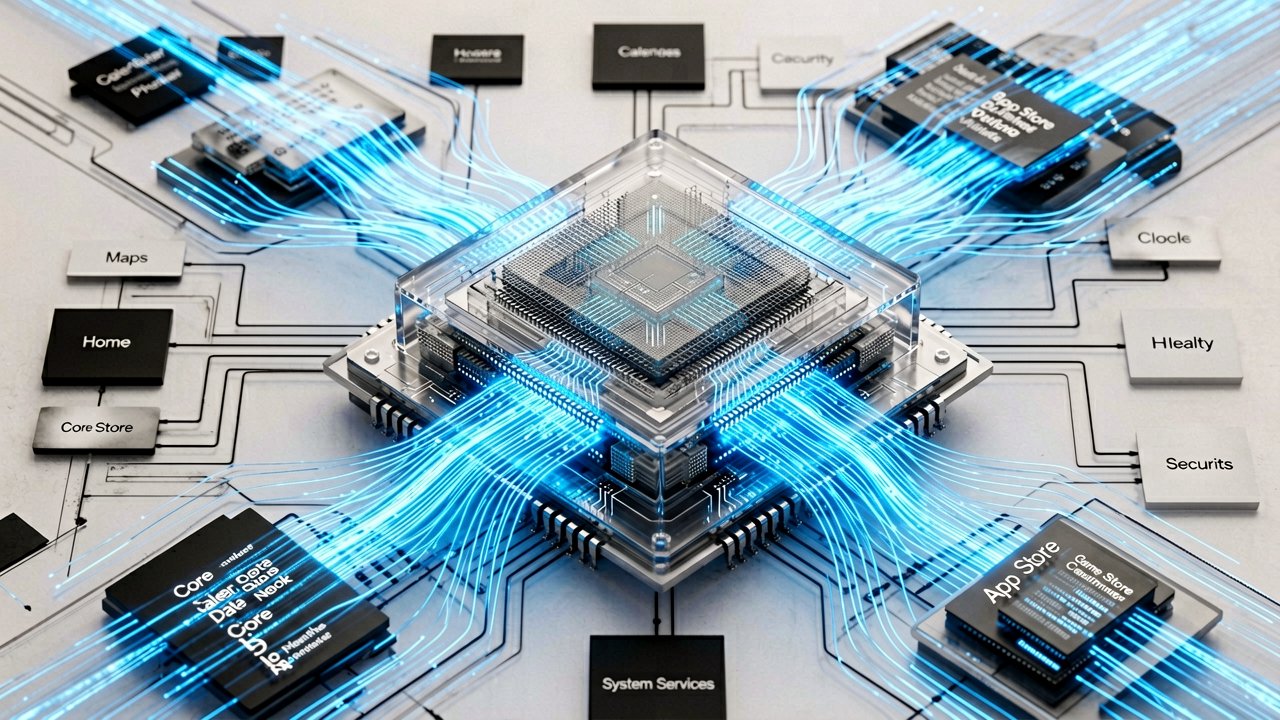
The upcoming launch of iOS 27 marks a definitive pivot in mobile software architecture, transforming Apple Intelligence from an experimental layer into the foundational architecture of the iPhone ecosystem. Rather than continuing the traditional model of isolated applications, Apple is anchoring its strategic tech roadmap to a deeply integrated, system-wide ambient intelligence. This transition, moving away from simple feature additions toward a framework of autonomous coordination, reflects an industry-wide prioritization of context-aware utility over hardware iteration. The scheduled release in September 2026, previewed at the Worldwide Developers Conference (WWDC), establishes a software ecosystem built around direct-to-device automation and open gateway functionality, as detailed by Macworld.
Market context dictates this evolution, as hardware boundaries blur and silicon-level performance increasingly hinges on dedicated neural processors. While competing operating systems rely heavily on centralized, cloud-only large language models, Apple is doubling down on a local-first approach to protect user data and ensure offline efficiency, according to analytical reporting from ITP.net . By restricting the most advanced agentic tools to newer silicon lines, Apple establishes a bifurcated user base that incentivizes hardware upgrades while redefining the long-term value of ambient software. The platform architecture adapts explicitly to this dynamic, transitioning the device from a mere app launcher into an integrated digital assistant capable of cross-application logic and visual synthesis.
A Rebuilt Siri and the Gateway Framework
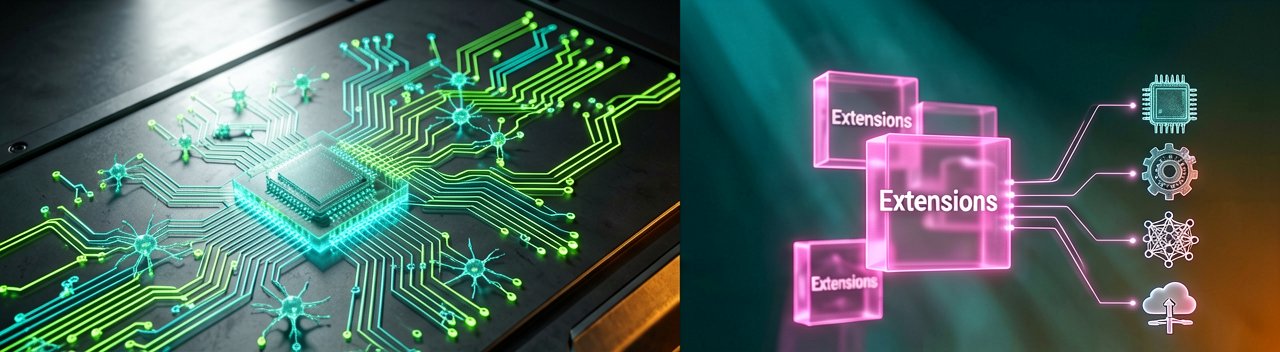
The centerpiece of the iOS 27 update is a complete reconstruction of Siri, moving the assistant away from basic voice-command execution to true agentic, multi-turn conversation. Operating with deep on-screen awareness, the upgraded Siri interprets real-time user activity, cross-referencing files, calendar events, and messages to contextualize requests without manual inputs. Crucially, Apple is shifting its competitive strategy by introducing an "Extensions" framework, turning Siri into a distribution hub for third-party AI models like Google Gemini and Anthropic's Claude, as outlined by Gadget Hacks. This allows the iPhone to act as an open gateway for alternative AI services, maximizing consumer choice while ensuring Apple retains control over the core interface and user monetization layers.
Visual Intelligence and Camera Customization
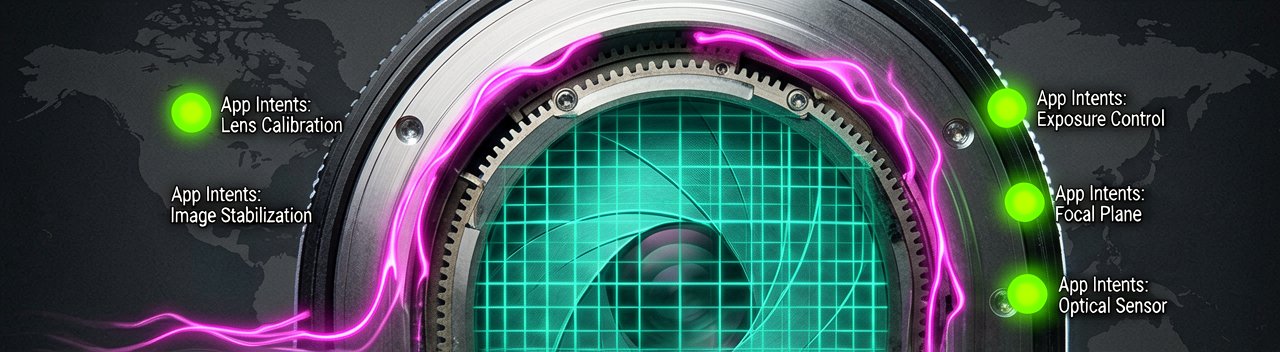
Camera hardware capabilities are augmented through localized visual intelligence systems integrated directly into the core camera and image processing pipelines. Users can leverage real-time spatial synthesis and object-recognition toggles to analyze physical surroundings, search for items online, or extract deep textual data instantly from the view-finder. The native Photos application also introduces generative fill mechanics, allowing scenes to be dynamically expanded, perspectives reframed, and lighting elements adjusted via machine learning. These systemic refinements, combined with advanced accessibility toolsets, ensure that image capture is no longer just a passive function but an active, context-aware interface layer across the operating system.
Ecosystem Implications and App Integration
The integration of advanced machine learning alters how third-party software communicates with the native operating system, utilizing the App Intents framework to map out cross-application workflows. Systemic automations within the Shortcuts application can now be generated using everyday natural language descriptions, entirely lowering the technical barrier to building complex macro routines. Furthermore, the strategic emphasis on windowing capabilities and adaptable application layouts lays the software foundation for multi-screen execution and upcoming device form factors, as highlighted by Gulf News. By executing these intricate computations directly on device through high-performance silicon, Apple positions its ecosystem to remain the primary gatekeeper of consumer data and mobile AI distribution channels.
The Hidden Dynamics of Local-First Architecture
What Most Reports Miss: The transition to iOS 27 is not merely a feature release, but a calculated counter-offensive against the cloud-dependent monetization models favored by rivals like Google and OpenAI. For years, the smartphone industry measured innovation in megapixel counts and screen refresh rates, but the integration of system-level ambient intelligence shifts the battleground entirely to local silicon efficiency. By anchoring complex multi-turn logic to the device's neural engine, Apple circumvents the catastrophic data center and electricity costs currently plaguing centralized cloud providers. This architecture shields the company from the volatile overhead of running millions of remote LLM queries simultaneously, while establishing a robust moat centered on consumer privacy that competitors cannot easily mimic without rebuilding their entire advertising-driven business models.
This structural pivot, however, creates immediate tension within Apple's global supply chain and developer relations. Silicon yields must now support unprecedented memory bandwidth to host localized weights without draining battery life or causing thermal throttling. Developers are quietly voicing concerns over the technical demands of the updated App Intents framework, which requires them to meticulously index their apps' internal structures so Siri can navigate them. Smaller software houses worry that if their applications are not fully optimized for these autonomous workflows, they risk becoming invisible to users who increasingly rely on an AI agent to execute tasks rather than opening individual apps manually. The move effectively repositions the App Store from a digital storefront into a training ground for contextual automation.
From a historical perspective, this strategy mirrors Apple's previous ecosystem locks, such as the initial rollout of the M-series chips and the implementation of App Tracking Transparency. By establishing an "Extensions" gateway that invites third-party models like Google Gemini or Anthropic's Claude into the ecosystem, Apple gracefully dodges antitrust scrutiny while maintaining absolute control over the user interface. They are not trying to win the raw foundational model race; instead, they are capturing the highly lucrative aggregation layer. Third-party providers become commoditized plug-ins, while Apple retains ownership of the user relationship, the contextual on-screen data, and the hardware that makes execution possible. It is a long-game play that secures their platform's relevance for the next decade of mobile computing.
The Friction of an Agentic Ecosystem
Reading Between the Lines: The market consensus surrounding iOS 27 assumes a frictionless transition into the era of agentic smartphones, yet this optimism ignores a glaring operational contradiction. Apple is pitching a future where an autonomous Siri navigates third-party applications to execute complex macros on behalf of the user. However, this model directly undermines the attention-economy metrics that developers rely on to survive. If a user can order groceries, book a flight, or check a news feed entirely through a voice agent without ever viewing an application's interface, ad impressions will plummet and in-app monetization strategies will collapse. Apple is essentially asking its developer ecosystem to cooperate in a structural migration that threatens to render their traditional revenue models obsolete.
Furthermore, the heavily marketed reliance on local-first architecture introduces a stark hardware divide that challenges Apple’s historical reputation for long-term device support. Running highly optimized, localized AI models requires immense RAM and neural processing bandwidth, meaning that older iPhone models will inevitably be excluded from the core features of iOS 27. This creates a forced obsolescence cycle driven not by degrading hardware, but by artificial software barriers. The environmental narrative of building long-lasting, recyclable devices clashes directly with a tech roadmap that practically demands a premium upgrade every two to three years just to maintain parity with the evolving operating system.
There is also an inherent geopolitical and regulatory gamble in Apple's strategy of acting as a neutral gateway for third-party AI models. While delegating complex cloud queries to external partners like Google or Anthropic shields Apple from local compute costs, it exposes the ecosystem to fragmented regional compliance laws. A featureset that operates seamlessly in North America will face intense regulatory friction under Europe's AI Act or China's strict data sovereignty laws. By delegating the underlying intelligence to external plugins while trying to maintain a uniform global user experience, Apple risks creating a fractured ecosystem where the device's actual utility depends entirely on the regulatory climate of the country it happens to be in.
"We are moving toward an era where our smartphones will anticipate our every need, handle our most tedious chores, and perfectly streamline our digital lives—assuming, of course, that we have a thousand dollars to spare every twenty-four months and don't mind our favorite apps quietly going out of business in the background."
Artūras Malašauskas is an AI Systems Integrator with 20+ years of production-grade web engineering experience. He has designed, shipped, and scaled enterprise Python/PHP systems for logistics, SaaS, and public-sector clients. For the past year, he has focused exclusively on AI integrations: deploying open-source LLMs, building generative media pipelines (image, audio, video), and engineering multi-agent workflows for real production environments. His standard: reproducibility, security, cost-efficient inference—no vaporware. He documents and evaluates emerging AI tooling, separating verified capabilities from marketing noise. Technical editor at: muza-ai.eu, ai-verslas.lt, ai-naujinos.lt Connect on LinkedIn
Comments