Beyond Coding Autocomplete: LG CNS and Cline Launch Agentic AI Platform to Automate the Enterprise IT Lifecycle
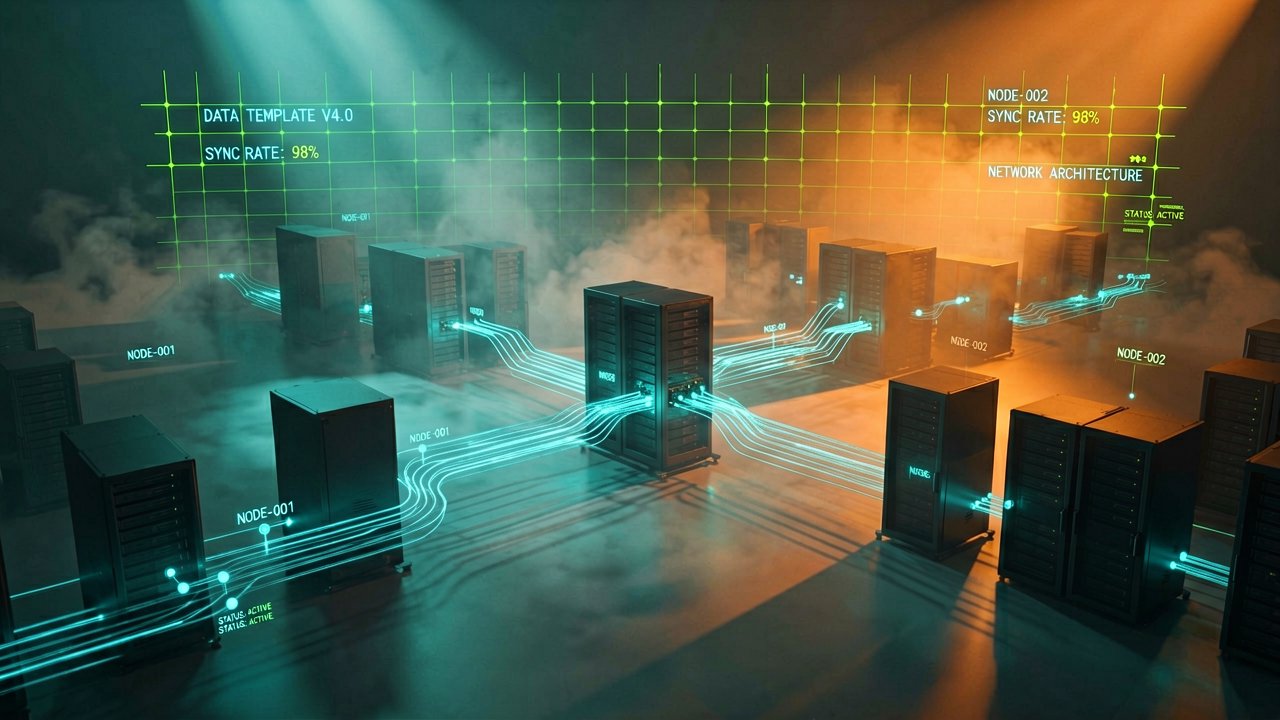
The enterprise software development paradigm is shifting from basic generative code assistance to completely autonomous operations. In a major move targeting this evolution, South Korean IT service provider LG CNS, in partnership with U.S.-based open-source AI startup Cline, has launched "Cline Spec Driven for Enterprise," an agentic AI platform designed to orchestrate large-scale IT system development. Announced on June 8, 2026, via a PR Newswire release, the platform moves past the boundaries of standard generative models to manage complex software lifecycles in strictly regulated, security-critical corporate landscapes.
This deployment highlights a strategic shift within corporate technology strategies, transitioning away from casual, unverified software generation toward rigorous, architecture-aware systems. By implementing specialized AI agents acting across discrete development phases, the platform structures corporate intelligence to execute technical tasks autonomously. The strategic framework aims to mitigate traditional AI errors while satisfying strict enterprise compliance standards across global markets, including the United States, Japan, and Southeast Asia.
Architectural Core: Knowledge Foundations and Spec-Driven Design
The platform centers on a structural ontology database known as the Knowledge Foundation, which maps and ingests an organization's specific technical ecosystem. According to reporting by Asiae, this architectural repository compiles existing source code, system documentation, engineering guidelines, and localized security rules into an interconnected data mesh. Instead of relying on generalized public training data, multiple domain-specific agents—handling requirements gathering, system architecture, active programming, and testing—query this centralized engine to cooperate synchronously on engineering tasks.
To eliminate model hallucinations and operational variances, the platform implements a methodology termed spec-driven development. Under this mechanism, development processes are rigidly governed by predefined functional criteria and baseline templates. As detailed by Digital Today, having the AI execute design, generation, and quality verification against locked specifications enforces structural uniformity and code consistency across large developer cohorts, regardless of individual operator skill levels.
Legacy Modernization and Multi-Industry Scalability
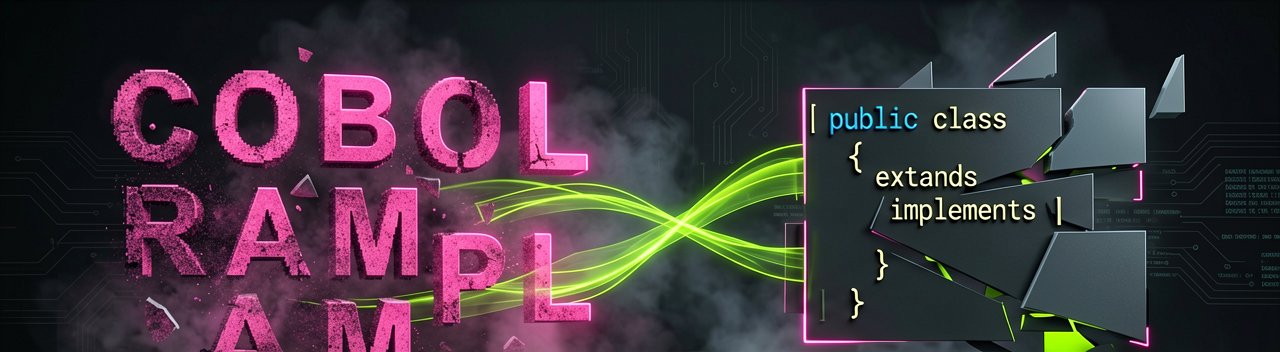
A primary commercial application for the platform is automated legacy modernization, specifically targeting the conversion of outdated software systems into modern architectures. According to Chosun Biz, the system can autonomously translate legacy COBOL codebases into optimized Java architectures. Complex code analysis, syntactic translation, and regression testing protocols that traditionally demanded weeks of manual engineering can be completed in minutes, drastically accelerating modernization timelines.
The solution is already undergoing real-world validation, with its COBOL-to-Java pipeline currently deployed in a next-generation infrastructure modernization project for a major financial institution. Moving forward, LG CNS and Cline intend to scale this enterprise offering to highly regulated sectors where data privacy and strict compliance are mandatory, including defense, manufacturing, public services, and banking operations.
Socio-Technical Implications of Autonomous Enterprise Engineering
What Most Reports Miss: The shift to agentic platforms like "Cline Spec Driven for Enterprise" signals a deeper evolution than mere software generation speed; it rewires how institutional logic is captured and preserved. Historically, enterprise IT ecosystems have suffered from a persistent brain-drain effect, where the fundamental operational logic of critical infrastructure resides solely in the heads of aging engineering cohorts. When legacy programmers retire, they leave behind millions of lines of poorly documented source material that traditional tools cannot decipher. By converting these fragmented ecosystems into a centralized Knowledge Foundation, companies are essentially building an executable digital archive of their entire operational history.
From an organizational perspective, this structural shift changes the baseline role of human developers within the software lifecycle. Rather than spending valuable cycles on syntax correction, boilerplate configuration, and routine regression testing, engineers are transitioning into strategic system architects. Human intervention becomes focused on defining systemic constraints, refining the initial functional specifications, and auditing automated outputs against corporate security frameworks. This change shifts the engineering workforce toward high-value oversight, drastically reducing the mundane friction usually associated with large-scale digital transformations.
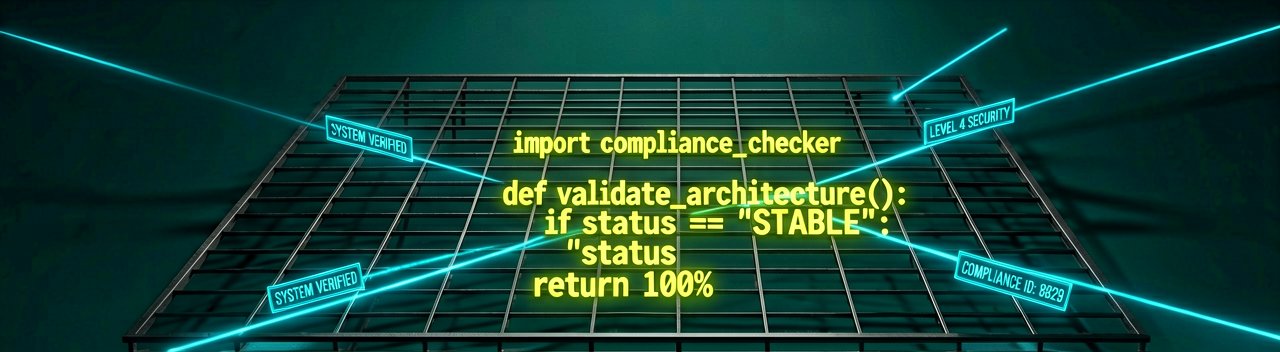
However, the realization of fully autonomous enterprise engineering relies entirely on solving the trust boundaries within regulated industries. While financial and defense sectors stand to gain the most from rapid legacy modernization, their risk tolerance for unverified code generation remains near zero. The integration of spec-driven frameworks serves as an architectural safeguard to satisfy conservative risk compliance models. By tying every autonomous development step to predefined compliance templates, this approach builds an objective audit trail that corporate risk officers can actively evaluate, bridging the gap between raw AI capabilities and strict production standards.
The Technical Debt and Architectural Realities of Automated Transformation
Reading Between the Lines: The corporate enthusiasm surrounding completely autonomous software pipelines frequently masks a fundamental engineering contradiction. While translating legacy COBOL into modern Java in a matter of minutes sounds revolutionary on a quarterly earnings call, it risks converting old, poorly understood technical debt into shiny, automated technical debt. Translating code syntactically is not the same as re-architecting an application for modern, cloud-native scalability. If an AI agent strictly maps legacy procedures to modern languages without fundamentally reimagining the underlying data models, organizations may find themselves paying premium cloud infrastructure costs to run what is effectively still a 1980s mainframe design.
Furthermore, the reliance on a centralized Knowledge Foundation introduces an entirely new vector of systemic risk. If the source material, engineering guidelines, or localized security policies ingested by the platform contain deep-seated architectural flaws, the specialized AI agents will systematically amplify these errors at a speed and scale that human engineers cannot easily match. The enterprise IT department then faces a reality where debugging an automated, multi-agent system becomes exponentially more complex than auditing standard, human-written source code. Tracking down an obscure logic flaw propagated across dozens of integrated microservices by autonomous agents presents a unique diagnostic nightmare.
Ultimately, the true barrier to this automated future is not the capability of the large language models, but the systemic messiness of corporate environments. Enterprises rarely operate on clean, universally standardized documentation. They run on a chaotic mix of undocumented hotfixes, political compromises between departments, and legacy systems that work for reasons no living employee can explain. Forcing these highly organic, irregular corporate environments into rigid, spec-driven development models will require a level of operational discipline that most organizations historically struggle to maintain. The technology may be ready to build the future, but corporate infrastructure remains stubbornly tethered to its past errors.
"We are rapidly approaching an era where enterprise software will be written by machines, audited by machines, and maintained by machines. Hopefully, the machines will also be the ones staying up until three in the morning on a Sunday when a minor syntax error brings down the entire global billing system."
Artūras Malašauskas is an AI Systems Integrator with 20+ years of production-grade web engineering experience. He has designed, shipped, and scaled enterprise Python/PHP systems for logistics, SaaS, and public-sector clients. For the past year, he has focused exclusively on AI integrations: deploying open-source LLMs, building generative media pipelines (image, audio, video), and engineering multi-agent workflows for real production environments. His standard: reproducibility, security, cost-efficient inference—no vaporware. He documents and evaluates emerging AI tooling, separating verified capabilities from marketing noise. Technical editor at: muza-ai.eu, ai-verslas.lt, ai-naujinos.lt Connect on LinkedIn
Comments