The Human Refinement Guardrail: Analyzing AI Integration via Tomb Raider: Legacy of Atlantis
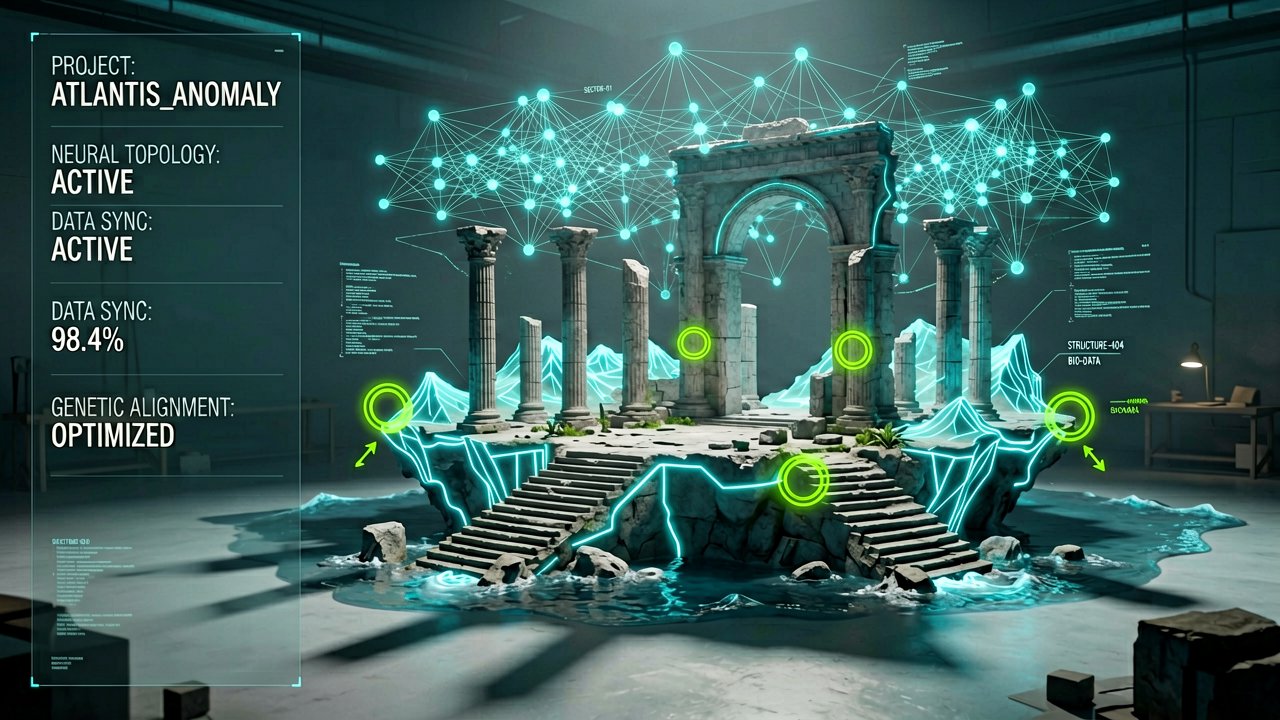
The gaming industry is undergoing a tactical evolution as artificial intelligence shifts from a theoretical disruption to a practical development pipeline tool. This reality took center stage following the confirmation by developers Crystal Dynamics and Flying Wild Hog that generative AI tools were utilized during the creation of Tomb Raider: Legacy of Atlantis. According to an official product disclosure updated on Steam, the software assisted the team in drafting early ideation and temporary structural placeholders, which were later finalized or completely replaced by human hands before shipping.
A representative from the studio clarified to Nintendo Life that these technical interventions are deployed exclusively to help their internal teams iterate on environmental concepts faster, emphasizing that every piece of finished commercial material remains fundamentally human-crafted. This public messaging highlights a broader strategic push across modern publishers to leverage operational efficiencies without triggering consumer backlash or eroding creative integrity. Under parent holding group Embracer and global publisher Amazon Games Studios, the project reflects a growing industry trend where technical automation is balanced against consumer demands for premium, artisan-level creative assets.
The Structural Pivot from Content Generation to Iterative Prototyping
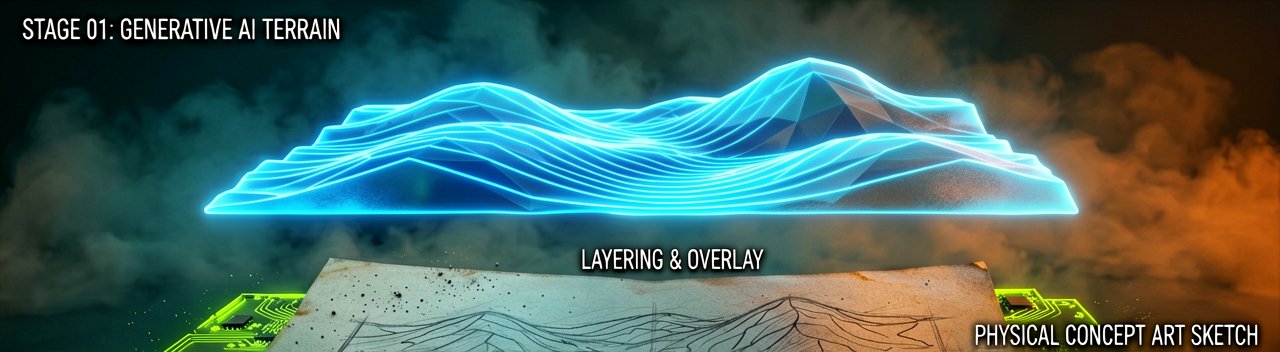
The structural approach taken by the development team indicates that major studios are building a middle-ground operational model. Rather than utilizing algorithms to bypass standard art department requirements, companies use large models as rapid prototyping engines. This methodology drastically truncates the pre-production phase, enabling small test teams to visualize architectural layout concepts or terrain geometries before locking down a project's technical scope. By confining artificial intelligence to early exploratory sandboxes, developers are protecting themselves against the legal vulnerabilities and intellectual property uncertainties currently impacting unfiltered algorithmic content creation.
Market Transparency and Navigating Consumer Expectations
The mandatory distribution platform disclosures introduced across PC marketplaces have forced game makers to abandon quiet development workflows in favor of radical operational transparency. Public reactions to the Steam listing show that audiences remain intensely critical of automation, treating algorithmic involvement as a threat to human craftsmanship. Studios that successfully navigate this paradigm shift must explicitly emphasize human oversight. By maintaining a strict "human-in-the-loop" model, where artists filter, re-engineer, and replace temporary generation, businesses can preserve consumer goodwill while still capturing the speed and efficiency advantages of machine assistance.
What Most Industry Reports Miss: The Invisible Scaffold of Post-Pandemic Production
The conversation surrounding Tomb Raider: Legacy of Atlantis frequently focuses on the final visual fidelity, yet the true disruption lies in how modern studio infrastructure handles the lingering bottlenecks of post-pandemic development. Following years of remote work fragmentation and skyrocketing asset budgets, AAA development cycles routinely stretch past five years. Machine assistance is not being deployed by studios like Crystal Dynamics as a creative replacement, but as an invisible engineering scaffold designed to solve the industry’s crushing velocity problem. By automating repetitive iteration loops, developers can stabilize volatile production timelines and prevent the catastrophic project delays that have plagued the current console generation.
From a technical workflow perspective, the integration of these tools alters the traditional hierarchy of the art and design departments. Senior environmental artists increasingly transition into editorial roles during the early phases of a project, managing algorithmic outputs rather than building placeholder geometry from scratch. This shift allows teams to stress-test level mechanics and camera angles using asset proxies much earlier in the pipeline. The strategy significantly reduces the risk of late-stage structural redesigns, which historically force studios into expensive crunch periods or multi-month delays just to restructure a single problematic level.
This operational pivot also serves as a defensive maneuver against the economic realities of modern publishing. Under massive conglomerate structures, games must prove their viability to stakeholders long before receiving full production budgets. Utilizing rapid prototyping frameworks allows internal teams to build vertical slices and proofs-of-concept at a fraction of traditional costs. Consequently, the technology acts as a funding catalyst, enabling creative directors to pitch ambitious, high-risk world designs to risk-averse executives by presenting data-backed layout simulations early in the negotiation process.
However, the long-term impact on junior talent acquisition remains a critical point of concern for industry veterans. Historically, entry-level production assistants and junior artists cut their teeth on the very placeholder assets, prop variations, and iterative clean-up tasks that automation now targets. As these foundational tasks are absorbed into automated pipelines, studios must actively reinvent their mentorship structures. Ensuring that the next generation of digital artisans can develop deep technical expertise in an ecosystem that increasingly skips the manual basics is the next major hurdle for studio leadership.

Reading Between the Lines: The Illusion of Efficiency and the Reality of Liability
The industry's embrace of machine assistance is frequently marketed as a triumph of operational efficiency, yet this narrative glosses over a core contradiction in modern production economies. While utilizing automation to generate temporary placeholders cuts early-stage development hours, it introduces a highly unpredictable technical debt during the polish phase. Human artists tasked with cleaning, re-topologizing, and validating algorithmic outputs often find themselves fighting against foreign, unoptimized data structures. This reality suggests that the supposed time savings in pre-production may simply be deferred costs that reappear as complex debugging bottlenecks later in the lifecycle.
Furthermore, the defensive posture adopted by publishers regarding "human-only" final assets highlights a deeper legal anxiety rather than a pure commitment to creative integrity. Under current intellectual property frameworks, pure machine outputs lack copyright protection, leaving multi-million-dollar franchises vulnerable to systemic duplication if their underlying assets are legally challenged. The insistence that every shipped polygon has been touched by a human hand is often less about protecting the workforce and more about building a robust legal shield to protect corporate equity from future copyright litigation.
This hybrid production model also creates an unstable paradox regarding creative originalism. Studios use automated networks trained on historical, existing game data to build "new" concepts, which inherently biases early prototyping toward familiar, derivative tropes. When an industry uses a closed loop of past successes to generate its future placeholders, it risks homogenizing gameplay layouts and aesthetic structures. Over-reliance on these tools threatens to stifle true mechanical innovation, delivering technically flawless, highly optimized iterations of games the market has already seen dozens of times before.
"The ultimate irony of automated game development is that we are spending millions of dollars to build highly advanced networks capable of mimicking human creativity, only to employ an army of exhausted human artists to spend thousands of hours fixing the machine's sloppy homework."
Artūras Malašauskas is an AI Systems Integrator with 20+ years of production-grade web engineering experience. He has designed, shipped, and scaled enterprise Python/PHP systems for logistics, SaaS, and public-sector clients. For the past year, he has focused exclusively on AI integrations: deploying open-source LLMs, building generative media pipelines (image, audio, video), and engineering multi-agent workflows for real production environments. His standard: reproducibility, security, cost-efficient inference—no vaporware. He documents and evaluates emerging AI tooling, separating verified capabilities from marketing noise. Technical editor at: muza-ai.eu, ai-verslas.lt, ai-naujinos.lt Connect on LinkedIn
Comments