Unveiling the Technical Foundations: How Capcom’s Engine Upgrades Power RE9/10 and Retro Remakes
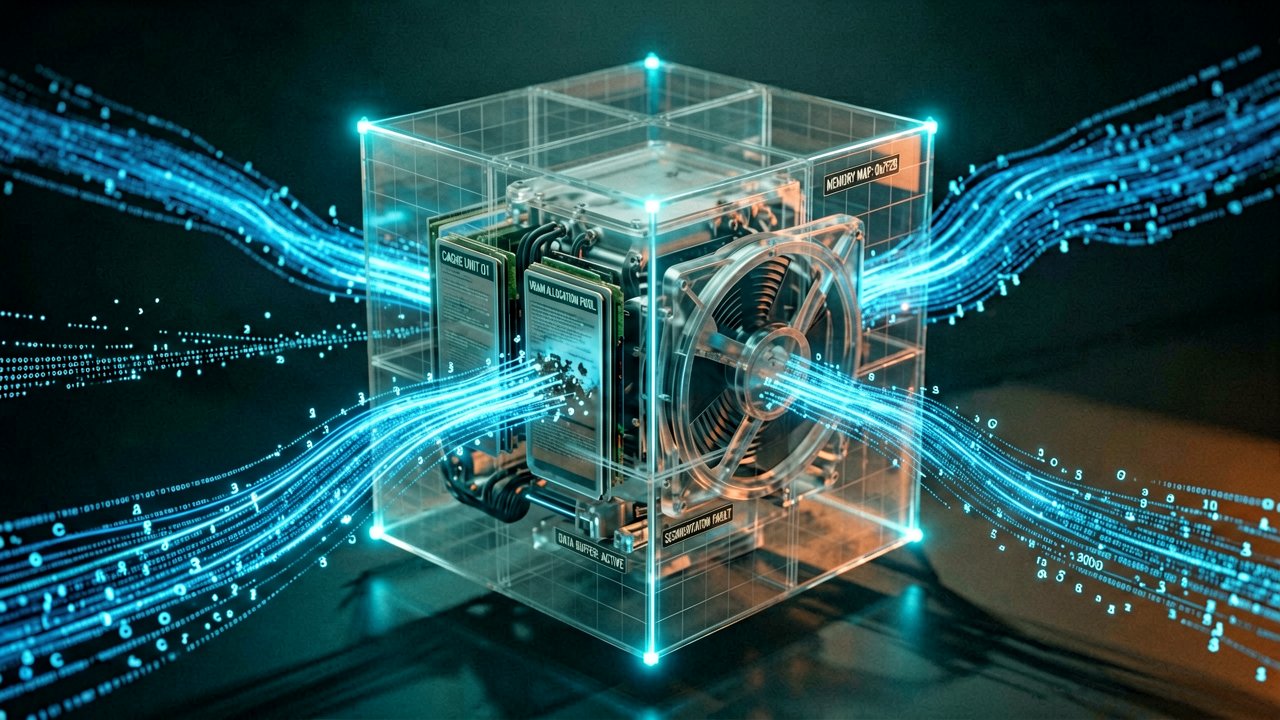
Capcom is executing a calculated dual-strategy, aggressively positioning Resident Evil 9 and Resident Evil 10 alongside a suite of rebuilt classic remakes to capture both narrative pioneers and nostalgia-driven fans. Managing this scale of production requires a massive evolution in software infrastructure. Instead of entirely abandoning the foundation that resurrected their flagship horror franchise, Capcom is deploying its next-generation engine architecture, incrementally staging capabilities under the internal moniker "Codename REX" to handle massive data loads without sacrificing runtime efficiency.
The original RE Engine excelled at tight, corridors-based horror, but fell into bottlenecks when tasked with streaming massive asset volumes or managing complex global logic across sprawling environments. By modernizing the internal Virtual Machine layer and replacing rigid memory management systems with dynamic virtual memory allocators, Capcom’s updated pipeline lets engineering teams stitch together vast open spaces while keeping the engine’s signature low-latency input loop intact. This architecture establishes a flexible sandbox where the upcoming main entries can push systemic complexity, while the classic retro remakes can focus their computing budgets on hyper-dense, photogrammetric environments that mirror the claustrophobic tension of original layouts.
Advanced Rendering Mechanics
The technical differentiation between these projects manifests clearly in how light and materials interact within the updated framework. For cutting-edge flagship titles, Capcom has matured its pipeline to move past basic rasterization and hybrid ray tracing, scaling up to full path-traced execution pipelines on high-end hardware profiles as detailed in technical analysis by 80 LEVEL. This physical simulation calculates multi-bounce indirect lighting, mirroring light accurately through dense fog, damp corridors, and organic tissue via complex subsurface scattering shaders. The asset workflow relies on high-fidelity photogrammetry, where scanned real-world surfaces maintain their micro-surface roughness values under dynamically shifting light sources. Conversely, for retro remakes, the engine scales these features down structurally, using optimized light probes and aggressive shadow caching to preserve visual consistency on baseline console profiles while liberating computational overhead for intricate physics and environmental scripting.
Performance Metrics and Scalability
The real triumph of Capcom’s framework optimization lies in its cross-platform performance scalability, demonstrating an impressive resilience against the micro-stutters and high VRAM bottlenecks that plague modern AAA game engines. According to documented development roadmaps from Wikipedia, the design philosophy centers on integrating modular rigging, motion matching, and procedural animation toolsets directly into the core code, allowing characters to move with realistic physical weight without exhausting the CPU thread budget. On target hardware like modern consoles and mid-tier PCs, the framework targets a locked 60 frames per second runtime target by employing intelligent asset streaming and variable rate shading. On extreme hardware profiles, the engine unlocks full native 4K resolution presentation while seamlessly integrating advanced machine learning upscaling technologies, successfully proving that an in-house, tailor-made engine can adapt across vastly different game genres and generations without buckling under the weight of modern asset sizes.
Behind the Scenes: The architectural shift driving Capcom’s updated pipeline centers on a complete overhaul of the engine's core execution scheduler. Historically, the engine relied on a job system that, while efficient for linear asset streaming, suffered from worker thread starvation when managing heavy parallel workloads like systemic AI and dynamic physics simulations. Systems engineers addressed this bottleneck by implementing an asynchronous fiber-based job system. This approach allows the engine to decouple gameplay logic from rendering pipelines, dynamically balancing worker threads based on real-time CPU frame times. By minimizing synchronization barriers and eliminating thread-blocking mutexes, the engine extracts maximum throughput from modern multi-core processor layouts, ensuring smooth execution even during chaotic combat scenarios.
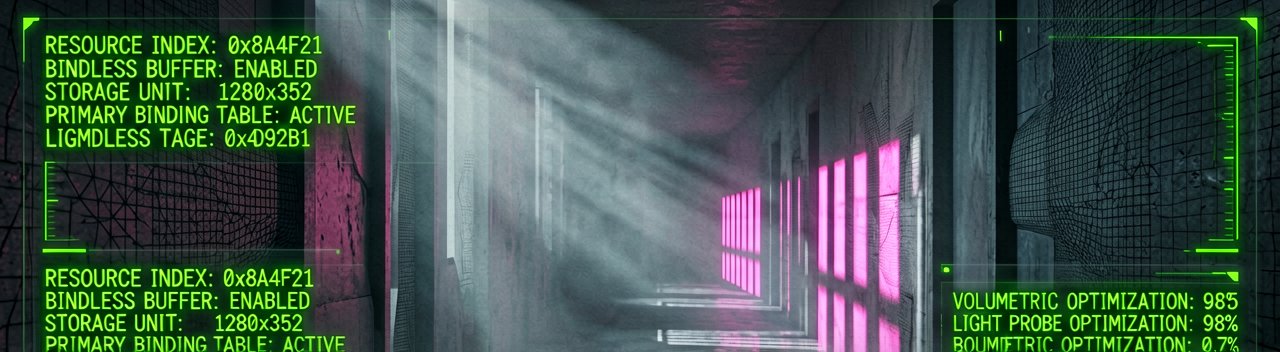
Memory fragmentation was another critical hurdle that threatened stability during long play sessions across sprawling environments. To stabilize VRAM utilization, Capcom shifted away from monolithic heaps toward a highly modular, page-based virtual memory allocator. Assets are broken down into granular, fixed-size pages that can be loaded, recycled, or evicted from memory instantly without causing address space fragmentation. When players transition from dense outdoor environments to claustrophobic interiors, the streaming manager pre-allocates localized memory pools, pulling in high-mip texture data and geometric meshes just fractions of a second before they enter the camera’s view frustum, which effectively eliminates visible asset pop-in.
On the data pipeline side, the engine utilizes custom dictionary-based compression algorithms executing directly on GPU compute shaders. Rather than routing compressed asset packages through the CPU for decompression and risking data serialization delays, raw bitstreams are piped straight into VRAM. Dedicated hardware decompression pipelines expand these assets on the fly, significantly reducing load times on high-speed NVMe storage systems. This optimization frees up critical CPU cycles, allowing developers to allocate more computational headroom toward complex game systems like advanced audio spatialization and sophisticated, multi-layered collision logic.
The rendering backend has also been re-engineered around a modern bindless resource model, removing the traditional CPU overhead associated with updating descriptor tables before every draw call. In this updated paradigm, all textures, samplers, and geometry buffers are globally visible to the GPU via an array of indices. Shaders pull assets directly from global memory using flat, 64-bit virtual addresses, allowing the engine to drastically reduce draw call counts and clear the CPU-to-GPU validation bottlenecks that frequently trigger frame rate dips in modern asset-heavy productions.
Low-Level Micro-Optimizations
To keep instruction caches hot and prevent pipeline stalls, Capcom’s engineers aggressively restructured core gameplay components to adhere to Data-Oriented Design principles. Entity Component Systems manage low-level objects like ambient props, particle emitters, and enemy behavior states, grouping identical data structures contiguously in memory. This layout maximizes L1 and L2 cache hits, enabling the CPU to process massive arrays of entities in parallel via Single Instruction, Multiple Data extensions. By transforming abstract object hierarchies into clean, linear data arrays, the engine minimizes memory latency and maintains a highly predictable execution loop across a diverse range of hardware profiles.
Reading Between the Lines: While Capcom’s engineering feats offer an impressive blueprint for cross-generation stability, relying on an in-house engine update to concurrently fuel sprawling new mainline entries and hyper-localized retro remakes introduces a precarious balancing act. The industry is littered with publishers whose internal tech stacks buckled under the divergent demands of varied production pipelines. Upgrading a foundational engine while actively developing multiple high-profile titles creates a moving target for creative teams. If the engine's core virtual machine layer evolves mid-production, features built for a linear, heavily scripted remake can easily introduce regression bugs or performance regressions when deployed within the open, systemic sandbox of a mainline entry.
Furthermore, marketing narratives highlighting seamless scalability often gloss over the stark compromises required to bridge vastly different hardware profiles. Optimizing an engine to run fluidly on baseline consoles while simultaneously striving to deliver uncompromised path-traced rendering on high-end hardware risks creating an architectural identity crisis. Features optimized for low-level data-oriented design can easily become restricted by the lowest common denominator in hardware. This paradox suggests that despite technical breakthroughs in bindless resource models and asynchronous fiber scheduling, the actual gameplay design of these upcoming titles may remain fundamentally bounded by the geometric and structural constraints of older hardware architectures.
There is also the logistical reality of maintaining a proprietary toolset in an industry increasingly dominated by standardized third-party engines. While avoiding external licensing fees provides obvious financial benefits, it forces Capcom to bear the entire burden of research, development, and toolchain maintenance internally. Every single micro-optimization, from custom compute shader decompression to bespoke virtual memory allocators, requires a dedicated team of elite systems engineers to maintain. Should development timelines bloat or key engineering talent rotate out, the proprietary stack can rapidly transform from a competitive advantage into a rigid, specialized bottleneck that slows down asset pipelines and prolongs debugging cycles across all active projects.
The Realities of Unified Infrastructure
The strategic push to capture both nostalgia and technological novelty ultimately forces an engine to serve two masters with fundamentally opposing goals. A faithful retro remake relies on precise, predictable, and tightly controlled triggers where environmental density is prioritized over systemic unpredictability. A next-generation mainline sequel, conversely, requires dynamic AI, emergent world states, and flexible systems that test the absolute limits of multi-threaded processors. Forcing a unified codebase to excel at both paradigms simultaneously means engineers are constantly tuning performance dials that inevitably pull in opposite directions, potentially leading to remakes that feel overly rigid or mainline sequels that feel mathematically constrained by their underlying architecture.
"In the modern games industry, upgrading a proprietary engine mid-production is less like changing tires on a moving racecar and more like swapping out the engine blocks of an entire fleet while they are actively delivery-routing. If Capcom pulls this off seamlessly, they deserve every bit of praise; if they fail, at least we know the dynamic asset streaming will render the ensuing corporate debris in glorious, un-stuttering 4K."
Artūras Malašauskas is an AI Systems Integrator with 20+ years of production-grade web engineering experience. He has designed, shipped, and scaled enterprise Python/PHP systems for logistics, SaaS, and public-sector clients. For the past year, he has focused exclusively on AI integrations: deploying open-source LLMs, building generative media pipelines (image, audio, video), and engineering multi-agent workflows for real production environments. His standard: reproducibility, security, cost-efficient inference—no vaporware. He documents and evaluates emerging AI tooling, separating verified capabilities from marketing noise. Technical editor at: muza-ai.eu, ai-verslas.lt, ai-naujinos.lt Connect on LinkedIn
Comments