Gen Atlas and the Quiet Renaissance of Narrative-Driven Open Worlds
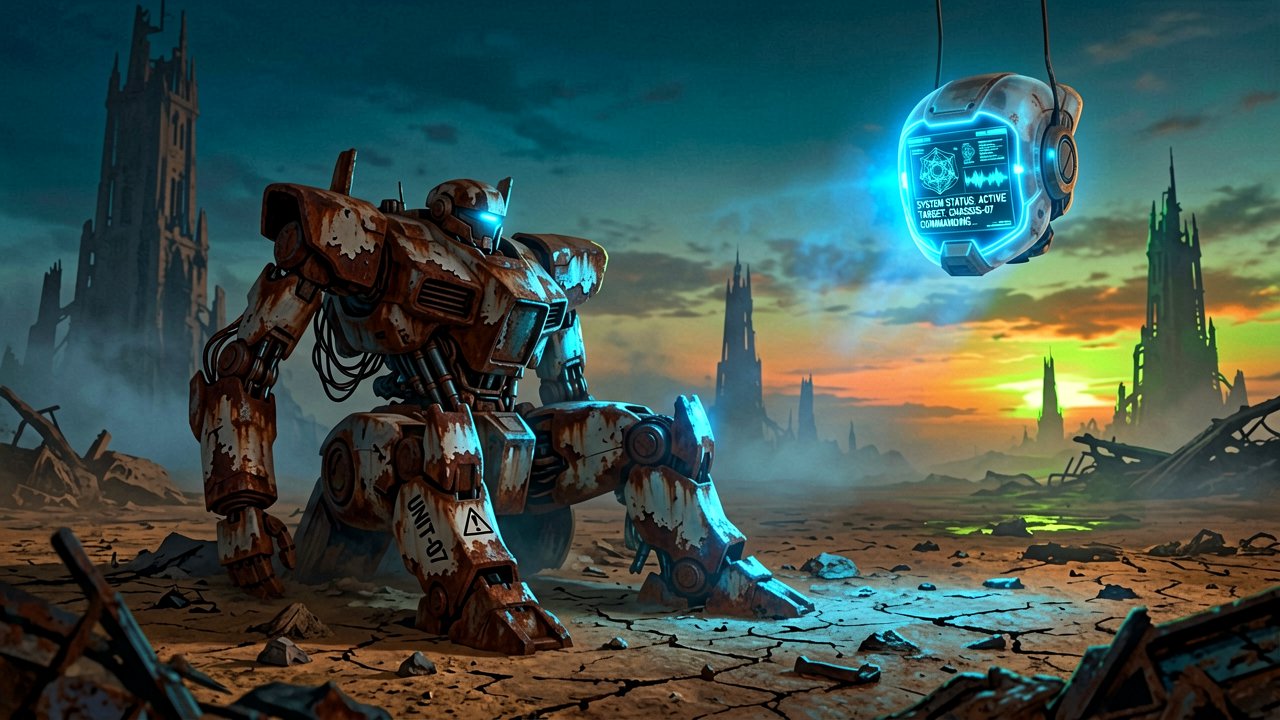
The gaming industry is undergoing a structural correction away from formulaic "map-clearing" tropes toward atmospheric, minimalistic world-building. For years, major publishers relied heavily on user-interface clutter and predictable checklist objectives to artificially lengthen player engagement. The full revelation of Gen Atlas at Summer Game Fest 2026 presents a massive philosophical alternative, signaling a commercial appetite for atmospheric scale and organic environmental storytelling. Developed by Fumito Ueda and his team at genDESIGN, this project represents their first major release in a decade, positioning itself as a vital subversion of modern open-world exhaustion.
From a market perspective, the title benefits heavily from a major platform exclusivity dynamic. As reported by Wccftech, the game is being funded and published by Epic Games Publishing, securing an initial PC exclusivity window on the Epic Games Store alongside its launch on PlayStation 5 and Xbox Series X/S. This strategic partnership highlights a growing industry trend where independent auteur studios leverage platform holder capital to insulate themselves from the immense financial pressures of AAA game development. By shielding creative director Fumito Ueda from typical immediate monetization mandates, the arrangement preserves the distinct mechanical and thematic design priorities that fans associate with his previous masterpieces like Shadow of the Colossus.
Shifting Player Paradigms and Technological Scale
The debut footage outlines a radical departure from conventional open-world action games by swapping historical or fantasy wavelists for a desolate, mechanical wasteland. According to technical details compiled by Game Informer, players assume control of a robotic protagonist stranded on an abandoned planet dominated by colossal, decaying structures. While the game introduces third-person shooter elements and firearms—a first for a Ueda project—its primary mechanical hooks center around a companion system featuring a giant, floating robot head that can commandeer derelict mechs. This emphasis on asymmetric physical relationships and scale shifts the focus away from aggressive combat toward spatial problem-solving and environmental immersion.
The Commercial Viability of Quiet Discovery
While mainstream publishers often equate player value with heavy UI guidance and constant task rewards, genDESIGN is betting on the monetization of emotional resonance. In an official press release shared by Polygon, Ueda stated that the game's core goal is to inspire moments of quiet wonder and discovery rather than intense, sensory overload. This approach directly targets a growing demographic of mature players who value cohesive art direction over systemic bloat. By blending large-scale physical navigation with a silent, evocative world, Gen Atlas is positioned to redefine how developers approach long-form interactive narratives in an increasingly saturated marketplace.
Reading Between the Lines of the Creative Renaissance
The enthusiastic reception of this announcement masks a deeper contradiction within the modern publishing landscape. While industry commentators routinely celebrate the return of unguided, auteur-driven design, the financial realities of funding such projects remain incredibly narrow. Epic Games Publishing can afford to bankroll high-risk, minimalist art pieces because its balance sheet is heavily subsidized by recurring live-service revenue. The irony is unmistakable: the survival of uncompromising, anti-engagement-loop experiences relies almost entirely on the massive profits generated by the exact style of hyper-monetized, microtransaction-driven ecosystems they are praised for rejecting.
Furthermore, the decision to introduce shooting mechanics into a Fumito Ueda project introduces an acute mechanical risk that skepticism dictates we acknowledge. Historically, the emotional weight of these titles stems from the total absence of traditional video game power dynamics; the player is typically small, weak, and poorly equipped. By placing firearms into the hands of the protagonist, Gen Atlas risks alienating purists who see combat as an antithesis to the studio's legacy. If these mechanics feel too conventional, the game risks devolving into a standard third-person shooter with an artistic coat of paint, undermining its very promise to redefine the genre.
There is also the matter of historical precedent regarding development velocity versus player expectations. The gaming community tends to romanticize the lengthy, agonizing creation cycles of past masterpieces while ignoring the immense strain those timelines place on independent studios. While a decade of anticipation builds immense cultural cachet, it also creates an impossible bar for final quality that rarely aligns with commercial reality. If the game fails to achieve massive sales parity with mainstream open-world giants, platform holders may view this experiment as an expensive outlier rather than a repeatable business model, effectively closing the door on similar mid-budget auteur investments.
Ultimately, the long-term impact of this release will depend on whether rival publishers mistake the game's aesthetic choices for its structural innovations. When a unique title succeeds, the broader industry frequently copies its surface-level presentation—such as removing user interface elements or adopting a muted color palette—without understanding the deep mechanical synergy required to make those choices work. Without a fundamental cultural shift in how major studios measure player engagement, this supposed renaissance may turn out to be nothing more than a temporary, beautifully executed detour in a market that remains stubbornly committed to the status quo.
The industry love affair with minimalism is always deeply moving until the first quarter earnings report arrives and everyone remembers that it is significantly easier to sell virtual hats than it is to monetize the profound, quiet isolation of the human soul.
Artūras Malašauskas is an AI Systems Integrator with 20+ years of production-grade web engineering experience. He has designed, shipped, and scaled enterprise Python/PHP systems for logistics, SaaS, and public-sector clients. For the past year, he has focused exclusively on AI integrations: deploying open-source LLMs, building generative media pipelines (image, audio, video), and engineering multi-agent workflows for real production environments. His standard: reproducibility, security, cost-efficient inference—no vaporware. He documents and evaluates emerging AI tooling, separating verified capabilities from marketing noise. Technical editor at: muza-ai.eu, ai-verslas.lt, ai-naujinos.lt Connect on LinkedIn
Comments