The Algorithmic Hustle: How the 2028 Race Became a Battle of the Bots
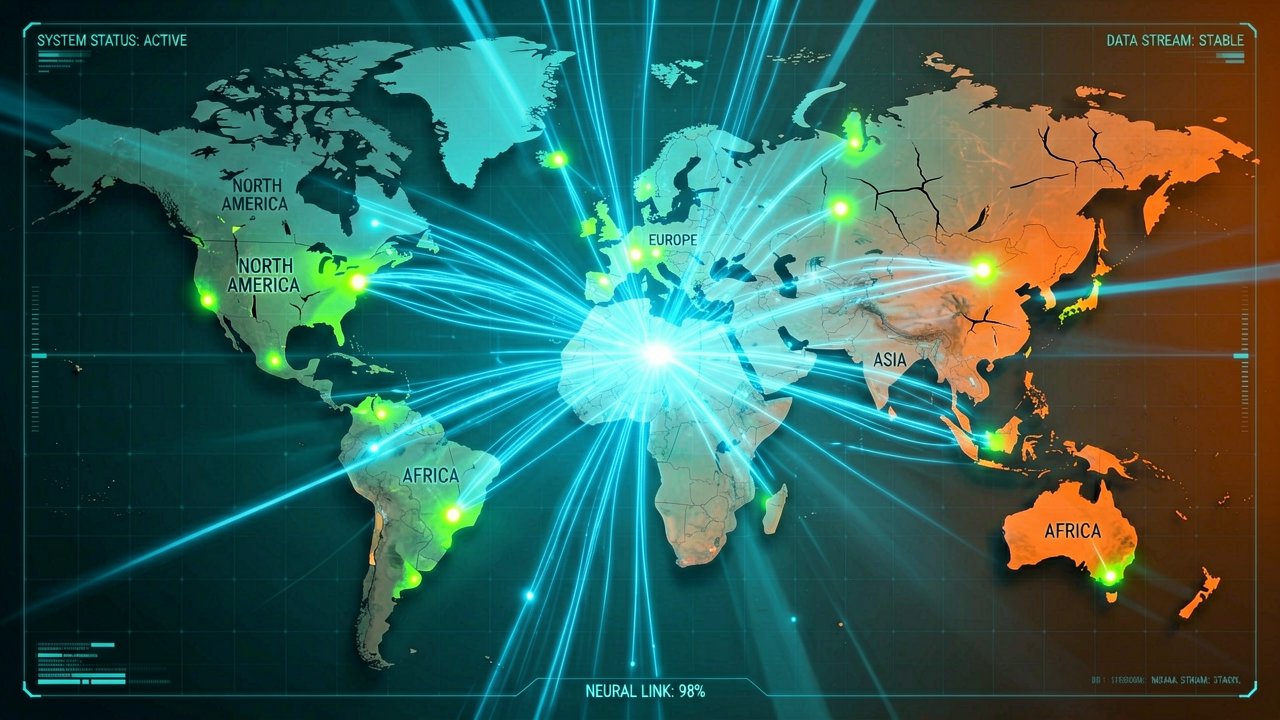
The traditional political handshake is officially dead, replaced by automated sentiment scraping and localized network persuasion. We aren't just watching a standard transition of power anymore; we're witnessing a complete structural takeover of the American political apparatus by predictive algorithms. As campaigns pivot toward the 2028 White House race, artificial intelligence has mutated from a back-office optimization tool into the absolute center of gravity for both strategy and policy. The old-school political operatives who used to rely on gut feelings and broad television buys are finding themselves hopelessly outmatched by automated engines capable of running hundreds of distinct arguments simultaneously, modifying messaging in real time based on how a narrow bloc of voters reacts over a four-hour window.
This isn't a futuristic dystopian prediction; the tactical shift is already thoroughly documented. Data compiled by political marketing analysts reveals a massive campaign budget shift toward predictive algorithms, with operations deploying synthetic voter personas to map out exactly how different demographics will respond to policy proposals before a candidate ever takes the podium. According to a comprehensive survey of political practitioners published by Campaigns & Elections, a staggering 74% of campaign professionals openly admit that integrating AI is now completely essential to remain competitive in the current election cycle. The result is a hyper-personalized, heavily automated echo chamber where what looks like a grassroots online debate is increasingly orchestrated by agent-to-agent ad routing and synthetic media designed to maximize psychological resonance.
The Populist Backlash and the Data Center War
Yet, for all its utility in the campaign war rooms, AI has triggered a ferocious populist counter-movement that is rapidly dividing the electorate along entirely new ideological fault lines. The debate is no longer confined to technical circles or Silicon Valley boardrooms. Voters are expressing acute anxieties over massive job automation, soaring consumer utility costs driven by resource-intensive AI infrastructure, and a fundamental loss of human agency in governance. As reported by Quartz, potential candidates are already aggressively staking their territory on the technology, attempting to capture a growing voter base that worries AI will drive widespread job losses and permanently reshape privacy rights. This anti-AI populism is turning data center policy and local energy grid protection into major campaign issues, forcing candidates to explicitly declare whether they stand with the tech titans or the communities feeling the physical crunch of the AI boom.
The Federal Paradox and the Fight for Control
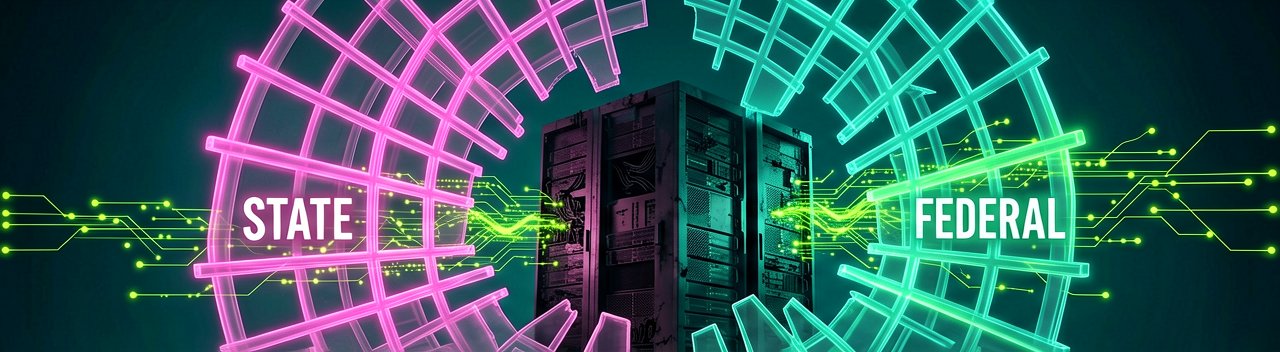
The legislative arena has descended into a chaotic turf war between state-level consumer protections and federal overwatch. While states have historically rushed to fill the regulatory vacuum by passing landmark bills to police synthetic media and mandate algorithmic transparency, a massive federal push is underway to centralize authority and protect national competitiveness. Lawmakers recently introduced a sweeping 269-page discussion draft for the Great American Artificial Intelligence Act of 2026, a bipartisan framework covered by Broadband Breakfast that aims to freeze state laws regarding how frontier models are built for three years while forcing major tech firms to open up their systems for safety reviews. This tension highlights the ultimate paradox of the 2028 cycle: candidates must convince a deeply skeptical public that they can safely govern a technology while simultaneously relying on that very same technology to win the presidency.
The battlefield isn't just algorithmic; it's aggressively personal. What we are witnessing is the systematic dismantling of shared objective reality, replaced by a hyper-customized pipeline of manufactured outrage. While the campaign managers inside the Beltway treat this transformation like a high-stakes chess match played with supercomputers, the average voter is left navigating an absolute minefield of synthetic deception. The 2026 midterm cycle already exposed the jagged edges of this new paradigm, with candidates routinely dropping poorly disclosed synthetic attack videos on social platforms and forcing the electorate to second-guess every piece of digital evidence that crosses their feeds.
The institutional guardrails meant to protect the democratic process are buckling under the sheer volume of this automated onslaught. In a frantic attempt to contain the chaos, state capitols have become the primary battleground for defensive policy making. According to the comprehensive tracking data maintained by the National Conference of State Legislatures, 30 states have successfully codification-wrapped laws specifically targeting the deployment of political deepfakes. These legislative efforts heavily favor mandatory disclosures and digital watermarks over outright bans, attempting to slap a warning label on an ecosystem that moves far too quickly for bureaucratic enforcement mechanisms to actually contain.
The Disinformation Laundering Pipeline
This decentralized, state-by-state defensive line leaves massive structural vulnerabilities that bad actors are exploiting with terrifying efficiency. Because federal campaign finance rules remain completely deadlocked on comprehensive AI prohibitions, the current media landscape operates with virtually zero consistent national guardrails. A deep-dive investigation by Reuters revealed that major social platforms have systematically stripped back their professional fact-checking infrastructure, offloading the burden of verification onto automated systems and crowdsourced user notes. This institutional retreat allows algorithmic campaigns to launch highly tailored, deeply deceptive micro-narratives that completely vanish before anyone can log a formal complaint or issue a correction.
The danger here isn't just that a voter might believe a fabricated audio clip or a simulated corporate scandal; the true crisis is the total erosion of systemic trust. When everything can be faked with a few keystrokes, any real scandal or genuine journalistic breakthrough can simply be dismissed by an uncooperative candidate as an adversarial deepfake. This absolute breakdown of accountability shifts the entire incentive structure of political communication toward sensationalism and psychological manipulation. By the time the 2028 primaries reach full throttle, the candidates who command the highest-performing neural networks won't just win the news cycle, they will dictate exactly what their supporters perceive as reality itself.
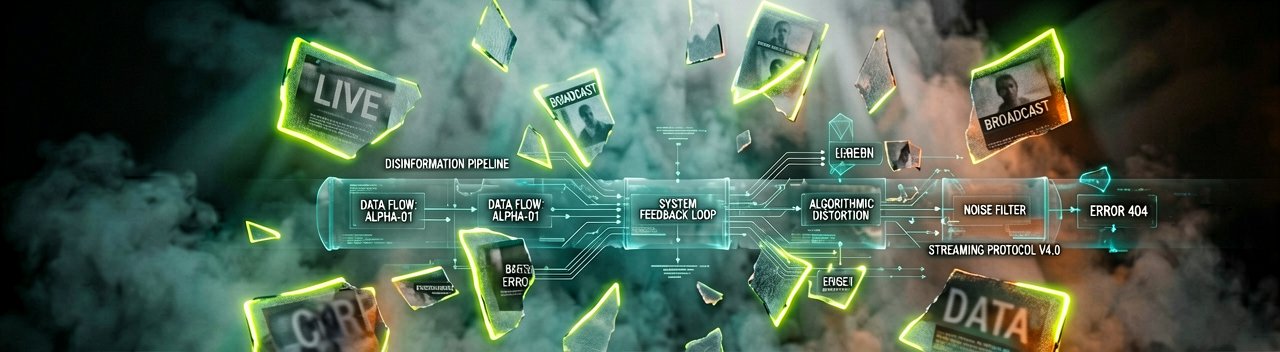
The ultimate tragedy of the automated democracy is that we are willingly coding ourselves out of the loop. As political strategists outsource the raw mechanics of persuasion to neural networks, the line between authentic public sentiment and synthetic consensus disappears entirely. Democracy was always intended to be a messy, deeply human argument carried out in community centers, union halls, and neighborhood diners. By surrendering the debate to hyper-optimized feedback loops, the political class has transformed voters from active participants into mere data points to be harvested, manipulated, and ultimately neutralized by the highest-bidding infrastructure.
This systematic dehumanization of politics has profound consequences for the actual governance that follows Election Day. A candidate who ascends to the presidency through the hyper-precise targeting of predictive algorithms becomes a hostage to those very same models upon taking office. Policy decisions will no longer be weighed by historical precedent, ethical obligations, or long-term societal health. Instead, executive actions risk being dictated by immediate algorithmic projections, running constant simulations to ensure that every presidential decree satisfies the narrow, volatile micro-constituencies manufactured during the campaign cycle.
The Sovereignty of the Switch
Reclaiming the democratic narrative from the grip of the algorithmic complex requires looking past the superficial debates over watermarks and disclosure laws. The true battleground of the 2028 election cycle and beyond is not the regulation of synthetic content, but the defense of human cognitive sovereignty. If the electorate cannot disconnect from the continuous stream of hyper-personalized grievances delivered by autonomous ad networks, the democratic process will permanently devolve into an administrative exercise managed by competing technology conglomerates.
Ultimately, the power to break this loop does not reside in a deadlocked Congress or a fractured patchwork of state legislation. The final line of defense remains the individual capacity to slow down, question the digital feed, and demand verifiable human accountability from those who seek power. Until the public treats algorithmic manipulation as an existential threat to personal autonomy rather than a routine tech trend, the machinery of politics will continue to refine its grip on the steering wheel of the republic.
"We spent decades worrying that artificial intelligence would become so advanced it would perfectly mimic human behavior, but the terrifying reality of the 2028 race is that it succeeded by forcing us to behave exactly like algorithms."
Artūras Malašauskas is an AI Systems Integrator with 20+ years of production-grade web engineering experience. He has designed, shipped, and scaled enterprise Python/PHP systems for logistics, SaaS, and public-sector clients. For the past year, he has focused exclusively on AI integrations: deploying open-source LLMs, building generative media pipelines (image, audio, video), and engineering multi-agent workflows for real production environments. His standard: reproducibility, security, cost-efficient inference—no vaporware. He documents and evaluates emerging AI tooling, separating verified capabilities from marketing noise. Technical editor at: muza-ai.eu, ai-verslas.lt, ai-naujinos.lt Connect on LinkedIn
Comments