The End of Whack-a-Mole: Cambridge’s AI-Designed Universal Vaccine Passes First Human Trial
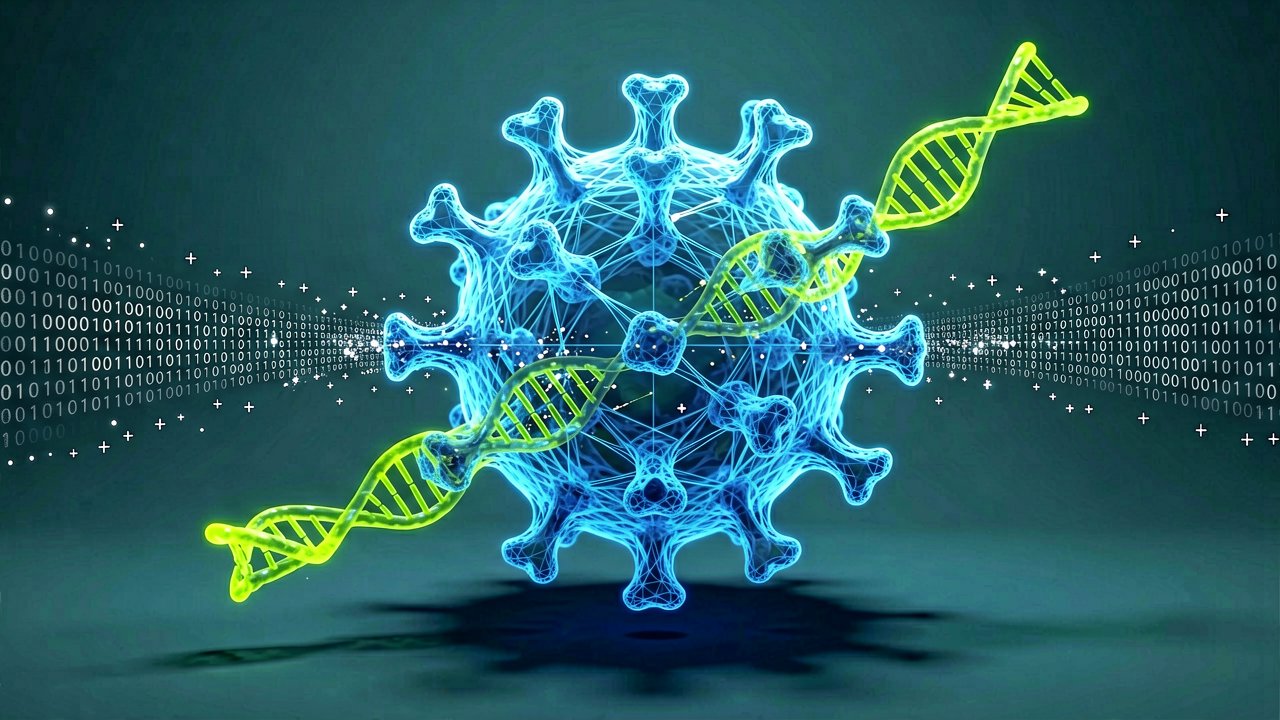
For the past several years, the global approach to viral outbreaks has looked remarkably like a high-stakes game of whack-a-mole. Every time a virus mutates, pharmaceutical labs scramble to update their shots, inevitably remaining one step behind the evolutionary curve. But a massive breakthrough from the University of Cambridge and its spin-out company, DIOSynVax, might finally change the paradigm. Scientists have successfully completed the first-ever human clinical trial of a universal coronavirus vaccine engineered entirely by artificial intelligence, paving the way for a future where we stop pandemics before they even begin.
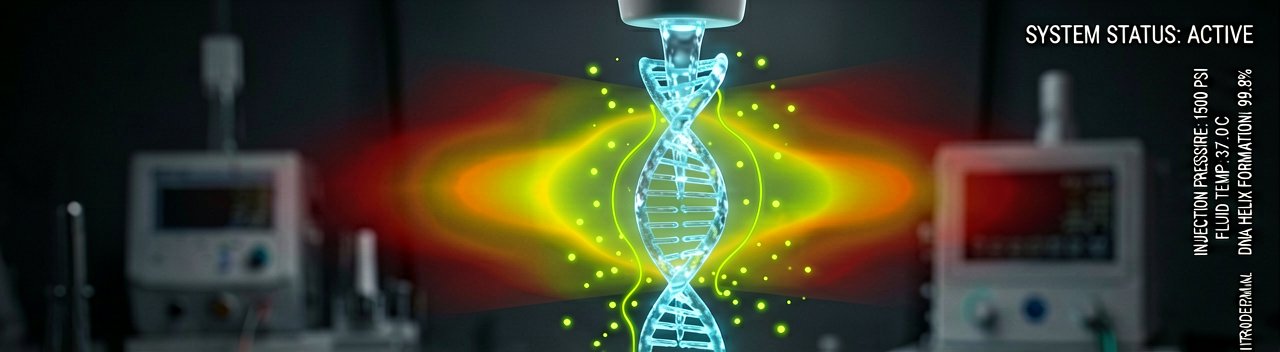
Instead of chasing individual variants, researchers fed global genetic surveillance data into machine learning algorithms to map out the common, unchanging structural weak points across the entire Sarbeco coronavirus family. The AI synthesized these shared elements into a single, computationally optimized "super-antigen" code-named pEVAC-PS. Rather than traditional needles, the resulting DNA vaccine was administered via a microfluidic jet injection device, which uses high-pressure liquid streams to fire the vaccine directly through the skin cells. According to data published in the ScienceDaily summary of the trial, this pioneering approach proved completely safe and well-tolerated among the human participants.
A Shift from Reactive to Future-Proof
The open-label Phase 1 trial, sponsored by the University Hospital Southampton, evaluated the vaccine across healthy volunteers aged 18 to 50. Because the subjects already possessed complex baselines of immunity from previous infections and standard vaccinations, measuring the precise antibody jump was complicated. However, the trial successfully proved that the vaccine generates cross-reactive binding responses. It doesn't just recognize SARS-CoV-2 and its endless offshoots; it also flags older SARS strains and related bat coronaviruses that haven't even crossed over to humans yet.
While the early immunogenicity results were characterized as modest, the core takeaway is that the architecture works. The platform successfully trains the human immune system to target the deep vulnerabilities shared by an entire viral lineage. The research team is already looking past coronaviruses, preparing to deploy the exact same AI pipeline to construct preemptive, universal vaccines against influenza and the deadly Ebola virus group. With a larger Phase 2 study poised to test the vaccine in broader, more diverse populations, we are watching the dawn of truly proactive medicine.
Behind the Scenes: Why Traditional Vaccine Blueprints Fall Short
What most reports miss about standard immunizations is that they are fundamentally retroactive. Whether utilizing traditional weakened viruses or modern mRNA platforms, classic design methods rely on capturing a snapshot of a pathogen that is actively circulating. The core issue is that highly volatile RNA viruses, like the coronavirus family, mutate at blinding speeds. By the time researchers isolate a strain, conduct safety testing, scale manufacturing, and distribute vials to pharmacies, the virus has already drifted genetically, rendering the updated shot significantly less effective.
To break free from this biological game of catch-up, the computational biology lab at the University of Cambridge shifted its strategy from observation to prediction. Instead of coding an antigen based on a solitary variant, their spin-out company, DIOSynVax, leveraged machine learning to cross-reference thousands of global genomic surveillance sequences. The AI isolated specific, immutable structural hubs—focal points that the virus cannot modify without physically destabilizing its own machinery. This synthetic target acts as an evolutionary bottleneck, forcing the immune system to recognize vulnerabilities that pathogens are mathematically restricted from altering.
The Complexities Hidden Inside the Phase 1 Data
According to the full peer-reviewed trial data published in the Journal of Infection, evaluating the universal candidate pEVAC-PS presented an entirely unique set of immunological challenges. When testing a brand-new vaccine platform, researchers ideally look for clean, unblemished baselines in their test subjects. However, because the trial was conducted in Cambridge and Southampton on healthy volunteers who had already received multiple doses of first-generation vaccines, their bodies were already crowded with pre-existing antibodies. This complex background noise introduced an unavoidable immune bias, causing initial antibody level jumps to appear relatively modest on paper.
Despite these muddy baselines, the real victory lies in the breadth of protection achieved rather than raw antibody volume. The trial data proved that the AI-constructed antigen succeeded in triggering cross-reactive binding across vastly divergent viral targets. The volunteers' blood serum didn't just display defensive recognition against the original Wuhan strain and various Omicron sublineages; it successfully flagged SARS-CoV-1—the deadly 2003 pathogen—and several pre-emergent Sarbeco viruses currently circulating in wild bat populations. This cross-species confirmation proves that the machine learning model successfully identified a universal Achilles' heel across an entire viral genus.

Replacing Needles with Physics for Global Access
Another major logistical bottleneck for worldwide immunization campaigns is cold-chain storage and the simple physical requirement of needles. To make a universal vaccine truly viable for rapid global deployment, especially in resource-limited environments, the development team opted for a DNA plasmid-based platform delivered via a specialized microfluidic jet injection device. Instead of a steel needle piercing muscle tissue, the device uses high-pressure liquid streams to shoot the genetic blueprints directly into the intradermal layers of the skin, where immune-sentinel cells are highly concentrated.
This approach offers a dual advantage. Chemically, DNA plasmid structures are inherently more thermostable than delicate mRNA strands, meaning they do not require extreme sub-zero freezing units for transport. Logistically, eliminating needles completely bypasses accidental stick injuries and disposal hazards, facilitating rapid, large-scale deployment. With funding support from Innovate UK and the National Institute for Health and Care Research, the researchers are leveraging this first-in-human milestone to prepare for a Phase 2 trial. The ultimate objective is a single, easily transportable platform capable of stamping out viral family threats before they ever secure a foothold in the human population.
Reading Between the Lines: The Friction Between Elegance and Reality
Reading between the lines of this computational triumph reveals a classic tension between elegant bio-informatics and the unpredictable chaos of human biology. On paper, a machine learning model that maps out the immutable structural hubs of an entire viral genus is a masterpiece of predictive engineering. In practice, however, the human immune system is not a clean digital canvas waiting for an optimized software update. The modest initial antibody spikes observed in the Journal of Infection report underscore a daunting phenomenon known as original antigenic sin, where the body stubbornly relies on its memory of past infections rather than fully adapting to a new, theoretically superior synthetic antigen.
This immunological inertia raises a critical contradiction in the universal vaccine strategy. To force the immune system to target these hidden, universal weak points, the AI must present highly conserved, structurally deep regions that the virus normally keeps shielded from natural antibody detection. Because these regions are deliberately obscured by the virus during natural infection, the human body treats them as low-priority targets. Getting the immune system to care enough about these deeply buried structural hubs to mount a robust, long-lasting defense requires overwhelming the body's natural preferences, a feat that a gentle Phase 1 safety trial can map out but cannot yet guarantee to work at scale.
The Regulatory and Commercial Minefield Ahead
Even if subsequent trials prove that this AI-designed DNA platform can break through the body's immunological biases, the path to global deployment faces a massive regulatory hurdle. Current approval frameworks are fundamentally built around a reactive model, designed to evaluate vaccines tailored to explicit, active threats with measurable real-world transmission. Regulating a preemptive vaccine meant to neutralize hypothetical, pre-emergent bat coronaviruses that have not yet crossed over into humans is unchartered territory. Proving efficacy against a ghost pathogen that does not yet exist in the wild requires complex, indirect statistical modeling that conservative regulatory bodies are historically hesitant to accept without years of deliberation.
Then comes the harsh reality of pharmaceutical economics. Monoclonal treatments and reactive, variant-chasing booster campaigns are incredibly lucrative, recurring revenue streams for the biotechnology sector. A truly universal, future-proof vaccine platform that aims to neutralize entire viral families in a single blow inherently disrupts this transactional business model. Securing the massive public and private capital required for large-scale Phase 2 and Phase 3 trials demands a long-term humanitarian commitment that often evaporates the moment a current pandemic fades from the front-page news cycle, exposing the platform to the notorious funding "valley of death" that claims most experimental therapeutics.
Ultimately, the Cambridge and DIOSynVax platform marks an undeniable leap forward in predictive medicine, transitioning us from defensive scrambles to proactive positioning. By utilizing high-pressure microfluidic jet injectors to deliver thermostable DNA plasmids, the team has cleverly solved many of the logistical nightmares plaguing global distribution. Yet, the true test of this technology will not be decided by the elegance of its code or the speed of its liquid jets, but by whether international health coalitions possess the sustained political will and financial stamina to manufacture and distribute a shield against threats that the public cannot yet see.
"We may have finally taught artificial intelligence how to outsmart the evolutionary trajectory of the entire coronavirus family, but now comes the truly impossible task: engineering an algorithm that can outsmart the short-lived attention span of global public funding."
Artūras Malašauskas is an AI Systems Integrator with 20+ years of production-grade web engineering experience. He has designed, shipped, and scaled enterprise Python/PHP systems for logistics, SaaS, and public-sector clients. For the past year, he has focused exclusively on AI integrations: deploying open-source LLMs, building generative media pipelines (image, audio, video), and engineering multi-agent workflows for real production environments. His standard: reproducibility, security, cost-efficient inference—no vaporware. He documents and evaluates emerging AI tooling, separating verified capabilities from marketing noise. Technical editor at: muza-ai.eu, ai-verslas.lt, ai-naujinos.lt Connect on LinkedIn
Comments