AI-Driven Vaccine Development Signals New Era in Pandemic Prevention

The successful Phase I clinical trial of the experimental vaccine, pEVAC-PS, marks a paradigm shift in biopharma from reactive containment to proactive mitigation. Developed by the University of Cambridge and its biotech spinout DIOSynVax, this platform represents the first time a vaccine's active component has been designed entirely by artificial intelligence and successfully tested in humans. By moving away from conventional strain-specific designs, the industry is witnessing a structural transition toward predictive therapeutics capable of neutralizing entire viral families before outbreaks even cross the species barrier.
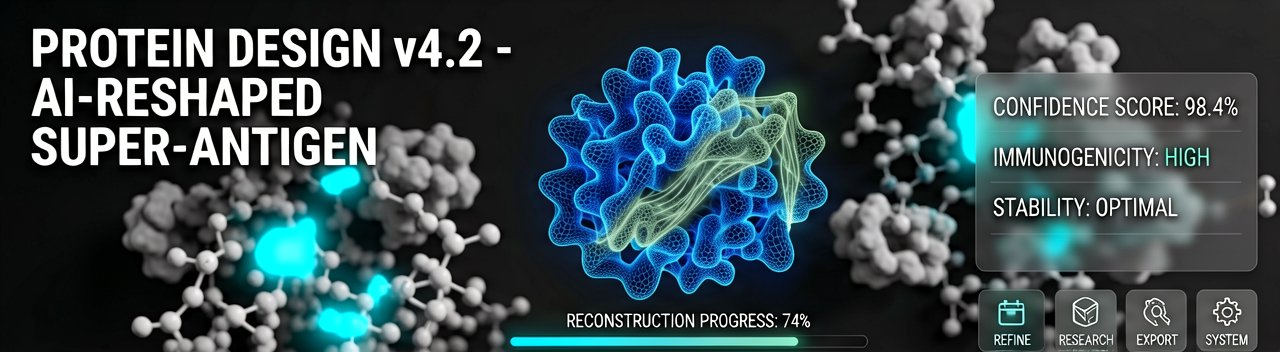
From a market standpoint, this breakthrough addresses a massive inefficiency in the current healthcare ecosystem: the costly cycle of updating seasonal and pandemic vaccines. Traditional manufacturers are routinely forced into a reactive race against viral mutations. By deploying computational biology to construct a synthetic "super-antigen", the Cambridge team has demonstrated that machine learning can successfully identify structural vulnerabilities conserved across thousands of Sarbecovirus variants. This capability directly threatens the commercial lifecycles of legacy, single-variant booster portfolios.
The strategic implications extend far beyond coronaviruses, as the underlying platform is already being adapted to target other high-consequence pathogens. Funded primarily by ScienceDaily via Innovate UK, the underlying commercial value lies in the platform’s high agility and vector-agnostic compatibility. As the asset advances to Phase II testing, it establishes a blueprint for future-proofed biosecurity assets that could eliminate the economic shocks and disruptions typical of global outbreaks.
The Structural Transition to Pre-Emptive Biotech Platforms
The core technology hinges on training machine learning models on vast global surveillance datasets. Instead of analyzing a single dominant strain, the AI evaluates diverse genetic codes to isolate immutable components essential for viral survival. The resulting data-driven vaccine teaches the human immune system to target these shared vulnerabilities. For venture capital and institutional investors, this shifts the biopharma valuation model from high-volume, repetitive booster sales to high-value, broad-spectrum immunization intellectual property.

Disrupting Manufacturing and Distribution Economics
Beyond molecular design, the implementation of these technologies reshapes downstream supply chain economics. According to data published by the University of Cambridge, the trial utilized a needle-free, microfluidic jet delivery system to administer the DNA blueprints. Eliminating the cold-chain reliance typically required by early-generation mRNA platforms allows these synthetic formulas to be distributed as stable powders. This drastically lowers logistical barriers and unlocks significant commercial access to low- and middle-income markets.
Regulatory Barriers and Future Outlook
While the initial data confirms safety and cross-reactive binding in a small cohort, scaling this methodology presents unique regulatory and clinical validation hurdles. Traditional approval frameworks are optimized for testing defense mechanisms against active, known circulating pathogens. Validating an asset designed to combat theoretical, yet-to-emerge zoonotic threats requires public-private risk-sharing partnerships. The platform's success will ultimately depend on whether regulatory agencies can adapt their validation timelines to match the rapid speed of computational discovery.
Behind the Scenes: Unlocking the Next Decade of Molecular Biosecurity
The Hidden Structural Engineering: While mainstream coverage emphasizes the word "artificial intelligence," the real breakthrough lies in how machine learning models bypass the biological trade-offs that have plagued structural virologists for decades. Historically, designing a universal vaccine meant trying to force the immune system to recognize a highly conserved, yet obscured "stem" region of a viral surface protein. This approach frequently failed because these regions are structurally hidden by the virus to escape detection, or they elicit weak immune responses compared to highly variable loop regions. The predictive algorithms developed by the Cambridge team did not just find hidden structures; they computationally reshaped a completely synthetic protein layout that makes these immutable viral cores highly visible and immunogenic to human B-cells.
This computational engineering addresses a critical tension point between public health officials and major pharmaceutical manufacturers. For years, the commercial incentive structure favored an annual iteration model, similar to the seasonal influenza paradigm, which generates predictable, recurring revenue streams from updated booster shots. Shifting the industry standard toward a true "one-and-done" pan-coronavirus solution disrupts this financial architecture. Institutional investors are watching this trial closely, recognizing that a single platform capable of providing long-term immunity against an entire viral genus could render multi-billion-dollar single-variant manufacturing pipelines obsolete within the decade.
From a historical perspective, this evolution solves the critical delivery bottlenecks that hampered the earliest iterations of genetic vaccines. When synthetic DNA platforms were first explored in the early 2000s, they required massive doses because the cellular uptake of bare plasmid DNA was incredibly inefficient. By pairing the computationally optimized sequence with a needle-free, high-pressure micro-jet delivery system, researchers forced the DNA directly through cell membranes in a fraction of a second. This mechanical optimization ensures that the synthetic genetic code reaches the intracellular machinery smoothly, achieving high protein expression levels without the systemic inflammation and lipid nanoparticle toxicity issues that have triggered public hesitancy in recent years.
The regulatory path forward, however, will require a complete rewrite of traditional clinical endpoints. Regulatory bodies like the FDA and EMA traditionally evaluate vaccine efficacy based on real-world infection rates or established correlates of protection against a known, circulating strain. Because this candidate is explicitly engineered to neutralize future zoonotic spillover events from viruses that currently exist only in animal reservoirs, proving real-world efficacy in a standard Phase III trial is statistically impossible without a live outbreak. To overcome this hurdle, developers are working alongside global health organizations to establish a regulatory precedent for approving autonomous assets based entirely on deep biomimetic simulation data and broad cross-neutralization animal models.
Reading Between the Lines: The Friction Between Algorithmic Promise and Biological Reality
The Predictive Paradox: The narrative surrounding algorithmic vaccine design often suffers from technological hubris, treating biology as an engineering problem that can be entirely solved with raw compute. While machine learning excels at identifying historical patterns and conserved sequences across known viral datasets, it cannot explicitly predict the unknown evolutionary path of an actively mutating virus. A model is fundamentally constrained by its training data. If a future coronavirus jumps to humans via an entirely novel evolutionary pathway that circumvents targeted structural regions, the algorithmic "super-antigen" risks becoming an expensive monument to the virus of yesterday rather than a shield against the pandemic of tomorrow.
Furthermore, an uncomfortable economic contradiction lies at the heart of the universal vaccine movement. Developing a broad-spectrum, pan-virus therapeutic requires immense capital injection, yet its primary commercial value is preventative—acting as a biosecurity insurance policy rather than a high-yield product. If these platforms succeed in permanently suppressing viral outbreaks, the immediate consumer market for seasonal boosters evaporates. Convincing private pharmaceutical giants to fund the late-stage development of an asset designed to cannibalize their most profitable, recurring revenue models remains a steep systemic hurdle that altruistic public funding alone cannot fully bridge.
There is also an evident disconnect between raw technological agility and localized healthcare infrastructure. A stable, needle-free, micro-jet delivered DNA blueprint is an elegant laboratory solution, but its deployment relies on supply chains that are notoriously resistant to rapid modernization. In a real-world crisis, regulatory red tape, manufacturing scaling bottlenecks, and localized public distrust often outpace the speed of computational discovery. Even the most perfectly optimized synthetic antigen is functionally useless if it remains locked in a bureaucratic approval bottleneck or a high-tech storage facility, highlighting that the ultimate constraint on modern pandemic prevention remains stubborn human logistics, not computational processing power.
"We have successfully taught artificial intelligence to outsmart the virus, but the true test of this technology will be whether we can finally engineer a system to outsmart the distribution logistics of the local post office."
Artūras Malašauskas is an AI Systems Integrator with 20+ years of production-grade web engineering experience. He has designed, shipped, and scaled enterprise Python/PHP systems for logistics, SaaS, and public-sector clients. For the past year, he has focused exclusively on AI integrations: deploying open-source LLMs, building generative media pipelines (image, audio, video), and engineering multi-agent workflows for real production environments. His standard: reproducibility, security, cost-efficient inference—no vaporware. He documents and evaluates emerging AI tooling, separating verified capabilities from marketing noise. Technical editor at: muza-ai.eu, ai-verslas.lt, ai-naujinos.lt Connect on LinkedIn
Comments