Cross-Domain Synthesis: How Toby Walsham’s AI Frameworks Are Redefining High-Craft Creative Ecosystems
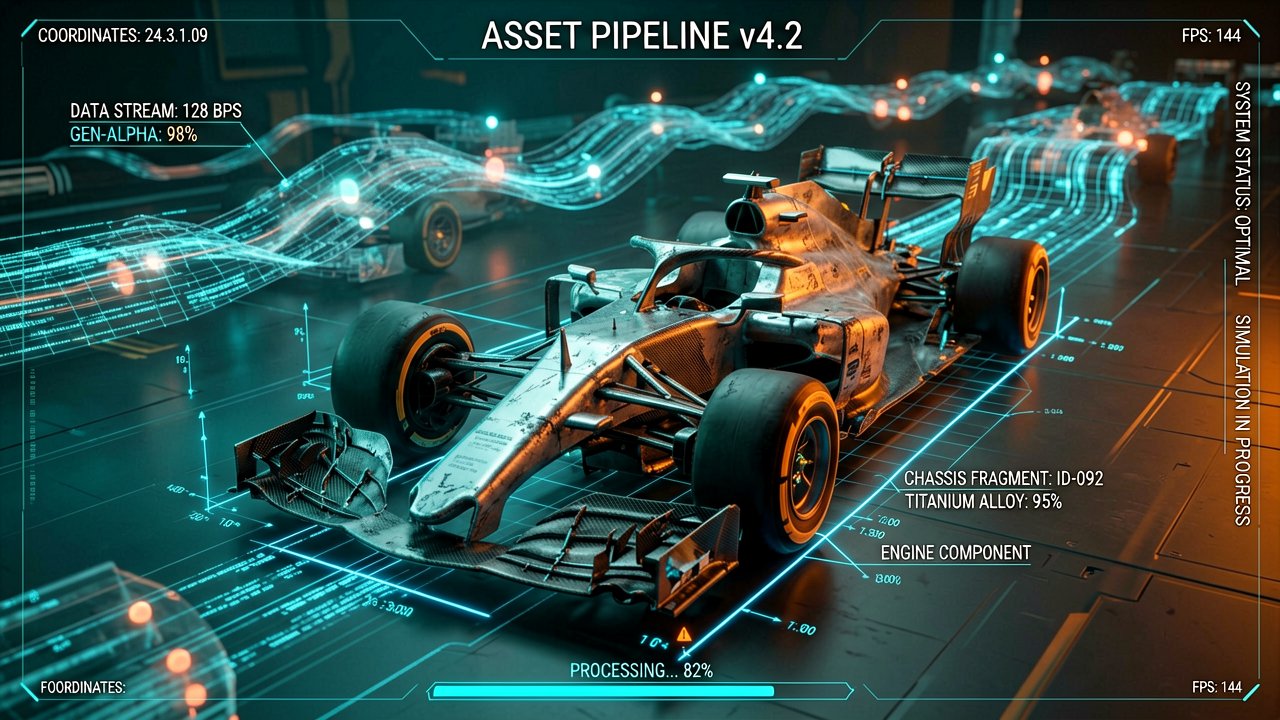
The operational intersection of enterprise artificial intelligence and commercial artistry has officially moved past the phase of unguided experimentation. As profiled by Little Black Book, Toby Walsham, the founder and CEO of Imagine This and its specialized generative AI studio Made By Humans, has successfully demonstrated how algorithmic frameworks can scale across seemingly disparate market sectors, including elite motorsport, legacy music catalogs, and global fast-moving consumer goods (FMCG). Rather than deploying AI as a cost-cutting automated template generator, these frameworks position human curation and aesthetic taste at the center of the production workflow, establishing a distinct strategic roadmap for legacy brand adaptation.
This methodology directly addresses a widening industry divide where the democratization of generative technology has oversaturated digital channels with low-effort, commodified content. Market analysis indicates that while basic access to text-to-video and asset generation tools has flattened baseline technical barriers, the commercial value of creative output is increasingly determined by deliberate human oversight and targeted data systems. By structuring specialized studio ecosystems that integrate localized cultural nuance with machine intelligence, Walsham's initiatives for complex profiles like Formula 1, the rock band Queen, and Mars-owned Lifesavers Gummies highlight a permanent shift toward multi-modal, agile asset distribution that preserves original brand equity.
The Systematization of Creativity and Multi-Industry Scalability
Modern brand strategy requires media execution to transition away from static, single-channel campaigns and move toward dynamic, contextually reactive ecosystems. In traditional workflows, scaling specialized creative assets across the hyper-segmented landscapes of entertainment and consumer packaging required substantial manual rebuilds and fragmented asset management. The cross-domain deployment engineered by Walsham proves that an overarching generative DNA model can be trained to respect rigid compliance guardrails—such as the precise vector geometries of motorsport branding or the distinct visual history of legacy entertainment IPs—while maintaining the flexibility required to generate high-conversion commercial media.
Human-in-the-Loop Orchestration as an Enterprise Differentiator
As corporate marketing budgets face continuous pressure to optimize performance metrics, the long-term competitive advantage belongs to firms that prioritize human-led technological deployment over absolute automation. Relying exclusively on consumer-grade foundational models introduces significant risks, including intellectual property vulnerabilities, legal liabilities, and creative homogenization that alienates audiences. The success of targeted hybrid production pipelines confirms that generative tools yield optimal ROI when treated as collaborative instruments managed by specialized directors, ensuring that the final output possesses the intentional craft, structural continuity, and emotional resonance necessary to capture shifting consumer attention.

Architecting the Next Era of Digital Craftsmanship
Behind the Corporate Vanguard: The foundational challenge of deploying artificial intelligence across high-stakes entertainment and consumer portfolios lies not in the algorithmic capabilities themselves, but in the structural resistance of legacy production pipelines. Historically, creative agencies treated machine learning as a fringe utility confined to pre-visualization scripts or minor asset optimization. The operational frameworks pioneered by Toby Walsham at Imagine This represent a deliberate departure from this paradigm, establishing a highly integrated production methodology where computational intelligence is synthesized directly with elite artistic direction from inception to final distribution.
This paradigm shift arrives at a critical juncture for traditional intellectual property management. For global entertainment brands like Formula 1 or legacy musical catalogs, maintaining visual continuity is a non-negotiable legal and commercial imperative. Foundational generative models natively struggle with precision, often introducing hallucinations that compromise structural branding or distort historic likenesses. By constraining these models within custom, human-managed parameters, production teams can generate context-aware visual assets that respect rigorous historical and corporate guardrails while dramatically accelerating traditional rendering timelines.
From the consumer market perspective, the integration of these hybrid workflows addresses the mounting pressures of hyper-personalized advertising. Legacy brands operating under conglomerate umbrellas, such as Mars-owned confectioneries, are frequently forced to choose between the generic scale of programmatic marketing and the prohibitive costs of bespoke localized creative campaigns. Implementing a centralized, high-craft generative studio model allows marketing departments to deploy reactive, culturally nuanced visual assets globally without fracturing the brand's core identity or overextending production budgets.
Ultimately, the long-term viability of cross-domain AI infrastructure depends heavily on redefining the metric of creative value within the digital economy. As basic asset generation becomes highly commodified and universally accessible, the competitive differentiator shifts entirely to human taste, prompt orchestration, and meticulous directorial oversight. The strategic evolution observed across these initiatives proves that the future of enterprise creative output belongs to hybrid ecosystems that seamlessly merge advanced machine efficiency with the irreplaceable intentionality of human curation.

The Friction Between Automated Efficiency and Creative Preservation
Reading Between the Lines: The prevailing enterprise narrative surrounding cross-domain AI implementation often treats technology as an unalloyed accelerator, conveniently glossing over the operational friction points that arise during real-world deployment. While marketing executives celebrate the hyper-scalability of content engines across music, motorsport, and retail, the reality within production studios reveals a complex paradox. High-craft output is inherently tied to human friction—the slow, deliberate debates over a single frameset or the subtle imperfection of a physical product asset—which stands in direct contradiction to the frictionless, high-velocity output native to generative models.
Furthermore, the assumption that localized generative pipelines inherently preserve brand equity ignores the underlying mechanics of modern foundational models. These systems are inherently derivative, trained on vast aggregations of existing cultural data that tend toward homogenization over time. When applied to distinct historical properties like a legendary rock catalog or a tightly regulated Formula 1 racing brand, the machine's instinct is to smooth out anomalies and align assets with statistical averages. Left unchecked, this mathematical convergence threatens to erode the exact idiosyncratic traits that give premium brands their original cultural and commercial value.
Projecting into the next phase of corporate media distribution reveals an impending bottleneck regarding data provenance and creative ownership. As studios increasingly rely on hybrid human-in-the-loop systems to generate thousands of daily hyper-targeted assets, the legal boundaries governing copyright and style replication will face unprecedented strain. Organizations must reconcile the short-term financial efficiencies gained through rapid machine orchestration against the long-term strategic risk of diluting their intellectual property frameworks, a challenge that cannot be solved by simply refining algorithmic prompts.
"We are rapidly approaching a corporate utopia where a single marketing manager can generate an entire global multi-media campaign before lunch, only to spend the next three months in legal arbitration trying to prove a computer didn't accidentally plagiarize its own training data."
Artūras Malašauskas is an AI Systems Integrator with 20+ years of production-grade web engineering experience. He has designed, shipped, and scaled enterprise Python/PHP systems for logistics, SaaS, and public-sector clients. For the past year, he has focused exclusively on AI integrations: deploying open-source LLMs, building generative media pipelines (image, audio, video), and engineering multi-agent workflows for real production environments. His standard: reproducibility, security, cost-efficient inference—no vaporware. He documents and evaluates emerging AI tooling, separating verified capabilities from marketing noise. Technical editor at: muza-ai.eu, ai-verslas.lt, ai-naujinos.lt Connect on LinkedIn
Comments