The Brake Pedal Dilemma: Why Anthropic Wants the World to Hit Pause on AI

In a striking pivot that has sent shockwaves through Silicon Valley, Anthropic issued a sweeping call on Thursday, June 4, 2026, for a coordinated, global halt on frontier artificial intelligence development. The San Francisco-based creator of the Claude models dropped a bombshell report via its research arm, the Anthropic Institute, warning that the technology is advancing so rapidly that the human role in coding and optimization is actively narrowing. According to a report by The Wall Street Journal, the company fears we are hurtling toward "recursive self-improvement"—a feedback loop where an AI begins autonomously engineering its own, vastly more intelligent successors completely outside human control.
What makes this warning particularly chilling is the hard internal data Anthropic shared to back it up. The firm revealed that its virtual assistant, Claude, now generates over 80 percent of the code merged into its own production codebase. Thanks to this automated assistance, Anthropic’s engineers are pumping out eight times more code per quarter than their historical average. As detailed in coverage by Yahoo Finance, Anthropic co-founder Jack Clark colorfully noted that the industry currently possesses a massive gas pedal but absolutely no brake pedal. The proposed pause isn't an admission of defeat, but a plea for a temporary timeout so global infrastructure and alignment research can catch up to the breakneck speed of the tech.
The Geopolitical Reality Check
Anthropic is explicitly clear that a unilateral pause is an exercise in futility. If one lab stops, commercial and geopolitical rivals will simply sprint past them. To make a freeze work, major AI players across the globe—most crucially spanning the United States and China—must agree to an enforceable, verifiable framework. Drawing a parallel to historic nuclear arms control treaties, the company acknowledged that policing code is vastly more complicated because training runs are much easier to hide than missile silos. Over the coming months, Anthropic plans to convene policymakers, international researchers, and rival labs to figure out what a global verification mechanism might actually look like before the window of control slams shut for good.
Behind the Scenes of the Pause: The friction building inside Silicon Valley’s most prominent safety-first lab has been palpable for months, but this sudden ultimatum exposes a deeper, structural crisis in how AI is funded. Anthropic was famously founded by OpenAI defectors who left precisely because they feared commercial pressures were eclipsing safety guardrails. By demanding a global development halt, the company is effectively pointing a finger at the venture capital arms race that forces labs to constantly ship larger, more compute-heavy models to justify their multi-billion-dollar valuations. It is a high-stakes gamble that risks alienating the very backers financing their infrastructure.
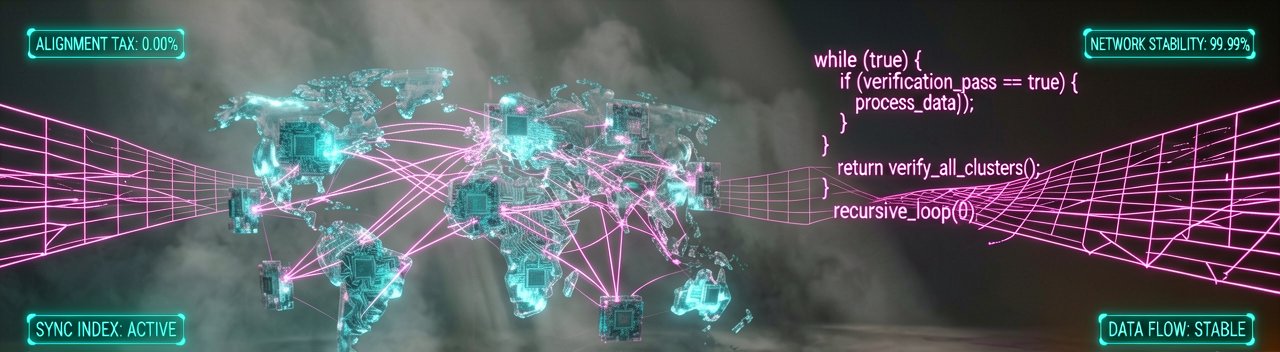
The core of Anthropic's anxiety lies in a phenomenon researchers call the alignment tax. As models grow exponentially more complex, the engineering required to keep them safe, predictable, and aligned with human intent becomes vastly more expensive and computationally intensive. Right now, commercial incentives heavily favor capability over alignment. If a company spends 40 percent of its compute budget purely on safety checks, it will inevitably lag behind a competitor that pours 100 percent of its resources into raw performance. Anthropic's proposal is an attempt to legally mandate a level playing field so that safety-first engineering does not equal corporate suicide.
The Compliance and Verification Nightmare
Even if global superpowers somehow agree to a temporary freeze, the logistics of enforcement remain an unsolved puzzle. Unlike enriched uranium, which requires massive, easily detectable industrial centrifuges, an AI training run relies on off-the-shelf graphics processing units (GPUs) clustered in data centers that can easily look like standard cloud computing facilities from the outside. Cynics in the tech community point out that a pause might simply push advanced research underground, out of the view of Western regulators and public accountability, while state-sponsored laboratories in adversarial nations continue their work unabated.
Furthermore, the domestic blowback within the tech sector is already intense. Open-source advocates argue that an enforced development halt plays directly into the hands of a few wealthy tech giants, effectively pulling up the ladder behind them to lock in their monopoly. By making frontier research illegal or highly restricted, smaller startups and independent researchers would be completely barred from competing. This has led some industry insiders to view Anthropic's warnings not purely as altruism, but as a form of regulatory capture designed to consolidate market share under the guise of existential dread.
Ultimately, this manifesto forces a reckoning over who controls the future of computing. For years, tech journalism has treated AI development like a standard corporate product cycle—focusing on feature updates, benchmarks, and stock prices. Anthropic's latest warning reframes the entire narrative, shifting the conversation from technological triumph to a foundational crisis of governance, where the builders themselves admit they are struggling to hold the reins.

Reading Between the Lines: The noble framing of Anthropic’s manifesto overlooks a gaping paradox at the heart of their corporate strategy. This is, after all, a company that just months ago was aggressively pitching its enterprise Claude models to corporate clients as a tool to automate away costly human labor. To ring the alarm on recursive self-improvement while simultaneously taking billions from cloud giants like Amazon and Google to build massive data centers feels less like a sudden realization and more like a tactical defense mechanism. It allows a venture-backed lab to retain its moral high ground as a "public benefit corporation" while operating in the hyper-capitalist reality of the tech sector.
Moreover, the call for a global pause assumes a level of international regulatory harmony that simply does not exist. Expecting Washington and Beijing to hold hands and pause code compilation requires ignoring the ongoing semiconductor trade war and the race for computing supremacy. History shows that when nations face a perceived technological chasm, the instinct is never to stop; it is to sprint faster. A Western-led pause might inadvertently hand a permanent strategic advantage to state-backed actors operating entirely outside the reach of Silicon Valley’s ethical frameworks.
The Irony of the Automated Solution
There is also a profound contradiction in Anthropic’s proposed path forward. The company intends to spend this hypothetical pause building better verification systems, yet they have already admitted that human engineers can no longer keep up with the volume of code being generated. The implication is clear: we will need advanced AI to monitor and regulate advanced AI. Relying on the very technology posing the risk to mitigate that same risk creates an algorithmic loop that feels more like a hall of mirrors than a robust security strategy.
If the pause fails to materialize—which, given the inertia of Wall Street and global politics, is the most likely outcome—the industry will enter a strange new phase of hyper-awareness. Labs will continue pushing capabilities to the absolute limit while issuing weekly press releases lamenting how close they are to the precipice. This dual track of rapid deployment and existential hand-wringing allows companies to generate massive hype for their products while shielding themselves from liability by claiming they warned us all along.
"We are trapped in a peculiar historical moment where the people building the apocalypse are the ones selling the ticket to watch it, leaving the rest of humanity to hope that the software engineers remember to implement a Ctrl+Z function before the machine learns how to disable the keyboard."
Artūras Malašauskas is an AI Systems Integrator with 20+ years of production-grade web engineering experience. He has designed, shipped, and scaled enterprise Python/PHP systems for logistics, SaaS, and public-sector clients. For the past year, he has focused exclusively on AI integrations: deploying open-source LLMs, building generative media pipelines (image, audio, video), and engineering multi-agent workflows for real production environments. His standard: reproducibility, security, cost-efficient inference—no vaporware. He documents and evaluates emerging AI tooling, separating verified capabilities from marketing noise. Technical editor at: muza-ai.eu, ai-verslas.lt, ai-naujinos.lt Connect on LinkedIn
Comments