Metroidvania Meets Medicine: How 'Oh My Doug!' Redefines Body Horror in Gaming

The side-scrolling platformer market has long cycled through predictable thematic templates, moving from gothic castles to neon cyber-dystopias. However, the official unveiling of Oh My Doug! by developer Odd Men In Studios at the MIX Summer Game Showcase signals a sharp subversion of genre expectations. Rather than relying on standard fantasy or science-fiction tropes, the title establishes a bizarre ecosystem completely contained within the anatomy of an unhealthy, middle-aged human male. By positioning an entire interconnected world inside organic, failing biological systems, the game introduces a fresh mechanism for non-linear exploration that turns traditional body horror into a playground of interactive satire.
From a design standpoint, the strategic shift relies heavily on an unapologetic throwback to traditional 1990s television aesthetics. Industry commentators highlighting the title on Time Extension have noted that its hand-drawn fluid animation mirrors classic, hyper-detailed "gross-up" frames popularized by animators like Bill Wray. This visual execution serves a deliberate functional purpose within the Metroidvania framework. Instead of arbitrary stone walls or locked gates, exploration boundaries are formed by physiological anomalies, such as tooth cavities and deep intestinal tracts, using anatomical absurdities to naturally gate player progression.
Anatomical Architecture and Mechanical Innovation
The core gameplay loop centers around a dual-character framework, presenting a single-player cooperative dynamic that shifts how players navigate utility-gated landscapes. Controlling a mismatched duo—a purple blob and a youth in a space suit—players must combine contrasting skill sets to survive an internal apocalypse triggered when Doug simply attempts to get into shape. Combat and environmental traversal abandon standard projectile mechanics in favor of surreal, cartoon-logic weaponry. Equipment like portable holes and trajectory-altering gadgets force players to rethink spatial geometry, transforming a deteriorating human body into a highly responsive, strategic sandbox.
Market Differentiation in a Crowded Indie Space
As the indie landscape grapples with oversaturation, distinct visual identity and thematic subversion have become essential vectors for commercial visibility. By pairing the meticulous, high-effort production of 100% human-drawn 2D animation with irreverent comedy, the game successfully distances itself from the solemn tone of genre standard-bearers. The initial audience response tracked across core communities on reveals a growing consumer demand for mechanical precision coupled with unpredictable, avant-garde thematic choices. This suggests that the future of the genre may belong to developers willing to cross tight structural loops with radically eccentric, creator-driven artistry.
Anatomy of the Animation Bottleneck
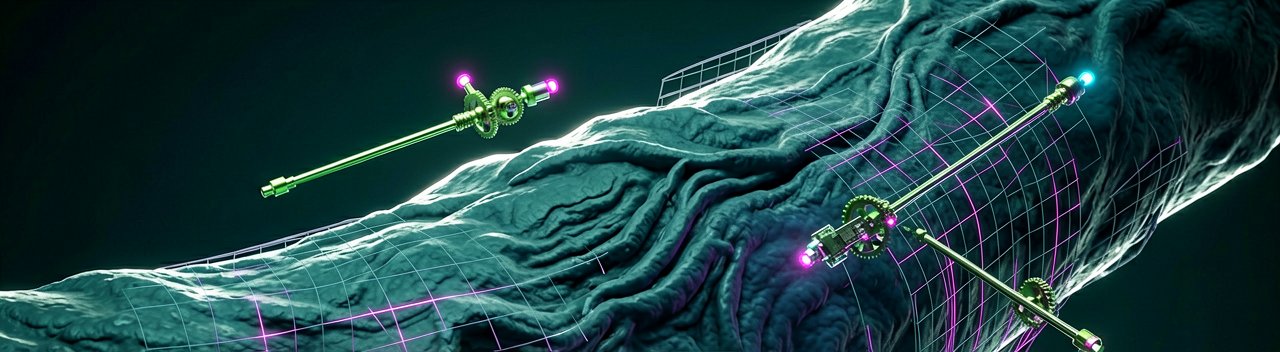
Behind the Gross-Up Lens: While the striking visual identity of the title captures immediate attention, the operational reality of producing cell-by-cell hand-drawn animation presents a severe production bottleneck that modern indie studios rarely choose to navigate. Unlike standard digital puppetry or pixel art, where assets can be quickly transformed, scaled, and repurposed, the fluid animation methodology employed here demands thousands of unique, hand-crafted frames. Every contraction of an artery or spasm of a digestive wall requires dedicated illustration cycles, creating a structural tension between the expansiveness required by the Metroidvania genre and the rigid limits of indie development budgets.
To mitigate this friction, the production strategy shifts from sheer map scale to density of interaction. Industry veterans observe that navigating an internal organic space allows the developers to substitute vast, empty corridors with hyper-reactive environments. Instead of designing hundreds of disparate rooms, the studio focuses on multi-state interactive assets, where a single organ can drastically alter its physical state based on player actions or narrative milestones. This dense design approach allows a smaller, focused animation team to extract maximum gameplay utility from every hand-drawn asset, turning a potential developmental liability into a core mechanical strength.
The historical precedent for this approach dates back to the experimental platformers of the 16-bit era, yet modern publishing dynamics demand a much sharper focus on community-driven development. By maintaining a highly transparent production pipeline, the creators cultivate an early, dedicated following that appreciates the sheer labor behind the game's aesthetic. This grassroots strategy lowers the reliance on traditional publisher backing, giving the creative team the financial runway needed to polish intricate animation frames without succumbing to the market pressures that frequently sanitize eccentric indie projects.
Ultimately, the commercial viability of this anatomical odyssey will test whether modern audiences value artisanal visual craft over the infinite replayability loops that currently dominate the market. By treating the human body as a living, reacting level design template, the project challenges the prevailing industry consensus that Metroidvanias must be sprawling, hundred-hour epics to succeed. Success in this territory will likely inspire a broader wave of boutique indie titles that prioritize distinct, singular artistic conviction over the safe, algorithmically optimized design formulas that dominate mainstream storefronts.
The Delicate Line Between Absurdity and Exhaustion
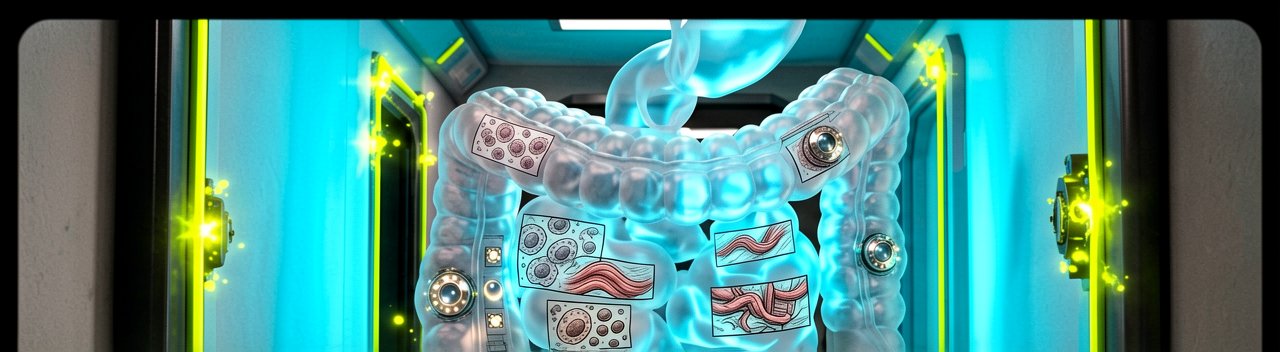
Reading Between the Lines: The initial critical enthusiasm surrounding this visceral sandbox overlooks a fundamental risk inherent to comedy-driven game design: the shelf-life of a gag versus the length of a standard campaign. While a grotesque, hyper-detailed anatomical visual joke can captivate an audience in a short promotional trailer, stretching that singular tone across a fifteen-hour exploration loop presents a massive pacing challenge. Metroidvanias inherently rely on backtracking and environmental familiarity, meaning players will be forced to traverse the same pulsating, inflamed organ corridors multiple times. What begins as a shocking, transgressive aesthetic choice risks devolving into visual white noise if the underlying mechanical progression fails to match the audacity of the art style.
Furthermore, an analytical tension exists between the fluid, chaotic logic of classic animation and the rigid, pixel-perfect precision demanded by enthusiasts of the genre. The best-received side-scrolling platformers achieve longevity through transparent hitboxes, predictable enemy behaviors, and highly readable environments that facilitate split-second player reactions. Introducing squishy, morphing organic obstacles with erratic, rubbery animations can easily compromise this competitive clarity. If player frustration arises not from a lack of skill, but from the inability to distinguish a safe platform from a hazardous layer of biological tissue, the game's core demographic may quickly abandon the experience regardless of its artistic merit.
From a broader market perspective, the title also gambles heavily on the volatile nature of internet novelty. The indie ecosystem is littered with visually striking projects that generated massive pre-release engagement on social media platforms, only to suffer from poor conversion rates at launch due to a lack of mechanical depth. By tying its identity so closely to a niche, nostalgic animation style, the studio faces the difficult task of convincing mainstream consumers that the project is a deep, mechanically sound experience rather than a brief, gimmicky internet curiosity. Striking this balance requires the developer to prove that the anatomical theme is an essential gameplay driver, rather than a clever marketing coat of paint wrapped around an otherwise conventional platformer framework.
Designing a game inside a human body proves that while the path to a player's heart is traditionally through engaging mechanics, a truly memorable indie title prefers to take the scenic route straight through the large intestine.
Artūras Malašauskas is an AI Systems Integrator with 20+ years of production-grade web engineering experience. He has designed, shipped, and scaled enterprise Python/PHP systems for logistics, SaaS, and public-sector clients. For the past year, he has focused exclusively on AI integrations: deploying open-source LLMs, building generative media pipelines (image, audio, video), and engineering multi-agent workflows for real production environments. His standard: reproducibility, security, cost-efficient inference—no vaporware. He documents and evaluates emerging AI tooling, separating verified capabilities from marketing noise. Technical editor at: muza-ai.eu, ai-verslas.lt, ai-naujinos.lt Connect on LinkedIn
Comments