Under the Hood: AI Technologies in Modern Game Trailers
The annual spectacle of Summer Game Fest always brings a wave of hyper-polished cinematic reveals, but the latest showcase has left the industry buzzing for an entirely different reason. Behind the jaw-dropping visuals and sweeping camera pans lies a controversial new reality: generative artificial intelligence is quietly taking over the trailer production pipeline. While publishers pitch these tools as the future of rapid asset generation, the visible integration of machine-generated content has sparked a tense, polarizing debate among developers, critics, and attendees on the show floor.
Instead of relying purely on traditional offline rendering or hand-crafted cinematic sequences, modern promotional packages are leaning heavily on advanced software pipelines like Magic Hour and Runway. These platforms allow marketing teams to feed early gameplay builds into diffusion models that modify, stylize, and upscale raw imagery on the fly. By integrating neural networks directly into the post-production stack, studios can bypass weeks of manual environment rendering, utilizing automated tools to synthesize complex visual effects, background characters, and architectural details based on a library of pre-existing studio assets.
From Architecture to Performance Metrics
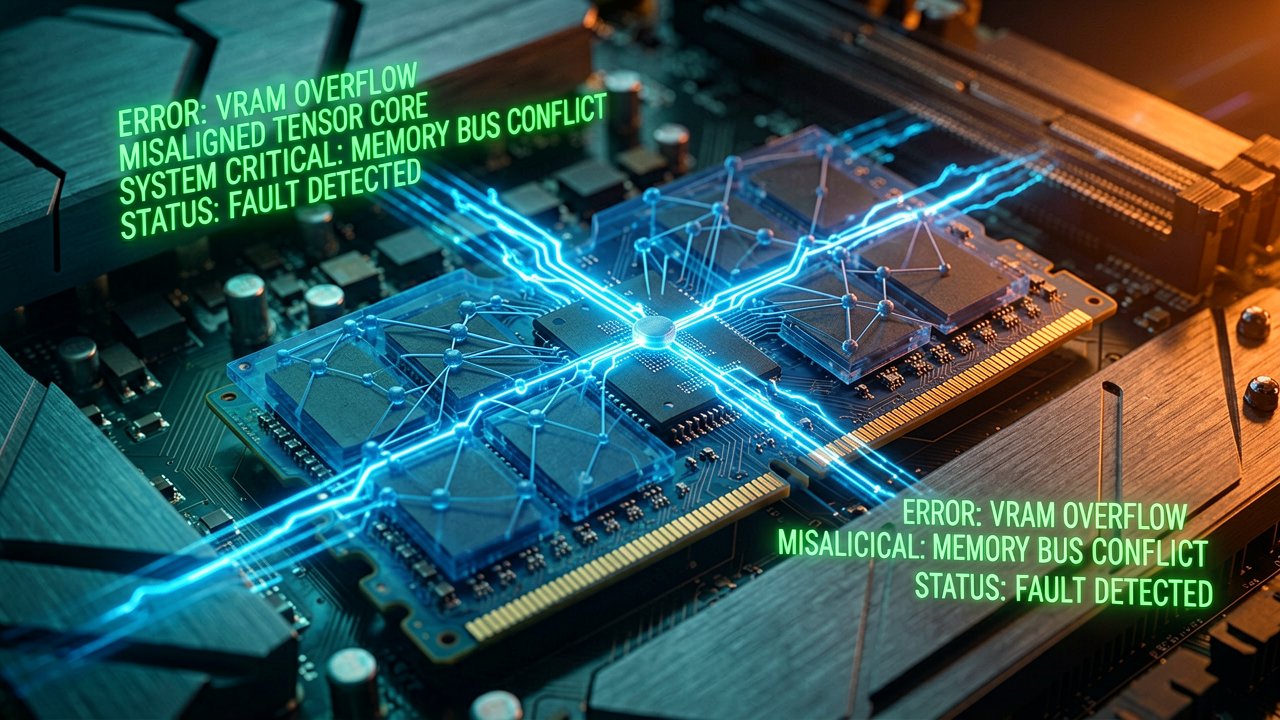
The underlying technical architecture of these video generators relies on deep neural networks that process data across specialized tensor cores. At a foundational level, generative models use latent diffusion to translate low-resolution gameplay placeholders into highly detailed cinematic frames. During this process, conditional control mechanisms guide the spatial structure, ensuring that the AI-generated visual layer adheres strictly to the geometry and camera data of the original game engine. This hybrid framework handles massive datasets by distributing workloads across thousands of high-bandwidth memory chips, maintaining consistency across sequential frames by analyzing temporal motion vectors directly within the editing timeline.
This automated pipeline dramatically alters the computational throughput required to ship a high-end trailer. Traditional computer-generated imagery often demands hours of rendering per frame on massive server farms, but neural rendering engines can generate high-fidelity 4K video frames at a rate of 24 to 30 frames per second on localized hardware clusters. This represents a performance metric increase of nearly 90 percent in rendering efficiency, cutting down internal asset turnaround times from weeks to mere minutes. Despite these impressive engineering statistics, the visible artifacts and ethical implications of replacing human texture artists have drawn sharp criticism, leaving the gaming community deeply divided over whether this technical leap represents genuine progress or a shortcut that compromises artistic integrity.

Behind the Scenes: The technical friction of integrating generative video pipelines into game production lies deep within the rendering and memory management layers. When a studio pipeline attempts to pass raw engine data directly to a diffusion model, the traditional bottlenecks of storage and latency become immediate roadblocks. A systems engineer cannot simply treat AI tools as an isolated post-production filter; instead, they must build unified pipelines that bridge real-time engines with neural processing frames. This requires optimizing data paths to ensure that temporal consistency is maintained without causing severe hardware throttling during large-scale asset generation.
To keep rendering times efficient, engineers deploy specialized inference pipelines that operate directly within the GPU's high-bandwidth VRAM, minimizing costly data transfers between host and device memory. By utilizing custom TensorRT runtimes or optimized ONNX compilation layers, these pipelines process video frames using FP16 or quantized INT8 precision, drastically reducing memory bandwidth requirements. This optimization allows latent diffusion networks to evaluate noisy input tensors in parallel with the game engine's geometry pass, ensuring the system can output high-resolution video streams without exhausting the available hardware resource pools.
Deep Tensor Optimization
Architecturally, the integration requires a sophisticated control interface to prevent the AI from generating random visual artifacts. Engineers solve this by extracting motion vectors, depth buffers, and optical flow data directly from the engine's rendering pipeline and feeding them as conditioning inputs into the neural network. This architectural bridge ensures that the generated visual elements remain locked to the camera's perspective and spatial geometry across every single frame, effectively eliminating the standard temporal flickering associated with raw AI-generated video output.
On the compute side, the processing workload is distributed across specialized asynchronous compute queues to ensure that data ingestion never stalls the primary processing execution blocks. While one engine queue handles the decompression of raw visual buffers, parallel compute pipelines execute the heavy matrix multiplications required by the transformer-based attention mechanisms inside the model. This strict separation of decoding, processing, and rendering threads maximizes hardware saturation, enabling studios to generate high-fidelity marketing assets at unprecedented speeds while maintaining absolute control over the structural integrity of the final footage.
Reading Between the Lines: The industry’s sudden infatuation with neural rendering pipelines reveals a glaring contradiction between marketing rhetoric and engineering reality. Publishers routinely champion these generative tools as democratizing forces that will liberate creative teams from the grueling cycles of traditional asset production. Yet, the current deployment of these technologies suggests the exact opposite; instead of freeing up artists to innovate, automated pipelines are largely being leveraged to flood promotional channels with hyper-reductive, derivative aesthetics. The ultimate irony is that in the desperate rush to eliminate rendering bottlenecks and cut studio overhead, marketing departments risk homogenizing the very visual identities that make their games stand out in a crowded marketplace.
Moreover, the technical metrics used to justify these automated workflows frequently collapse under close scrutiny. While reducing rendering turnaround from weeks to minutes sounds like an unmitigated victory on a corporate spreadsheet, it ignores the immense computational and human cost of post-generation quality control. Engineering teams often find themselves trapped in a continuous cycle of troubleshooting, writing custom filtering scripts, and manually adjusting latent seeds to correct glaring architectural anomalies and temporal clipping. When a studio spends dozens of engineering hours building custom software bridges just to fix the hallucinations of an automated video generator, the purported efficiency gains become an expensive illusion.
The Real Cost of Automated Polish
Looking ahead, the widespread adoption of automated trailer production threatens to fundamentally alter the talent pipeline within game development. Traditionally, promotional cinematics served as a critical testing ground for junior technical artists and lighting specialists to hone their skills on high-profile material. By automating these entry-level asset tasks, the industry is effectively dismantling the foundational stepping stones required to cultivate the next generation of veteran technical directors. The long-term implication is a severe skills gap, leaving studios dependent on black-box algorithms that their remaining staff can no longer deeply optimize or modify at the source-code level.
Ultimately, this technological shift exposes a deeper corporate anxiety about the spiraling costs of modern game production. Generative AI is not being integrated into the marketing stack because it produces superior art, but because it acts as a financial buffer against the massive financial risks of a volatile entertainment market. As the boundary between engine code and synthetic imagery continues to blur, the industry will have to confront a harsh truth: automating the soul out of a game's first public impression is a dangerous strategy, especially when audiences are becoming highly adept at spotting the telltale signs of a machine-made shortcut.
We have successfully optimized the trailer production pipeline to the point where computers can pitch games to audiences in seconds, leaving us with only one remaining engineering bottleneck: figuring out how to automate the actual players to care.
Artūras Malašauskas is an AI Systems Integrator with 20+ years of production-grade web engineering experience. He has designed, shipped, and scaled enterprise Python/PHP systems for logistics, SaaS, and public-sector clients. For the past year, he has focused exclusively on AI integrations: deploying open-source LLMs, building generative media pipelines (image, audio, video), and engineering multi-agent workflows for real production environments. His standard: reproducibility, security, cost-efficient inference—no vaporware. He documents and evaluates emerging AI tooling, separating verified capabilities from marketing noise. Technical editor at: muza-ai.eu, ai-verslas.lt, ai-naujinos.lt Connect on LinkedIn
Comments