Beyond the Claws: How Wolverine's Game Balances Brutality and Accessibility for a Wider Audience

For decades, video game adaptations of comic book icons have walked a razor-thin tightrope between raw comic authenticity and corporate marketability. When Insomniac Games initially pulled back the curtain on its upcoming title, a collective gasp echoed through the community because it became immediately clear that this was not another family-friendly romp through New York City. The studio is unapologetically leaning into a mature, blood-soaked environment where adamantium blades actually do what they were born to do: tear through crime syndicates, cybernetic Reavers, and heavily armored foes with terrifying, localized precision. It is a visceral statement of intent that positions Logan as a force of untamed nature, yet the real magic trick lies in how the studio plans to prevent this sheer ferocity from alienating a massive chunk of potential players.
During an illuminating breakdown of fresh gameplay details published by Variety, the development team revealed a surprisingly elegant approach to handling the character's signature ultra-violence. Recognizing that a subset of superhero enthusiasts love Logan’s brooding stoicism but stomach his stomach-churning dismemberments with great difficulty, the developers are introducing a sophisticated "low-gore" accessibility toggle. This isn't just a crude, pixelated mosaic slapped over the screen or a global asset replacement that turns blood into purple paint. Instead, the game features nuanced alternative paths and customized violence settings, effectively filtering out the most extreme carnage for squeamish players while preserving the core, mechanical impact of the claw combat.
A Mortal Mutant and Team X Legacy
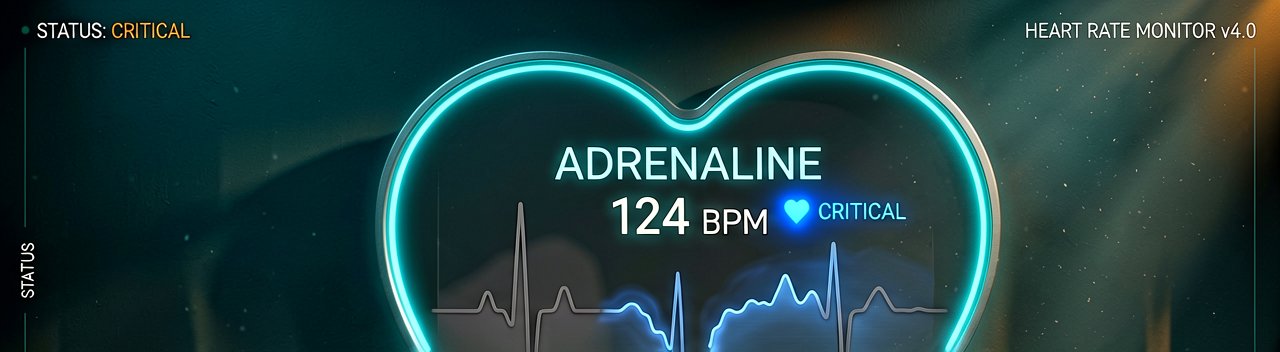
This duality between intense action and granular player comfort extends deep into the core mechanics of Logan’s combat loop. Unlike standard superhero titles where the protagonist functions as an unstoppable tank, player mortality is a looming, mechanical reality here. Insomniac has implemented a unique cardiovascular failure system where Logan can genuinely die if his heart stops from sustained trauma. To survive, players must actively manage a high-stakes adrenaline and rage economy, triggering high-pressure survival reflexes to literally restart his heart in the heat of a chaotic melee. It is a brutal rhythm that mirrors the character’s comic book desperation, making every claw slash feel earned.
The narrative framing itself shifts away from the traditional, comfortable safety nets of Marvel lore to elevate this grittier tone. In a fascinating narrative departure, the developers confirmed that the X-Men do not actually exist as an established entity within this specific universe. Logan isn't lounging in a Westchester mansion; instead, he operates across global hotspots like Madripoor alongside a covert mutant rescue operations unit known simply as Team X. Even without the formal team structure, fans can still look forward to high-profile mutant appearances, including a confirmed presence from Eurogamer detailing Jean Grey's dynamic role in the unfolding chaos. By pairing a deeply mature, standalone character study with customizable violence and highly granular gameplay tuning, the title ensures that whether you are a die-hard gorehound or an accessibility-focused player, the mythos of Wolverine remains fully within arm's reach.
Stripping away the comfort of the traditional Xavier mansion changes everything about how we perceive Logan’s survival. By placing him in a world where the X-Men simply do not exist, the narrative forces players to confront a mutant who is profoundly isolated, operating on the dangerous fringes of global society. The choice of Madripoor as a central narrative hub is a stroke of atmospheric brilliance, providing a neon-drenched, sweat-soaked playground that feels a world away from the bright skies of Insomniac's virtual New York City. In this lawless, shadow-choked haven, the game shifts its focus away from traditional heroism, grounding itself instead in the gritty, transactional reality of mutant rescue operations alongside Team X.
The Mechanical Symbiosis of Rage and Recovery
This isolation is not merely a narrative trick; it heavily dictates how players interact with the environment and the enemies hunting them. Combat is designed to feel like a desperate, uphill battle against overwhelmingly armed foes, where the cybernetic Reavers act as cold, calculated counters to Logan's animalistic fury. Insomniac breaks away from standard, flawless superhero choreography by making Logan’s physical vulnerability a key element of the gameplay. His suit tears, his flesh yields to heavy weaponry, and players must actively witness the raw, visceral process of his mutant healing factor piecing him back together in real time during a frantic melee.
To survive this relentless onslaught, players must master a high-stakes economy built entirely around a fluid momentum system. Sneaking through the shadows for quiet stealth takedowns isn't just an optional playstyle, but a tactical necessity used to aggressively prime Logan's adrenaline and build up his vital rage meter before a major confrontation explodes. When things inevitably go loud, managing this rage meter becomes the definitive line between life and death. The cardiovascular failure mechanic ensures that if the player's health drops to zero, the game does not simply fade to a traditional game-over screen; instead, it demands high-pressure, fast-reflex inputs to trigger an emergency surge of adrenaline, literally forcing Logan's heart to restart and thrusting him back into the fray.
Cooperative Chaos and the Weight of Choice
The pacing shifts beautifully when Logan is paired with crucial mutant allies, introducing a dynamic layer of cooperative gameplay that expands his tactical options. Teaming up with Jean Grey alters the entire flow of combat, as her telekinetic mastery dynamically opens up heavily armored targets, leaving them perfectly exposed for Logan's devastating claw strikes. This synergy offers a fascinating mechanical contrast to other encounters, such as fighting alongside Sabretooth, where the partnership quickly devolves into an unstable, chaotic competition to see who can rack up a higher body count. Players can easily toggle Logan’s iconic claws in and out with a simple press of a trigger, adding a satisfying tactile punctuation mark to the end of every bloody encounter.
Ultimately, the game's greatest achievement lies in how it seamlessly bridges the gap between hardcore action fans and a much broader audience through its thoughtful accessibility suite. Squeamish players who want to experience this deeply emotional character study can freely dive into the low-gore paths without losing a shred of the game's intense narrative gravity or mechanical depth. By combining customizable violence settings with a demanding, rewarding combat loop, Insomniac is crafting an experience that respects both the absolute savagery of Wolverine's comic legacy and the diverse needs of modern gamers. It is a bold, uncompromising blueprint for the future of mature superhero adaptations, proving that a game can be intensely brutal while remaining profoundly welcoming to all.
Balancing the raw, animalistic fury of Wolverine with inclusive game design is more than a commercial safety net. It is a sophisticated recalibration of how mature superhero media can interact with a diverse, global player base. Historically, triple-A development has often treated accessibility and extreme, narrative-driven violence as fundamentally incompatible philosophies. Developers typically believed that to welcome a mainstream crowd, the sharpest, most distinctive edges of a character's mythos had to be aggressively filed down. Insomniac Games is actively shattering that outdated paradigm by demonstrating that deep player customization does not inherently dilute a studio's bold creative vision.
A Blueprint for Modern Adaptations
The implementation of customized violence settings and alternative low-gore pathways represents a profound shift in design priority. Squeamish players are no longer entirely locked out of experiencing an intimate, high-stakes character study simply because they prefer not to witness hyper-realistic dismemberment. Concurrently, hardcore action enthusiasts are granted the uncompromised, blood-soaked experience they have demanded for years. By decoupling the mechanical weight of claw combat from the literal volume of blood spilled on screen, the studio effectively expands its audience without insulting the intelligence or preferences of either player demographic.
This design methodology ultimately sets an ambitious new benchmark for the entire interactive entertainment industry. It proves that a game can confidently explore the dark, isolated corners of a beloved universe while remaining profoundly open to everyone. By embedding accessibility directly into the foundational architecture of Logan's journey, the title ensures that his legendary resilience is mirrored not just in his healing factor, but in the very design of the game itself.
"In an industry that frequently mistakes excessive gore for true maturity, the ultimate triumph of this approach is proving that a character's real depth lies in his humanity, not just the sheer sharpness of his claws."
Artūras Malašauskas is an AI Systems Integrator with 20+ years of production-grade web engineering experience. He has designed, shipped, and scaled enterprise Python/PHP systems for logistics, SaaS, and public-sector clients. For the past year, he has focused exclusively on AI integrations: deploying open-source LLMs, building generative media pipelines (image, audio, video), and engineering multi-agent workflows for real production environments. His standard: reproducibility, security, cost-efficient inference—no vaporware. He documents and evaluates emerging AI tooling, separating verified capabilities from marketing noise. Technical editor at: muza-ai.eu, ai-verslas.lt, ai-naujinos.lt Connect on LinkedIn
Comments