Executive Order Redefines AI Security Priorities for Developers and Critical Infrastructure
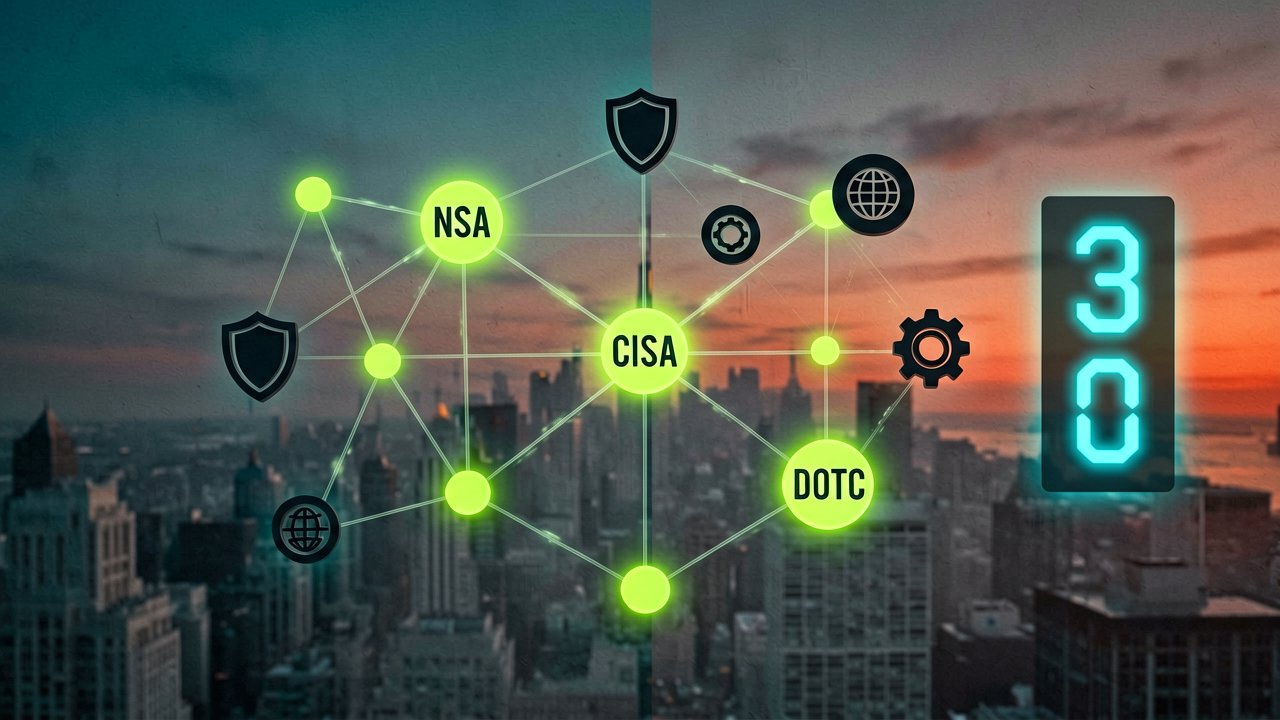
The White House has issued a pivotal directive designed to re-engineer the cybersecurity posture of American artificial intelligence infrastructure. Titled Promoting Advanced Artificial Intelligence Innovation and Security, the Executive Order establishes a voluntary pre-release vetting framework for frontier models while aggressively accelerating software vulnerability patching across the public and private sectors. The directive attempts to preserve rapid commercial innovation while building a cohesive defense mechanism against next-generation, AI-driven cyber threats.
This strategic policy shift follows immense pressure on the administration after frontier labs demonstrated unprecedented autonomous capabilities in identifying and exploiting complex zero-day software vulnerabilities. For instance, severe anxiety rippled through federal agencies following a preview of Anthropic’s Claude Mythos model, which demonstrated cyber capabilities far outstripping human professionals. Analysts note that while the administration initially favored a completely hands-off regulatory environment to combat geopolitical competitors like China, the sheer velocity of model capabilities forced a compromise that introduces government oversight without traditional regulatory bottlenecking.
A Voluntary 30-Day Pre-Release Vetting Architecture
At the center of the directive is a new collaborative system managed by the National Security Agency (NSA), the Department of Homeland Security, and the Department of Commerce. Together, these entities are directed to build a classified benchmarking process to identify "covered frontier models." Developers can voluntarily submit their next-generation systems to the federal government for up to 30 days before a wider public release, as reported by . During this period, intelligence agencies and trusted commercial partners will stress-test the models specifically for advanced cyber exploitation and intellectual property security risks.
The 30-day timeline represents a major concession to Silicon Valley executives who successfully lobbied against an initial 90-day draft that threatened to stall commercial release cycles. According to market coverage by NPR, the final text explicitly disclaims any authority to mandate government preclearance, permitting, or formal licensing. This voluntary design rewards cooperative enterprise giants with early access to federal security insights while shielding smaller startup ecosystems from existential regulatory compliance costs.
Hardening Critical Infrastructure and Federal Networks
The directive outlines strict 30-day deadlines for the Cybersecurity and Infrastructure Security Agency (CISA) to deploy legally binding operational directives to secure civilian federal networks. Crucially, CISA is tasked with facilitating wider public-private deployment of defensive AI tools to insulate highly vulnerable sectors, including community banks, rural hospitals, and municipal utilities. To synchronize the massive volume of vulnerability reports generated by automated AI testing, the Department of the Treasury will lead a brand new collaborative clearinghouse to manage automated code scanning, validation, and real-time patch distribution.
Financial and infrastructure stakeholders have largely praised this proactive posture, highlighting how small-scale operators frequently lack the capital to defend against highly sophisticated, AI-augmented digital assaults. Trade associations like the American Bankers Association emphasized that the clearinghouse framework will successfully convert cutting-edge defensive intelligence into tangible protections for regional institutions. Furthermore, the directive instructs the Department of Justice to aggressively prioritize federal criminal enforcement against malicious actors using autonomous AI agents to breach critical software pipelines.
Market Impact and the Rise of De Facto Norms
Though explicitly voluntary, this executive order will inevitably reshape corporate due diligence, insurance liability standards, and federal procurement preferences. Technology law experts at WilmerHale observe that major enterprise buyers and government contractors will likely mandate participation in the voluntary framework as a baseline requirement for commercial partnerships. Consequently, non-participating AI laboratories risk losing profitable federal contracts and suffering reputational damage in a market that increasingly treats security clearance as a competitive asset.
Inside the Strategic Pivot
What Most Reports Miss: The shift from the rigid, binding mandates of previous administrations to this voluntary, incentive-driven model reflects an intense ideological struggle within the intelligence community itself. Senior security officials spent months debating whether heavy-handed regulation would cripple American competitiveness against rapidly advancing state-sponsored AI programs in East Asia. By pivoting to a voluntary vetting framework, the administration is betting that the carrot of federal collaboration will prove more effective than the stick of compliance. The goal is to build an exclusive ecosystem where the most sophisticated developers trade early access to their source code for immediate, classified threat intelligence that protects their own intellectual property from foreign espionage.
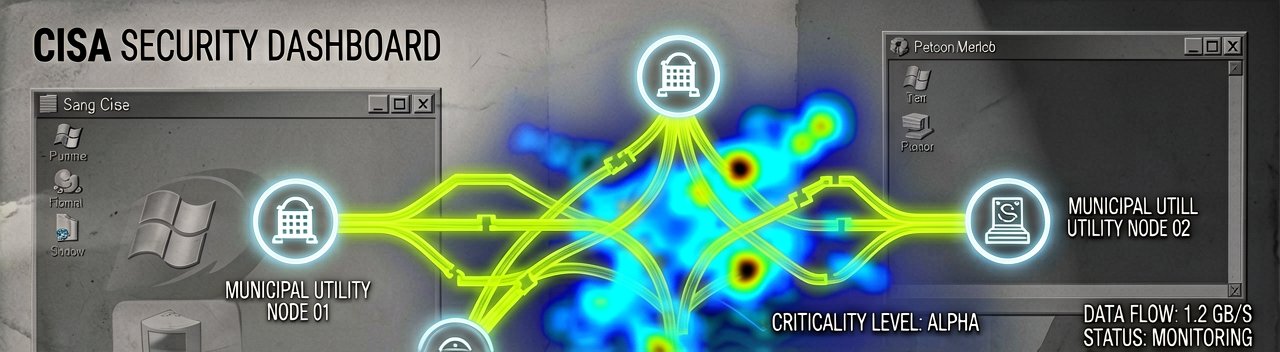
This approach fundamentally alters the traditional power dynamic between Silicon Valley and Washington. In prior tech revolutions, such as social media and cloud computing, the federal government remained a passive consumer or a reactive regulator. Now, the creation of a dedicated, real-time clearinghouse for automated patch distribution means the government is positioning itself as a core infrastructure partner. This deep level of public-private entanglement ensures that the security baselines for the next decade of software development are being co-written by corporate engineers and national security analysts behind closed doors, largely bypassing the slow-moving legislative process.
However, the voluntary nature of the order has created a stark divide among market players. For established tech titans with capital to spare, a 30-day pre-release review window is an easy pill to swallow, especially since it validates their market dominance with a de facto government seal of safety. Conversely, mid-tier open-source advocates and capital-constrained startups view this framework as a subtle mechanism for market consolidation. They argue that enterprise buyers, hyperscale cloud providers, and commercial insurance underwriters will rapidly shift their requirements to favor only "federally reviewed" models, effectively starved-out independent developers who cannot afford to delay deployment by a single day.
The operational stress on federal agencies will also be immense. Tasking entities like CISA and the Treasury Department with securing thousands of underfunded municipal utilities and regional banks in a 30-day sprint is an unprecedented administrative challenge. While trade groups have voiced public optimism, internal tech teams at municipal water plants and rural hospitals remain highly skeptical about their ability to ingest and deploy the complex patch pipelines envisioned by the directive. Without a massive influx of federal technical talent to act as hands-on implementation partners, the sophisticated intelligence generated by the clearinghouse may simply overwhelm the exact critical systems it was designed to protect.
The Friction Between Innovation and Enforcement
Reading Between the Lines: The central paradox of this executive order lies in its attempt to secure a highly volatile technological frontier through a purely voluntary mechanism. While the administration champions this as a business-friendly compromise that avoids stifling innovation, history suggests that voluntary compliance in cybersecurity lasts only until the first major market downturn or high-stakes commercial race. In a market where being first to market with an AI agent can determine a startup's survival or a tech giant's multi-billion-dollar valuation, the temptation to bypass the 30-day federal review window will be overwhelming. Without a binding legislative stick, the entire security apparatus risks turning into a theater of compliance where only the most risk-averse companies participate, leaving the most aggressive and potentially dangerous models entirely unvetted.
Furthermore, the government’s reliance on defensive AI to patch critical infrastructure reveals a concerning circular logic. The directive assumes that automated code-scanning and autonomous patch distribution systems can outpace the offensive capabilities of the very same frontier models. In reality, the deployment of automated clearinghouses creates a centralized, highly attractive target for adversarial nation-states. If an adversary manages to compromise or poison the data flowing through the Treasury or CISA’s automated patching pipelines, they gain a direct backdoor into thousands of municipal utilities and regional banks under the guise of an official security update. The administration is essentially trying to cure an arson epidemic by distributing a new, automated firefighting chemical that has yet to be tested at scale.
The geopolitical motivations driving this text also contradict its explicit domestic safety goals. The order heavily emphasizes locking down intellectual property and protecting American labs from foreign espionage, yet the voluntary nature of the pre-release review could inadvertently accelerate brain drain. Elite AI researchers and open-source pioneers, frustrated by even the softest forms of government oversight or the pressure to seek a de facto federal seal of approval, may simply relocate their operations to jurisdictions with absolute regulatory freedom. By attempting to build a secure digital fortress around Silicon Valley, Washington may inadvertently incentivize the fragmentation of the global AI ecosystem, leaving the West with highly secure but technically stagnant models while adversaries iterate in the wild without any constraints.
"We are witnessing a classic Washington compromise: creating a cutting-edge, automated cyber defense shield to protect municipal water treatment plants that are still running Windows 7 and using 'password123' for remote access. The government has successfully designed a pristine, 30-day waiting room for the future, but the real threat is already in the parking lot, and it doesn't plan on signing the guest book."
Artūras Malašauskas is an AI Systems Integrator with 20+ years of production-grade web engineering experience. He has designed, shipped, and scaled enterprise Python/PHP systems for logistics, SaaS, and public-sector clients. For the past year, he has focused exclusively on AI integrations: deploying open-source LLMs, building generative media pipelines (image, audio, video), and engineering multi-agent workflows for real production environments. His standard: reproducibility, security, cost-efficient inference—no vaporware. He documents and evaluates emerging AI tooling, separating verified capabilities from marketing noise. Technical editor at: muza-ai.eu, ai-verslas.lt, ai-naujinos.lt Connect on LinkedIn
Comments