How AI Security Protocols Are Redefining Global Hospitality Standards

The global hospitality sector has quietly transitioned into a hyper-connected, intelligent ecosystem where digital identity, biometric check-ins, automated property systems, and AI-driven concierge workflows intersect. This sudden saturation of autonomous intelligence has elevated hospitality from a consumer-facing service industry to a critical component of national security frameworks. Because modern hotels capture dense repositories of personal, financial, and real-time operational data, international bodies and state governments are imposing sweeping mandates to secure these systems from escalating vulnerabilities. The era of treating artificial intelligence as an isolated experimental tool for guest personalization has official ended; it is now managed under strict national defense architectures.
This paradigm shift is driven by a hardening of regulatory environments worldwide, forcing an industry-wide pivot toward zero-trust networks and rigorous verification. Government directives, such as the newly signed U.S. Executive Order on "Promoting Advanced Artificial Intelligence Innovation and Security" issued by the White House, explicitly classify AI capabilities as critical infrastructure dependencies that require aggressive vulnerability tracking and secure early access structures. Simultaneously, the impending enforcement deadlines for high-risk systems under the European Commission AI Act are compelling multi-property hospitality conglomerates to formalize their model data flows and transparency metrics. Consequently, hoteliers are caught in an urgent operational bind, tasked with maintaining friction-free consumer experiences while satisfying uncompromising, legally binding cyber-defense requirements.
As sovereign entities accelerate the deployment of national AI guidelines, hospitality tech vendors and integration engineers face a dramatic restructuring of software procurement and deployment. The financial stakes of non-compliance or negligent data isolation have grown catastrophic, with modern regulations threatening massive administrative penalties that can fundamentally disrupt international corporate operations. To navigate this hostile threat landscape, forward-thinking operators are abandoning purely checklist-based compliance audits in favor of active behavioral threat models and hardware segmentation. Global brands must systematically rebuild their tech stacks to defend against complex AI-powered threats while keeping their physical properties safe, continuous, and hospitable.
The Convergence of National Security and Connected Hotels
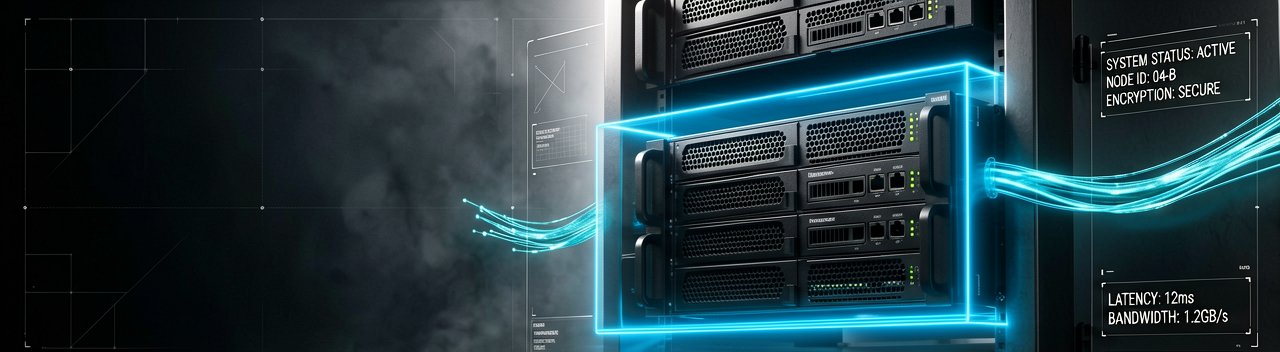
Modern properties are no longer just physical buildings; they function as decentralized data hubs controlling physical infrastructure through operational technology (OT) networks. National defense agencies monitor the sector closely because vulnerabilities in automated systems can expose everything from building management infrastructure to high-profile executive and diplomatic travel data. Strategic guidelines released in early 2026, analyzed comprehensively via Hospitality Net , confirm that AI systems managing guest logistics have officially crossed the threshold into national critical infrastructure dependencies. Threat actors routinely deploy automated vulnerability scans and algorithmic exploits to infiltrate property management systems, forcing cybersecurity strategies to merge with sovereign security directives.
Regulatory Enforcement and the Cost of AI Negligence
The legal landscape has evolved from ambiguous advisory frameworks into aggressive, multi-jurisdictional enforcement paradigms that demand strict accountability from enterprise boards. Global hotel chains operating across border lines must instantly comply with localized regulations, such as India's IT Amendment Rules tracked by Invenia Tech, which eliminate safe harbor protections and leverage steep financial penalties for unwatermarked synthetic content or unverified automated pipelines. In the West, data governance deadlines logged by ToxSec are forcing procurement teams to demand certified assurance standards, such as ISO/IEC 42001, directly from third-party booking agents and AI vendors. This compliance environment means standard IT audits are obsolete, replaced by a mandate for continuous, evidence-backed accountability structures.
Balancing Frictionless Guest Experiences with Zero-Trust Security
The central operational problem for hoteliers centers on introducing heavy-duty defensive architectures without damaging the seamless, luxury nature of premium guest service. According to consumer insights published by The Access Group, over one-third of international consumers remain deeply skeptical of widespread hospitality AI deployment due to data misuse and surveillance anxieties. To safely alleviate these concerns, security leaders are deploying background-running threat defenses that secure data without introducing tedious guest-facing obstacles. Predictive trends outlined by Hotel Business emphasize that isolating IT booking networks from critical OT systems like electronic door locks and HVAC controls allows properties to maintain physical continuity even during active digital breaches.
Behind the Scenes: The Hidden Vulnerability in Decentralized Asset Management
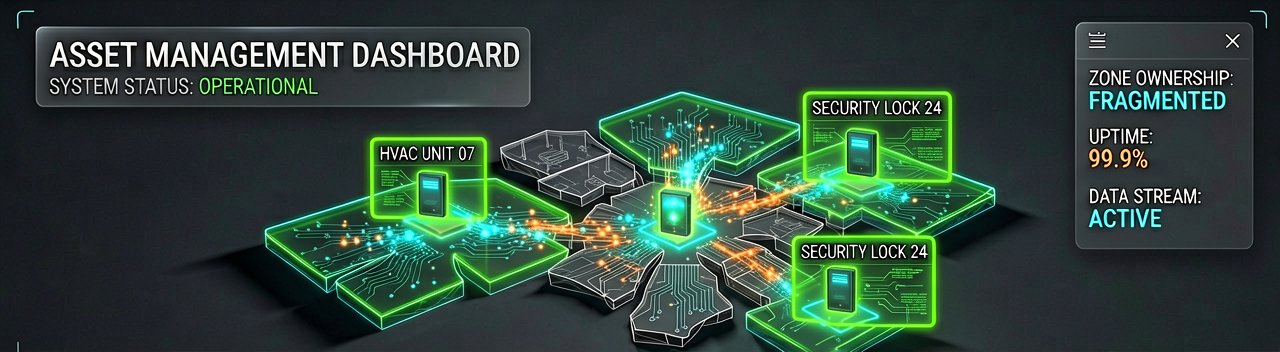
The Real Battleground: While consumer tech journalism routinely fixates on public-facing AI concierges and automated mobile check-ins, enterprise IT architects are quietly fighting a far more precarious war within decentralized property ownership models. Under traditional hospitality management agreements, a single global brand name might cover thousands of properties worldwide, but the physical real estate and the localized IT infrastructure are actually owned by hundreds of separate third-party investment funds and private asset groups. This fragmented ownership creates an incredibly uneven defensive perimeter. While a corporate brand headquarters can mandate top-tier, zero-trust AI security protocols, the actual capital expenditure required to upgrade legacy edge servers, local property management systems, and IoT sensors at the individual property level relies entirely on the financial willingness of independent property owners. This leaves sophisticated threat groups with a massive structural advantage, allowing them to target underfunded, mid-tier franchise locations as weak entry points to compromise the broader, interconnected corporate data core.
This systemic fragmentation is compounded by a profound cultural divide between legacy operational technology teams and modern corporate cybersecurity divisions. For decades, hotel engineers evaluated building management systems—such as industrial HVAC setups, digital elevator arrays, and electronic door locks—purely on physical reliability, mechanical longevity, and operational uptime. Today, these exact same legacy networks are abruptly being plugged into predictive, AI-driven energy optimization algorithms and automated scheduling platforms to cut soaring operational costs. This sudden connectivity introduces immediate risks; an AI system given direct write-access permissions to optimize a property's power grid can easily be manipulated into a beachhead for a coordinated, lateral ransomware attack across the entire operational network. Experienced security engineers stress that separating these foundational building systems from public-facing corporate booking engines is no longer just an IT best practice, but a core requirement for basic physical safety and business continuity.
At the same time, the human element within hospitality remains a massive, largely unaddressed vulnerability that purely software-based security frameworks fail to resolve. The hospitality industry operates on a model of high seasonal staff turnover, relying on a revolving workforce of desk agents, bellhops, and facility managers who are rarely trained in advanced digital threat detection. Threat actors are keenly aware of this dynamic and increasingly deploy highly targeted, AI-generated social engineering attacks, such as deepfake audio calls replicating regional managers or perfectly written, automated phishing emails tailored to exploit local operational emergencies. When an under-trained employee is tricked into granting administrative access or bypassing an automated verification protocol during a busy weekend rush, even the most expensive, state-of-the-art AI defensive software becomes completely useless. Security leadership must realize that building a resilient defense requires a continuous commitment to ongoing employee training and strict behavioral guardrails, rather than simply relying on software purchases to solve systemic human risks.
Looking ahead, the international hospitality sector is rapidly moving toward a high-stakes compliance cliff where regional regulatory divergence will actively dictate corporate survival. Global hotel operators can no longer rely on a single, unified global data-handling standard; instead, they must dynamically adapt their operational workflows to comply with conflicting national security demands across different jurisdictions. For instance, an enterprise AI model that aggregates cross-border guest preferences to streamline international travel may run completely afoul of local sovereignty laws that strictly mandate all guest data remain isolated within physical national boundaries. Navigating this highly fragmented legal and technical landscape requires an entirely new breed of technology leadership—one that possesses a deep, sophisticated understanding of international diplomacy and regulatory frameworks just as much as server architecture and algorithmic threat modeling.
Reading Between the Lines: The Structural Paradox of Frictionless Security
The Operational Illusion: The grand marketing promise of the modern hospitality industry relies on an irreconcilable paradox: the illusion of absolute, frictionless luxury existing alongside an aggressively monitored, Zero-Trust digital environment. Global hotel brands consistently reassure high-value travelers that AI-driven biometric checkpoints, facial recognition room keys, and predictive service algorithms will completely eliminate travel friction, creating an unbothered, deeply personalized stay. Yet, the underlying national security mandates driving these technological adoptions demand the exact opposite behind the curtain. True algorithmic threat prevention requires continuous data collection, pervasive behavioral tracking, and intrusive identity verification checkpoints that naturally disrupt the relaxed, anonymous sanctuary that luxury hotels traditionally sold to the global elite. By attempting to mask heavy-duty sovereign surveillance networks as convenient consumer amenities, the hospitality sector risks a severe backlash from privacy-conscious corporate travelers who see through the polished marketing copy.
Furthermore, an uncritical reliance on autonomous AI defense systems introduces systemic vulnerabilities that industry executives are hesitant to publicly admit. The contemporary security narrative presumes that deploying automated machine learning models to monitor network traffic will instantly neutralize sophisticated cyber threats at the digital perimeter. This optimistic view completely overlooks the growing field of adversarial machine learning, where state-sponsored threat actors deliberately feed poisoned data or subtle, calculated anomalies into hospitality networks to slowly desensitize automated detection tools. Over time, an over-automated IT infrastructure can easily be manipulated into misclassifying a slow-moving, lateral data exfiltration campaign as routine background operation. By outsourcing critical, context-dependent threat analysis to rigid black-box algorithms, hotel operators are trading the nuanced intuition of experienced human security teams for an automated system that can be systematically blinded by clever, patient adversaries.
This vulnerability is further exacerbated by the severe financial hypocrisy underlying corporate sustainability and security pledges. Major hospitality conglomerates frequently boast about their massive capital investments in cloud-based AI governance software, yet they simultaneously squeeze the operating budgets of local, on-property IT departments. The harsh reality of property management means that a state-of-the-art AI threat-detection model running in a corporate cloud datacenter is fundamentally crippled if the physical hotel location relies on unpatched, decade-old local area routers, unencrypted point-of-sale terminals, and smart TVs with outdated firmware. Until international hospitality brands mandate and subsidize uniform hardware modernization across all franchise properties, their highly publicized corporate AI security initiatives will serve as little more than expensive, performative digital window dressing that leaves the actual physical points of vulnerability completely exposed.
Ultimately, the rapid push to merge hospitality tech infrastructure with national security frameworks will fundamentally alter the economics of international travel, creating a starkly bifurcated consumer market. As compliance costs for high-security, government-approved data handling skyrocket, elite tier properties will be forced to pass these operational expenses directly to the consumer, turning verified digital privacy into an expensive luxury commodity. Conversely, budget and mid-tier chains will likely be left with under-regulated, ad-supported AI systems that continuously monetize guest data and foot traffic patterns to offset their baseline security overhead. This regulatory trajectory means the future of travel will no longer be defined by the quality of a room or the attentiveness of the service, but by the level of digital exposure a guest is willing to tolerate based on the price of their booking.
"In the end, the ultimate irony of the fully automated, hyper-secure luxury hotel is that after spending millions of dollars on military-grade AI behavioral tracking and zero-trust biometric perimeters, a property's entire digital fortress can still be completely dismantled by a tired front-desk clerk who gladly plugs a stranger's unverified USB drive into the main terminal just to print out a forgotten boarding pass."
Artūras Malašauskas is an AI Systems Integrator with 20+ years of production-grade web engineering experience. He has designed, shipped, and scaled enterprise Python/PHP systems for logistics, SaaS, and public-sector clients. For the past year, he has focused exclusively on AI integrations: deploying open-source LLMs, building generative media pipelines (image, audio, video), and engineering multi-agent workflows for real production environments. His standard: reproducibility, security, cost-efficient inference—no vaporware. He documents and evaluates emerging AI tooling, separating verified capabilities from marketing noise. Technical editor at: muza-ai.eu, ai-verslas.lt, ai-naujinos.lt Connect on LinkedIn
Comments